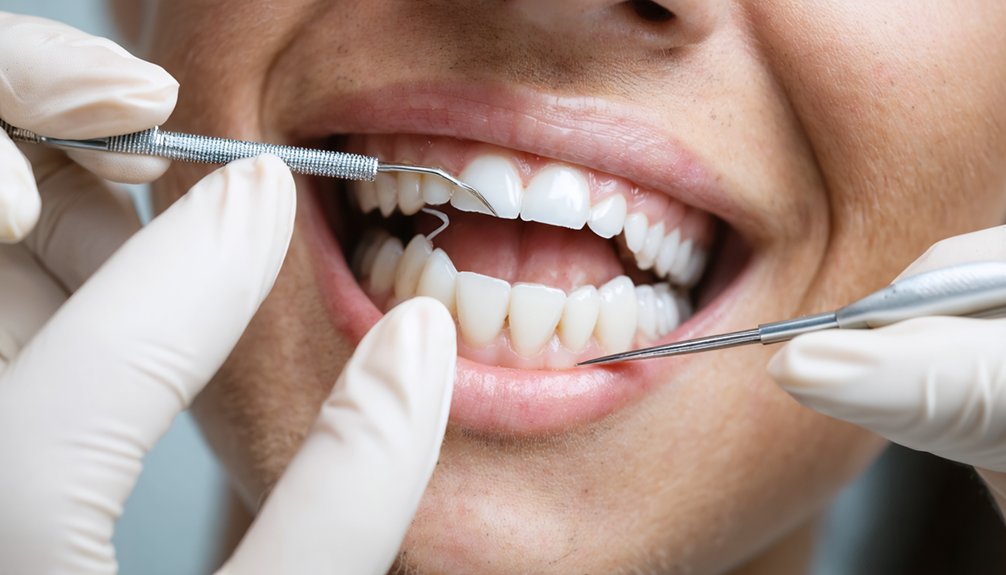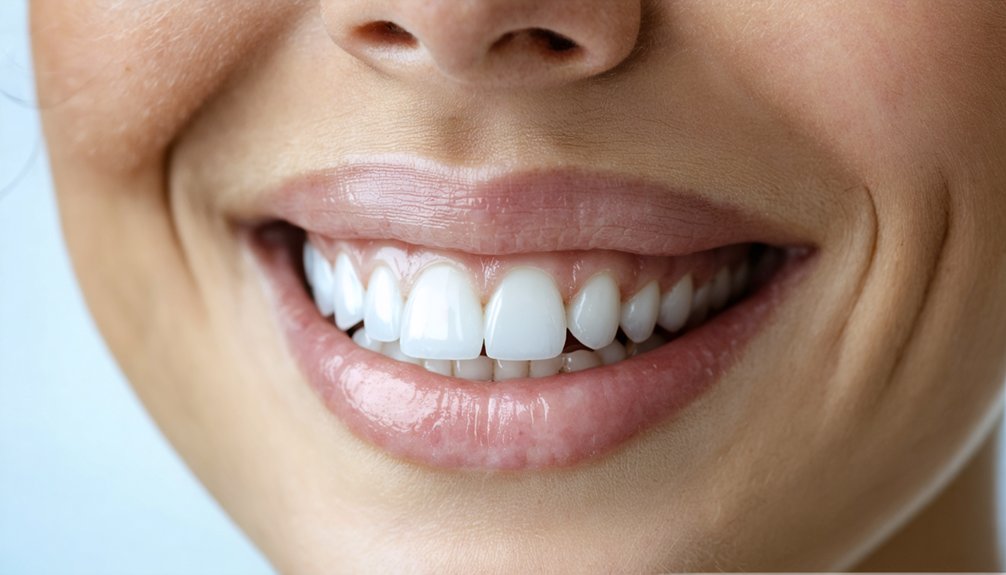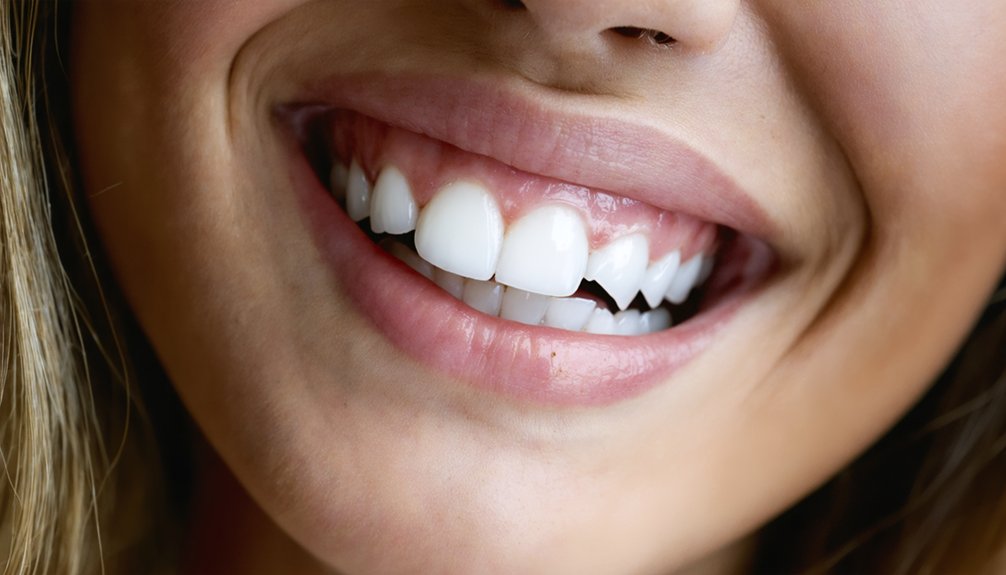
You’ll find professional whitening delivers 8-shade improvements in just one hour, lasting 12-24 months, while at-home kits provide 2-6 shades over several weeks. Professional treatments cost $583-$792 but minimize sensitivity risks through expert protocols, whereas over-the-counter options run $20-$100. Expect temporary sensitivity for 24-48 hours as peroxide penetrates enamel—manageable with desensitizing treatments. Natural methods like baking soda offer supplementary benefits, though clinical evidence supports peroxide-based systems for ideal efficacy. Understanding these options helps you select the most suitable whitening approach for your specific needs.
Key Takeaways
- Professional whitening achieves 8-shade improvements in one hour, while at-home kits provide 2-6 shades over several weeks.
- Results last 12-24 months professionally or months to three years, requiring maintenance treatments every 6-12 months for longevity.
- Tooth sensitivity from peroxide treatments typically resolves within 24-48 hours; desensitizing agents help manage discomfort.
- Costs range from $20-$100 for over-the-counter products to $583-$792 for professional in-office laser or Zoom treatments.
- Baking soda paste and crunchy vegetables offer natural whitening benefits; avoid lemon juice and charcoal which damage enamel.
Professional vs. At-Home Whitening: Which Method Works Best?
When deciding between professional and at-home teeth whitening, you’ll find that each method offers distinct advantages based on your timeline, budget, and desired results. Professional treatments deliver 8-shade improvements in one hour through expert consultation recommendations and personalized treatment plans that minimize sensitivity risks. You’ll pay $300+ but achieve results lasting 12-24 months with protective protocols preventing gum irritation.
At-home kits cost approximately $50 and provide 2-6 shade improvements over weeks, though they’re less effective on deep stains from medications or aging. According to 2023 meta-analysis data (p < 0.01), professional methods outperform at-home options.
You can optimize longevity by combining professional initial treatment with at-home maintenance, giving you control over both immediate transformation and long-term results while managing costs effectively.
Understanding Treatment Results: Shades, Duration, and Longevity
Understanding the measurable outcomes of teeth whitening requires examining three critical dimensions: the degree of shade change, immediate post-treatment effects, and long-term color stability. You’ll observe average whitening results of 7-8 shades with professional systems, though outcomes range from 4 shades (Opalescence Boost) to 10-15 shades in exceptional cases.
Color change manifests within 30-60 minutes post-treatment, with at-home protocols (ΔE 10.60-11.38) demonstrating superior immediate efficacy compared to in-office treatments (ΔE 5.28-5.92).
Your results persist from months to three years depending on behavioral factors. Without intervention, whiteness diminishes within 4-6 weeks. Maintenance requirements include 1-2 treatment days every 6-12 months. At-home systems maintain superior color stability at six months. Your oral hygiene practices, dietary choices, smoking status, and natural aging processes directly determine longevity outcomes.
Safety Considerations and Managing Tooth Sensitivity
While achieving ideal shade improvement remains the primary treatment goal, managing physiological responses to bleaching agents demands equal attention in your whitening protocol. You’ll likely experience sensitivity lasting 24-48 hours as peroxide penetrates enamel and exposes dentinal tubules. Higher hydrogen peroxide concentrations directly correlate with increased discomfort intensity.
Effective desensitizing strategies include potassium nitrate applications and fluoride treatments that promote remineralization. You can minimize risk by ensuring proper whitening techniques: correctly fitted trays prevent gum irritation, controlled contact time reduces enamel demineralization, and scheduled treatment intervals allow tissue recovery.
If you have pre-existing sensitivity, thinner enamel, or gum recession, you’re predisposed to heightened responses. Persistent pain beyond 48 hours requires professional evaluation. Two-thirds of over-the-counter product users report transient sensitivity that resolves completely upon treatment cessation.
Cost Breakdown: Budgeting for Your Whitening Journey
Before committing to any whitening protocol, you’ll need to evaluate exhaustive cost structures that vary drastically across treatment modalities and geographic regions. In-office laser treatments average $792 nationally, while Zoom! whitening costs $583. Regional disparities exist—Massachusetts peaks at $965, whereas West Virginia averages $679.
Take-home dentist-provided kits range $150-$600, delivering results within 1-2 weeks. Over-the-counter alternatives cost $20-$100 but yield limited outcomes over 2-4 weeks.
Since dental insurance typically excludes cosmetic procedures, you’ll need alternative financing options. Many practices offer flexible payment plans to distribute costs across manageable intervals. Per-arch treatments average $297.12, while internal bleaching for single teeth costs $271.67. Consider location, practitioner expertise, and technology when budgeting. Your investment reflects both immediate aesthetic goals and long-term oral health priorities.
Natural Alternatives and Supplementary Whitening Techniques
Many patients seek alternatives to professional whitening treatments, whether due to budget constraints, dental sensitivity, or preference for natural approaches. Baking soda paste—one teaspoon mixed with two teaspoons water—delivers statistically significant whitening when used once or twice weekly, effectively targeting external stains. Crunchy vegetables like carrots and celery mechanically remove plaque while stimulating protective saliva production, addressing diet based discoloration through natural polishing action.
However, you’ll need realistic expectations. Oil pulling risks wasting time without delivering measurable brightening despite bacterial reduction benefits. Avoid lemon juice, vinegar, and activated charcoal entirely—these methods damage enamel and lack scientific validation. Your most powerful tool remains consistent daily brushing and flossing, which prevents stain accumulation more effectively than any supplementary technique. Natural methods support, but can’t replace, professional interventions for significant whitening results.
Frequently Asked Questions
Can Teeth Whitening Damage Existing Dental Work Like Crowns or Veneers?
Professional whitening agents won’t damage your crowns or veneers structurally, though you’ll experience potential tooth sensitivity on natural teeth. The impact on dental restorations involves color mismatch rather than harm—your restorations retain their original shade while natural teeth lighten.
How Long Should I Wait to Whiten Teeth After Dental Procedures?
Wait times vary by procedure: 7-14 days for fillings, 2-4 weeks for crowns, and 3-4 weeks post-root canal. Seek professional advice for your specific situation to avoid over-whitening and safeguard the wholeness of the restoration before treatment.
Will Whitening Work on Teeth Stained by Antibiotics or Fluorosis?
Whitening can lighten stains caused by medications like tetracycline, though results vary—mild cases improve most over 6-8 weeks. However, fluorosis stains resist treatment. You’ll experience minimal sensitivity from whitening process using 10% carbamide peroxide concentration.
Can I Whiten My Teeth if I Have Braces or Retainers?
You’ll need to adjust whitening regimen based on your orthodontic appliances. With braces, wait until removal to avoid uneven results. Clear aligners and retainers permit whitening during removal. Always consult orthodontist for guidance on safe, effective options.
Do Certain Foods or Drinks Reverse Whitening Results Faster Than Others?
Your smile’s brightness faces its greatest enemies in deeply pigmented beverages. Coffee stains and red wine stains accelerate whitening reversal most rapidly due to chromogens and tannins that penetrate enamel. You’ll maintain results by avoiding these primary culprits post-treatment.