Charcoal toothpaste before-and-after photos can be misleading — what you’re seeing is surface stain removal, not actual whitening. Charcoal acts as an abrasive that scrubs away coffee and food debris, but it doesn’t penetrate enamel or lighten your tooth structure. Worse, daily use accelerates enamel erosion, which can make your teeth appear more yellow over time. If you want the full picture on whether charcoal whitening is worth the risk, keep going.
Key Takeaways
- Before-and-after photos show surface stain removal from coffee and tea, not actual whitening or changes to tooth structure.
- Charcoal toothpaste works as an abrasive, scrubbing extrinsic stains without chemically bleaching or penetrating enamel.
- Visual improvements in photos are often misleading marketing tactics reflecting debris removal, not true whitening results.
- Daily charcoal use erodes enamel over time, exposing yellower dentin and potentially worsening tooth appearance long-term.
- Clinical trials show charcoal performs no better than regular toothpaste, while peroxide-based products consistently deliver superior whitening results.
What Charcoal Toothpaste Actually Does to Your Teeth
When you brush with charcoal toothpaste, it works primarily as an abrasive, scrubbing away surface stains from coffee, tea, or other foods rather than chemically bleaching your teeth. It can reduce extrinsic dental stain, but it doesn’t penetrate enamel to alter your tooth’s underlying color.
That distinction matters. What you’re seeing in before-and-after results is often debris and plaque removal, not true whitening.
Worse, repeated abrasive brushing accelerates enamel erosion, thinning the protective outer layer and exposing the naturally yellow dentin beneath. Over time, your teeth can actually appear more yellow, not less.
Clinical trials confirm charcoal products perform no better than standard fluoridated toothpaste for whitening. You’re trading long-term enamel integrity for a short-term cosmetic effect that isn’t reliably superior to what regular toothpaste already delivers.
Before and After Charcoal Whitening: What’s Really Happening
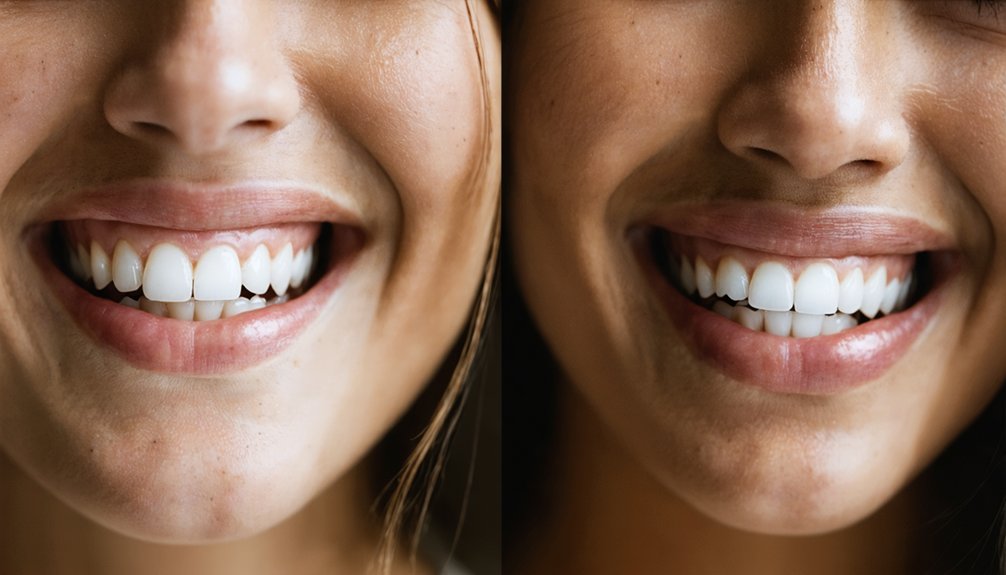
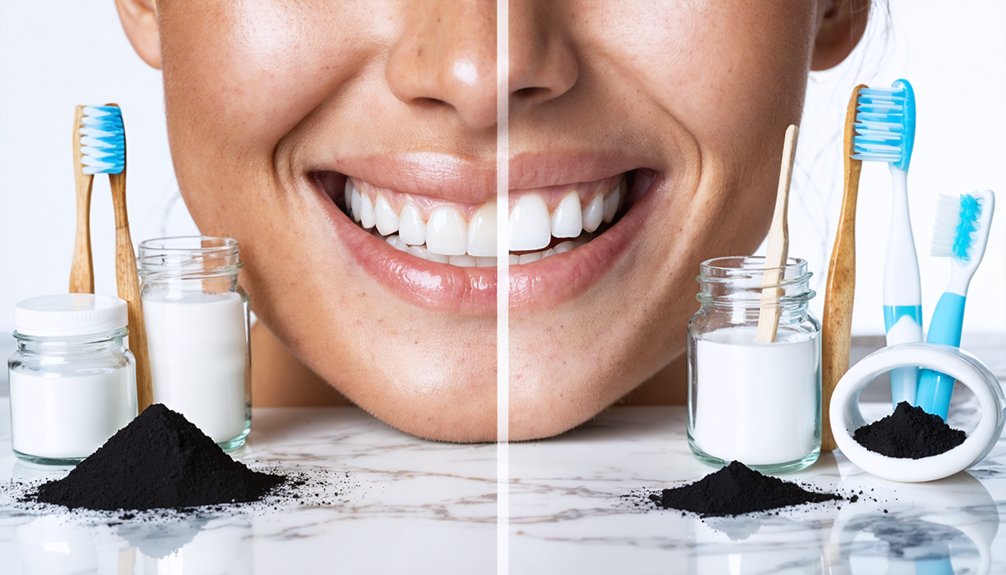
Those dramatic before-and-after photos driving charcoal toothpaste sales deserve a closer look. What you’re seeing isn’t true bleaching — it’s surface stain removal. Coffee, tea, and food debris lift away, making teeth appear brighter temporarily. That’s the reality behind most natural remedies marketed as whitening breakthroughs.
Those dramatic before-and-after photos aren’t showing bleaching — just surface stains from coffee and tea lifting away temporarily.
Consumer misconceptions persist because the visual difference looks convincing. However, charcoal doesn’t penetrate enamel to lighten deeper tooth structure. Clinical trial participants actually reported lower satisfaction with charcoal products compared to peroxide-based alternatives.
Worse, repeated abrasive use can wear enamel down over time, exposing yellower dentin underneath — the opposite of what you want.
If you’re evaluating before-and-after results critically, ask what type of staining changed and whether those results will last.
How Charcoal Toothpaste Compares to Peroxide Whitening
Carbamide peroxide outperforms charcoal toothpaste in both whitening effectiveness and user satisfaction, and a randomized clinical trial confirms it.
Despite strong consumer perceptions that natural remedies deliver comparable or superior results, the evidence disagrees. Trial participants using activated charcoal reported lower satisfaction and only minor whitening, while peroxide users saw best results.
Charcoal performed no better than regular fluoridated toothpaste in that same study. If you’re choosing a whitening method based on before-and-after outcomes, that distinction matters.
Charcoal can remove surface stains through abrasion, but it doesn’t bleach tooth structure the way peroxide does. You’re not getting a true color change beneath the enamel.
For meaningful, measurable whitening, peroxide-based products remain the most evidence-supported option available to you.
Why Daily Charcoal Whitening Wears Down Your Enamel
Over time, daily use accelerates enamel erosion. Once enamel thins, the yellower dentin underneath becomes more visible, which means your teeth can actually look worse the longer you use charcoal products.
You lose the very thing you’re trying to protect.
Short-term cosmetic results may look promising, but the structural cost compounds quietly. If you’re brushing with charcoal daily, you’re trading long-term tooth health for minimal whitening gains.
What the Evidence Says About Whether Charcoal Whitening Is Worth It
When you look past the marketing, the clinical evidence on charcoal whitening is underwhelming. Randomized clinical trials show activated charcoal produces only minor, unsatisfactory aesthetic improvements compared to carbamide peroxide.
Consumer perceptions of brighter teeth often reflect extrinsic stain removal, not actual tooth lightening. In controlled studies, charcoal performed no better than standard fluoridated toothpaste.
You’re also not getting a safety advantage. The American Dental Association hasn’t granted its Seal of Acceptance to charcoal products, and long-term enamel wear remains a documented concern.
If you want measurable, evidence-backed results, peroxide-based options consistently outperform charcoal across satisfaction scores and clinical outcomes. Charcoal’s appeal is largely visual and marketing-driven. The data doesn’t support choosing it over proven whitening alternatives.
Frequently Asked Questions
Can Charcoal Toothpaste Remove Stains Caused by Tetracycline Antibiotics?
Charcoal toothpaste can’t remove tetracycline stains. These stains cause deep tooth discoloration within the dentin, beyond charcoal’s surface-level reach. You’ll need professional treatments like veneers or peroxide-based whitening for meaningful results.
Is Charcoal Toothpaste Safe to Use on Dental Veneers or Crowns?
Charcoal toothpaste can wreck your restorations over time. Its abrasiveness threatens veneer durability by scratching surfaces, and it won’t reverse crown discoloration. You’re better off asking your dentist for restoration-safe whitening alternatives.
How Long Does It Take to See Results From Charcoal Toothpaste?
You’ll likely notice minor surface stain removal within a few days using charcoal toothpaste, but don’t expect dramatic results. Among natural remedies and whitening techniques, evidence shows charcoal produces only unsatisfactory whitening compared to peroxide-based alternatives.
Can Children or Teenagers Safely Use Charcoal Whitening Toothpaste?
Charcoal lacks ADA approval, making children safety a real concern. You shouldn’t let kids or consider teenagers usage either — developing enamel is more vulnerable to abrasion, increasing long-term sensitivity and yellowing risks considerably.
Does Charcoal Toothpaste Interact With Any Dental Treatments or Procedures?
Charcoal toothpaste can interfere with dental restorations and whitening treatments. Its abrasiveness may compromise bonding agents and veneers. You’ll also risk increasing dental sensitivity, and it won’t reliably support plaque removal compared to dentist-recommended alternatives.
References
- https://www.webmd.com/oral-health/what-to-know-about-activated-charcoal-whitening
- https://www.healthline.com/health/dental-and-oral-health/charcoal-toothpaste
- https://pubmed.ncbi.nlm.nih.gov/38316199/
- https://www.healthline.com/health/activated-charcoal-teeth-whitening
- https://pmc.ncbi.nlm.nih.gov/articles/PMC8404563/
- https://pmc.ncbi.nlm.nih.gov/articles/PMC10351494/
- https://pubmed.ncbi.nlm.nih.gov/36183933/
- https://pmc.ncbi.nlm.nih.gov/articles/PMC8095700/
- https://pmc.ncbi.nlm.nih.gov/articles/PMC12220043/
- https://penndentalmedicine.org/blog/does-charcoal-toothpaste-work/