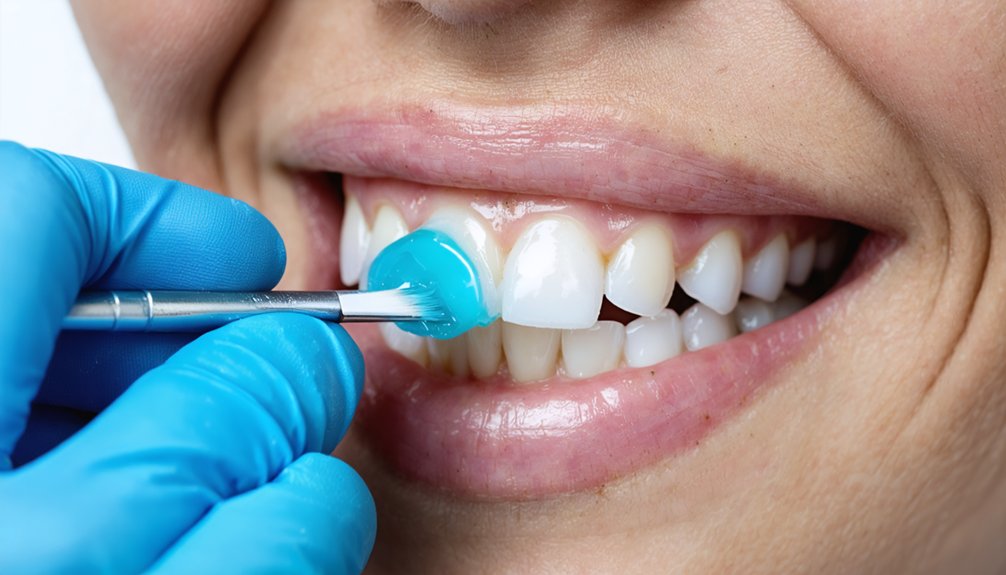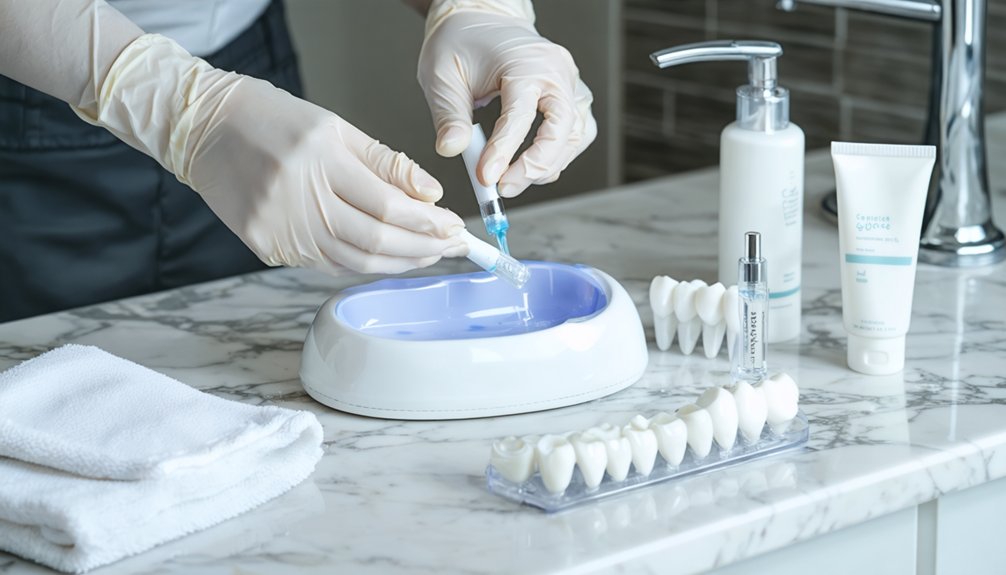
To minimize whitening sensitivity, you’ll want to start using desensitizing toothpaste containing 5% potassium nitrate one week before treatment and continue afterward. Choose products with lower peroxide concentrations (10-16% carbamide peroxide), which reduce sensitivity risk by 33% while maintaining efficacy. Avoid temperature extremes and acidic foods for 24-48 hours post-treatment, follow manufacturer instructions precisely, and consider custom-fitted trays from your dentist. The following evidence-based strategies will help you achieve ideal whitening results while protecting your enamel and minimizing discomfort.
Key Takeaways
- Use desensitizing toothpaste with potassium nitrate twice daily starting one week before whitening and continue after treatment.
- Choose products with 10-22% carbamide peroxide or 6-16% hydrogen peroxide to reduce sensitivity risk by 33%.
- Consult your dentist for custom-fitted trays and personalized protocols that prevent gum irritation and optimize treatment strength.
- Avoid hot, cold, and acidic foods for 24-48 hours after whitening to prevent triggering pain through exposed dentin.
- Follow manufacturer instructions precisely, limiting sessions to 30-60 minutes and reducing frequency if sensitivity develops.
Use Desensitizing Toothpaste Before and After Whitening
Desensitizing toothpaste serves as a foundational intervention for managing teeth whitening sensitivity, though its effectiveness varies greatly based on specific bleaching protocols. Research demonstrates reduction in sensitivity following 22% carbamide peroxide home bleaching and single-session 35% hydrogen peroxide in-office treatments, but not with 16% carbamide peroxide or two-session professional bleaching.
For ideal pre treatment usage, you’ll need to begin application at least two weeks before whitening. Brush twice daily with 5% potassium nitrate toothpaste, or apply via custom tray for four minutes daily starting one week prior.
Post treatment timing requires continued use immediately after whitening procedures to manage lingering discomfort, typically lasting 24-72 hours. Potassium nitrate blocks neural pain signals, while fluoride and stannous fluoride strengthen enamel and obstruct dentin tubules without compromising bleaching efficacy.
Choose Lower Peroxide Concentration Products
Selecting products with lower peroxide concentrations dramatically reduces your risk of experiencing whitening-induced sensitivity while maintaining clinically effective results. You’ll find that 10% carbamide peroxide formulations cause sensitivity in only 15% of patients compared to 100% with high-concentration hydrogen peroxide treatments.
Understanding concentration levels, adopting gradual whitening protocols, and choosing gentle formulations will help you achieve your desired shade improvement without compromising dental comfort.
Understanding Peroxide Concentration Levels
Peroxide concentration directly influences both whitening efficacy and sensitivity risk, making it a critical selection factor for patients seeking to minimize adverse effects. You’ll find OTC products ranging from 1.24% to 6% hydrogen peroxide, while professional formulations extend to 40%. Research demonstrates low-to-medium concentrations (6-30%) reduce sensitivity risk by 33% compared to high-strength alternatives (35-40%), without compromising long-term results.
When you compare branded whitening efficacy, 10% and 16% carbamide peroxide match 37% formulations after one week. Higher concentrations accelerate initial whitening but increase relapse rates, ultimately delivering equivalent outcomes. You should monitor actual peroxide concentrations, as measured values often differ from manufacturer claims—Yotuel Special contained 27.19% versus its stated 35%. Select products with verified concentrations between 10-22% carbamide peroxide for ideal balance.
Gradual Whitening Approach Benefits
Strategic selection of lower-concentration formulations delivers comparable whitening outcomes while substantially reducing adverse effects. You’ll achieve ΔE values approximating 2.0 with 10-16% carbamide peroxide through scheduled application sessions, matching in-office results over extended treatment periods. This methodical approach provides lower sensitivity risks while preserving enamel crystallinity and minimizing dentin tubule exposure.
Implementation protocol:
- Initial phase: Apply custom trays for 1 hour daily over 7-10 days using 15% carbamide peroxide formulations
- Maintenance scheduling: Implement 1-2 day treatment cycles every 6-12 months to sustain shade improvements
- Professional oversight: Coordinate dentist-supervised protocols to guarantee optimal concentration selection and application duration
- Long-term strategy: Incorporate monthly touch-ups following any in-office treatment to extend color persistence beyond 6 months
This evidence-based framework balances efficacy with patient comfort, delivering predictable whitening results.
Selecting Gentle Formulation Options
When sensitivity concerns limit your whitening options, formulations containing 6-16% hydrogen peroxide (or 16-22% carbamide peroxide equivalents) provide ideal therapeutic balance between efficacy and tolerance.
Carbamide peroxide advantages include slower oxidation rates that reduce neural irritation while maintaining whitening efficacy. Select 16% carbamide peroxide formulations when experiencing moderate sensitivity, or 22% concentrations for mild reactivity.
Peroxide free alternatives utilizing phthalimido peroxy caproic acid (PAP) technology deliver comparable results to 6% hydrogen peroxide without triggering sensitivity mechanisms. These formulations achieve oxidation through non-peroxide organic peracids, eliminating hydrogen peroxide’s direct enamel interaction. Prioritize products with supplemental desensitizing agents like aloe vera or fluoride-free vegan formulations.
Professional-grade options under dentist supervision allow customized concentration adjustments based on your individual tolerance thresholds and whitening objectives.
Consult Your Dentist for Professional Guidance
Before initiating any whitening regimen, you should schedule a thorough dental evaluation to assess your candidacy and guarantee sensitivity risks. Your dentist will identify pre-existing conditions—such as active decay, gum disease, or enamel erosion—that require treatment before whitening commences.
Professional supervision provides essential safeguards through:
- Custom-fitted trays that prevent bleaching gel from irritating gum tissue
- Tailored protocols utilizing lower peroxide concentrations with potassium nitrate additives
- In-office desensitizing treatments including fluoride applications to strengthen enamel
- Personalized guidelines specifying appropriate product strength and application frequency
Periodic check-ins enable your dentist to monitor treatment response and adjust protocols accordingly. This collaborative approach guarantees you maintain control over your whitening experience while mitigating discomfort. If you’re pregnant, breastfeeding, or have severe sensitivity, your dentist will recommend alternative solutions.
Avoid Hot and Cold Foods During Treatment
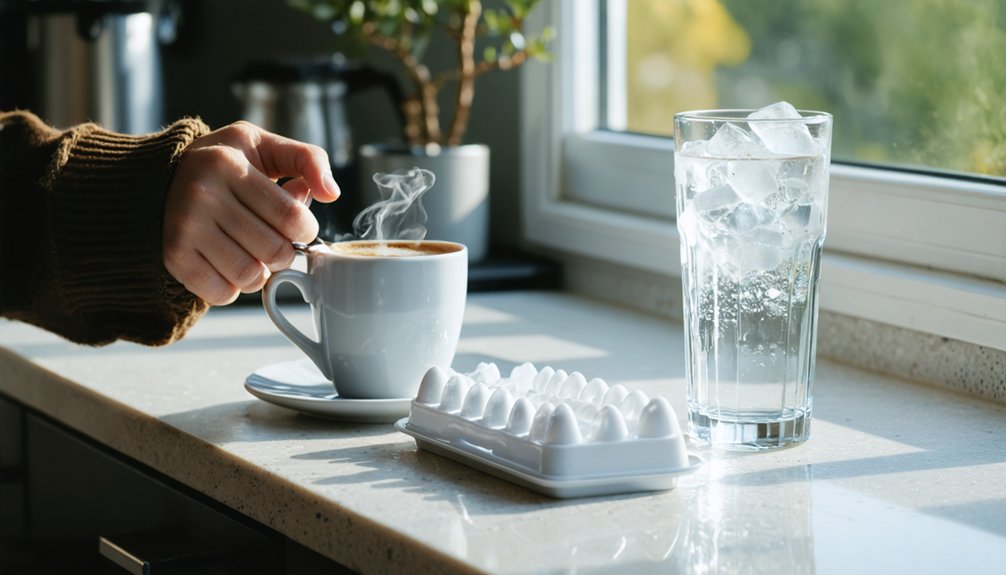
Your dentist’s customized treatment plan establishes the foundation for successful whitening, but your dietary choices during the process greatly influence your comfort level and treatment outcomes. Bleaching products weaken enamel and expose dentin’s nerve pathways, making temperature extremes particularly problematic.
You’ll experience sharp pain when hot or cold items activate TRPC5-packed cells within exposed dentin. Implement temporary sensitivity solutions by maintaining room temperature consumption for 24-48 hours post-treatment. Utilize straws for cold beverages to bypass tooth surfaces entirely, and allow frozen items to warm slightly before consumption.
Simultaneously eliminate acidic foods—citrus, tomatoes, wine—that further compromise weakened enamel. Choose low-acidic alternatives like cheese, yogurt, and bananas that won’t trigger discomfort. Fluoride toothpaste application helps restore enamel protection while minimizing temperature-related pain signals.
Follow Application Instructions Carefully
Following whitening gel application instructions precisely minimizes your risk of sensitivity by preventing overexposure to active ingredients. Adhering to manufacturer-specified wear times—such as 30-60 minutes for 10% hydrogen peroxide or 15-20 minutes for 15% formulations—ensures therapeutic efficacy without damaging enamel or irritating soft tissues.
Custom-fitted trays designed for your dentition deliver gel accurately to tooth surfaces while protecting gingival margins from chemical contact that triggers discomfort.
Precise Timing Prevents Overexposure
When whitening products remain on teeth beyond recommended timeframes, enamel dehydration and pulpal inflammation intensify, directly correlating with sensitivity severity. You must monitor gel application duration precisely according to concentration specifications and control frequency and timing of sessions to prevent adverse reactions.
Implement these evidence-based protocols:
- Match duration to concentration: 10% hydrogen peroxide requires 30-60 minutes, while 15% hydrogen peroxide limits application to 15-20 minutes daily.
- Build tolerance systematically: Restrict initial sessions to 30-60 minutes, extending only after confirming zero sensitivity response.
- Adjust upon sensitivity onset: Reduce to alternate-day application or shorten sessions to 1-hour intervals twice daily.
- Adhere to treatment cycles: Complete 5-10 consecutive days maximum, with maintenance limited to one application every two months.
Custom Trays Ensure Accuracy
Tray precision determines treatment outcomes as considerably as application timing. Custom-fitted trays deliver superior whitening results through engineered accuracy that over-the-counter alternatives can’t replicate.
Your dentist-fabricated trays create a perfect seal around each tooth, maintaining even gel contact across all surfaces while preventing peroxide migration onto gingival tissues.
This custom fit accuracy translates directly into sensitivity reduction. Scalloped edges block gel from touching your gums, eliminating the primary irritation source.
The precise fit holds professional-strength peroxide (15-43%) exactly where needed, achieving 3-8 shade improvements while minimizing discomfort.
You’ll need approximately 10% carbamide peroxide applied for 3 hours daily over 21 days. The controlled delivery system guarantees consistent results—80% of users report satisfaction with professional custom trays, with visible improvements appearing within 2-4 weeks of compliant use.
Practice Gentle Post-Whitening Dental Care
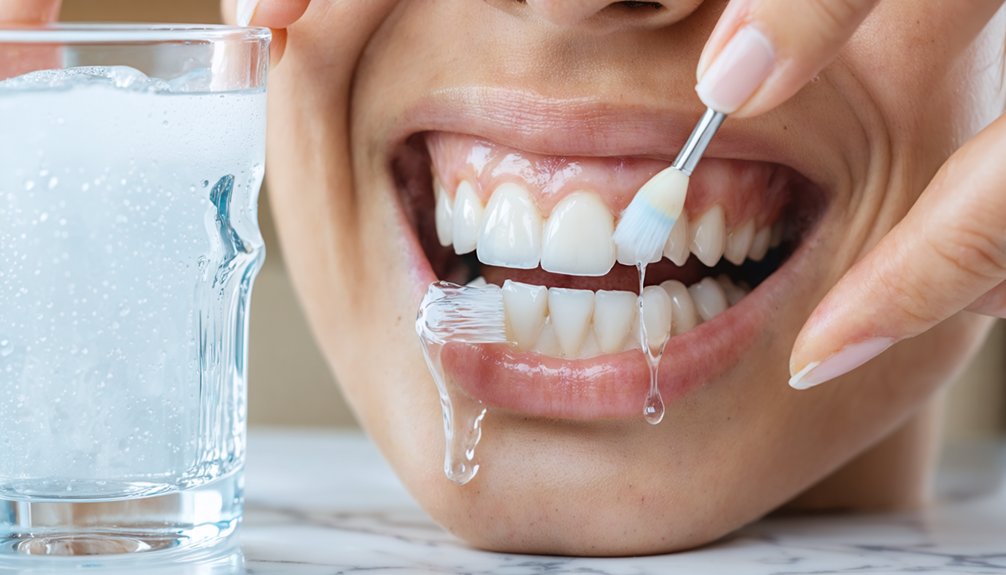
Proper post-whitening dental care drastically reduces sensitivity while preserving your treatment results. Your whitened enamel requires strategic protection during the critical 48-hour rehydration period. Implementing evidence-based protocols guarantees optimal outcomes while monitoring enamel status throughout recovery.
Essential Post-Whitening Care Protocol:
- Adopt gentle brushing habits using a soft-bristled toothbrush with desensitizing toothpaste twice daily, waiting 30-60 minutes after meals to prevent enamel damage when temporarily weakened.
- Rinse thoroughly with water after consuming any potentially staining substances to remove residues and maintain hydration.
- Follow strict post whitening diet considerations by avoiding extreme temperatures and acidic foods for 24-48 hours to minimize discomfort and enamel compromise.
- Use only white dental products including non-abrasive toothpastes and clear, alcohol-free mouthwashes to prevent premature staining on porous surfaces.
Apply Fluoride Treatments to Strengthen Enamel
Beyond implementing protective care routines, targeted fluoride applications provide immediate reinforcement to post-whitening enamel while addressing sensitivity at its source. You’ll achieve excellent results with professional-strength treatments containing 0.1% sodium fluoride combined with 5% potassium nitrate, which effectively blocks dentin tubules while reversing demineralization.
Ideal fluoride concentration levels vary by delivery method—varnishes and gels applied chairside offer superior strength compared to over-the-counter products containing 1,450 ppm. For fluoride application frequency, schedule professional treatments 2-4 times yearly based on your sensitivity severity.
When combined with low-level laser therapy post-whitening, fluoride’s protective effects amplify considerably. These applications form calcium fluoride precipitates and fluorapatite crystals that seal tubules, preventing fluid movement to nerve endings while strengthening enamel against continued acid erosion.
Frequently Asked Questions
Can I Use Whitening Products if I Already Have Sensitive Teeth?
Yes, you can use whitening products with sensitive teeth by choosing lower-peroxide formulations and implementing temporary tooth desensitization protocols beforehand. Understanding teeth whitening sensitivity causes enables you to select appropriate products and preventive strategies that maintain control over your treatment outcomes.
How Long Does Teeth Sensitivity Typically Last After Whitening Treatments?
Approximately 60% experience sensitivity lasting 24-72 hours post-whitening. Your whitening procedure duration and peroxide concentration directly influence this timeframe. You’ll find reversing sensitivity after whitening occurs naturally within 48 hours, though severe cases may require professional intervention.
Are Natural Whitening Remedies Better for Preventing Sensitivity Than Commercial Products?
No, home remedies for whitening generally aren’t better than over-the-counter whitening alternatives for preventing sensitivity. Commercial products contain controlled peroxide concentrations and desensitizing agents, whereas natural methods like lemon juice or charcoal can damage enamel, increasing sensitivity.
Will Whitening Strips Cause More Sensitivity Than Professional In-Office Treatments?
Yes, you’ll likely experience more sensitivity with whitening strips due to increased exposure time and inconsistent application. Proper product selection under professional supervision reduces sensitivity risks by customizing bleaching concentrations and ensuring appropriate treatment protocols for your specific dental condition.
Can I Drink Coffee or Wine During My Whitening Treatment Period?
You can drink coffee or wine, but avoid staining beverages for 48 hours post-treatment to prevent rapid discoloration. Use a straw, rinse immediately with water, and apply desensitizing toothpaste containing hydroxyapatite to minimize sensitivity and maintain results.