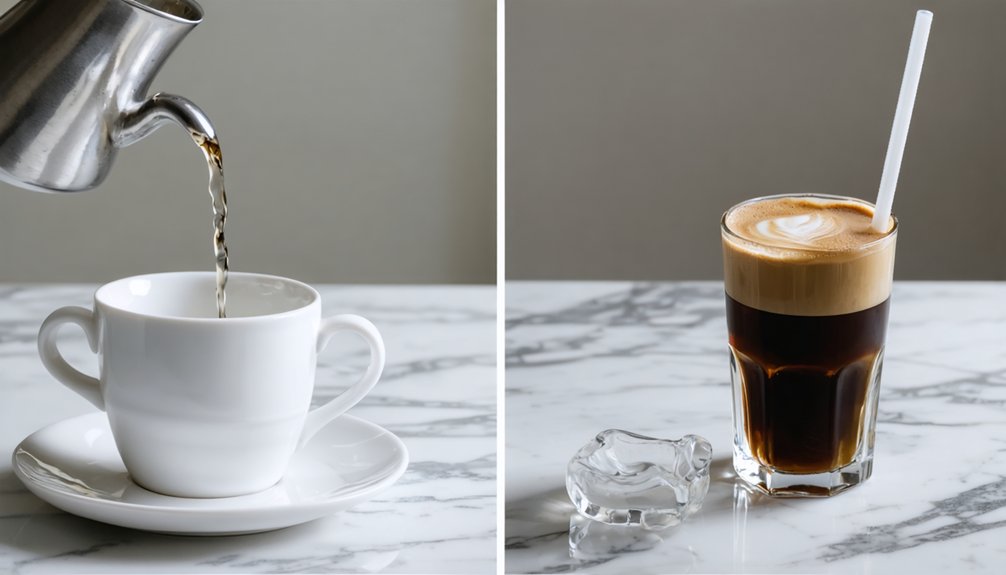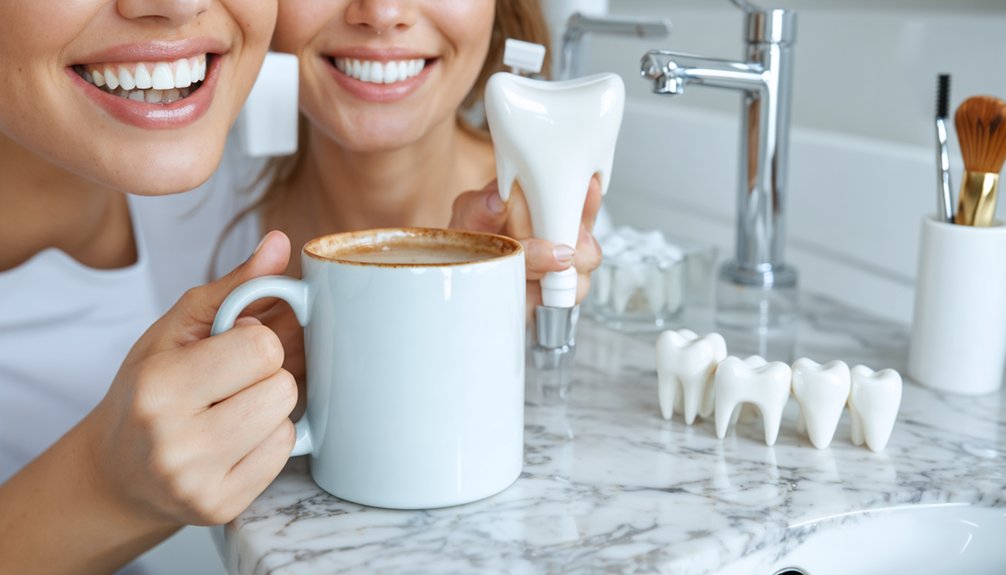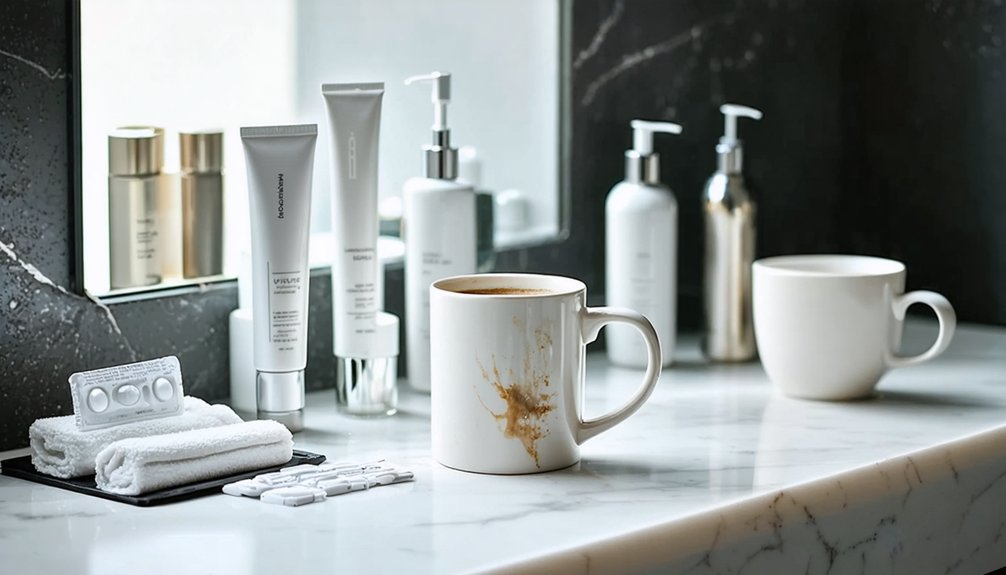
Rinse your mouth with water immediately after drinking tea to flush tannins before they penetrate enamel pores. You’ll prevent deeper staining by waiting 30 minutes before brushing, as acidic compounds temporarily soften tooth surfaces. Apply a 1:1 hydrogen peroxide solution for one minute, then stimulate saliva production with sugar-free gum to accelerate remineralization. For persistent discoloration, whitening toothpastes with low-concentration peroxide or micro-abrasives provide gradual improvement. Professional treatments and strategic consumption modifications offer extensive stain-management protocols that address both immediate and long-term dental aesthetics.
Key Takeaways
- Rinse mouth with water multiple times immediately after drinking tea to remove pigmented compounds before they stain.
- Use whitening toothpaste with micro-abrasives or hydrogen peroxide twice daily, waiting 30 minutes after tea consumption.
- Apply baking soda paste or swish diluted hydrogen peroxide solution to gently remove surface stains at home.
- Chew sugar-free gum after tea to stimulate saliva production, which naturally cleanses and remineralizes teeth.
- Try over-the-counter whitening strips with 3-10% peroxide concentration or schedule professional dental cleanings for stubborn stains.
Immediate Actions After Drinking Tea
When tea’s tannins and chromogens contact tooth enamel, immediate intervention becomes critical for stain prevention. Execute multiple water rinses—up to four rounds—directly following consumption to clear pigmented compounds from enamel surfaces. This protocol prevents tannin accumulation that forms plaque matrices on teeth.
Resist the impulse to brush vigorously immediately post-consumption. Tea’s acidic content temporarily softens enamel, rendering it vulnerable to abrasive damage. Instead, wait between rinses of thirty to sixty minutes before mechanical cleaning. During this interval, stimulate saliva production through sugar-free gum to facilitate natural remineralization.
For enhanced stain removal, swish a 1:1 hydrogen peroxide-water solution for one minute, or consume crunchy vegetables that provide mechanical surface cleaning. These immediate actions establish your primary defense against chromogenic staining.
Daily Oral Care Techniques
While immediate post-consumption interventions provide initial defense, establishing consistent daily oral care protocols remains essential for long-term stain management and enamel protection. You’ll achieve ideal results by brushing twice daily with fluoride toothpaste using proper brushing method that addresses all tooth surfaces. This approach guarantees thorough plaque removal before it mineralizes into tartar, which readily harbors pigments.
Wait 30 minutes post-tea consumption before brushing to prevent enamel erosion when acid temporarily softens tooth structure. Incorporate daily flossing to eliminate interproximal plaque accumulation. Whitening toothpastes containing micro-abrasives or low-concentration peroxide agents polish away surface tannin deposits gradually. Select ADA-approved products for reliable efficacy. Fluoride application strengthens enamel against acid damage while reducing pigment absorption. These evidence-based practices maintain dental health while systematically controlling stain development.
Natural Home Whitening Methods
Although professional dental treatments deliver rapid whitening outcomes, evidence-based natural remedies offer accessible alternatives for gradual stain reduction without significant financial investment.
You’ll find baking soda provides enamel safe scrubbing when mixed with water or 3% hydrogen peroxide, effectively removing surface discoloration through gentle abrasion. Oil pulling with coconut or sesame oil for 15-20 minutes daily reduces plaque accumulation and bacterial staining. Activated charcoal‘s absorbent properties bind to toxins and surface stains when applied as a paste.
For enhanced results, combine stain lifting ingredients—mashed strawberries containing malic acid with baking soda—applied weekly for 3-5 minutes. These methods work synergistically to address tea-induced discoloration while preserving enamel integrity. Consistent application yields measurable improvements without damaging tooth structure when used according to recommended protocols.
Store-Bought Whitening Products
Over-the-counter whitening products contain hydrogen peroxide or carbamide peroxide concentrations ranging from 3-10%, considerably lower than the 15-43% found in professional treatments. This reduced ingredient effectiveness requires extended application periods to achieve visible results on tea stains. Product quality varies greatly—only select American Dental Association-approved options guarantee safety and efficacy standards.
You’ll encounter three primary formats: whitening strips, prefilled trays, and toothpaste. Generic one-size-fits-all designs create application inconsistencies, producing patchy whitening patterns. Without custom-fitted trays, you risk uneven gel distribution and missed areas.
Strict adherence to manufacturer protocols prevents enamel erosion and gum irritation. Overuse causes irreversible translucency and heightened sensitivity. Consider Crest 3D White Professional Effects ($44.99) or Plus White 5 Minute Kit ($11.49) for verified results. These products effectively address superficial discoloration when applied correctly.
Professional Dental Treatments
Professional dental treatments represent the most efficacious intervention for tea-induced dental discoloration, delivering clinically superior outcomes compared to at-home solutions. In-office whitening breaks down stubborn stains beneath enamel using pharmaceutical-grade agents, lifting years of discoloration in one appointment. Professional shade evaluation determines ideal treatment intensity while minimizing sensitivity.
Dental cleanings remove plaque-embedded stains that harbor tea’s tannins, providing essential foundation for advanced interventions.
For intrinsic discoloration unresponsive to whitening, veneers offer permanent stain-resistant coverage through custom porcelain shells. Cosmetic bonding addresses moderate tea stains cost-effectively using tooth-colored resin. Severe cases involving structural compromise require crowns for complete restoration.
Regular stain monitoring through scheduled examinations enables timely intervention, preventing progressive discoloration. You’ll achieve predictable, lasting results through professional protocols unavailable in consumer products.
Beverage Choices and Consumption Habits
Modifying your tea selection and consumption patterns provides effective primary prevention against dental staining. Switching from high-tannin black teas to lower-tannin alternatives—such as green, white, or herbal varieties—significantly reduces polyphenol adhesion to enamel surfaces.
Strategic adjustments to drinking technique, including straw usage and concentrated consumption periods rather than prolonged sipping, minimize direct contact between tannins and anterior teeth.
Switch to Low-Tannin Teas
While traditional black teas deliver robust flavor profiles, their elevated tannin content accelerates dental discoloration through chromogen accumulation on enamel surfaces. You’ll minimize staining by implementing strategic tea varietal selection and understanding tea processing methods that reduce tannin levels.
Optimal Low-Tannin Tea Choices:
- White Tea – Minimal processing yields virtually negligible tannin content while preserving antioxidant benefits and delivering crisp, clean flavor characteristics.
- Green Tea Varieties – Lack of oxidation prevents catechin breakdown into tannins, producing light-colored brews with reduced astringency profiles (Gunpowder, Jasmine Yin Cloud, Moroccan Mint).
- Chinese Black Teas – Golden Yunnan and other mainland varieties offer mellower profiles with substantially lower tannin concentrations than Indian counterparts.
Rooibos presents a caffeine-free alternative with nearly zero tannin content, while semi-oxidized oolongs provide moderate compromise between flavor complexity and staining potential.
Modify Tea Drinking Technique
Beyond selecting appropriate tea varieties, your consumption methodology directly impacts chromogen deposition rates on enamel surfaces. Implement straw-based drinking to minimize tannin contact with anterior dentition, particularly your social six. Control tea consumption timing by finishing beverages in single sittings rather than prolonged sipping sessions—concentrated exposure periods reduce cumulative staining potential.
Optimize steeping times to two minutes maximum; caffeine extraction peaks early while tannin release intensifies between minutes two through five. Add milk to leverage casein’s tannin-binding properties, effectively neutralizing chromogenic compounds before enamel contact. Execute immediate water rinses post-consumption to clear residual pigments from enamel micropores.
These protocol modifications establish barriers between staining agents and tooth surfaces, enabling continued tea enjoyment while maintaining aesthetic outcomes through strategic consumption management.
Frequently Asked Questions
Does Drinking Tea Through a Straw Really Prevent Teeth Staining Effectively?
Drinking tea through a straw offers moderate straw effectiveness by reducing anterior tooth contact with tannins, though it doesn’t prevent staining completely. You’ll achieve better results when managing drinking temperature impact and combining this method with proper oral hygiene practices.
How Long Should I Wait to Brush Teeth After Drinking Tea?
Wait 30-60 minutes before brushing after tea consumption. Tea’s acidity temporarily demineralizes enamel, and immediate brushing during this softened state accelerates erosion. Proper timing of brushing protects against mechanical damage while maintaining your control over long-term enamel integrity.
Can Whitening Treatments Damage Tooth Enamel With Frequent Use?
Yes, prolonged whitening treatments cause enamel erosion through progressive demineralization, thinning, and increased porosity. You’ll experience heightened sensitivity, brittleness, and paradoxically greater staining susceptibility. Strict adherence to manufacturer guidelines and professional supervision prevent irreversible structural damage.
Are Electric Toothbrushes Better Than Manual for Removing Tea Stains?
Yes, electric toothbrushes outperform manual brushes for tea stain removal. Oscillating-rotating models demonstrate superior efficacy, though sonic vibration effectiveness varies. You’ll achieve ideal results when bristle stiffness impacts complement mechanical action, ensuring controlled, evidence-based stain reduction beyond manual brushing alone.
Will Switching to Green Tea Instead of Black Reduce Staining?
Yes, you’ll reduce staining by switching from black to green tea due to lower oxidation levels. Consider oolong tea alternatives for moderate staining risk, or matcha tea consumption offers minimal discoloration while maintaining polyphenol benefits through controlled preparation methods.