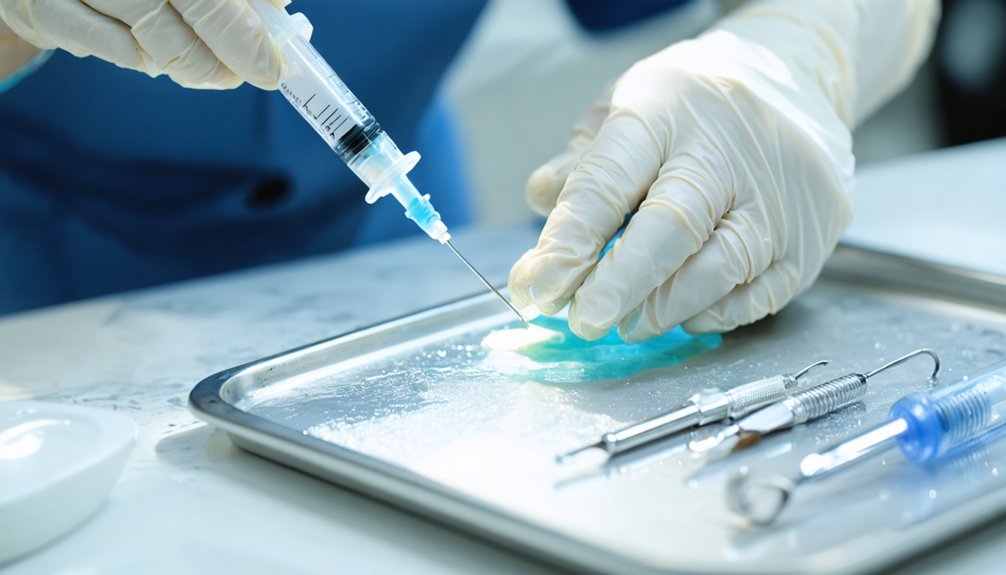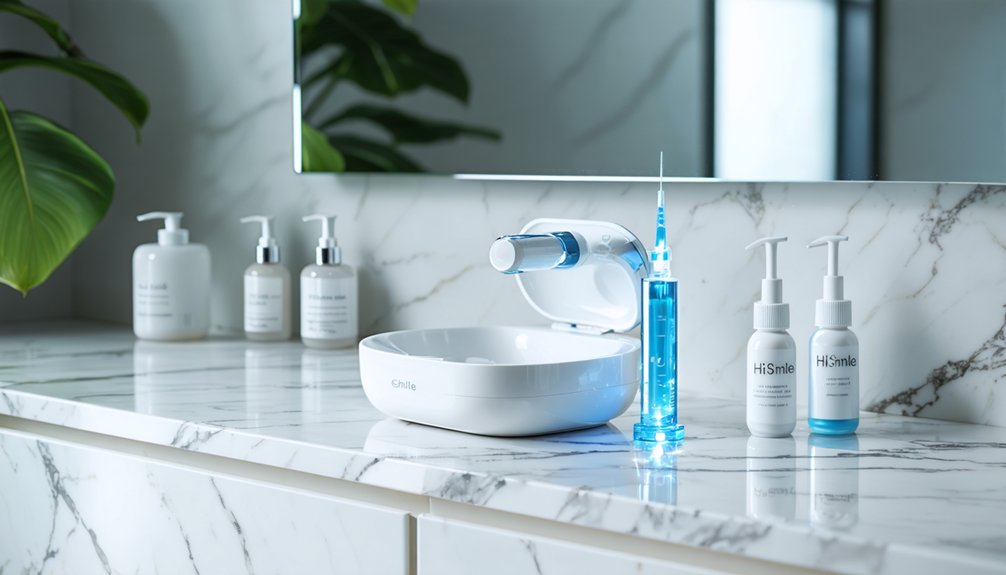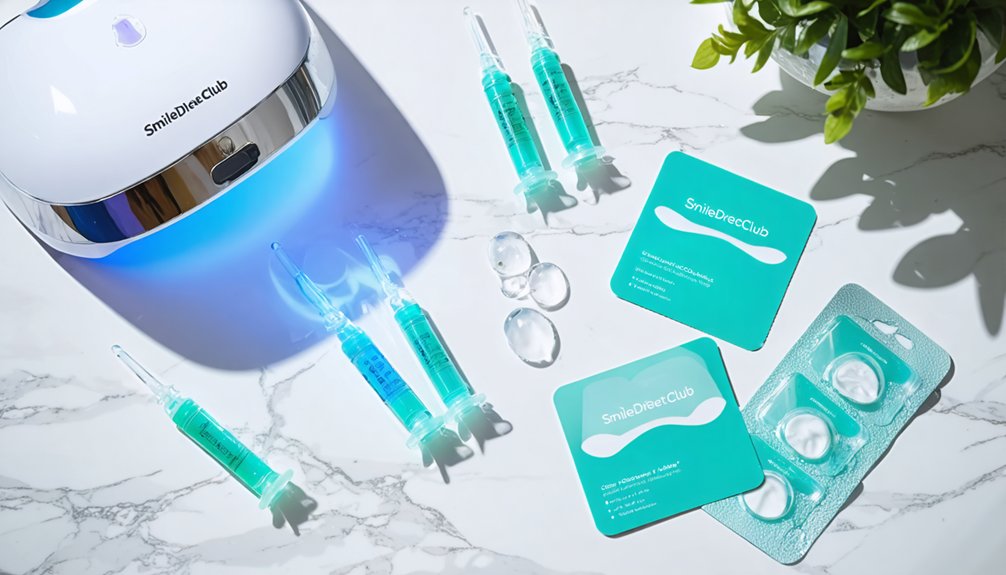
The SmileDirectClub Whitening Kit delivers hydrogen peroxide gel through four pens paired with a 20-LED accelerator light, claiming up to 9 shades of improvement within seven days. You’ll need twice-daily five-minute sessions, though results depend heavily on your baseline discoloration and stain type. It won’t work on crowns, veneers, or composite fillings, and children under 12, pregnant women, and those with untreated sensitivity should avoid it. The following sections examine whether this system’s peroxide-based chemistry matches your specific dental profile and staining patterns.
Key Takeaways
- Kit includes four whitening pens, 20-LED accelerator light, smartphone adapters, and travel case for a 7-14 day treatment protocol.
- Uses hydrogen or urea peroxide activated by blue LED light, requiring twice-daily 5-minute sessions for up to 9 shades improvement.
- Formula contains peroxide whitening agents, hydrated silica for stain removal, and hydroxyapatite with potassium nitrate for sensitivity reduction.
- Not suitable for children under 12, pregnant/nursing women, or individuals with untreated sensitivity, allergies, or dental restorations.
- Results depend on baseline tooth color and compliance; temporary sensitivity may occur, and whitening won’t affect crowns or fillings.
What’s Inside the Premium Whitening Kit
The Premium Whitening Kit contains four carbamide peroxide-free whitening pens (0.047 fl. oz. each), one LED Whitening Accelerator Light, two smartphone adapters compatible with Apple and Android devices, and a protective travel case. Each pen delivers precisely 4 applications through a no-mess brush applicator, totaling 16 treatments across the 7-day protocol.
The whitening pens specifications reveal hydrogen peroxide as the active ingredient, stabilized with polyethylene glycol, poloxamer 188, and chelating agents (EDTA, etidronic acid). This formulation targets extrinsic staining through oxidative mechanisms.
The portable travel case consolidates all components for consistent treatment adherence outside clinical settings. The smartphone-compatible LED light claims to accelerate results, though independent verification of enhanced efficacy remains limited. You’ll receive sufficient product volume for the complete week-long regimen plus additional gel for maintenance applications.
How the 20-LED Accelerator Light Technology Works
The SmileDirectClub accelerator employs a patented 20-LED array that replicates professional dental office light-activated whitening systems, though independent clinical validation of its specific configuration remains limited.
The device functions by emitting blue light wavelengths that theoretically catalyze hydrogen peroxide breakdown within the proprietary Bright Boost gel formulation, accelerating oxidation of chromophore molecules embedded in enamel.
You’ll complete twice-daily 5-minute exposures for 7-14 days, with the manufacturer claiming results up to 9 shades whiter—though individual outcomes depend on baseline tooth color and stain etiology.
Professional Dentist-Grade LED Technology
Utilizing patented 20-LED accelerator technology, SmileDirectClub’s whitening light mimics professional dental equipment at a fraction of the clinical cost. The LED accelerator design employs the same wavelength specifications dentists use to activate peroxide-based whitening agents, though independent verification remains limited.
This patented whitening technology claims to enhance gel performance through light-activated oxidation, potentially accelerating results up to 9 shades within one week. However, you’ll want to note that “enamel-safe” designations don’t guarantee universal suitability—individual tooth sensitivity varies considerably.
The hands-free, 6-ounce device requires twice-daily 5-minute sessions. You’ll connect it via smartphone or USB port using included Lightning, USB-C, or Micro USB adapters. While marketed as “dentist-grade,” scrutinize whether at-home application truly replicates clinical supervision and customized treatment protocols.
Gel Activation Process Explained
Beyond hardware specifications, understanding how this LED technology interfaces with whitening gel reveals critical performance factors you’ll encounter during treatment. The 20-LED accelerator initiates what the manufacturer terms “Bright Boost technology”—essentially LED light synchronization with peroxide-based compounds. Clinical data suggests this activation yields two additional shades beyond gel-only application, though independent verification remains unavailable.
The whitening gel application process requires precise timing: exactly five minutes of LED exposure per session, twice daily. You’ll position the light with a bite-down grip while maintaining lip coverage. Each gel pen delivers four applications, spanning one week of treatment.
Critically, the light remains optional. While marketed results claim nine-shade improvement with LED activation versus lesser outcomes without, you’re not obligated to use it—though doing so contradicts purchasing this specific system.
Accelerated Whitening Treatment Timeline
Drilling down into SmileDirectClub’s treatment protocol reveals a compressed seven-day timeline that diverges from traditional whitening regimens. You’ll commit to 10-minute daily sessions targeting up to seven shades of improvement—though “average results” and “may vary” qualifiers warrant scrutiny. The patented 20-LED accelerator light allegedly amplifies gel efficacy through professional-grade technology, yet independent verification remains absent.
The usage convenience factor centers on smartphone compatibility across Apple and Android devices, eliminating dedicated power sources. You’ll activate the light, insert the mouthpiece, and maintain device wake mode—a protocol that demands attention to adapter selection and phone settings. While cost effectiveness appears favorable compared to professional treatments, the post-whitening Enamel Care Gel requirement suggests ongoing investment. Consistency determines outcome variability.
Active Ingredients and Formula Breakdown
The SmileDirectClub whitening system employs distinct formulations across its four-component kit, each engineered with specific active agents to address different phases of the whitening process.
Your Advanced Gel relies on hydrogen peroxide as its primary whitening agent, while the Whitening Pen utilizes urea peroxide as an alternative peroxide compound. Through ingredient testing, you’ll find the ProActivate Accelerator contains hydrated silica—an abrasive that mechanically removes surface stains.
The Prolong Extender incorporates hydroxyapatite for enamel remineralization and potassium nitrate to mitigate sensitivity. Whitening component comparison reveals the formulas share common elements: polyethylene glycol for consistency, glycerin for moisture retention, and water as base solvent. The concentration levels remain undisclosed on packaging, limiting your ability to assess efficacy against professional-grade alternatives. This opacity warrants cautious consideration before committing to treatment.
Step-by-Step Application Process

The application protocol requires systematic preparation to achieve ideal whitening outcomes while minimizing adverse effects. You’ll need to master the gel dispensing mechanism and coordinate the LED light attachment to execute each five-minute treatment session correctly.
Adherence to prescribed timing intervals and application techniques directly influences both efficacy and safety parameters throughout the seven-to-fourteen-day treatment cycle.
Preparing Your Whitening Treatment
Proper preparation protocols determine whitening treatment efficacy and minimize adverse effects. Before initiating treatment, you’ll need to verify all components are present and review manufacturer instructions completely.
The mouth tray must be cleaned and dried thoroughly—moisture compromises gel adhesion and dilutes active ingredients.
Pre-treatment tooth brushing using the included toothpaste removes surface debris that interferes with whitening agent contact. Apply toothpaste in circular motions, then rinse completely.
For ideal gel application, twist the pen’s base until a single gel droplet appears on the brush tip. Exercise restraint—overfilling the tray causes spillage and wastes product. Proper tray alignment requires a snug fit against tooth surfaces; gaps reduce treatment effectiveness. Insert the tray carefully and bite down gently to secure positioning without displacing gel.
Timing and Technique Tips
Achieving ideal whitening results requires adherence to manufacturer-specified treatment intervals and systematic gel application protocols. You’ll implement twice-daily five-minute sessions for standard stain removal, extending to 14 consecutive days only for persistent discoloration. The whitening duration directly correlates with stain severity, though manufacturer claims of six-month efficacy lack independent verification.
Critical technique considerations include:
- Twist pen applicator minimally until single gel droplet appears, preventing gel overflowing onto soft tissues
- Apply circular brushing motions exclusively to tooth enamel surfaces, avoiding gingival margins
- Secure LED device through controlled bite pressure, maintaining consistent light-to-gel contact
- Postpone oral intake for 20 minutes post-treatment to maximize active ingredient absorption
Monitor for adverse gingival responses. Discontinue immediately if irritation develops, as individual tolerance thresholds vary considerably.
Expected Results and Treatment Timeline
While manufacturer claims suggest up to 9 shades of whitening within one week, clinical outcomes depend substantially on baseline tooth discoloration and individual response variability. Your teeth color transformation typically manifests as several shades of improvement following the initial 8-day treatment cycle, though individual results fluctuate based on yellowing severity and intrinsic staining patterns.
The treatment time frame operates on 5-minute sessions twice daily, accelerated by LED light activation that enhances hydrogen peroxide efficacy beyond gel-only applications. You’ll observe measurable changes within the first week when protocol compliance remains strict.
Result longevity correlates directly with post-treatment dietary modifications—avoiding chromogenic substances extends whiteness duration. Maintenance cycles every couple months sustain outcomes, though temporary sensitivity may occur during active treatment phases.
Safety Guidelines and Who Should Avoid This Product

Before initiating treatment with SmileDirectClub’s whitening system, you must verify that you meet specific eligibility criteria, as contraindications exist for multiple demographic and medical categories.
The manufacturer has established explicit age restrictions (prohibiting use under 12 years) and excludes pregnant or breastfeeding individuals, though clinical trial data supporting these limitations remain unpublished.
Understanding emergency protocols for adverse events and adhering to maximum daily application parameters is essential, as the hydrogen peroxide concentration presents documented risks for soft tissue damage when protocol deviations occur.
Age and Health Restrictions
The SmileDirectClub Whitening Kit carries specific contraindications that warrant careful consideration before initiating treatment. You’ll need to evaluate your eligibility against established parameters. The manufacturer explicitly prohibits use for individuals under 12 years, citing developmental concerns.
Pregnancy guidelines and breastfeeding restrictions mandate physician consultation, with some documentation advising complete avoidance during these periods.
Critical exclusion criteria include:
- Age threshold: No application permitted below 12 years
- Gestational status: Pregnant or nursing women require medical clearance or face prohibition
- Dental hardware: Incompatible with braces; ineffective on restorations
- Hypersensitivity profiles: Contraindicated for those with ingredient allergies or untreated dental sensitivity
You should discontinue immediately if irritation develops. The product’s vegan, allergen-free formulation doesn’t eliminate individual reaction risk. Consult your dentist before proceeding if pre-existing oral conditions exist.
Emergency Response Procedures
Understanding eligibility restrictions requires equal attention to acute incident management protocols. You’ll need established response procedures for ocular exposure and accidental ingestion precautions.
Upon eye contact, initiate immediate water irrigation without delay—rubbing compromises corneal integrity. Document exposure parameters for subsequent professional evaluation if irritation persists beyond initial treatment.
For accidental ingestion precautions, you mustn’t induce emesis. Contact poison control immediately while monitoring for gastrointestinal distress indicators. The protocol emphasizes prevention through controlled application—you’re required to expectorate excess gel at five-minute intervals and maintain product isolation from pediatric access points.
Protocol adherence demands meticulous attention: maintain device battery capacity above 50%, prevent fabric contact, and seek immediate medical attention when standard interventions prove insufficient for symptom resolution.
Daily Usage Limitations
While manufacturer recommendations suggest twice-daily application, you’ll find the protocol demands strict temporal constraints that merit clinical scrutiny. The treatment window extends 7-14 days maximum, with 5-minute sessions requiring precise adherence.
However, the product imposes categorical exclusions that warrant examination:
- Pregnancy and breastfeeding limitations establish absolute contraindications without alternative protocols
- Age requirements without dentist consultation prohibit use under 12, yet fail to specify appropriate screening criteria for adolescent populations
Sensitivity thresholds remain undefined, delegating discontinuation decisions to subjective patient assessment. Natural dentition-only application excludes individuals with restorations from achieving uniform results.
The kit provides no dosage modifications for compromised enamel or pre-existing hypersensitivity. You must evaluate whether these rigid parameters align with your clinical presentation before initiating treatment.
Sensitivity and Enamel Protection Features

SmileDirectClub’s whitening system employs hydrogen peroxide in concentrations marketed as “professional-strength” while maintaining a low-sensitivity profile through undisclosed proprietary modifications.
The accompanying ProLong gel claims to provide enamel remineralization benefits post-treatment, though the manufacturer doesn’t specify active mineralizing agents like calcium phosphate or fluoride compounds. You’ll find the formula purportedly creates dentinal tubule occlusion effects to minimize discomfort during active whitening phases.
ProLong gel promises remineralization and tubule occlusion to reduce sensitivity, though specific active ingredients remain undisclosed by the manufacturer.
The company reports 95% customer satisfaction regarding repeat usage, yet this metric doesn’t quantify actual sensitivity experiences. Their Enamel Care Gel pen functions as post-whitening maintenance, allegedly smoothing tooth surfaces to resist stain adherence.
The 10-minute daily protocol represents a shorter exposure window than conventional systems, theoretically reducing sensitivity incidents through limited peroxide contact time.
Effectiveness on Different Types of Stains
The whitening system demonstrates variable efficacy across stain classifications, with hydrogen peroxide concentrations proving most effective against extrinsic chromogens from dietary sources like coffee, tea, and tobacco. Surface discoloration removal occurs within one week through the blue wavelength LED accelerator, which operates three times faster than conventional strips. However, intrinsic stain penetration requires the 20-minute post-application absorption protocol for ideal enamel permeation.
Stain-Specific Performance Metrics:
- Surface-level chromogens: Enamel-safe agents achieve up to nine-shade improvement with twice-daily application
- Accumulated deposits: ProActivate’s grittier formulation mechanically dislodges years of buildup
- Deep enamel discoloration: Hydrogen peroxide penetration reaches subsurface staining when pre-cleaning protocols are followed
- Prevention capacity: Formula demonstrably slows plaque formation, maintaining results for six months post-treatment
Clinical claims warrant scrutiny regarding intrinsic versus extrinsic differentiation.
Limitations With Dental Work and Restorations

Although hydrogen peroxide demonstrates efficacy on natural tooth enamel, porcelain crowns, composite fillings, and ceramic veneers remain fundamentally incompatible with peroxide-based whitening protocols. These restoration materials don’t respond to bleaching agents, creating visible color discrepancies between treated natural teeth and unaffected dental work. You’ll need professional assessment of dental restoration compatibility before initiating treatment, as whitening natural teeth several shades lighter than existing restorations necessitates costly replacement procedures to achieve uniform appearance.
Pre existing condition considerations extend beyond aesthetic concerns—hydrogen peroxide penetration through compromised margins of aged restorations may cause pulpal sensitivity or damage underlying tooth structure. If you’re maintaining crowns, bridges, or extensive composite work, you’re assuming financial risk of subsequent restoration replacement without guaranteed satisfactory results. Document your current restoration inventory and consult your dentist regarding realistic outcome expectations.
Customer Satisfaction and Real-World Performance
Across multiple review platforms encompassing 28,573 verified purchasers, SmileDirectClub’s whitening kit maintains an 88.5% aggregate satisfaction rating, though this metric obscures substantial performance variability that warrants clinical scrutiny.
Clinical outcomes demonstrate bifurcated results:
- Sensitivity paradox: 40% report zero discomfort despite pre-existing dental hypersensitivity, while 35% experience treatment-limiting irritation requiring discontinuation by day five
- Whitening efficacy: Results range from two-shade improvement within seven days to complete treatment failure with paradoxical yellow tone enhancement
- Temporal stability: Reported outcomes lack durability, necessitating repeated applications without clear product quality assurance protocols
- Cost-benefit analysis: Three-stage application protocol increases user burden, though consumer financing options may offset initial investment concerns
You’ll need individualized risk assessment before committing to this intervention, particularly regarding pre-existing sensitivity and restoration presence.
Frequently Asked Questions
Can I Use the Whitening Kit While Wearing Invisalign or Clear Aligners?
You can’t use SmileDirectClub’s whitening kit with aligners simultaneously. You’ll need to remove them, maintain proper dental hygiene, then apply the gel. Consult your orthodontist about potential interactions between whitening treatments and your specific aligner protocol.
How Should I Store the Whitening Pens Between Applications?
You’ll need absolutely impeccable temperature controlled storage in a cool, dry environment. Keep your pens protected from light storage—no sunlight whatsoever. Cap them securely after each use, and they’ll maintain their efficacy for your next treatment.
Will the LED Light Work if the Battery Dies or Needs Replacement?
LED light functionality ceases when battery life depletes. You can replace CR2450 batteries yourself by removing the silicone cover, though post-restructuring support isn’t available. Alternatively, you’ll achieve whitening results using gel alone without the light.
Can I Drink Water or Eat Immediately After Finishing the Treatment?
You shan’t consume anything for 20 minutes post-treatment. Avoid drinking hot beverages during this critical absorption phase. To maintain proper dental hygiene and maximize efficacy, wait before eating. Evidence suggests immediate consumption adversely affects your whitening results.
What Happens if I Accidentally Swallow Some of the Whitening Gel?
Swallowed gel residues typically cause minimal harm in small amounts, though potential health concerns include gastric irritation and nausea with larger quantities. You’ll likely experience no adverse effects, but you should contact poison control if symptoms develop or persist.