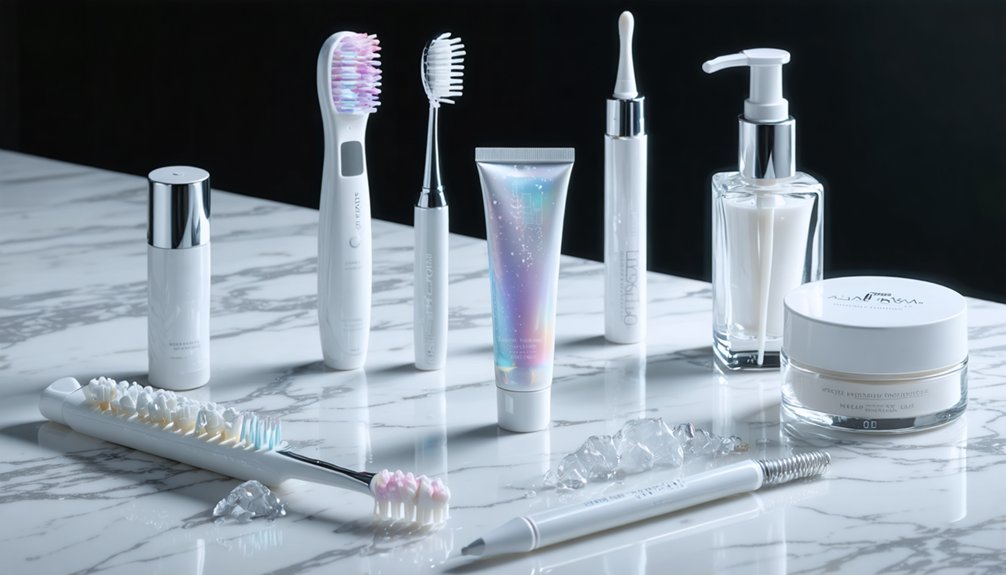
You’ll achieve whitening success with sensitive teeth by selecting products featuring potassium nitrate, nano-hydroxyapatite, or peroxide-free formulations that minimize neural pathway activation. Crest 3D Whitestrips Gentle Routine, Sensodyne Extra Whitening Toothpaste, and Lumineux’s natural kit provide graduated protection levels, while TrueWhite’s precision pen targets specific areas. LED systems accelerate results using lower peroxide concentrations, and custom-fitted trays guarantee uniform distribution without gingival irritation. Match your product to your sensitivity threshold—mild cases tolerate 5-10% peroxide with desensitizers, while severe sensitivity requires PAP-based alternatives that deliver clinical outcomes without compromising enamel integrity or triggering discomfort throughout treatment protocols.
Key Takeaways
- Sensodyne Extra Whitening Toothpaste combines 5% potassium nitrate for sensitivity relief with hydrated silica for gentle stain removal.
- Crest 3D Whitestrips Gentle Routine whitens gradually over 14 days with 5-minute daily applications using Advanced Seal Technology.
- Lumineux Whitening Kit uses peroxide-free ingredients like coconut oil and natural enzymes, safe for veneers and sensitive teeth.
- TrueWhite Whitening Pen provides targeted touch-ups with peroxide-free formula, enabling nightly use without increasing sensitivity risks.
- LED whitening systems pair low-concentration gels with blue light activation, achieving 6-8 shade improvements while minimizing dental sensitivity.
Crest 3D Whitestrips Gentle Routine: Low-Peroxide Protection for Enamel Safety
The product’s Advanced Seal™ Technology guarantees precise application on clean, dry teeth. You’re instructed to apply strips for 5 minutes daily, with the option to repeat twice per day.
The formulation includes carbomer and PVP for adhesion, while glycerin prevents gel dehydration. You’ll achieve full results after 14 days of consistent use, gradually whitening beneath the enamel surface while maintaining comfort throughout the treatment process.
Sensodyne Extra Whitening Toothpaste: Daily Defense Against Stains and Sensitivity
While whitening strips deliver intensive treatment cycles, daily maintenance requires consistent enamel protection that integrates sensitivity management with stain prevention. Sensodyne Extra Whitening Toothpaste employs 5% potassium nitrate for customized sensitivity relief, building protective barriers around tooth nerves while 0.24% sodium fluoride remineralizes enamel. You’ll achieve visible results through daily routine application—twice-daily brushing delivers relief within two weeks and maintains 24-hour protection against recurring hypersensitivity.
The formulation addresses multiple therapeutic objectives:
- Hydrated silica polishes surface stains without enamel abrasion
- Pentasodium triphosphate prevents tartar accumulation above the gumline
- SLS-free surfactant system minimizes soft tissue irritation
This dual-action approach allows you to control both aesthetic concerns and discomfort simultaneously. Clinical evidence supports its efficacy, making it the dentist-recommended standard for managing sensitivity while pursuing cosmetic improvement.
Lumineux Whitening Kit: Natural Formula Safe for All Dental Work
The Lumineux Whitening Kit eliminates hydrogen peroxide from its formulation, utilizing coconut oil, Dead Sea salt, and essential oils to achieve clinical whitening results without compromising enamel integrity.
You’ll find this plant-based approach particularly advantageous if you have veneers, crowns, or other dental restorations, as the natural composition won’t damage artificial surfaces or weaken bonding agents.
The system’s gentle mechanism allows you to pursue aesthetic improvements while maintaining the structural soundness of both natural teeth and prosthetic work.
Peroxide-Free Plant-Based Ingredients
Natural enzymes derived from plant sources—specifically bromelain from pineapple and ficin from Ficus insipida—demonstrate whitening efficacy comparable to carbamide peroxide formulations without the associated enamel damage. Research utilizing bovine enamel discs stained with coffee revealed that 15-minute applications repeated four times achieved color shifts matching traditional bleaching agents.
The enzyme safety profile extends beyond whitening:
- Anti-inflammatory properties reduce gingival sensitivity during treatment
- Immunomodulatory effects support oral tissue health
- Stain breakdown occurs through protein degradation rather than chemical oxidation
These mechanisms address consumer preferences trends toward biocompatible formulations. Unlike carbamide peroxide’s oxidative action, enzymatic whitening targets chromogenic compounds through controlled proteolytic activity. This approach enables you to maintain enamel integrity while achieving measurable color improvement, offering evidence-based control over your whitening regimen.
Compatible With Dental Restorations
When selecting whitening treatments for dentition containing restorations, you’ll face limitations inherent to peroxide-based formulations that don’t apply to enzymatic alternatives. Lumineux’s natural formula eliminates restoration lifespan effects associated with peroxide exposure, including composite resin roughness and amalgam spotting documented in 2013 Journal of Dentistry research. You’ll maintain structural integrity across crowns, veneers, fillings, and implants without compromising dental cement bonds or glazed porcelain surfaces.
Preexisting restoration considerations become simplified—natural ingredients bypass peroxide’s inability to whiten non-biological materials while avoiding mercury release risks from amalgam fillings. You’ll experience reduced sensitivity intensity compared to peroxide application on restored teeth. This allows strategic shade matching: whiten natural dentition first, then replace anterior restorations using spectrophotometric analysis for seamless aesthetic harmony across your smile.
Gentle Whitening Without Enamel Damage
Unlike peroxide-based systems that risk microprismatic dissolution, Lumineux’s enzymatic whitening technology employs bromelain as its primary active agent—the only whitening compound demonstrating zero cytotoxicity in peer-reviewed clinical trials. This formulation actively removes artificially induced stains while preserving enamel microstructure integrity.
The system’s compatibility with remineralization treatments provides distinct advantages:
- Maintains enamel density through non-abrasive stain removal that doesn’t compromise mineral content
- Supports teeth enamel strengthening protocols by avoiding acidic pH levels that interfere with calcium phosphate deposition
- Enables concurrent protective treatments without chemical interference from aggressive bleaching agents
Clinical evidence confirms bromelain’s effectiveness in stain reduction without surface alterations to tooth structure. You’ll achieve measurable whitening results while maintaining ideal conditions for enamel fortification—critical for long-term dental health management.
True White Whitening Pen: Portable Precision for Targeted Touch-Ups
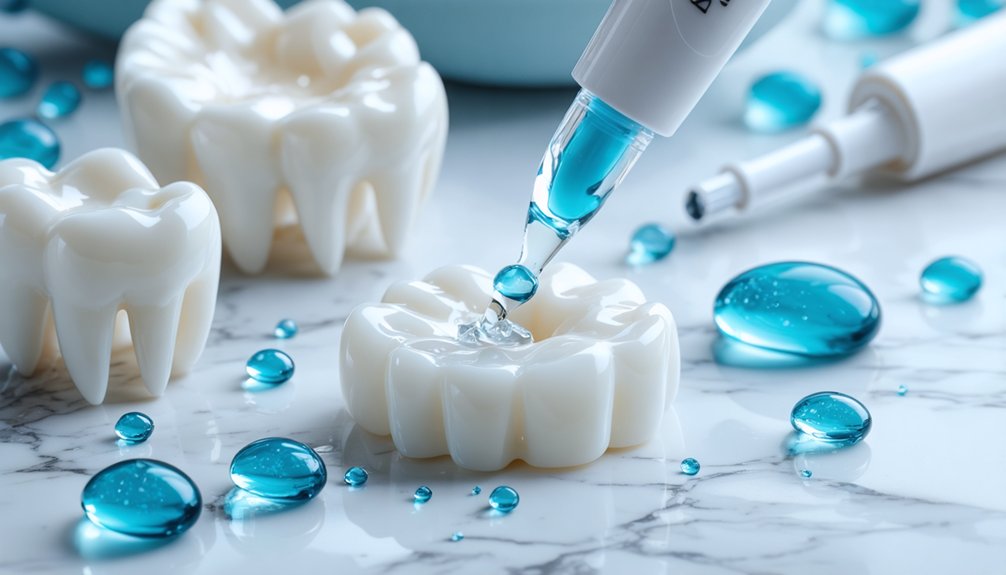
The TrueWhite Advanced Extra Strength Night Time White Teeth Whitening Pen ($119.00) delivers targeted whitening through a precision brush-tip applicator that addresses localized discoloration while you sleep. You’ll achieve controlled application on specific stained areas without affecting surrounding enamel or gum tissue.
The peroxide-free formulation enables nightly use while minimizing sensitivity risks. Clinical testing confirms the serum breaks down surface stains gradually, producing visible results that maintain brightness for up to four months. You’ll experience targeted effects on stubborn discoloration from coffee, tea, and wine.
Apply the serum after brushing and flossing, waiting 30 minutes before consuming food or beverages. The brush-tip design guarantees you direct the whitening agent precisely where needed, eliminating excess product contact with healthy tissue. This portable pen format supports consistent maintenance and on-demand touch-ups.
LED Light Whitening Kits: Accelerated Results With Minimal Discomfort
LED light whitening kits employ blue wavelengths to catalyze hydrogen peroxide oxidation, accelerating stain removal from tooth enamel through enhanced chemical activation.
Clinical formulations designed for sensitive teeth pair lower-concentration peroxide gels with light activation to achieve ideal whitening while minimizing adverse reactions.
You’ll achieve the best outcomes by adhering to manufacturer-specified treatment durations—typically three 10-minute cycles—which balance efficacy with reduced risk of gingival irritation and dental sensitivity.
How LED Technology Works
When you activate an LED whitening device, blue light at approximately 456 nanometers catalyzes the breakdown of hydrogen peroxide or carbamide peroxide gel applied to your enamel surface. This wavelength accelerates free radical production, enabling enhanced stain removal through oxidation reactions that dismantle chromophore double bonds.
The technology delivers measurable advantages:
- Temperature control: Maintains intrapulpal increases below 5.5°C, ensuring reduced enamel impact compared to halogen or plasma arc systems
- Accelerated efficacy: Achieves 6-8 shade improvements within 60-90 minute sessions through photon-assisted oxidation
- Extended activity: Gel remains reactive for 24 hours post-application, maximizing stain molecule breakdown
LED systems require minimal power while avoiding UV-associated health risks. Clinical protocols utilizing 10-minute cycles with combined light-heat application demonstrate up to 11 shade improvements, providing quantifiable whitening outcomes.
Gentle Gel Formulation Benefits
While traditional whitening gels often compromise enamel integrity through aggressive chemical concentrations, LED-compatible formulations leverage carbamide peroxide’s delayed-release mechanism to minimize thermal stress and neural hypersensitivity. You’ll find Australian-regulated systems limit hydrogen peroxide to 6% concentration, establishing formulation stability while preventing pulp damage through heat-free activation protocols.
Potassium nitrate integration provides immediate sensitivity control by desensitizing nerve pathways during oxidation cycles. The thick gel consistency maintains targeted contact throughout LED exposure, eliminating migration-related gum irritation. Pre-measured dosing systems like MySmile prevent over-application risks that trigger adverse reactions.
This controlled-release approach accelerates peroxide breakdown without thermal generation, delivering 5-8 shade improvements while preserving structural enamel density. You maintain clinical-grade efficacy through precisely calibrated formulations designed for LED wavelength optimization.
Optimal Treatment Duration Guidelines
Formulation chemistry determines application windows, but exposure duration directly influences both efficacy thresholds and adverse reactions in LED-accelerated protocols. You’ll achieve ideal outcomes by adhering to recommended treatment time frames specific to peroxide concentration—typically 9-30 minutes for at-home LED systems versus 60-90 minutes for in-office procedures.
The importance of following directions becomes evident when comparing protocol efficiency:
- 6% HP delivers results in 7 total hours over 14 days, while 10% CP requires 140 hours
- LED acceleration reduces exposure from 60 to 30 minutes for equivalent whitening
- Shortened 16-minute sessions with 35% CP minimize sensitivity incidents
Professional treatments condense active whitening into three 10-minute cycles under accelerator lamps. At-home protocols extend 1-2 weeks with daily sessions, then pause several months. You’ll maintain results 6 months to 3 years through strategic touch-ups and hygiene compliance.
Custom Fitted Whitening Trays: Professional-Grade Control at Home
Custom-fitted whitening trays represent the gold standard for at-home tooth whitening, combining professional-grade efficacy with personalized precision. You’ll experience superior results because these professionally molded trays conform exactly to your dental anatomy, ensuring uniform gel distribution across all tooth surfaces. The snug fit minimizes product waste and prevents whitening agent contact with sensitive gum tissue—a primary cause of discomfort with over-the-counter alternatives.
Your dentist will assess oral health conditions before treatment, identifying potential complications like cavities or gum disease. Higher-concentration professional formulations deliver accelerated whitening—often several shades lighter within days. With continuous daily wear protocols and periodic professional monitoring, you’ll achieve ideal outcomes while maintaining enamel integrity. These reusable trays provide long-term value, requiring only replacement gel for future touch-ups rather than complete system repurchase.
Choosing the Right Product for Your Sensitivity Level
Selecting an appropriate whitening product requires systematic evaluation of your individual sensitivity threshold and underlying dental conditions. You’ll need to match formulation strength to your documented pain patterns while implementing personalized application techniques that minimize gum irritation.
Product Selection by Sensitivity Grade:
- Mild sensitivity: Whitening toothpaste containing potassium nitrate (5–10% peroxide equivalent) for controlled, gradual results
- Moderate sensitivity: Low-concentration strips (5.25% peroxide) with hydroxyapatite or fluoride-enhanced formulas and reduced wear times
- Severe sensitivity: Peroxide-free PAP gels paired with LED activation systems that deliver whitening without nerve stimulation
Prioritize products featuring desensitizing compounds—potassium nitrate, nano-hydroxyapatite, or xylitol. Eliminate formulations containing charcoal, baking soda, or concentrations exceeding 10% peroxide. You’ll achieve ideal outcomes by selecting evidence-based products aligned with your specific sensitivity classification.
Frequently Asked Questions
How Long Do Whitening Results Typically Last for Sensitive Teeth?
Whitening results typically last 6-12 months for sensitive teeth, though you’ll maintain them longer by managing tooth enamel sensitivity properly. Your whitening treatment duration affects longevity—professional treatments generally outlast over-the-counter options by several months.
Can I Use Multiple Whitening Products Together Safely?
Combining products risks 78% increased sensitivity. You shouldn’t use multiple whitening agents simultaneously due to poor product compatibility. Instead, make whitening schedule adjustments—spacing treatments by weeks and consulting your dentist guarantees controlled, safe enamel preservation.
Should I Stop Whitening if Sensitivity Worsens During Treatment?
Yes, you should stop immediately if sensitivity worsens. Discontinue treatment to prevent enamel damage. Focus on temporary sensitivity relief with desensitizing toothpaste, then implement long-term sensitivity management strategies before resuming whitening under professional guidance.
Are There Specific Foods to Avoid While Whitening Sensitive Teeth?
Yes, you’ll need to modify your diet during treatment. Focus on avoiding acidic foods that compromise enamel integrity and limiting hot/cold beverages that trigger nerve sensitivity. These dietary adjustments directly protect your teeth while maximizing whitening outcomes.
How Soon After Dental Work Can I Start Whitening?
Wait 7-14 days after composite fillings, 2-4 weeks following crowns, and 3-4 weeks post-root canals. You’ll need to maintain your oral hygiene routine and consult your dentist before whitening to prevent complications and guarantee favorable treatment outcomes.