You’ll protect your enamel during whitening by choosing professional treatments over DIY remedies, using only ADA-approved products with verified peroxide concentrations, and scheduling a pre-treatment dental examination to identify contraindications. Apply desensitizing agents containing potassium nitrate between sessions, take strategic breaks to prevent cumulative nerve damage, and avoid chromogenic foods during the post-treatment porosity window. Following these evidence-based protocols minimizes risks while maximizing results, and understanding the science behind each recommendation guarantees you’re making informed decisions about your oral health.
Key Takeaways
- Choose professional whitening treatments over DIY remedies for safer, customizable results with proper enamel protection and supervision.
- Use only ADA-approved whitening products with verified safe peroxide levels, like Crest 3DWhitestrips or Colgate Total SF toothpaste.
- Get a dental examination first to identify cavities, gum disease, or enamel erosion that could compromise safety.
- Apply desensitizing treatments with potassium nitrate or fluoride and take breaks between whitening sessions to protect enamel.
- Avoid acidic and dark-pigmented foods after whitening; consume calcium-rich dairy to help remineralize temporarily weakened enamel.
Choose Professional Whitening Over DIY Home Remedies
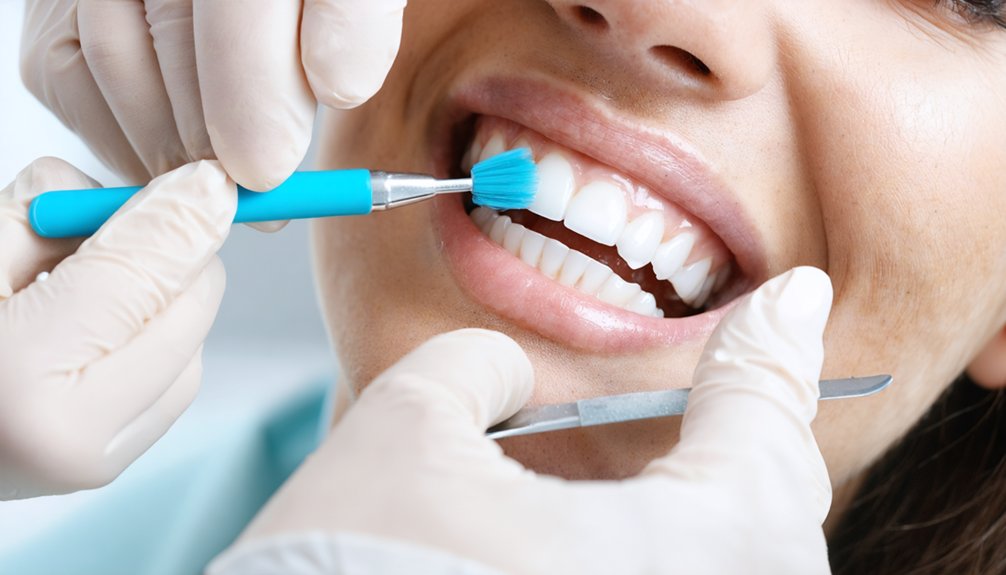
While over-the-counter whitening kits promise convenience, professional treatments deliver superior efficacy through higher-concentration bleaching agents that penetrate enamel more effectively. Dentists utilize 25-40% hydrogen peroxide versus OTC’s 10% carbamide peroxide, achieving up to 8 shades improvement per 45-minute session. You’ll benefit from reduced irritation risks through controlled application that protects your gums and prevents enamel damage.
Pre-treatment evaluations identify cavities or gum disease that could complicate DIY approaches. Professional oversight provides a customizable solution tailored to your intrinsic stains and oral health status. Custom-fitted trays guarantee even coverage, eliminating the patchy results common with generic kits. Though costs range from $300-$1000, you’ll avoid the enamel degradation associated with repeated DIY overuse, making professional whitening the evidence-based choice for lasting results.
Use Only Ada-Approved Products With Safe Peroxide Levels
Because whitening products penetrate your enamel’s porous structure, you’ll need verification that active ingredients meet established safety thresholds. The ADA Seal confirms rigorous evaluation by the Council on Scientific Affairs through clinical and laboratory studies spanning five-year review periods.
When you evaluate product ingredients, prioritize peroxide concentrations below professional-strength levels—carbamide or hydrogen peroxide formulations tested for enamel preservation. Crest 3DWhitestrips maintains exclusive ADA acceptance among at-home bleaching brands, while approved toothpastes like Colgate Total SF variants use low-abrasive compounds for surface stain removal.
To understand application safety, verify fluoride inclusion in toothpastes and enamel-safe peroxide levels in strips. Professional dentists endorse these ingredients specifically because testing protocols minimize sensitivity risks, gum irritation, and structural damage when you follow directed usage parameters.
Get a Dental Examination Before Starting Any Whitening Treatment
Before scheduling any whitening procedure, you’ll need thorough dental screening to identify contraindications that compromise treatment safety and efficacy. Your dentist detects cavities requiring repair before whitening—untreated decay worsens during treatment and causes severe pain. The examination evaluates gum disease that leads to irritation and discomfort post-whitening. You must prioritize oral health by addressing periodontal issues first.
Enamel assessment determines your candidacy; erosion and heightened sensitivity contraindicate treatment. Your dentist examines existing restorations—crowns, veneers, and fillings won’t whiten, creating uneven results requiring replacement for color matching.
Professional cleaning removes plaque and tartar, enhancing whitening agent penetration and effectiveness. Consult dental expert to identify stain types and underlying discoloration causes. This evaluation enables customized treatment protocols that maximize results while preventing complications and enamel damage.
Apply Desensitizing Treatments and Take Breaks Between Sessions
After confirming your candidacy through professional examination, implementing preventive measures protects dental nerves from whitening-induced hypersensitivity.
Professional dental evaluation combined with strategic preventive protocols effectively minimizes nerve sensitivity during whitening treatments.
Evidence-Based Sensitivity Prevention Protocol:
- Pre-treatment desensitization — Apply potassium nitrate toothpaste two weeks before whitening to block nerve pathways, while fluoride formulations enable gradual enamel strengthening against chemical exposure.
- Inter-session desensitizing gels — Utilize 5% potassium nitrate or fluoride gels between applications to shield vulnerable areas during higher-concentration treatments and maintain progress without nerve irritation.
- Personalized session durations — Work with your dentist to establish ideal wear times; shorter sessions with custom trays minimize enamel exposure while lower-concentration formulas reduce discomfort risk over extended periods.
- Scheduled treatment breaks — Pause applications if sensitivity develops, allowing nerve recovery through strategic intervals that prevent irritation buildup while supporting controlled whitening progression.
Protect Your Results With Smart Dietary Habits and Proper Oral Care
Following your whitening treatment, temporary enamel porosity creates a 24-48 hour vulnerability window when chromogenic compounds penetrate more readily through exposed dentin tubules. You’ll need to maintain good oral hygiene while restricting chromogenic food intake.
Limit consumption to white proteins (cod, chicken breast, egg whites), light-colored dairy (cottage cheese, plain yogurt), and white carbohydrates (rice, pasta, cauliflower). Avoid acidic beverages including citrus juices and sodas that compromise already-weakened enamel structure.
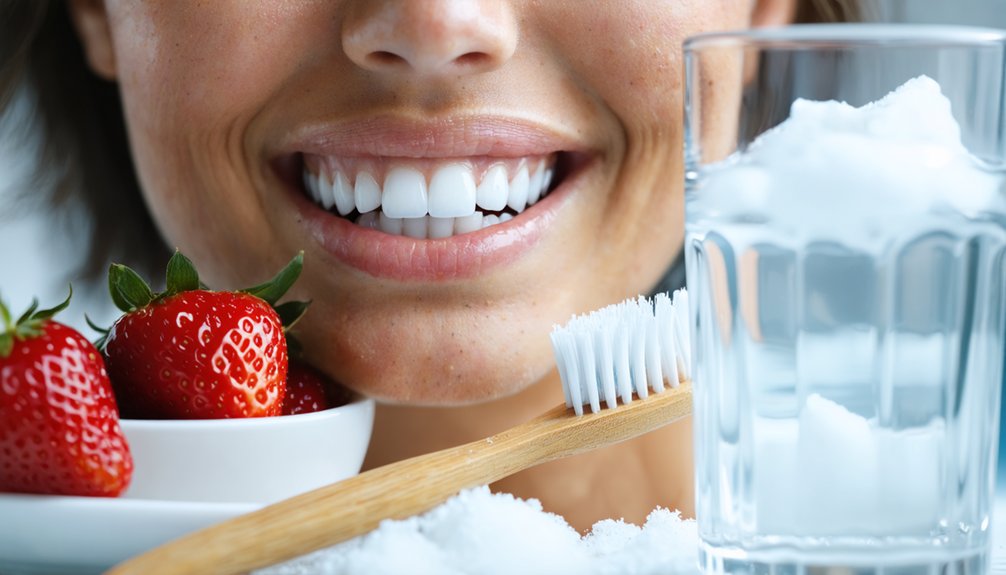
Dark pigmented foods—berries, beets, tomatoes, soy sauce—pose the highest staining risk. Rinse immediately after any questionable food exposure. Use straws for beverages to minimize tooth contact. Apply the white shirt test: if it stains fabric, it’ll stain your teeth.
Calcium-rich dairy accelerates remineralization of softened enamel surfaces during this critical recovery period.
Frequently Asked Questions
Can Whitening Treatments Work on Crowns, Veneers, or Dental Fillings?
No, whitening treatments don’t work on tooth restoration materials like crowns, veneers, or fillings—they’re impermeable barriers. You’ll face mismatched shades post-whitening. While whitening sensitivity concerns affect natural enamel, your restorations remain their original color, requiring potential replacement.
How Long Do Professional Whitening Results Typically Last Before Retreatment?
Professional whitening typically lasts 1-3 years with proper care. You’ll need retreatment sooner if you experience teeth sensitivity or enamel discoloration from smoking, coffee, or poor hygiene. Maintain results through regular cleanings and avoiding staining agents to control longevity.
Are Whitening Treatments Safe for Pregnant or Breastfeeding Women?
Most dentists recommend you avoid whitening treatments during pregnancy and breastfeeding due to insufficient safety data. Consult your dentist for personalized recommendations. If you proceed, avoid prolonged exposure to peroxide-based products to minimize potential chemical transfer risks.
At What Age Is It Safe to Begin Teeth Whitening Treatments?
While some claim earlier is acceptable, you shouldn’t begin whitening until ages 14-16 when proper tooth development completes. Enamel calcification finishes around age 15, reducing tooth sensitivity concerns. Your dentist must evaluate individual readiness first.
Does Teeth Whitening Increase the Risk of Developing Cavities or Decay?
Whitening doesn’t increase cavity risk on healthy teeth, but you’ll experience heightened enamel sensitivity and compromised tooth structure integrity if you’re bleaching over existing decay, potentially masking progression and accelerating demineralization through peroxide penetration.