If you’re whitening with sensitive enamel, you’ll need to select lower-concentration peroxide formulations (1.5–10% hydrogen peroxide or 16% carbamide peroxide) that minimize microscopic tubule exposure. Apply desensitizing agents containing 5% potassium nitrate and 2% sodium fluoride before treatment to block neural transmission and seal dentin. Professional custom-tray systems provide precise gel containment, reducing soft tissue irritation while maintaining consistent enamel contact. Alternatively, peroxide-free agents like PAP (phthalimidoperoxycaproic acid) offer chromogen reduction without enamel microhardness compromise. Understanding these protocols enables you to achieve ideal whitening outcomes while controlling hypersensitivity throughout treatment.
Key Takeaways
- Choose whitening products with lower peroxide concentrations (1.5–10% hydrogen peroxide or 16% carbamide peroxide) to minimize nerve irritation.
- Apply desensitizing agents containing 5% potassium nitrate and 2% sodium fluoride before whitening to block pain and seal exposed dentin.
- Use custom-fitted trays for precise gel application, preventing soft tissue irritation while ensuring consistent enamel contact and professional monitoring.
- Consider peroxide-free alternatives like PAP or bromelain enzymes that don’t reduce enamel microhardness or open tubules.
- Strengthen enamel through remineralization with hydroxyapatite nanocrystals and fluoride treatments before and after whitening procedures.
Understanding Why Sensitive Enamel Reacts to Whitening
Whitening agents trigger sensitivity through a cascade of physiological responses that compromise enamel’s protective function. When peroxide penetrates your enamel within 15 minutes, it temporarily opens microscopic tubules that expose nerve-rich pulp to external stimuli. This process thins your enamel’s insulation capacity while simultaneously causing minor pulp inflammation, elevating nerve responsiveness.
Higher peroxide concentrations correlate directly with increased hypersensitivity complaints, particularly if you have pre-existing thin or worn enamel. Your teeth’s protective barrier rehydration occurs post-treatment as remineralization rebuilds the compromised structure over 2-3 days, with sensitivity typically peaking within 24 hours.
Understanding this mechanism enables long term hypersensitivity management through strategic selection of lower peroxide concentrations and controlled contact times, giving you measurable control over treatment outcomes.
Recognizing the Signs of Enamel Erosion and Sensitivity
Before initiating any whitening protocol, you’ll need to accurately identify whether your enamel has sustained erosion that contraindicates aggressive treatments. Clinical indicators include:
- Thermal reactivity: Sharp, transient pain when exposed to temperature extremes indicates dentin exposure through compromised enamel
- Chromatic alterations: Progressive yellowing or grayish discoloration signals dentin visualization as translucent enamel thins
- Morphological changes: Glossy surfaces, translucent incisal edges, or cupping defects demonstrate mineral depletion
Assess for surface irregularities—roughness, pitting, or enamel chips—which correlate with structural vulnerability. The impact of age on enamel erosion compounds these manifestations, while lifestyle factors contributing to sensitivity (acidic beverages, aggressive brushing) accelerate degradation.
Document sensitivity patterns and visual anomalies before selecting appropriate whitening modalities. Professional evaluation establishes baseline enamel integrity metrics.
Professional Whitening Treatments That Minimize Discomfort
Professional whitening treatments for sensitive teeth employ three primary strategies to reduce discomfort while achieving ideal results. In-office desensitizing protocols incorporate fluoride or potassium nitrate applications before and after whitening to block neural pain pathways and strengthen enamel.
Custom tray systems paired with low-peroxide formulations deliver controlled agent distribution, minimizing gingival contact and chemical exposure duration that typically trigger sensitivity responses.
In-Office Desensitizing Protocols
When you’re seeking teeth whitening despite enamel sensitivity, in-office desensitizing protocols offer the most controlled approach to minimize discomfort while achieving clinical-grade results. Dentist supervised desensitizing treatments apply 5% potassium nitrate and 2% sodium fluoride for 15-minute sessions totaling 45 minutes pre-treatment, effectively blocking neural pain signals and sealing exposed dentin tubules.
Customized whitening protocols you’ll receive include:
- Lower-concentration peroxide formulations that reduce sensitivity without compromising efficacy, avoiding the universal sensitivity caused by 35% hydrogen peroxide solutions
- Desensitizing gel integration containing potassium nitrate to fortify tooth surfaces against high-concentration bleaching agents
- Real-time monitoring without local anesthesia, allowing immediate detection of gel seepage or adverse reactions
Professional fluoride application strengthens enamel pre-whitening, while controlled peroxide levels minimize dentin exposure throughout the procedure. This evidence-based approach guarantees ideal whitening outcomes while maintaining patient comfort.
Custom Tray Systems
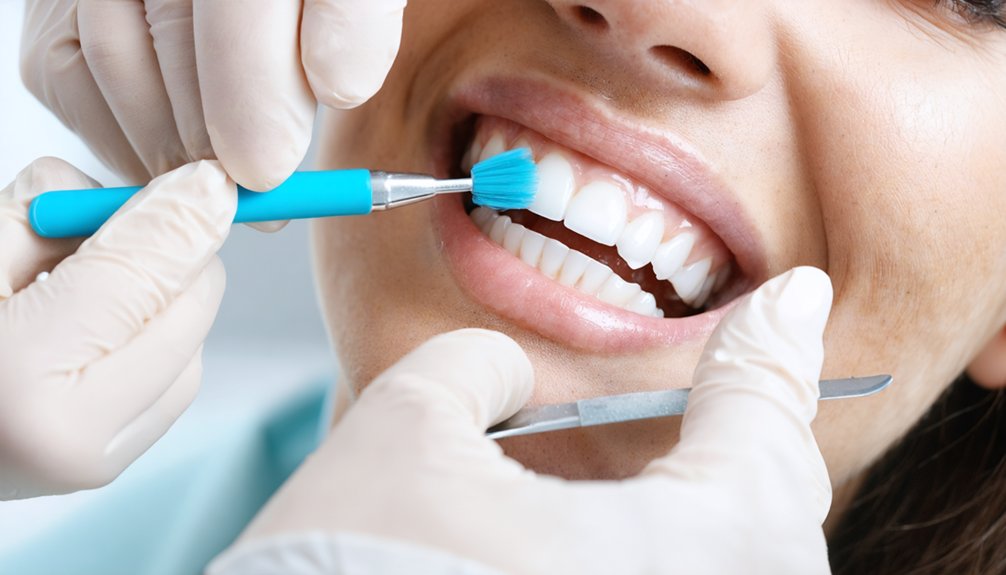
Custom tray systems deliver professional-grade whitening with precision-engineered fit that you can’t achieve through over-the-counter alternatives. Your dentist creates impressions of your dental architecture, fabricating trays that maintain consistent enamel contact while preventing gel migration to soft tissues. This barrier effect minimizes gum exposure and reduces chemical irritation risks.
The ideal gel concentration gets calibrated to your sensitivity threshold, allowing controlled whitening without excessive discomfort. Tailored application protocols adjust treatment duration and frequency based on your enamel response, providing flexibility for gradual shade improvement. You’ll experience lower sensitivity incidence compared to generic trays due to precise gel containment and professional oversight.
This system eliminates saliva dilution and product waste while ensuring thorough tooth surface coverage. Professional monitoring enables protocol modifications if sensitivity develops, maintaining treatment safety throughout your whitening regimen.
Low-Peroxide Professional Alternatives
Concentration management revolutionizes in-office whitening for patients with enamel hypersensitivity. You’ll access professional-grade treatments employing 16% hydrogen peroxide formulas with LED acceleration, delivering clinical results while customized desensitizing gels containing potassium nitrate safeguard nerve irritation. Dentist-supervised protocols combine gingival barriers with sensitivity-reducing solutions for controlled peroxide exposure.
Peroxide free whitening options expand your treatment portfolio:
- PAP+ formulations at 12% concentration break down chromogens without oxidative acids penetrating dentin tubules
- Hydroxyapatite-infused systems remineralize enamel microstructure during treatment sessions
- Dr. Brite Wireless Advanced System integrates minimal hydrogen peroxide with biomimetic calcium compounds
Your practitioner tailors gel concentrations from 16-44% hydrogen peroxide based on hypersensitivity assessments. Pre-treatment fluoride applications strengthen enamel crystalline structure, while post-whitening remineralizing protocols fortify tooth surfaces against sensitivity episodes. Professional bundles incorporating potassium nitrate guarantee predictable outcomes without compromising patient comfort.
Custom-Fitted Trays for Even Application and Reduced Irritation

Although over-the-counter whitening products offer convenience, they can’t match the precision and safety profile of professionally fabricated trays for patients with sensitive enamel. Custom trays created from dental impressions conform exactly to your tooth anatomy, ensuring uniform gel distribution across all surfaces while preventing overflow onto gingival tissues.
This precision eliminates chemical burns and soft tissue irritation common with ill-fitting generic alternatives. Your dentist develops tailored treatment plans adjusting peroxide concentration, application duration, and frequency based on your sensitivity threshold. The custom seal maintains direct enamel contact, minimizing product waste and preventing patchy results.
Professional-grade gels deliver 3-8 shades of improvement within 2-4 weeks while reusable trays provide long-term value for maintenance sessions. This controlled approach optimizes efficacy while protecting vulnerable oral tissues throughout treatment.
Desensitizing Products to Use Before and During Whitening
Because dental hypersensitivity affects approximately 12.5% of adults and intensifies during whitening procedures, implementing a strategic desensitizing protocol becomes essential for treatment tolerance and completion.
You’ll achieve ideal results by incorporating potassium nitrate-based products that block pain transmission through exposed dentin tubules. Pre-treatment application minimizes peroxide concentration impact on nerve endings, while fluoride-enhanced formulas provide concurrent enamel remineralization.
Evidence-based desensitizing effectiveness comparison:
- Pre-treatment serums (Snow LED Kit): Counter oxidative free radicals from peroxide before exposure
- During-treatment gels (Opalescence Sensitive): Combine potassium nitrate with fluoride for dual protection
- Post-treatment protocols: Apply calcium-potassium gel for 5-30 minutes to accelerate sensitivity resolution
Strategic timing of these agents—before, during, and after whitening—enables you to complete full treatment courses while maintaining therapeutic control over discomfort.
Low-Peroxide and Alternative Whitening Solutions

When traditional peroxide-based whitening proves intolerable for sensitive enamel, you’ll find clinically viable alternatives across a spectrum of reduced-concentration and peroxide-free formulations. Store-bought kits containing 1.5–10% hydrogen peroxide or 16% carbamide peroxide deliver gradual lightening with minimal nerve irritation.
Peroxide free whitening alternatives utilize phthalimidoperoxycaproic acid (PAP) at pH 6.5–7.0, bromelain enzymes, or sodium bicarbonate adherence mechanisms—all demonstrating zero enamel microhardness reduction in clinical assessments. You’ll optimize outcomes by pairing these gentler agents with tooth remineralization procedures incorporating hydroxyapatite nanocrystals, potassium nitrate desensitizers, and fluoride treatments.
While hydrogen peroxide remains most effective for chromogen elimination, these alternatives provide controlled whitening without interprismatic enamel dissolution, trading accelerated results for enamel preservation.
At-Home Whitening Options for Sensitive Teeth
Several evidence-based at-home whitening modalities accommodate sensitive enamel through controlled peroxide delivery and desensitizing formulations. Custom-fitted trays paired with professional-grade gels offer precise application while minimizing exposure to vulnerable areas. Whitening strips designed for sensitive teeth utilize lower hydrogen peroxide concentrations for gradual results with reduced discomfort.
Effective home whitening safeguards include:
- Whitening toothpastes containing potassium nitrate and fluoride for daily desensitization while lifting surface stains
- Whitening pens enabling targeted gel application with user-controlled dosing for sensitive zones
- Over-the-counter kits formulated with desensitizing agents to protect nerve endings during treatment
Tooth sensitivity monitoring remains critical throughout whitening protocols. You’ll maintain control by selecting lower-concentration products, adjusting application frequency, and consulting your dental professional if symptoms intensify. Professional-grade at-home options provide ideal efficacy while safeguarding enamel integrity.
Whitening Methods and Ingredients to Avoid
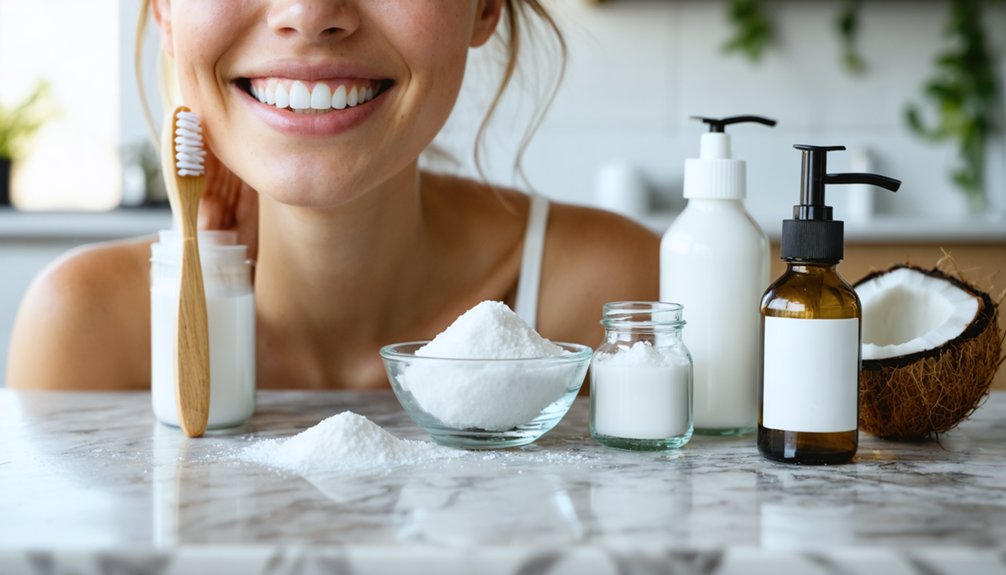
When you have sensitive enamel, certain whitening approaches pose significant risks that can exacerbate existing dental vulnerabilities. High-concentration peroxide formulations, abrasive do-it-yourself remedies containing baking soda or citrus acids, and unmonitored at-home treatments lacking professional oversight can compromise enamel integrity and intensify tooth sensitivity.
Understanding which specific ingredients and methods to avoid becomes essential for preventing irreversible enamel damage while pursuing aesthetic improvements.
High-Peroxide Bleaching Risks
High-concentration hydrogen peroxide gels—particularly formulations at 35% or higher—strip away critical mineral components from tooth enamel through aggressive demineralization. These products leach calcium and phosphate ions while reducing crystalline structure integrity, creating unexpected mineral loss that compromises your enamel’s protective capacity.
Repeated applications produce measurable structural damage:
- Surface porosities and cratering develop after multiple treatment cycles, creating unexpected wear patterns
- pH reduction releases hydrogen ions that directly attack hydroxyapatite crystals
- Deep penetration reaches pulp tissue at concentrations of 26.39 microg after seven hours of exposure
When concentrations exceed 12%, you’re risking superficial softening, increased roughness, and enhanced permeability. While professional applications may reverse minor damage through remineralization protocols, frequent use prevents natural salivary repair mechanisms from restoring your enamel’s mineral density effectively.
Abrasive DIY Remedies
Beyond commercial bleaching agents, many popular home remedies inflict comparable—or worse—structural damage to enamel through mechanical abrasion and chemical erosion. Baking soda’s high abrasivity removes microscopic enamel layers with repeated application, while activated charcoal’s coarse particles create irreversible surface scratches.
Citrus-based treatments—lemon juice, strawberry rubs, and apple cider vinegar—contain acids that demineralize enamel at pH levels below 5.5, directly exposing dentin tubules and triggering immediate sensitivity spikes. Combined acid-abrasive formulations compound this damage through dual-mechanism erosion.
Studies confirm these methods lack clinical efficacy for deep stain removal while accelerating enamel thinning and translucency. Preventing enamel erosion requires eliminating these DIY approaches entirely. For minimizing sensitivity spikes, you’ll need professionally validated alternatives that preserve tooth structure rather than compromise protective layers through uncontrolled chemical dissolution.
Unmonitored At-Home Treatments
Why do unmonitored at-home whitening treatments pose systematic threats to enamel integrity? Without professional oversight, you’re risking irreversible damage through improper peroxide concentrations and application protocols. Over-the-counter kits frequently contain excessive bleaching agents that penetrate enamel, stripping essential minerals and triggering demineralization cycles.
Key complications include:
- Chemical burns and gum recession from peroxide gels contacting soft tissue without protective barriers
- Dental work damage as whitening agents react with fillings, crowns, and veneers, causing material breakdown and structural compromise
- Uneven whitening results and translucent teeth appearance from exceeding recommended exposure times
Your sensitive enamel lacks sufficient protection against these aggressive formulations. High-concentration products intensify existing vulnerability, creating lasting sensitivity and heightened cavity susceptibility. Professional monitoring guarantees appropriate peroxide levels and safeguards your existing restorations throughout treatment protocols.
Best Practices for Maintaining Results Without Triggering Sensitivity
Maintaining whitened teeth while managing sensitivity requires a strategic integration of protective measures and controlled exposure protocols. Following thorough tooth sensitivity assessment, implement desensitizing toothpaste containing potassium nitrate two weeks before initiating your treatment implementation timeline.
Space whitening sessions appropriately—wearing trays every other day rather than consecutively allows enamel recovery. Apply fluoride rinses daily to reinforce structural integrity post-treatment. Limit exposure to staining agents (coffee, tea, red wine) and acidic substances that compromise enamel. When consuming pigmented beverages, use straws to minimize contact.
Line custom trays with desensitizing gel for ten minutes following whitening applications. Adhere strictly to recommended usage frequencies for over-the-counter products. Schedule regular professional cleanings and fluoride treatments. If sensitivity persists beyond expected parameters, consult your dentist immediately to reassess protocol modifications.
Frequently Asked Questions
Can I Whiten My Teeth if I Have Gum Recession?
You can whiten teeth with gum recession, but proceed cautiously. Given your gum irritation concerns, professional consultation’s needed first. Your dentist will assess recession severity, apply protective barriers, recommend lower peroxide concentrations, and customize treatment protocols to prevent further tissue damage.
How Long Should I Wait Between Whitening Sessions?
Wait 6–12 months between professional whitening sessions if you’ve got sensitive skin types or enamel. Treatment intervals should extend to 48 hours between at-home applications, allowing enamel remineralization while maintaining efficacy and minimizing hypersensitivity risks.
Does Diet Affect Tooth Sensitivity After Whitening Treatments?
Yes, foods consumed directly impact post-whitening sensitivity. Acidic, hot, cold, or pigmented items penetrate porous enamel, triggering discomfort and promoting tooth discoloration. You’ll minimize sensitivity by selecting bland, lukewarm, non-staining options during the 48-hour remineralization period.
Are There Age Restrictions for Teeth Whitening With Sensitive Enamel?
Like guarding developing roots, you’ll find whitening restrictions exist until age 14-16 when childhood tooth development completes. Proper dental hygiene practices during maturation protect thin enamel and enlarged pulp chambers from premature bleaching agent exposure.
Will Whitening Work on Dental Crowns or Veneers?
No, whitening won’t work on your crowns or veneers. Dental implant whitening and porcelain veneer whitening are ineffective because these non-porous materials resist bleaching agents. You’ll need replacement restorations to match your whitened natural teeth’s new shade.