You’ll safeguard your enamel by choosing ADA-approved whitening products containing 10% or less hydrogen peroxide and following manufacturer instructions precisely. Before starting any treatment, schedule a dental exam to identify contraindications like existing restorations that won’t respond uniformly. Avoid viral DIY methods that risk chemical burns—instead, opt for evidence-based options like customized professional take-home kits with desensitizing protocols or gentle natural remedies such as baking soda toothpastes. Understanding the critical distinctions between safe concentration thresholds and high-risk applications will help you achieve results without compromising your oral health.
Key Takeaways
- Use products with ADA Seal of Acceptance containing 10% or less hydrogen peroxide to minimize enamel damage and sensitivity risks.
- Follow manufacturer instructions precisely regarding application duration and frequency to prevent enamel demineralization and soft tissue injury.
- Complete a dental exam before whitening to identify contraindications like cavities, gum disease, or existing restorations that won’t whiten.
- Perform patch tests on small areas first to detect potential allergic reactions or sensitivity before full application.
- Avoid DIY treatments and excessive whitening schedules that prevent enamel remineralization and can cause permanent structural damage.
Understanding Your Over-The-Counter Whitening Options
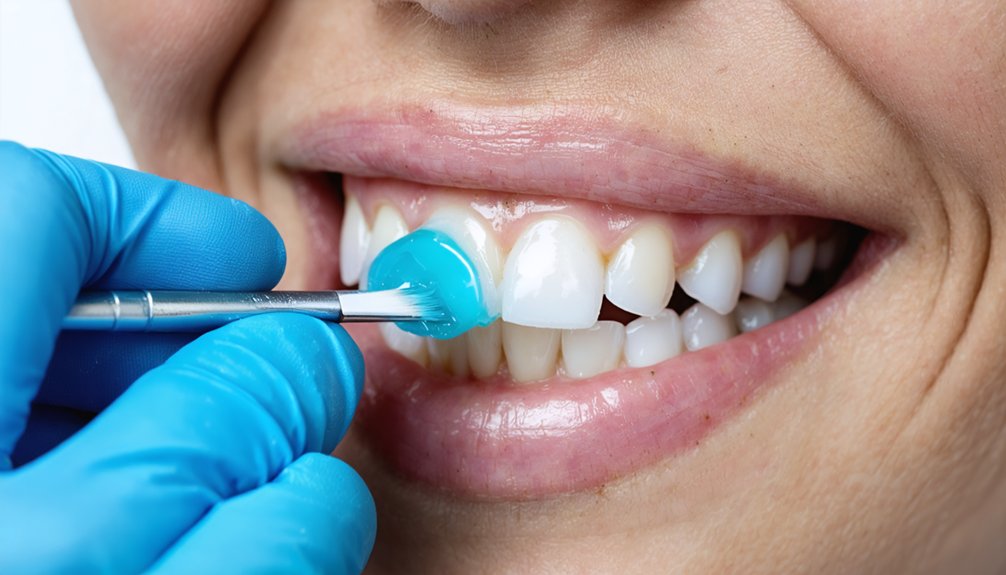
While over-the-counter whitening products offer accessible alternatives to professional treatments, understanding their active ingredient concentrations remains critical for safe and effective use. OTC kits contain 10-35% carbamide peroxide or 3-10% hydrogen peroxide, considerably lower than in-office gels at 25-40%.
You’ll find four primary delivery systems: strips coated with peroxide gel, direct-application gels and pens with reduced peroxide levels, tray-based kits requiring 10 minutes to one hour wear time, and whitening toothpastes containing gentle abrasives with 3-5% hydrogen peroxide.
Choosing the appropriate concentration depends on your staining severity and contact duration, with higher concentrations proving most effective when properly timed. Monitor whitening sensitivity throughout treatment, as peroxide exposure duration directly correlates with potential adverse reactions.
Professional Take-Home Kits: A Safer Alternative
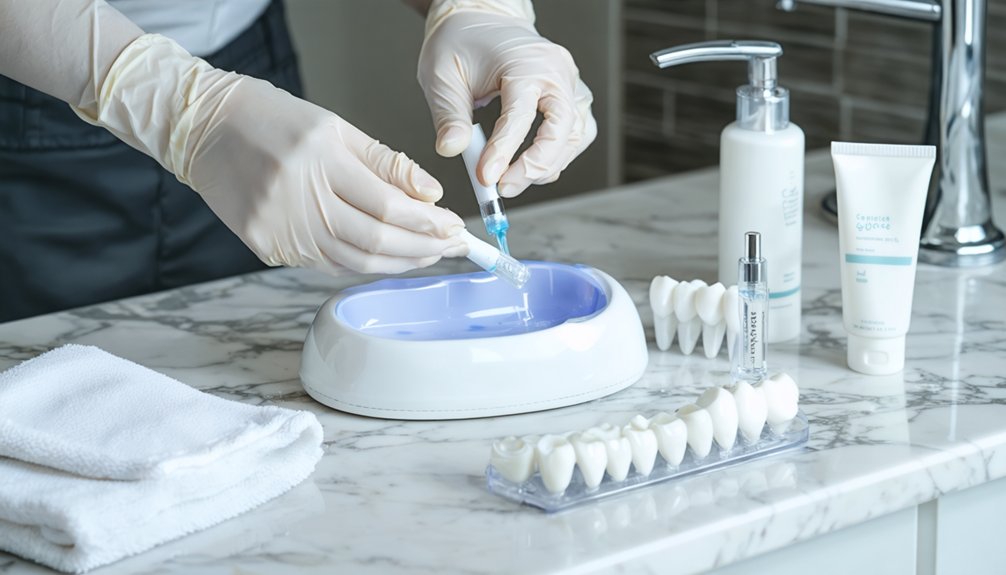
Professional take-home whitening kits prescribed by dentists contain carbamide peroxide concentrations of 15-35% or hydrogen peroxide at 10-20%—substantially higher than OTC formulations yet safer than in-office applications exceeding 40%. These FDA-approved agents deliver accelerated results while maintaining enamel integrity through dental supervision.
Your dentist conducts pre-treatment assessments to identify contraindications like untreated cavities or periodontal disease, then customizes tray fabrication to your dentition’s exact specifications. This precision prevents gel migration onto gingival tissues, eliminating chemical burns common with ill-fitting generic products.
You’ll receive desensitizing protocols incorporating potassium nitrate if sensitivity develops, alongside clear discontinuation criteria for adverse reactions. This approach maximizes convenience through at-home application while preserving clinical oversight—reducing hypersensitivity incidence to 30-50% compared to 40-60% with unsupervised products.
Natural Remedies That Work Without Damaging Enamel
Although natural whitening remedies attract consumers seeking chemical-free alternatives, you’ll find their efficacy considerably limited compared to peroxide-based treatments—with most delivering only superficial stain removal rather than intrinsic color modification. You can implement these evidence-supported methods safely:
- Coconut oil rinsing (10-20 minutes daily) reduces plaque-associated bacteria without abrasive action, though scientific validation remains limited.
- Baking soda mixing in ADA-approved fluoride toothpastes provides mild polishing properties—but you shouldn’t use pure baking soda alone, as it lacks enamel-strengthening fluoride.
- Abrasive nuts and seeds (almonds, walnuts, sesame) mechanically exfoliate surface stains when consumed regularly.
These approaches require consistent oral hygiene maintenance—twice-daily brushing and daily flossing—to prevent plaque hardening that causes yellowing. Natural methods carry minimal enamel-damage risk when properly executed.
High-Risk Methods to Approach With Caution
When you venture beyond professionally supervised treatments, you’ll encounter whitening methods that pose substantial risks to dental health—particularly products containing peroxide concentrations exceeding 10%, which can irreversibly compromise enamel integrity.
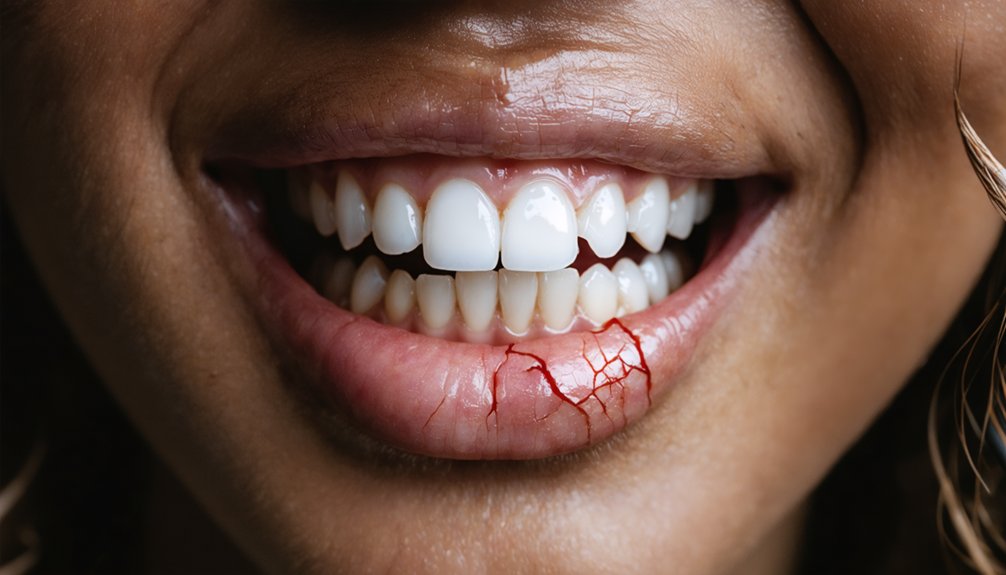
DIY dental treatments without professional oversight frequently result in chemical burns from improper application and extended exposure times that exceed manufacturer specifications. You’re particularly vulnerable if you have compromised tooth structures, including existing cavities, cracks, or worn enamel, as bleaching agents penetrate deeper into dentin and potentially damage nerve tissue.
Aggressive whitening schedules—multiple sessions within short timeframes—prevent adequate remineralization between treatments, leading to translucent teeth and permanent enamel erosion. Additionally, teeth with restorations won’t respond uniformly to whitening agents, creating aesthetic inconsistencies that may tempt you toward excessive product use and compound structural damage.
Essential Safety Guidelines for At-Home Whitening
Before initiating any at-home whitening regimen, you must read product labels thoroughly and adhere strictly to manufacturer instructions—deviations from specified application times, concentrations, or frequency protocols substantially increase your risk of enamel demineralization and soft tissue damage.
Avoiding ingredient sensitivity requires verifying hydrogen peroxide or carbamide peroxide concentrations don’t exceed evidence-based thresholds. Schedule a pre-treatment dental examination to identify contraindications like untreated caries or periodontal disease that compromise safety.
Critical safety protocols include:
- Conducting patch tests before full application to detect adverse reactions
- Verifying ADA Seal of Acceptance for validated efficacy and safety standards
- Minimizing gum irritation through proper tray fitting and immediate gel removal from soft tissues
Discontinue treatment immediately upon experiencing burning sensations or persistent discomfort. Custom-fitted trays from dental professionals optimize safety margins while delivering controlled whitening outcomes.
Frequently Asked Questions
How Long Do Whitening Results Typically Last Before Retreatment Is Needed?
Your whitening results typically last 6 months to 3 years depending on whitening solution concentration and whitening treatment frequency. You’ll need retreatment sooner with lower concentrations, while professional-strength treatments extend duration when you maintain proper oral hygiene.
Can Teeth Whitening Cause Permanent Damage to Tooth Enamel?
Professional whitening won’t permanently harm enamel, but overusing high-peroxide whitening agents composition causes irreversible enamel erosion risks. You’ll face demineralization, increased porosity, and translucent teeth if you exceed recommended protocols without professional supervision.
Are There Specific Foods to Avoid After Whitening Treatments?
You’ll need to avoid foods that can stain whitened teeth for 48-72 hours post-treatment. Maintain proper dental hygiene after whitening by avoiding dark beverages, acidic items, pigmented foods, and colored sauces that compromise enamel porosity and treatment effectiveness.
Is Tooth Sensitivity After Whitening Normal and How Long Does It Last?
Though concerning, sensitivity’s completely normal, typically peaking within 48 hours and resolving within two weeks. You’ll need vigilance in managing whitening sensitivity and monitoring tooth color changes—consult your dentist if discomfort persists beyond seven days.
Can Pregnant or Breastfeeding Women Safely Use Whitening Products?
You shouldn’t use whitening products during pregnancy or breastfeeding due to insufficient research on effects on baby’s development and safety concerns for nursing mothers. Limited data exists regarding peroxide transfer, so postpone whitening until after weaning.