You can safely whiten sensitive teeth by selecting low-concentration peroxide products, preparing your enamel in advance, and following proper application guidelines. Start with desensitizing toothpaste containing potassium nitrate two weeks before treatment. Choose formulas with 10% carbamide peroxide or 3% hydrogen peroxide, and limit sessions to three times weekly. Avoid whitening if you have active decay, gum disease, or cracked enamel. Everything you need to protect your teeth while achieving real results is covered ahead.
Key Takeaways
- Use desensitizing toothpaste containing potassium nitrate for two weeks before whitening to reduce nerve sensitivity and prepare teeth safely.
- Choose whitening products with 10% carbamide peroxide or 3% hydrogen peroxide, as these concentrations minimize enamel damage and irritation.
- Avoid whitening if you have active tooth decay, gum disease, or cracked enamel until professionally treated and cleared.
- Limit whitening sessions to three times weekly and follow manufacturer guidelines to prevent progressive enamel erosion and worsening sensitivity.
- After whitening, brush gently with a soft-bristled toothbrush, avoid acidic foods, and schedule regular dental check-ups to monitor sensitivity.
Why Sensitive Teeth React Badly to Whitening?
When whitening agents like hydrogen peroxide or carbamide peroxide penetrate the enamel, they irritate the nerves inside your teeth, triggering sensitivity and discomfort. This reaction intensifies if you have pre-existing gum disease, tooth decay, or worn enamel.
Dispelling whitening myths is essential: stronger concentrations don’t guarantee better results — they increase nerve irritation and gum damage. Prolonged product contact compounds this effect, making sensitivity management critical before you begin any whitening regimen.
Higher concentration doesn’t mean better results — it means more nerve irritation, gum damage, and sensitivity.
Your enamel acts as a protective barrier, but harsh chemicals and overuse erode it over time, leaving nerves increasingly vulnerable.
Understanding these biological mechanisms gives you direct control over your whitening approach, allowing you to choose methods that deliver results without unnecessary pain or long-term dental damage.
How to Tell If Your Teeth Can Handle Whitening
Before attempting any whitening treatment, you should assess whether your teeth can tolerate the process by recognizing key signs of sensitivity, such as sharp pain triggered by hot, cold, or sweet stimuli.
Pre-existing conditions like gum disease, enamel erosion, or active tooth decay greatly increase your risk of complications and discomfort during whitening.
If you experience any of these conditions, you should avoid whitening until a dentist evaluates and clears you for treatment.
Signs of Tooth Sensitivity
Several telltale signs indicate whether your teeth can tolerate a whitening treatment. Sharp, sudden pain when consuming hot, cold, sweet, or acidic foods signals existing tooth sensitivity that could worsen with whitening agents.
You may also notice discomfort when breathing cold air or applying pressure during brushing.
Dispelling whitening myths is critical here — sensitivity doesn’t automatically disqualify you from whitening, but it demands a more cautious approach.
Visible gum recession, worn enamel, or existing dental restorations increase your risk considerably. If you experience lingering pain rather than brief, sharp sensations, consult your dentist before proceeding.
Identifying these signs early lets you make informed decisions, choose appropriate products, and implement protective measures that allow effective whitening without compromising your dental health.
Pre-Existing Dental Conditions
Three pre-existing dental conditions — gum disease, tooth decay, and significant enamel erosion — directly determine whether your teeth can safely tolerate whitening treatments.
If you’re managing any of these conditions, whitening agents will penetrate compromised tissue, amplifying pain and accelerating damage.
Gum disease creates exposed root surfaces that lack protective enamel, making peroxide contact intensely painful.
Tooth decay presents open pathways directly to nerve tissue, turning standard whitening concentrations into active irritants.
Enamel erosion removes your teeth’s primary defense layer entirely.
Before starting any whitening protocol, schedule a dental examination.
Your dentist will identify these conditions, assess severity, and confirm whether your teeth can handle treatment.
Don’t assume your teeth are ready — verify it clinically first.
When to Avoid Whitening
Certain signs indicate your teeth aren’t ready for whitening, and recognizing them protects you from unnecessary damage. Active tooth decay, gum disease, or cracked enamel are immediate disqualifiers.
Whitening agents penetrate compromised surfaces, intensifying pain and accelerating structural damage.
Monitor your sensitivity triggers carefully. If cold water, acidic foods, or pressure consistently cause sharp discomfort, your teeth lack the resilience to tolerate peroxide-based treatments.
Pushing forward despite these signals worsens nerve irritation and prolongs recovery.
Whitening frequency also demands scrutiny. Overuse strips enamel progressively, creating cumulative vulnerability that compounds with each session.
If you’ve whitened recently and sensitivity persists, suspend all treatments immediately.
Consult your dentist before resuming any whitening protocol. Professional evaluation determines whether your current dental health supports safe treatment.
How to Prep Sensitive Teeth Before Whitening
Before starting any whitening regimen, you should assess your dental health by ruling out active decay, gum disease, or significant enamel erosion, as these conditions heighten sensitivity risks.
Begin using a desensitizing toothpaste containing potassium nitrate at least two weeks prior to treatment to calm nerve responses and reinforce enamel.
Consulting your dentist first guarantees you receive a personalized evaluation and guidance on the safest whitening approach for your specific dental profile.
Assess Your Dental Health
Evaluating your dental health before starting any whitening regimen is a critical first step that directly influences both safety and outcome.
Poor dental hygiene, untreated decay, or gum disease amplifies sensitivity triggers, transforming a routine whitening session into a painful experience.
Conduct this four-point self-assessment:
- Check for visible decay — Dark spots or cavities signal that peroxide agents will penetrate compromised enamel, intensifying nerve irritation.
- Examine your gums — Redness, bleeding, or recession indicates active gum disease requiring treatment before whitening.
- Identify existing sensitivity — Cold or hot food reactions reveal vulnerable nerve pathways that whitening agents will aggravate.
- Review recent dental work — Crowns, veneers, or bonding don’t respond to whitening agents uniformly, creating uneven results.
Schedule a dental consultation to confirm your readiness.
Use Desensitizing Toothpaste Early
Prepping your teeth with desensitizing toothpaste weeks ahead of your whitening treatment greatly reduces nerve irritation during the process.
Desensitizing products work by blocking dentinal tubules, the microscopic channels transmitting pain signals to your nerves. Consistent use two to four weeks before treatment builds measurable protection.
Prioritize toothpaste ingredients like potassium nitrate, which calms nerve activity, and fluoride, which strengthens enamel against chemical exposure.
Sensodyne Extra Whitening and Sensodyne Clinical White both deliver clinically supported desensitizing benefits alongside gentle stain removal.
Apply desensitizing toothpaste twice daily, brushing for two full minutes each session.
Continue use throughout your whitening regimen and afterward to maintain protection. This disciplined approach gives you direct control over sensitivity before it becomes a barrier to effective whitening.
Consult Your Dentist First
Desensitizing toothpaste builds a strong foundation, but your dentist determines whether whitening is safe to begin at all. Skipping this step means acting on whitening myths rather than evidence-based dentist recommendations.
Your dentist will:
- Examine existing conditions — identifying active decay, gum disease, or enamel erosion that disqualifies you from whitening immediately.
- Measure sensitivity severity — distinguishing between manageable nerve irritation and damage requiring treatment first.
- Prescribe concentration levels — recommending low-peroxide formulations tailored specifically to your tooth structure.
- Establish a monitored timeline — scheduling check-ins to track your response and prevent overuse-related damage.
You’re not guessing when you have clinical guidance. Control your outcome by letting diagnostic evidence, not marketing claims, drive every whitening decision you make.
Best Whitening Toothpastes for Sensitive Teeth
Whitening toothpastes formulated for sensitive teeth balance stain removal with nerve protection, making them a practical first-line option. You’ll find potassium nitrate in products like Sensodyne Extra Whitening, which calms nerve activity while fluoride strengthens enamel integrity.
Sensodyne Clinical White extends that protection continuously, offering 24/7 sensitivity coverage alongside measurable whitening effectiveness.
For safe usage tips, apply these toothpastes twice daily using a soft-bristled brush, avoiding excessive pressure that accelerates enamel wear.
In any whitening effectiveness comparison, these formulas whiten gradually through low-abrasive mechanisms rather than peroxide saturation, reducing irritation risk considerably. Baking soda-based options provide a natural abrasive alternative for gentle surface stain removal.
Always verify ADA approval before selecting a product to guarantee both safety and clinical credibility.
At-Home Kits That Won’t Wreck Your Enamel
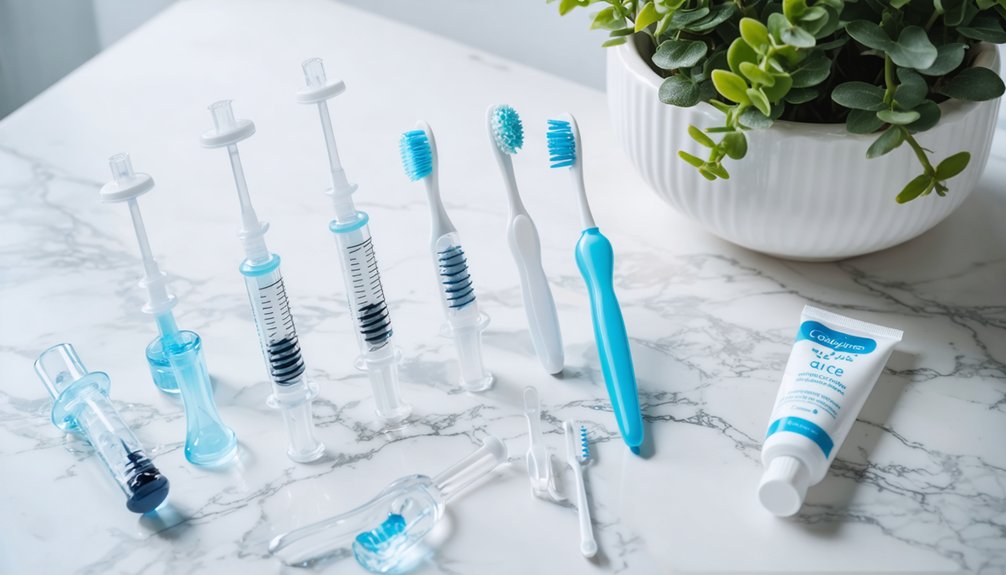
At-home whitening kits designed for sensitive teeth let you achieve meaningful results without compromising enamel integrity, provided you select formulations with controlled peroxide concentrations.
Prioritizing enamel protection guarantees you maintain dental health while brightening effectively.
- Choose kits containing 10% carbamide peroxide or 3% hydrogen peroxide — these concentrations whiten gradually without triggering nerve irritation.
- Select ADA-approved strips or gels with built-in desensitizing agents — potassium nitrate actively calms exposed nerves during treatment.
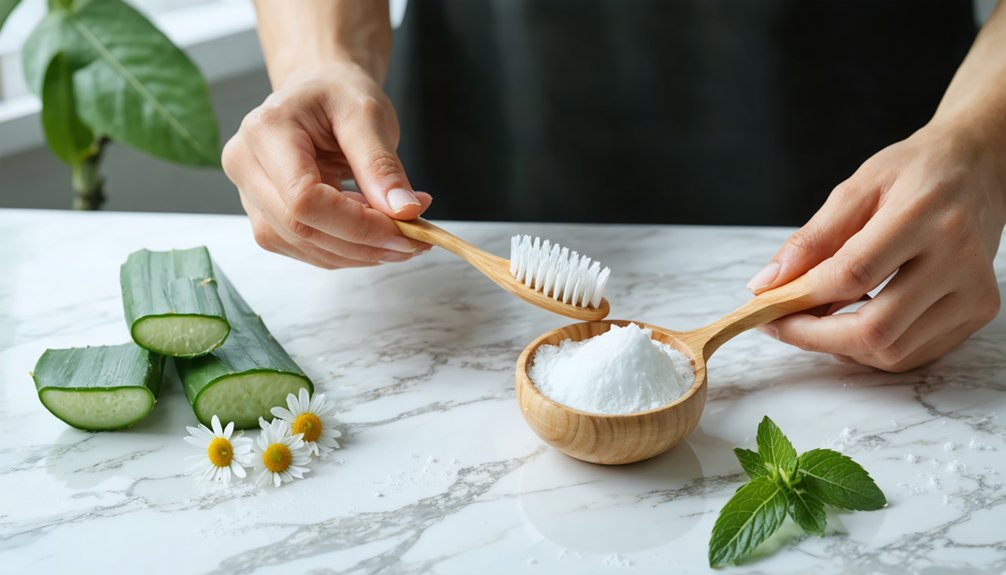
- Incorporate natural whitening options like baking soda-based gels — gentle abrasives lift surface stains without chemical aggression.
- Limit application sessions strictly per manufacturer guidelines — overuse accelerates enamel erosion, compounding existing sensitivity.
You control the outcome by matching product strength precisely to your sensitivity threshold.
Which Peroxide Strength Is Safe for Sensitive Teeth?
Peroxide concentration determines how aggressively a whitening agent penetrates enamel and irritates the pulp, making it the most critical variable for sensitive teeth. Among peroxide types, 10% carbamide peroxide and 3% hydrogen peroxide represent the clinically established thresholds for safe use.
Carbamide peroxide releases hydrogen peroxide slowly, reducing acute nerve irritation. Hydrogen peroxide acts faster but dissipates quickly, requiring careful application control.
You should avoid concentrations exceeding 15% carbamide peroxide or 6% hydrogen peroxide without professional supervision. Whitening frequency matters equally—limiting sessions to three times weekly prevents cumulative enamel stress.
Start at the lowest effective concentration, monitor your sensitivity response, and escalate only if you tolerate treatments without discomfort. Precision here protects your enamel long-term.
Natural Remedies That Whiten Sensitive Teeth Without Damage
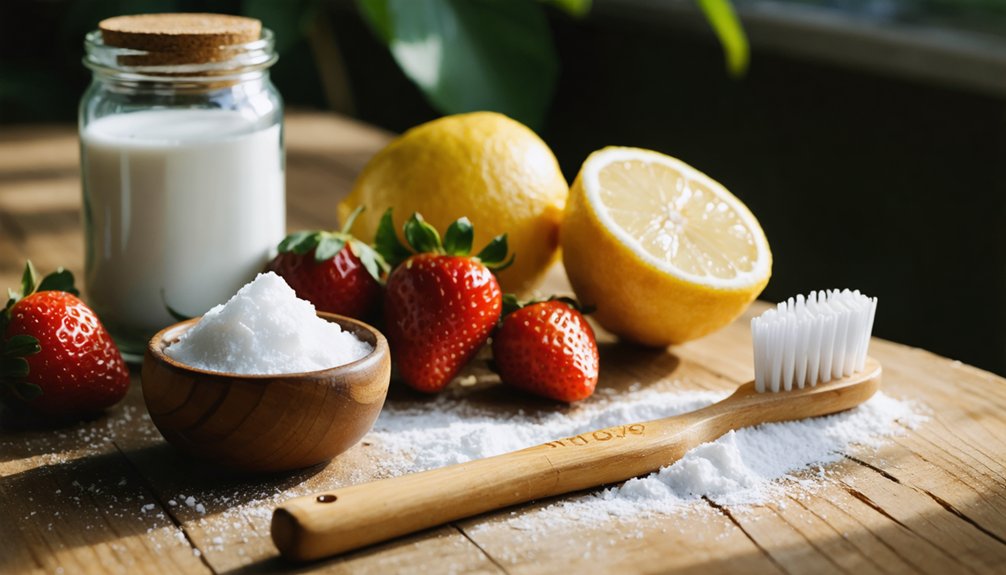
Natural remedies offer a gentler path to whitening sensitive teeth, but their effectiveness depends on proper application and realistic expectations. You can manage natural whitening safely by selecting low-risk methods that prioritize enamel preservation.
- Baking soda paste — Mix baking soda with water for gentle exfoliation, dissolving surface stains without harsh chemicals. Limit use to twice weekly.
- Diluted hydrogen peroxide rinse — Swish 3% hydrogen peroxide briefly before brushing to lift stains mildly without prolonged nerve exposure.
- Oil pulling — Swish coconut oil for 10 minutes daily to reduce bacteria and surface discoloration gradually.
- Baking soda and hydrogen peroxide combination — Apply sparingly to avoid enamel erosion, using this method no more than once weekly.
Overuse of any remedy accelerates enamel damage, worsening sensitivity long-term.
When Professional Whitening Is the Safer Choice for Sensitive Teeth
When sensitivity persists despite trying gentler at-home options, professional whitening becomes the safer and more effective choice. Your dentist controls every variable—peroxide concentration, application time, and gum protection—reducing your risk of irritation considerably.
In-office treatments use protective shields and buffering gels to safeguard your gums while delivering precise results. Custom-fitted trays prevent gel from migrating onto soft tissue, a common cause of discomfort with over-the-counter products.
Dentists also prescribe take-home professional kits containing low-strength whitening gels as safe alternatives to store-bought options. These formulations balance efficacy with sensitivity management, something generic products can’t consistently guarantee.
If you have gum disease, enamel erosion, or active decay, professional oversight isn’t optional—it’s essential. You gain both whiter teeth and clinical assurance that your oral health remains protected throughout treatment.
Daily Habits That Protect Sensitive Teeth After Whitening
Once whitening treatment ends, your daily habits determine how well you protect your results and manage lingering sensitivity. Habitual care and deliberate dietary choices directly influence how long your results last and how comfortable your teeth remain.
Post-whitening habits determine everything—protect your results and manage sensitivity through deliberate, consistent daily care.
- Use desensitizing toothpaste morning and night—potassium nitrate calms exposed nerves while fluoride rebuilds enamel integrity.
- Eliminate acidic foods and drinks—citrus, vinegar, and carbonated beverages chemically erode enamel, amplifying post-whitening sensitivity.
- Brush gently with a soft-bristled toothbrush—aggressive scrubbing accelerates enamel wear on already vulnerable tooth surfaces.
- Schedule regular dental check-ups—your dentist monitors sensitivity progression, identifies complications early, and adjusts your care protocol accordingly.
Executing these steps consistently keeps sensitivity manageable and preserves your whitening investment long-term.
Frequently Asked Questions
Can Teeth Whitening Cause Permanent Damage to Already Sensitive Teeth?
Yes, improper whitening methods can permanently damage your sensitive teeth by wearing down enamel and irritating nerves. You’ll minimize risks by choosing low-peroxide options, following instructions carefully, and using sensitivity relief toothpaste before and after treatments.
Is Whitening Safe During Pregnancy for People With Sensitive Teeth?
Avoiding whitening during pregnancy is the safest choice you can make. You should explore natural remedies and alternative treatments like baking soda paste instead, as peroxide-based products carry untested risks for sensitive teeth and fetal development.
How Long Does Tooth Sensitivity Typically Last After a Whitening Treatment?
Your sensitivity duration typically lasts 24–72 hours post-treatment. You’ll accelerate treatment recovery by using desensitizing toothpaste before and after sessions, avoiding acidic foods, and scheduling regular dental check-ups to monitor your progress effectively.
Can Children or Teenagers With Sensitive Teeth Safely Use Whitening Products?
Is your child’s smile worth the risk? You shouldn’t use whitening products on children due to age restrictions. Instead, explore safer whitening alternatives like fluoride toothpaste, which actively protects developing enamel without causing sensitivity complications.
Does Dental Insurance Ever Cover Whitening Treatments for Medically Sensitive Teeth?
Most insurance policies don’t cover cosmetic whitening, but you’ll find coverage options may apply if sensitivity stems from a medical condition. Consult your dentist to document necessity and advocate directly with your provider.
References
- https://www.blvddentistry.com/can-you-get-whitening-treatment-with-sensitive-teeth/
- https://www.northeastdentalarts.com/blog/what-is-the-least-damaging-way-to-whiten-your-teeth/
- https://www.sensodyne.com/en-us/oral-health-tips/whitening-sensitive-teeth/what-to-know/
- https://www.parkcreekdentalcare.com/blog/teeth-whitening-for-sensitive-teeth-safe-options-that-work/
- https://www.jeffreyburns.com/safe-teeth-whitening-options/
- https://www.nextleveldentalstudio.com/post/6-natural-ways-to-safely-try-teeth-whitening-for-sensitive-teeth
- https://www.oakwestdental.com/tips-to-reduce-pain-when-whitening-sensitive-teeth/
- https://www.goodrx.com/conditions/dental-care/is-teeth-whitening-safe