Safe at-home whitening for seniors requires a cautious approach because aging teeth have thinner enamel, increased sensitivity, and gum recession that standard products can aggravate. You’ll want to stick to low-concentration hydrogen peroxide, well-fitted OTC strips, or dentist-supervised take-home trays to minimize irritation. Daily fluoride toothpaste and alcohol-free whitening mouthwash help maintain results gently. A dental consultation before starting any regimen is strongly advised. The sections ahead break down each method in clinical detail.
Key Takeaways
- Dentist-supervised take-home whitening trays offer custom gel concentrations, minimizing peroxide contact with sensitive areas and delivering visible results within one to two weeks.
- Over-the-counter whitening strips effectively treat mild surface staining; choose well-fitted designs and use them after professional cleaning for best results.
- Limit hydrogen peroxide use to concentrations of 3% or lower, mixing with baking soda for gentle application a few times weekly.
- Select fluoride toothpastes with aloe vera or natural polishing agents and alcohol-free whitening mouthwash to protect sensitive gums and enamel.
- Consult a dentist before whitening if you have crowns, veneers, gum recession, or chronic sensitivity, as existing restorations won’t respond to whitening agents.
Why Senior Teeth Need a Gentler Whitening Approach
As you age, your teeth undergo structural changes that make aggressive whitening treatments risky. Enamel thins over decades, exposing the sensitive dentin layer underneath.
Aging teeth face real risks from whitening—thinning enamel leaves sensitive dentin exposed and vulnerable to damage.
Gum recession uncovers tooth roots, which lack enamel protection entirely. Medications common among seniors—including tetracyclines and antihistamines—can deepen staining that standard treatments don’t address effectively.
You’re also more likely to have crowns, veneers, or fillings that don’t respond to peroxide-based products. Applying high-concentration bleaching agents to compromised enamel health can cause lasting sensitivity, irritation, or uneven results.
Gentle techniques designed specifically for aging teeth allow you to manage the process on your own terms. Lower-strength formulas applied gradually give you control over comfort and outcomes without sacrificing meaningful results.
What Seniors With Sensitive Teeth Should Check Before Whitening
Before you attempt any whitening method, a few key checks can prevent discomfort and protect already-vulnerable tooth structures.
Start by scheduling a dental consultation to assess your tooth health, including enamel thickness, gum recession, and existing restorations like crowns or veneers.
Whitening agents don’t work on restorations, and exposed roots absorb peroxide unevenly, increasing sensitivity risk. Your dentist can identify these concerns before they become problems.
Prioritize enamel protection by avoiding high-concentration peroxide products without professional guidance.
If you’ve had tetracycline use or significant enamel wear, standard over-the-counter strips likely won’t deliver safe or effective results.
Custom-fitted trays from your dentist minimize gum contact and allow you to control treatment duration, making them the clinically preferred starting point for sensitive teeth.
Dentist-Supervised Take-Home Trays for Aging Teeth
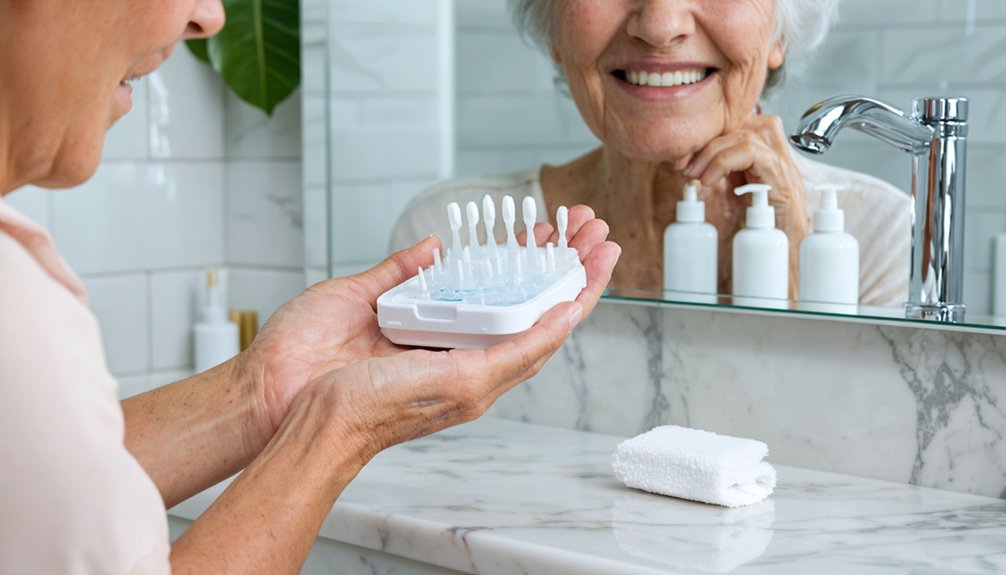
When your dentist designs a take-home tray system specifically for you, the treatment accounts for your enamel thickness, gum recession, and sensitivity thresholds in ways generic products can’t.
The tray benefits extend beyond whitening—custom fitting minimizes peroxide contact with exposed roots and soft tissue, reducing irritation risk considerably.
Custom trays do more than whiten—they protect sensitive roots and soft tissue from unnecessary peroxide exposure.
Dentist involvement guarantees you’re using an appropriate gel concentration, typically lower-strength carbamide peroxide, suited for aging teeth prone to sensitivity.
Your dentist monitors progress, letting you pause or adjust based on your comfort response.
The American Dental Association supports this approach when combined with consistent oral hygiene.
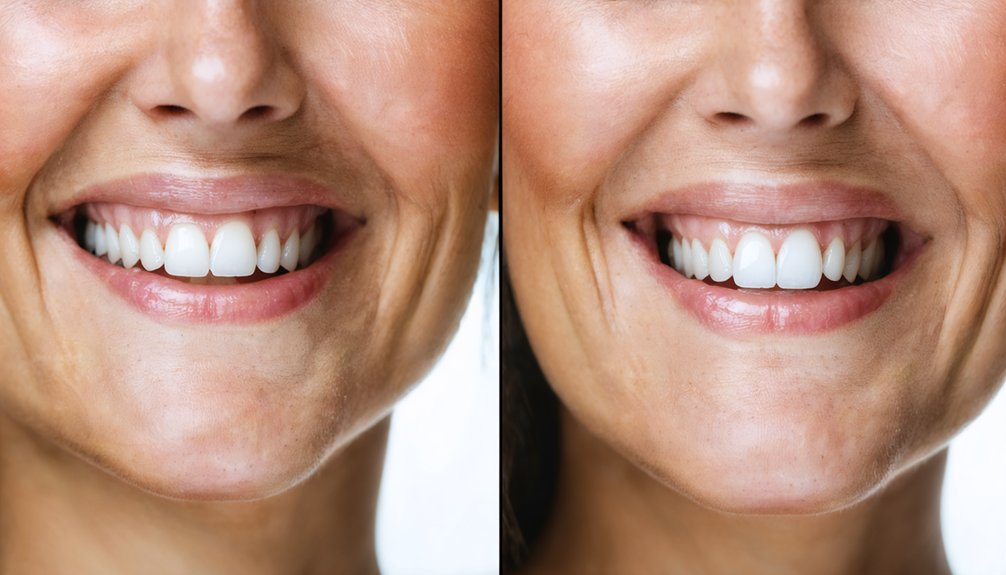
Results typically appear within one to two weeks.
Costs range from $300 to $1,000, but the controlled process gives you measurable outcomes without compromising your existing restorations or enamel integrity.
OTC Whitening Strips That Actually Work for Seniors
If your teeth show only mild surface staining, over-the-counter whitening strips offer a cost-effective option backed by moderate clinical evidence.
You should select strips with a well-fitted design to minimize direct peroxide contact with your gums, since poor-fitting strips raise your risk of irritation, particularly if you have receding gum tissue.
Use them strictly according to label instructions, and discontinue immediately if you experience sensitivity or gum discomfort.
Strips for Mild Staining
Although over-the-counter whitening strips aren’t as potent as dentist-supervised treatments, they’re a practical, low-cost option for seniors dealing with mild surface staining. Strips effectiveness depends largely on consistent, correct use—they work best on surface discoloration from coffee, tea, or food, not deeper intrinsic stains.
For application tips, apply strips only to clean, dry teeth and avoid contact with your gums, particularly if you have recession or exposed roots. Follow the manufacturer’s recommended wear time precisely—exceeding it increases sensitivity risk without improving results. Use them after professional cleaning for maximum impact.
If you experience gum irritation or increased tooth sensitivity, discontinue use and consult your dentist.
Strips serve best as a maintenance tool, not a primary whitening solution for significant discoloration.
Avoiding Gum Irritation
Gum irritation remains one of the most common complaints seniors report when using OTC whitening strips, largely because standard strip lengths aren’t designed to accommodate age-related gum recession or exposed root surfaces.
To prioritize gum health, trim strips before applying them, ensuring they contact only enamel surfaces. You’ll reduce irritation prevention failures greatly by avoiding strip overlap onto soft tissue.
If you’re experiencing sensitivity during treatment, discontinue use immediately and consult your dentist. Custom-fitted trays offer a more controlled alternative, minimizing peroxide contact with vulnerable gum tissue.
Never exceed recommended application times, and avoid high-concentration formulas without professional guidance.
Combining whitening treatments with consistent flossing reinforces gum health and reduces inflammation risk, giving you greater control over both safety and outcome.
Using Hydrogen Peroxide Safely on Aging or Sensitive Teeth
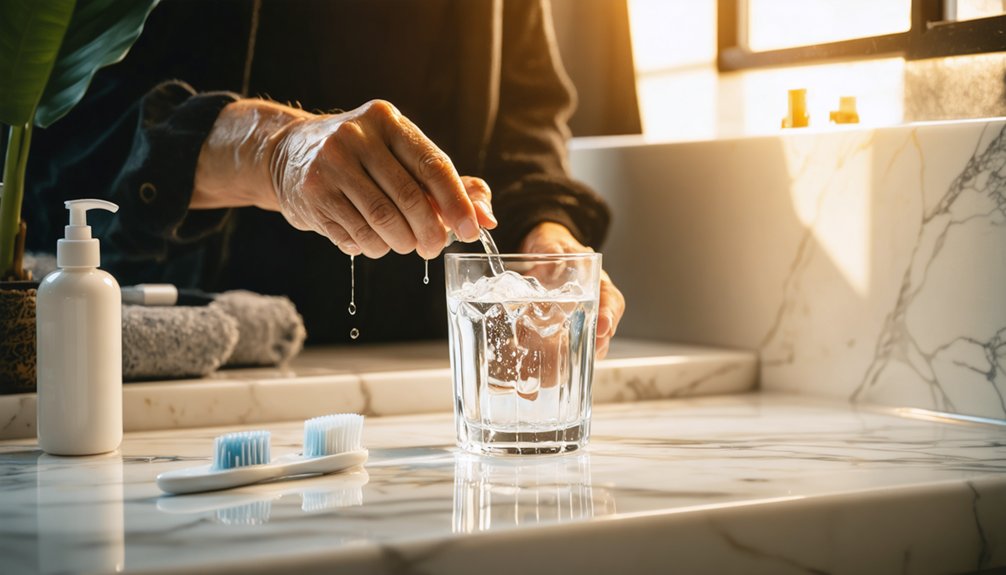
When using hydrogen peroxide at home, you should stick to concentrations of 3% or lower, as higher levels increase the risk of enamel erosion and gum irritation on aging teeth.
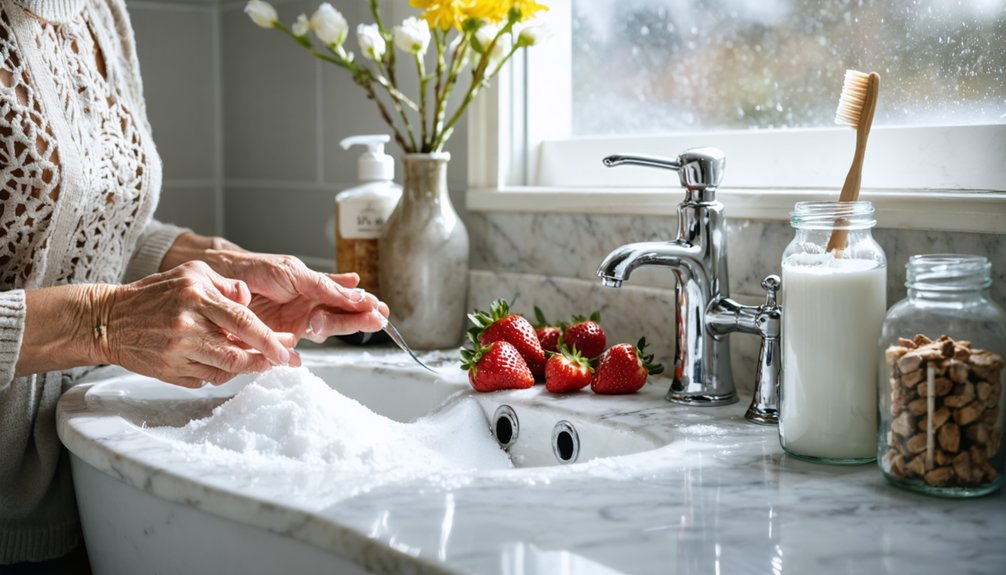
You can mix a low-concentration solution with baking soda and brush gently for one to two minutes, but limit this to a few times per week to avoid sensitivity.
If you have exposed roots, receding gums, or existing dental restorations, consult your dentist before use, since these conditions make your teeth more vulnerable to chemical irritation.
Safe Concentration Levels
Hydrogen peroxide can effectively reduce tooth staining, but concentration levels matter greatly when aging or sensitive teeth are involved. Selecting appropriate whitening ingredients protects your enamel while delivering measurable results.
Follow these evidence-based guidelines for safe application:
- Use 3% or lower hydrogen peroxide — concentrations above this threshold increase enamel erosion risk in aging teeth.
- Limit sessions to twice daily for one week — extended exposure compounds sensitivity and gum irritation risks.
- Stop immediately if sharp pain occurs — discomfort signals potential root exposure or enamel compromise requiring professional evaluation.
You control the process by respecting these boundaries. Higher concentrations don’t accelerate results safely — they amplify risk. Staying within clinically supported limits keeps whitening effective without sacrificing your long-term dental health.
Minimizing Sensitivity Risks
Respecting concentration limits protects your enamel, but aging and sensitive teeth demand additional precautions beyond dosage alone.
Effective sensitivity management begins with custom-fitted trays, which minimize gel contact with exposed roots and receding gums. If irritation develops, stop treatment immediately and allow 48–72 hours of recovery before resuming.
Control your whitening frequency carefully — treating every other day rather than daily reduces cumulative enamel stress without sacrificing results. Use fluoride toothpaste alongside your whitening regimen to reinforce enamel between sessions.
Avoid high-concentration formulas if you have existing restorations, as these don’t respond to peroxide and surrounding tissue becomes more vulnerable.
Consult your dentist before starting any regimen if you experience chronic sensitivity, gum recession, or wear existing dental work that could complicate treatment.
Daily Whitening Maintenance for Seniors: Toothpaste and Mouthwash
For seniors seeking a low-risk, daily approach to whitening maintenance, toothpaste and mouthwash offer a practical starting point. These products contain polishing compounds and low-strength whitening agents that target surface stains without altering enamel structure.
Following daily maintenance tips guarantees gradual, manageable results while protecting sensitive teeth.
When choosing products, prioritize safe ingredient choices:
- Select toothpastes with aloe vera or natural polishing agents — they’re clinically gentler on aging enamel.
- Choose alcohol-free whitening mouthwash — it freshens breath without irritating vulnerable gum tissue.
- Avoid abrasive charcoal-based formulas — evidence doesn’t support their safety for seniors.
You won’t achieve dramatic whitening, but you’ll maintain prior results consistently.
Combined with proper flossing and hygiene, these tools give you reliable, dentist-supported control over your daily oral care.
Frequently Asked Questions
Can Seniors Whiten Teeth if They Have Dental Implants or Crowns?
You can’t whiten implants or crowns—they don’t respond to peroxide. Focus on implant care and crown maintenance by whitening natural teeth carefully, then consult your dentist to match restorations to your new shade.
How Long Do At-Home Whitening Results Typically Last for Seniors?
Like a fresh coat of paint, results fade—you’ll typically maintain whitening 1–2 years with dentist-supervised trays. Monitor your teeth sensitivity and adjust whitening frequency accordingly, combining daily hygiene to extend your outcomes effectively.
Does Whitening Toothpaste Work Differently on Age-Yellowed Teeth?
Whitening toothpaste doesn’t change enamel color on age-yellowed teeth. It only removes surface stains, offering limited whitening effectiveness. If you’ve got tooth sensitivity, it’s safer, but you’ll need stronger methods for deeper discoloration.
Can Medications Seniors Take Affect Whitening Treatment Results?
Yes, your medications can affect whitening treatment results. Certain drugs cause whitening sensitivities or deeper staining that peroxide can’t reverse. You should disclose all medication interactions to your dentist before starting any at-home whitening regimen.
Are There Whitening Methods Safe for Seniors With Dry Mouth?
Consider Mary, 68, managing dry mouth — you’ll find dentist-supervised custom trays with low-strength carbamide peroxide, combined with natural remedies and hydration techniques, offer the safest whitening approach, minimizing irritation while preserving enamel integrity effectively.
References
- https://www.trysnow.com/blogs/news/teeth-whitening-for-seniors-safer-brighter-smiles-after-60
- https://sunlakesdentistry.com/can-senior-teeth-be-whitened/
- https://www.willowstreetdental.com/age-related-yellowing-whitening-solutions-for-seniors/
- https://www.northeastdentalarts.com/blog/what-is-the-least-damaging-way-to-whiten-your-teeth/
- https://www.youtube.com/watch?v=qGkzrHzJUBU
- https://newsnetwork.mayoclinic.org/discussion/mayo-clinic-q-and-a-many-safe-choices-available-to-help-whiten-teeth/
- https://www.medicalnewstoday.com/articles/322421
- https://www.aarp.org/health/conditions-treatments/teeth-whitening/
- https://www.urmc.rochester.edu/news/publications/health-matters/diy-teeth-whitening-too-good-to-be-true
- https://www.colgate.com/en-us/oral-health/teeth-whitening/whitening-aging-teeth