As you age, your enamel thins, dentin darkens, and saliva production drops—making brightening your smile far more complex than it once was. Whitening works well on surface stains from coffee or tobacco, but deep gray or brown discoloration often resists peroxide-based treatments entirely. Your options may extend beyond bleaching to veneers or bonding. Understanding your specific discoloration type, safety considerations, and maintenance strategies will help you make smarter, longer-lasting decisions for your smile.
Key Takeaways
- Enamel thins with age, exposing darker dentin beneath, making teeth harder to whiten and more sensitive to treatment.
- Whitening works best on yellow surface stains; gray or brown discoloration from structural changes often resists peroxide-based treatments.
- Lower peroxide concentrations and shorter sessions reduce sensitivity risks for older adults with naturally thinner enamel.
- Severe or deep discoloration unresponsive to whitening may require restorative alternatives like veneers or composite bonding.
- Avoiding staining foods and drinks for 48 hours post-treatment and maintaining consistent oral hygiene extends whitening results significantly.
Why Aging Teeth Turn Yellow Over Time
As you age, your teeth naturally lose their bright appearance due to changes happening both on the surface and deep within the tooth structure. Enamel thins progressively, exposing the darker yellow dentin beneath, while secondary dentin accumulates and reduces translucency.
Natural wear from chewing and acid erosion accelerates enamel loss, limiting your tooth’s capacity for natural enamel restoration. Declining saliva production weakens your mouth’s defense against staining compounds, making discoloration harder to prevent without intervention.
Unlike surface stains, these intrinsic structural shifts require more than basic oral hygiene. Prioritizing tooth remineralization through fluoride treatments and professional care helps slow this progression.
Understanding these mechanisms puts you in control of meaningful, evidence-based decisions about whitening and cosmetic restoration before discoloration advances further.
What Whitening Can and Cannot Fix on Older Teeth
While whitening treatments can meaningfully brighten your smile, they can’t reverse every form of age-related discoloration. Peroxide-based bleaching works best on yellow-toned stains and surface discoloration, delivering noticeable improvement when applied correctly.
Whitening treatments brighten smiles effectively, but only when the discoloration type aligns with what peroxide-based bleaching can actually address.
However, deep gray, brown, or structurally embedded discoloration often responds poorly, requiring veneers or bonding instead.
Don’t let whitening myths mislead you into expecting dramatic transformations on older teeth. Results tend to be more subtle because thinning enamel and accumulated dentin limit how much light reflects.
Professional cleaning should precede any bleaching to remove extrinsic stains first.
Before investing, confirm what your dental insurance covers, since most plans exclude cosmetic whitening but may cover diagnostic evaluations.
Understanding your discoloration type helps you target the right solution and maintain realistic, achievable expectations.
Which Whitening Method Matches Your Type of Discoloration
The type of discoloration you’re dealing with determines which whitening approach will actually work. Surface stains from coffee, tea, or tobacco respond well to professional cleaning, peroxide-based bleaching, and whitening toothpastes.
While these methods are effective for surface stains, deeper intrinsic yellowing tied to dentin darkening typically requires in-office bleaching or custom tray treatment for meaningful results.
When discoloration runs too deep for bleaching to correct—whether from structural changes, gray tones, or severe enamel loss—restorative options like veneers or bonding become the more effective path forward.
Surface Stain Whitening Options
Not all tooth discoloration responds to whitening the same way, and matching your method to your stain type is what separates meaningful results from wasted effort. Surface stains from coffee, tea, red wine, and tobacco respond most reliably to conventional whitening approaches.
Whitening toothpastes use specific toothpaste ingredients — mild abrasives and polishing agents — to mechanically lift these deposits before they set deeper. Strips and rinses offer additional support for minor extrinsic buildup.
Before choosing a product, you’ll need to dismiss common whitening myths, particularly the idea that stronger always means better. Excessive peroxide on surface stains doesn’t improve outcomes — it increases sensitivity.
Professional cleaning first removes accumulated debris, giving any whitening agent direct contact with enamel and dramatically improving your results.
Deep Discoloration Treatment Choices
Deep discoloration tells a different story than surface staining, and treating it the same way wastes time and money. When thinning tooth enamel exposes the darker dentin underneath, standard bleaching delivers limited results. Dentin exposure requires solutions that go beyond peroxide.
Here’s what actually works for deep discoloration:
- Professional bleaching can lighten yellow-toned intrinsic stains when enamel loss is moderate.
- Custom tray systems allow controlled, extended peroxide contact for gradual improvement.
- Veneers conceal structural discoloration that whitening can’t reverse.
- Dental bonding corrects localized dark spots without full coverage.
- Restorative evaluation identifies whether decay or damage is driving color change.
Choose your treatment based on diagnosis, not assumption. Control starts with knowing exactly what you’re dealing with.
Restorative Alternatives For Severe Cases
When whitening fails to move the needle, restorative dentistry steps in as the practical alternative. Veneers and composite bonding directly cover structural discoloration that peroxide simply can’t reach—gray tones, deep brown staining, or enamel defects respond far better to these solutions.
Veneers deliver long-lasting, controlled results, while bonding offers a more conservative, cost-effective entry point.
To protect your investment, you’ll need to commit beyond the dental chair. Consistent oral hygiene—brushing, flossing, and routine professional cleanings—prevents new stain buildup on surrounding natural teeth.
Diet modifications matter equally; limiting coffee, red wine, and tobacco preserves both the restoration and adjacent enamel.
Restorative options give you precise control over your outcome, but sustaining that result demands disciplined daily habits.
Is Teeth Whitening Safe for Older Adults?
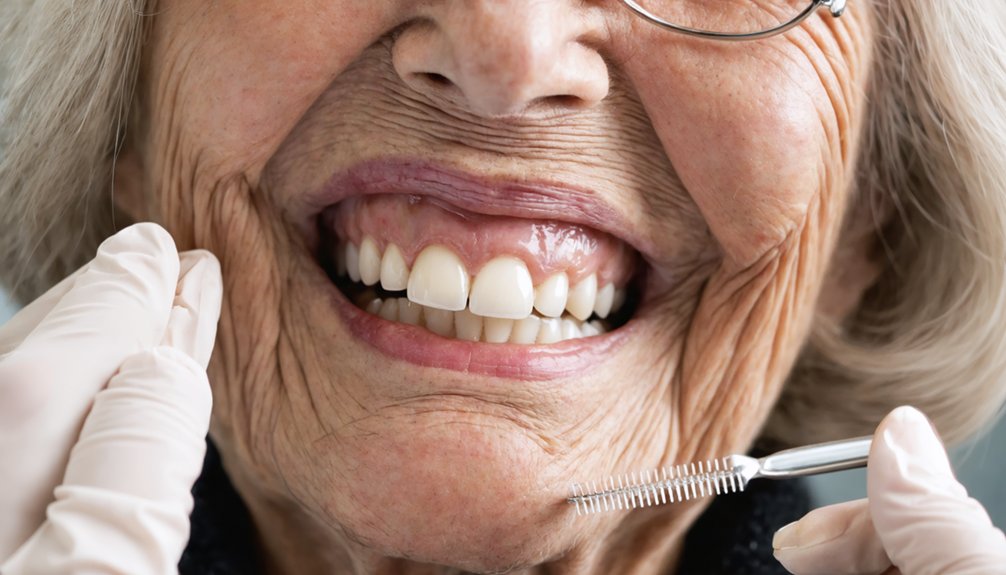
If your teeth and gums are healthy, whitening is generally safe even as you age. However, thinner enamel means your teeth may be more sensitive to peroxide than they were years ago.
You can reduce that risk by choosing lower-concentration formulas and keeping sessions short.
Before starting any whitening treatment, address existing decay, gum disease, or cracked enamel, because these conditions make sensitivity worse and can lead to further damage.
General Safety Considerations
Teeth whitening is generally safe for older adults, provided you address any underlying dental issues beforehand. Don’t let whitening myths derail your decision—safety depends on preparation, not age alone. Dental nutrition also plays a role; a mineral-rich diet supports enamel integrity during treatment.
Before starting any whitening protocol, confirm you’re managing these critical factors:
- Resolve decay and gum disease first — active conditions worsen under peroxide exposure
- Choose lower peroxide concentrations — thinner enamel increases sensitivity risk
- Shorten session durations — limiting exposure reduces gum irritation
- Repair cracked enamel beforehand — fractures allow peroxide to penetrate deeper tissues
- Schedule a professional evaluation — distinguishing stain type prevents wasted effort on ineffective treatments
You control the outcome by controlling the preparation.
Managing Sensitivity Risks
Safety preparation clears the path, but managing sensitivity is where whitening success often hinges for older adults. Thinner enamel exposes more dentin, making your teeth more reactive to peroxide. You can control this risk strategically.
Choose lower peroxide concentrations and shorten session durations to limit nerve irritation. Your dentist can calibrate both variables based on your enamel condition and sensitivity threshold.
Dental hygiene discipline also matters here. Brushing with desensitizing toothpaste before and during treatment builds measurable tolerance. Skipping this step leaves you vulnerable to unnecessary discomfort.
Dietary habits compound sensitivity risks post-treatment. Acidic foods and temperature-extreme beverages amplify nerve response when enamel is temporarily more porous after whitening. Avoiding these triggers for 24 to 48 hours lets your enamel restabilize and protects your results.
When Whitening Alone Won’t Solve the Problem
While whitening treatments can meaningfully improve the appearance of aging teeth, they can’t correct every type of discoloration. Enamel erosion from dietary habits and natural aging can expose dentin so deeply that bleaching produces minimal change. When discoloration is structural or severe, you’ll need restorative options to achieve real results.
Recognize when whitening reaches its limits:
- Gray or brown tones typically resist peroxide-based treatments
- Translucency loss from thinned enamel requires cosmetic restoration, not bleaching
- Deep intrinsic staining often responds better to veneers or bonding
- Cracked or worn enamel needs structural repair before any cosmetic treatment
- Uneven color caused by decay requires dental treatment first
Understanding these boundaries helps you make smarter decisions and choose solutions that actually deliver results.
How to Get Stronger Results From Whitening Treatments
When whitening treatments underdeliver, the problem usually isn’t the treatment itself—it’s how it’s being used. To get stronger results, you need to control the variables working against you.
Start by addressing diet impact directly. Avoid coffee, tea, red wine, and dark sauces for 48 hours post-treatment—your enamel is more porous and absorbs stains faster during this window. Rinse with water immediately after consuming staining foods or drinks.
Your enamel is most vulnerable post-treatment—what you eat in the next 48 hours determines your results.
Saliva effects also matter. Reduced saliva production weakens your natural stain defense, so stay hydrated and consider saliva-stimulating strategies like sugar-free gum.
Pair professional bleaching with custom trays for sustained peroxide contact.
Commit to routine cleanings to remove extrinsic buildup before each whitening cycle.
Consistency and precision—not repetition—drive better outcomes.
How to Keep Your Teeth Whiter After Treatment
Keeping your teeth whiter after treatment comes down to controlling the conditions that reverse your results. Diet modifications and oral hygiene aren’t optional maintenance steps—they’re what determine how long your investment lasts.
- Avoid coffee, tea, red wine, and dark sodas for 48 hours post-treatment when enamel is most vulnerable to staining.
- Rinse with water immediately after consuming staining foods or drinks to limit pigment absorption.
- Brush twice daily and floss consistently to prevent extrinsic stain accumulation.
- Schedule routine professional cleanings to remove buildup before it embeds deeper.
- Eliminate smoking or nicotine vaping, which accelerates discoloration and undermines whitening longevity.
Stain recurrence is predictable when staining habits continue unchanged. You control the timeline of your results by controlling what contacts your teeth daily.
Frequently Asked Questions
Can Whitening Treatments Interfere With Existing Dental Crowns or Bridges?
Whitening won’t alter your crowns or bridges—dental crown compatibility is a real limitation. You’ll face bridge discoloration concerns as natural teeth lighten while restorations stay fixed, creating visible mismatches you must address with your dentist proactively.
Does Insurance Ever Cover Whitening Treatments for Older Adults?
Most insurance plans won’t cover whitening because insurers classify it as cosmetic dentistry. You’ll typically pay out-of-pocket, so confirm your insurance coverage upfront and ask your dentist about flexible payment options to stay in control of costs.
How Long Does Professional Whitening Typically Last for Seniors?
Just like a fresh coat of paint, professional whitening typically lasts one to three years for seniors. You’ll extend results by managing teeth sensitivity with lower peroxide and applying maintenance tips like avoiding staining foods consistently.
Are Whitening Results Affected by Medications Commonly Taken by Older Adults?
Yes, medications can affect your whitening results. Certain drugs cause dry mouth, reducing saliva that protects aging enamel. Medication interactions may also deepen discoloration, making professional evaluation essential before you start any whitening treatment.
Can Receding Gums Affect How Whitening Treatments Are Applied?
When gum recession exposes root surfaces, you’ll need adjusted whitening protocols to protect vulnerable areas. Your provider can modify application techniques and reduce peroxide concentrations, directly managing tooth sensitivity so you maintain control over your comfort and results.
References
- https://www.colgate.com/en-us/oral-health/teeth-whitening/whitening-aging-teeth
- https://dentalpedia.co/clinical/tooth-color-changes-complete-guide.html
- https://www.health.harvard.edu/diseases-and-conditions/the-aging-mouth-and-how-to-keep-it-younger
- https://scienceinsights.org/how-to-whiten-teeth-over-60-what-actually-works/
- https://uomus.edu.iq/img/lectures21/MUCLecture_2024_129678.pdf
- https://my.clevelandclinic.org/health/symptoms/10958-tooth-discoloration
- https://unionsquaredentalny.com/why-do-teeth-lose-their-whiteness-as-you-age/
- https://blog.ultradent.com/does-aging-make-it-harder-to-whiten-teeth
- https://en.wikipedia.org/wiki/Tooth_discoloration
- https://www.cdhp.org/is-it-harder-to-whiten-teeth-as-you-age/