You can remove enamel stains using baking soda paste (1:1 ratio with water), which eliminates approximately 70% of severe discoloration when applied correctly. Hydrogen peroxide combined with baking soda creates a synergistic treatment for chromogenic stains, though you’ll need to limit applications to 2-3 weekly sessions to prevent sensitivity. For persistent stains, overnight soaking in warm baking soda solution loosens everyday buildup, while commercial products containing sodium hypochlorite target organic chromogens. The following sections outline specific protocols for ideal stain removal efficacy.
Key Takeaways
- Baking soda paste (1:1 ratio with water) removes approximately 70% of severe discoloration when applied and scraped with wooden tools.
- Hydrogen peroxide mixed with baking soda creates a synergistic paste that addresses superficial and chromogenic stains effectively.
- Warm soapy water or baking soda solution soaks loosen everyday stains without compromising enamel integrity.
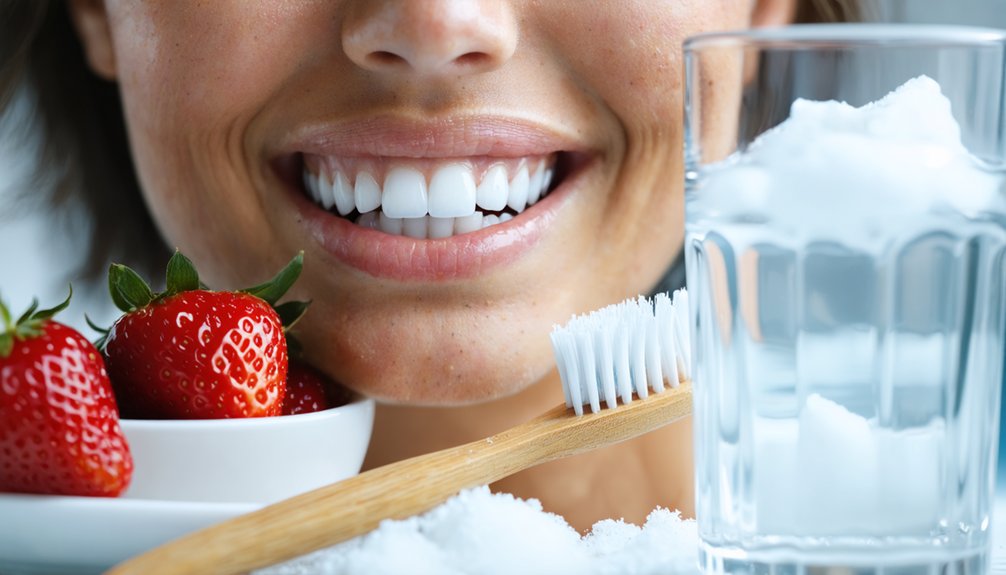
- Natural acids like strawberry malic acid, pineapple bromelain, and diluted apple cider vinegar dissolve protein-based discoloration.
- Commercial products containing sodium hypochlorite or mild abrasives target persistent stains with formulations matched to enamel composition.
Baking Soda Soaking Methods
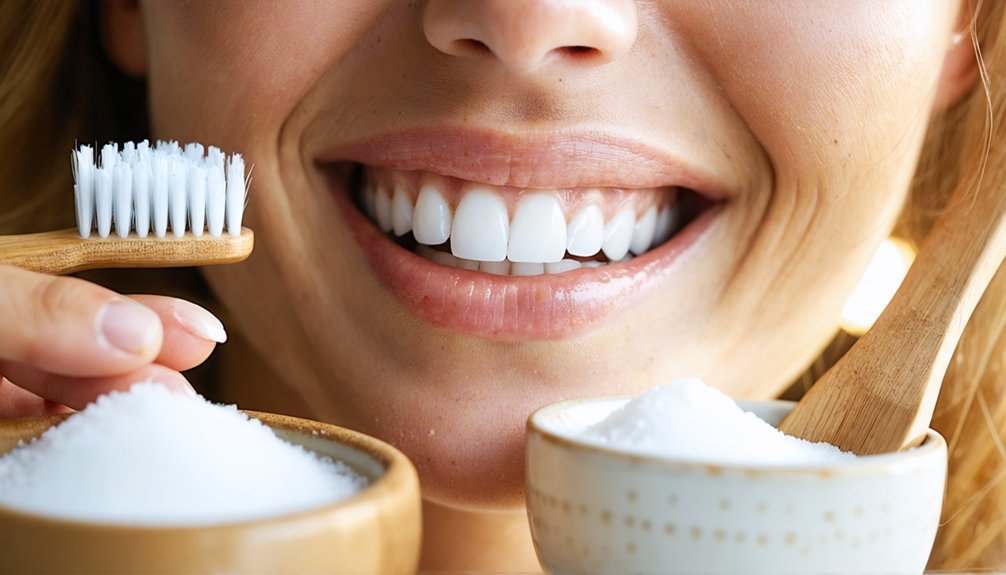
When addressing enamel stains through non-chemical intervention, baking soda paste represents the primary evidence-based approach due to its mild abrasive properties and alkaline pH. You’ll achieve satisfactory results by combining ½ cup baking soda with several tablespoons of water, maintaining a one-to-one baseline ratio. Paste ratio adjustment guarantees proper adhesion to vertical surfaces without premature sliding.
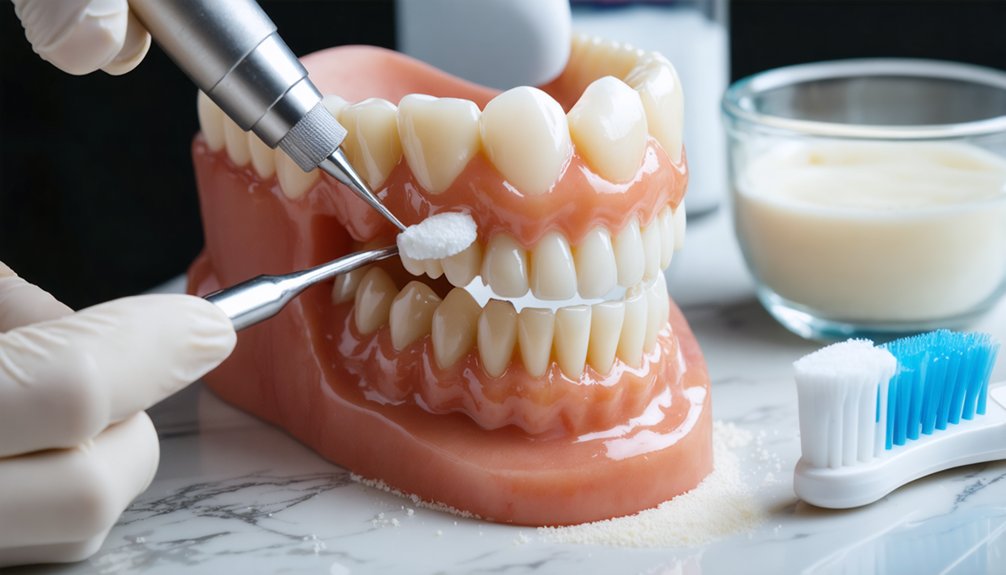
Apply the mixture directly to discolored regions, then allow complete surface contact during the brief drying time optimization period. You’ll observe the paste darkening as it absorbs stain particles. Employ wooden scrapers or spoons for mechanical removal—never metal implements that compromise enamel integrity. This method eliminates approximately 70% of severe discoloration when executed correctly.
For resistant stains, you’ll need to escalate treatment protocols rather than increase abrasive force.
Hydrogen Peroxide and Baking Soda Treatments
Although hydrogen peroxide functions independently as a whitening agent, its combination with baking soda creates a synergistic paste that addresses both superficial and chromogenic enamel stains through dual-mechanism action. You’ll achieve ideal results by mixing one teaspoon of hydrogen peroxide with baking soda until a thick consistency forms. Apply this paste directly to your teeth using a toothbrush, allowing it to remain for several minutes before thoroughly rinsing.
Proper frequency application dosage involves limiting treatments to prevent irrevocable enamel damage, as overuse causes breakdown within days. Essential enamel protective measures include avoiding paste ingestion and monitoring exposure duration. The 3% hydrogen peroxide concentration available in commercial products provides sufficient oxidative stain removal while minimizing interprismatic enamel dissolution when you adhere strictly to recommended protocols.
Magic Eraser Scrubbing Techniques
You should never use Magic Erasers on your teeth, as these melamine foam products aren’t formulated for oral use and cause irreversible enamel damage through mechanical abrasion.
The viral trend of pre-treating teeth with chemical solutions, applying light pressure for stains, or combining Magic Erasers with baking soda doesn’t mitigate the fundamental risk—these techniques all remove protective enamel that your body can’t regenerate.
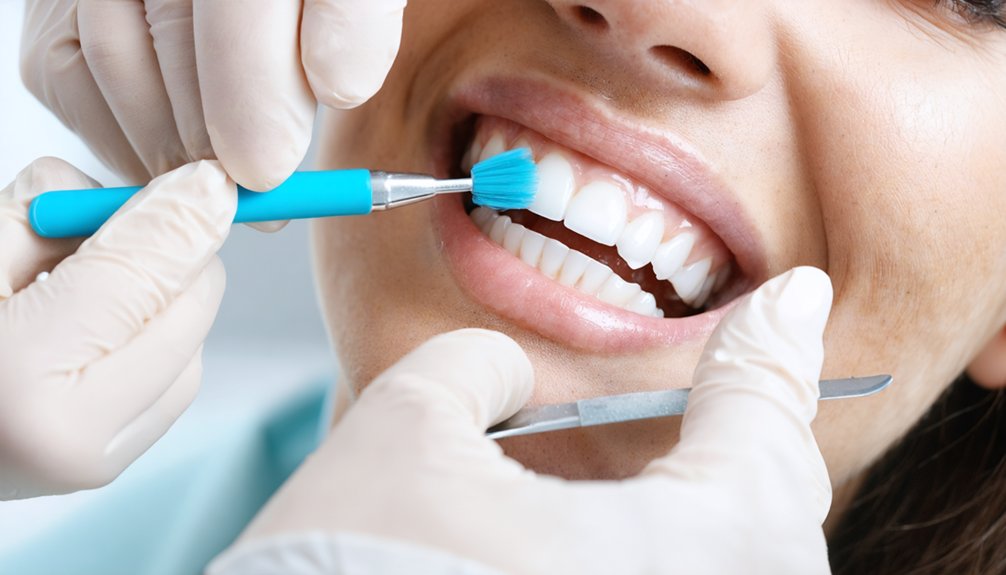
Professional dental cleaning and approved whitening treatments provide effective stain removal without compromising your enamel’s structural integrity or increasing your susceptibility to cavities and sensitivity.
Pre-Treatment With Chemical Solutions
Despite persistent social media trends promoting Magic Erasers as a cost-effective teeth whitening solution, this household cleaning product poses severe risks to dental health and should never contact oral tissues. You’ll achieve safer stain removal through professionally formulated pre-treatment methods.
Enzymatic pre-treatments break down organic compounds in stains through controlled biochemical reactions, preserving enamel integrity while targeting discoloration at the molecular level. Acid-based pre-treatments, when properly pH-balanced for dental use, dissolve surface deposits without mechanical abrasion. These chemical approaches eliminate the need for destructive physical scrubbing that characterizes melamine foam products.
You maintain complete control over enamel protection by selecting treatments specifically designed for oral application rather than household cleaning surfaces. Professional dental products undergo rigorous safety testing that Magic Erasers fundamentally lack.
Light Stain Application Methods
When applied to household surfaces, melamine foam’s abrasive microstructure mechanically dislodges particles through 10-micrometer skeletal strands that function as ultra-fine sandpaper. You’ll achieve ideal results by saturating the eraser, squeezing excess water, then applying moderate pressure with repetitive strokes across stained enamel surfaces.
Light Stain Removal Protocol:
- Test compatibility on inconspicuous areas before full application to prevent enamel damage
- Cut foam into targeted pieces for precision treatment of isolated stain zones
- Wipe residual particles with damp cloth after scrubbing to remove trapped debris
This method complements vinegar soaking methods and enzymatic spot cleaning as part of a thorough stain management strategy. The foam’s cavity-ridden structure traps loosened particles within skeletal strands, requiring minimal chemical intervention for effective stain extraction.
Combining With Baking Soda
Enhancing melamine foam’s mechanical abrasion with alkaline compounds creates synergistic cleaning action that addresses both surface-level and embedded enamel stains. You’ll achieve ideal enamel coating restoration by forming a baking soda scrub mix that matches melamine foam’s consistency when saturated.
Spray the dried paste with hydrogen peroxide to generate scrubbable foam texture that maximizes stain penetration. Apply vigorous scrubbing with gentle scouring pads while adding supplemental baking soda during application for enhanced abrasive action. This controlled approach prevents surface degradation while targeting persistent discoloration.
You must restrict application to interior surfaces only—exterior enamel contact risks irreversible bleaching discoloration. The mechanical-chemical combination provides measurable stain removal through controlled oxidation and physical particle displacement, establishing predictable outcomes for maintenance protocols.
Overnight Soaking Solutions
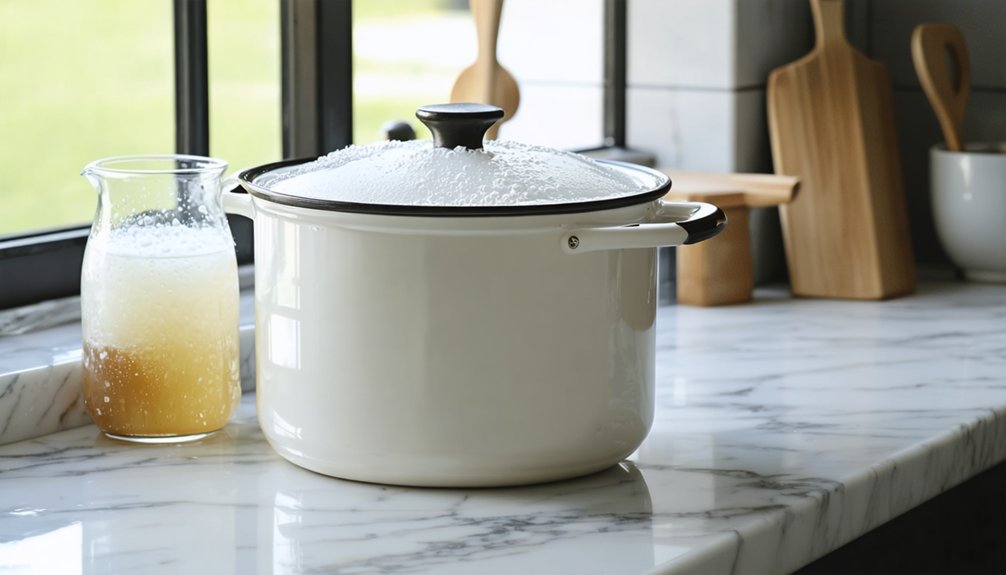
Multiple soaking methods effectively target enamel stains through prolonged chemical contact that loosens discoloration without mechanical abrasion. You’ll achieve ideal results by selecting the appropriate solution based on stain severity and allowing sufficient contact time.
Proven overnight soaking protocols:
- Warm soapy water – Fill your cookware with warm water and washing-up detergent, then let it soak overnight. You’ll remove slight everyday stains without compromising enamel integrity when you rinse with a non-abrasive scrubber the next morning.
- Baking soda solution – Dissolve 2 tablespoons baking soda in warm water and soak overnight. This alkaline treatment loosens everyday stains effectively, requiring only a soft scrubber afterward.
- Bleach solution – Mix 3 tablespoons household bleach per quart of water for 2-3 hour soaks targeting persistent interior stains.
Natural Acid Cleaning Approaches
Natural acids present controlled alternatives for enamel stain removal by leveraging enzymatic and oxidative mechanisms that target discoloration while minimizing mechanical abrasion. You’ll achieve ideal results with hydrogen peroxide-baking soda applications limited to 2-3 weekly sessions, preventing sensitivity while oxidizing surface deposits.
Strawberry malic acid treatments dissolve discoloration when applied for 3-5 minutes once weekly. Pineapple’s bromelain enzyme breaks down protein-based stains through direct application or consumption. Apple cider vinegar rinses create alkaline environments inhibiting bacterial growth when diluted properly.
For enhanced stain control, consider carbonated mineral water baths between acid treatments to neutralize pH levels. Vinegar and salt scrubs provide additional mechanical action for stubborn deposits. Monitor enamel integrity throughout treatment cycles, adjusting frequency based on sensitivity responses to maintain protective tooth structure while achieving whitening objectives.
Commercial Stain Removal Products
Commercial stain removal products for enamel cookware utilize oxidizing agents and alkaline formulations distinct from dental whitening mechanisms. Zep Mold Stain Remover employs sodium hypochlorite to break down organic chromogens on porcelain enamel surfaces, while manufacturer-specific cleaners like Lodge and Le Creuset formulations combine mild abrasives with surfactants idealized for cast iron enamel coatings.
You’ll achieve prime stain removal efficacy by selecting products matched to your enamel substrate composition, as formulations designed for kitchen enamel differ substantially in pH, abrasivity, and active ingredients compared to dental-safe dentifrices.
Zep Mold Stain Remover
Zep Mold Stain Remover delivers industrial-strength chlorine bleach in a ready-to-use spray formulation specifically engineered for rapid oxidation of mold and mildew stains on enamel and similar non-porous surfaces. You’ll achieve ideal stain elimination by following this evidence-based protocol:
- Pre-treatment assessment: Test product on inconspicuous enamel area to verify surface compatibility and prevent unwanted bleaching effects.
- Application technique: Apply spray directly onto stained surface, maintaining adequate ventilation due to chlorine vapor concentration. Allow 5-10 minutes for light staining, extended contact time for severe discoloration.
- Post-treatment procedure: Rinse thoroughly with water to remove residual bleach and prevent surface degradation.
Note that consistent spray nozzle performance varies between units. This chlorine-based formula whitens grout, tile, and porcelain effectively, though it requires proper ventilation management during application.
Lodge and Le Creuset
Enamel cookware manufacturers provide proprietary formulations that address the specific chemical composition and thermal stressing patterns inherent to their cast iron products. Lodge Enamel Cleaner offers ceramic-compatible enamel stain restoration that preserves gloss finish while eliminating discoloration from extended cooking times, dark spices, and pigmented ingredients. You’ll apply it post-washing using a damp cloth following bottle protocols for light-to-moderate surface marks.
For comparison of enamel cleaners, manufacturer-specific products demonstrate superior compatibility with their respective enamel formulations compared to generic alternatives. Lodge’s formula specifically targets staining patterns common to cast iron enamel without degrading the porcelain coating’s integrity. You’ll achieve ideal results by implementing these cleaners as secondary interventions after standard warm soapy water washing proves insufficient. This systematic approach prevents premature warranty exclusions while maintaining your cookware’s structural and aesthetic specifications.
Combination Cleaning Strategies
When surface discoloration persists despite single-agent treatments, combining multiple cleaning compounds creates synergistic mechanical and chemical action that penetrates embedded stains more effectively.
Sequential Application Protocol:
- Baking Soda Foundation Layer – Apply paste and scrub with wooden implements to mechanically loosen carbonized deposits. Allow overnight drying to maximize adhesion before scraping preparatory debris.
- Acidic Enhancement Phase – Layer lemon juice with salt onto pre-treated areas, creating pH gradient that dissolves mineral deposits the alkaline phase couldn’t penetrate. Intensify with additional baking soda for persistent discoloration.
- Oxidative Finishing Treatment – Boil hydrogen peroxide mixture to lift remaining chromophores through oxidation. Follow with damp paper towel scrubbing using kosher salt to polish surface without enamel degradation.
This staged approach addresses multiple stain components systematically while preserving cookware integrity.
Frequently Asked Questions
Can I Use Abrasive Scrubbers on Enamel Cookware Without Causing Damage?
You shouldn’t use abrasive scrubbers—they’ll scratch enamel’s glass-like coating. Avoid harsh abrasives like metal pads that cause irreversible surface damage. Instead, consider gentle cleaners: non-abrasive sponges, nylon brushes, or baking soda paste preserve your cookware’s protective integrity effectively.
How Do I Prevent Stains From Forming on Enamel Surfaces Initially?
You’ll prevent enamel surface stains by maintaining consistent wiping after each use to remove residue immediately. Utilize gentle cleaning agents rather than abrasive compounds, and apply protective barriers. This evidence-based approach guarantees you control discoloration before it forms.
Are There Specific Stains That Cannot Be Removed From Enamel?
Like battle scars on porcelain, acid-induced dulling and citrus etching create permanent staining you can’t reverse. Stubborn discoloration from overheated foods and deep metal marks often resist all treatments, requiring you to accept irreversible enamel surface changes despite aggressive intervention.
Does Hot Water Work Better Than Cold for Enamel Cleaning?
No, warm water effectiveness doesn’t surpass cold for enamel cleaning. Temperature impact on enamel cleaning is negligible—you’ll achieve excellent results through proper brushing technique and fluoride toothpaste, not water temperature. Focus on mechanical plaque removal for stain control.
How Often Should I Deep Clean My Enamel Cookware?
You’ll need deep cleaning only when routine methods fail—typically addressing burnt-on residue, persistent discoloration, or rim rust. Proper storage techniques and cleaning schedule maintenance prevent frequent interventions, giving you control over cookware longevity and reducing unnecessary enamel wear.