
For coffee stains aged beyond 24 hours, you’ll need enzyme-based cleaners that break down polymerized tannins at the molecular level. Start with a 30-minute soak using a 1:2 vinegar-to-water solution, followed by direct application of 3% hydrogen peroxide with a 10-15 minute dwell time. Heat-enhanced treatments using warm water and vinegar in a 2:1 ratio accelerate the dissolving process. Professional-grade formulas become essential when DIY effectiveness drops below 40%. Guaranteeing the complete chemical reversal process will restore even the most stubborn discoloration.
Key Takeaways
- Enzyme-based cleaners break down proteins and tannins that standard detergents cannot penetrate, especially effective for aged stains.
- Extended vinegar soaks at 1:2 concentration provide prolonged contact time to dissolve polymerized tannin molecules without enamel damage.
- Heat-activated treatments using 2:1 warm water to vinegar ratio accelerate acetic acid’s stain-dissolving properties when spray-applied.
- Professional hot carbonating extraction with specialized solvents removes stains aged beyond 24 hours with guaranteed effectiveness.
- Hydrogen peroxide applied directly with 10-15 minute dwell time activates oxidation to eliminate embedded coffee discoloration.
Understanding Why Coffee Stains Become Permanent Over Time
Coffee stains transform from temporary blemishes into permanent marks through a precise chemical sequence that begins the moment liquid contacts a surface. You’re dealing with tannins—polyphenolic compounds that bind aggressively to proteins and fibers while oxidizing during evaporation. This reaction darkens and hardens the deposit.
The drying process proves critical: capillary flow pushes particles outward, creating characteristic ring patterns while simultaneously driving tannins deeper into porous substrates. Heat accelerates this embedding, converting removable residues into permanent discoloration.
Time works against you exponentially. Extended exposure triggers tannin polymerization—molecular chains linking together into structures increasingly resistant to dissolution. Minimizing tannin adhesion requires immediate intervention, while reversing polymerized tannins demands prolonged cool-water reactivation followed by targeted pH-adjusted treatments that systematically break these stubborn molecular bonds.
Essential Supplies for Tackling Old Coffee Stains
To effectively remove old coffee stains, you’ll need the right combination of cleaning agents and application tools. Professional-grade solutions like MasterBlend or Bridgepoint target tannins with pH-balanced formulas, while household alternatives such as white vinegar and baking soda paste offer accessible options for immediate treatment.
Pairing these agents with proper equipment—spray bottles, damp sponges, and bottle brushes—ensures thorough penetration and stain extraction from various surfaces.
Cleaning Agents and Solutions
Several household items transform into powerful whitening agents when applied correctly to coffee-stained teeth. Understanding natural remedies effectiveness requires precise application protocols that match your specific staining severity.
Evidence-Based Whitening Solutions:
- Baking soda paste (1-2 times weekly): Mix one teaspoon with water, brush for 1-2 minutes, then apply fluoride toothpaste to protect enamel
- Hydrogen peroxide rinse (weekly maximum): Dilute 3% solution equally with water, apply via cotton ball for one minute to oxidize deeper stains
- Apple cider vinegar swish (once weekly): Combine one tablespoon with warm water, swish 30 seconds maximum, rinse immediately
Customized application methods prevent enamel erosion while maximizing stain removal. Journal of Dentistry studies confirm baking soda’s superiority over regular toothpaste for extrinsic discoloration. Moderation remains critical—overuse causes irreversible enamel damage.
Tools and Application Equipment
While whitening treatments address tooth discoloration, specialized equipment determines your success in removing stubborn coffee stains from brewing apparatus and surfaces. You’ll need group head cleaning brushes for espresso machine maintenance, targeting residue in ports where deposits concentrate. Steam wand brushes in 6mm, 7mm, and 7.5mm sizes access tight interior channels conventional tools can’t reach. Deep clean brush sets handle narrow crevices without equipment disassembly.
Stainless Wipz wipes eliminate surface stains while applying protective coatings. For embedded discoloration, use 32-ounce soaking containers with hot water—submerge portafilters and drip trays for 30-minute treatments.
The GrindMinder counter brush removes grounds from problem areas, while Grindz pellets clean burr assemblies through your grinder’s medium setting. Transparent group cleaning tools provide backflushing visibility, confirming complete stain removal during maintenance protocols.
The Power of Enzyme-Based Cleaners for Deep-Set Stains
Deep-set coffee stains demand more than surface-level treatment—they require molecular intervention. Enzyme-based cleaners deliver targeted breakdown of proteins, carbohydrates, and fats that standard detergents can’t penetrate. You’ll need ideal enzyme formulas containing protease, amylase, and lipase to address all coffee components effectively.
Critical application protocol:
- Apply cleaner directly to stain, allowing minimum five-minute dwell time for enzymatic penetration
- Blot excess liquid first—saturated fabric prevents enzyme contact with stain molecules
- Verify fabric compatibility; silk and wool deteriorate under enzyme exposure
Stain aging effects greatly impact treatment success. Older stains oxidize and bond deeper into fibers, requiring extended enzyme contact. You’ll achieve superior results by inspecting treated areas before heat-drying, which permanently sets remaining residue. Enzyme biodegradability provides environmental advantage without sacrificing performance.
Advanced Vinegar Soaking Methods for Stubborn Discoloration
When standard 15-minute vinegar soaks fail to eliminate stubborn coffee discoloration, you’ll need to intensify your approach through three evidence-based modifications.
Extending soak duration beyond the typical timeframe allows vinegar’s acidity more contact time to break down resistant tannin molecules embedded in fabric fibers. You can also adjust vinegar concentration ratios or introduce controlled heat application to accelerate the chemical breakdown process and restore your fabric’s original appearance.
Extended Vinegar Soak Duration
Stubborn coffee stains that resist standard cleaning methods require strategic vinegar exposure tailored to discoloration severity. Begin with 10-minute applications for mild marks, then scale to 30-60 minutes for moderate discoloration. Deeply embedded stains demand overnight immersion with careful monitoring.
The effectiveness of vinegar soaking depends on maintaining consistent saturation—reapply when fabric dries during extended treatments.
Monitor progression through systematic intervals:
- Check every 2 hours during soaks exceeding 4 hours to assess penetration depth
- Layer additional vinegar directly onto stain centers mid-process for vinegar quantity adjustment
- Seal in plastic bags overnight to create humid environments that maximize acid contact
Post-soak neutralization with baking soda eliminates residual acidity. If discoloration persists after initial treatment, repeat the full cycle rather than compromising with inadequate exposure times.
Vinegar Concentration Adjustment
Adjusting vinegar concentration requires understanding the balance between stain-removal efficacy and material safety. For stubborn coffee discoloration, you’ll employ a 1:2 vinegar-to-water ratio—the strongest dilution recommended without risking enamel erosion.
Vinegar concentration determination depends on stain severity: surface stains respond to milder dilutions (1 tablespoon per cup), while persistent discoloration necessitates the concentrated 1:2 formula. You’ll limit swishing to 30 seconds maximum, preventing acid exposure damage.
Dilution efficacy stems from acetic acid’s ability to break down tannins and plaque while reduced pH impact protects enamel integrity. Restrict concentrated applications to once weekly, following immediately with water rinses and fluoride toothpaste. For sensitive teeth, you’ll further dilute the mixture, prioritizing protective measures over aggressive stain removal to maintain long-term dental health.
Heat-Enhanced Vinegar Treatment
For persistent coffee discoloration that resists standard vinegar applications, heat-enhanced treatments activate acetic acid’s tannin-dissolving properties at an accelerated rate. You’ll achieve superior results through targeted solution application using warm water mixed with vinegar in a 2:1 ratio, delivered via spray bottle directly to affected fibers. This temperature elevation facilitates deeper penetration while maintaining fabric integrity.
Soak duration optimization protocol:
- Apply heated vinegar mixture and allow 5-15 minutes contact time depending on stain severity
- Pre-soak synthetic materials in warm vinegar solution before applying concentrated treatment
- Repeat applications with fresh solution until complete tannin breakdown occurs
Work from stain edges inward using dampened cloths, avoiding oversaturation. Blot thoroughly with clean towels, then rinse with cold water. Never apply dryer heat until you’ve confirmed complete stain removal.
Hydrogen Peroxide Treatment for Whitening Aged Stains
When coffee stains age beyond surface-level discoloration, hydrogen peroxide offers a targeted oxidation method that breaks down embedded tannins at the molecular level. You’ll apply 3% household peroxide directly to the stain after blotting residue, allowing a 10-15 minute dwell time for best oxidation process activation. Combining equal parts peroxide with dish soap enhances penetration on stubborn marks.
Test inconspicuous areas first—peroxide’s bleaching potential damages dark fabrics and improperly treated surfaces. You’ll maintain neutral to acidic pH conditions; high pH cleaners compromise oxidizing effectiveness and increase color removal risk.
For carpets and upholstery, blot after dwell time, rinse with cold water, then repeat as needed.
Your stain mitigation strategies require fresh peroxide for maximum potency. Multiple applications typically lift week-old or older stains that resist vinegar-based treatments.
Multi-Step Approach: Combining Baking Soda and Commercial Products
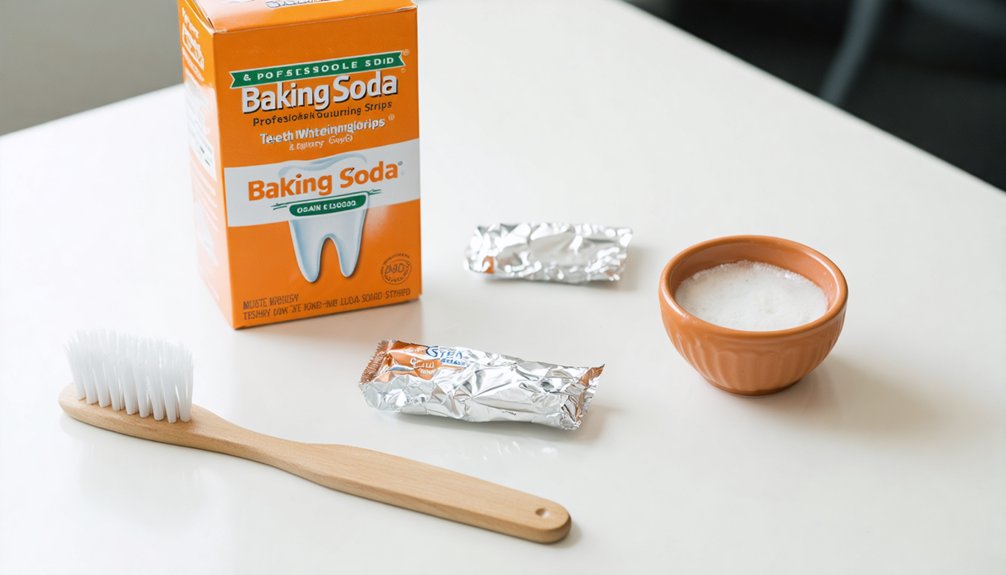
Although baking soda provides reliable initial treatment for coffee stains, you’ll achieve superior results by strategically layering it with commercial formulations that target different molecular components of the discoloration. Your stain evaluation process determines which combination delivers ideal whitening.
Baking soda works initially, but layering it with targeted commercial treatments delivers superior stain removal by addressing multiple discoloration components simultaneously.
Proven multi-step protocols:
- Enzyme pre-soak plus baking soda paste preparation: Apply enzyme-based cleaners first, allowing 30 minutes minimum penetration before following with your three-parts-baking-soda, one-part-water paste for mechanical lifting action
- Oxygen bleach activation: Combine natural dish soap with baking soda and hydrogen peroxide to create active oxygen bleach that breaks down chromophores while the alkaline paste neutralizes acidic compounds
- Commercial foam backup: Deploy professional carpet cleaners only after baking soda attempts fail on long-set stains requiring industrial-strength surfactants
This layered approach addresses both immediate alkaline neutralization and deep molecular degradation that single-product methods can’t accomplish.
Carpet-Specific Techniques for Long-Term Coffee Stain Removal
For carpets harboring persistent coffee stains, you’ll need techniques that penetrate deep into fibers and allow complete moisture evacuation.
White vinegar solutions offer acidic action that breaks down tannin molecules when applied with proper dwell time, while overnight drying prevents reabsorption that causes stain reappearance.
You must follow vinegar treatment with thorough vacuuming once the carpet reaches complete dryness to remove loosened particles and restore fiber texture.
Deep Cleaning Vinegar Solutions
White vinegar stands as the most effective household solution for breaking down coffee stains in carpet fibers due to its acidic properties that directly target tannins and oily components. Understanding vinegar concentration levels determines your cleaning success. For fresh stains, you’ll achieve optimal results with diluted vinegar application—combine equal parts white vinegar and warm water in a spray bottle. For set-in stains, apply undiluted white vinegar directly using a damp cloth.
Essential Application Protocol:
- Blot excess liquid immediately with a clean cloth before applying any solution
- Allow vinegar to penetrate fibers for 5-10 minutes without over-saturating the carpet backing
- Rinse thoroughly with cool water and blot dry to prevent residue buildup
Test your solution in an inconspicuous area first to guarantee colorfastness. Repeat the process systematically until complete stain removal occurs.
Overnight Drying and Vacuuming
After completing initial vinegar treatment, proper overnight drying becomes your critical defense against wicking—the phenomenon where dissolved coffee compounds migrate upward through carpet fibers as moisture evaporates. Apply blotting techniques by pressing firm, dry towels against the treated area, replacing sections until no transfer occurs.
Place a weighted object atop fresh towels overnight to maintain downward pressure, forcing residual moisture into absorbent layers rather than allowing upward migration. Restrict foot traffic during this critical 12-hour window. Implement moisture monitoring by checking carpet backing dampness—excess moisture invites mold colonization.
Once completely dry, vacuum in multiple directions to extract loosened particles and restore fiber texture. If staining reappears, you’re witnessing wicking; counter immediately with light treatment mist followed by renewed pressure-drying protocols before re-vacuuming.
Professional Dry Cleaning Solutions for Delicate Fabrics
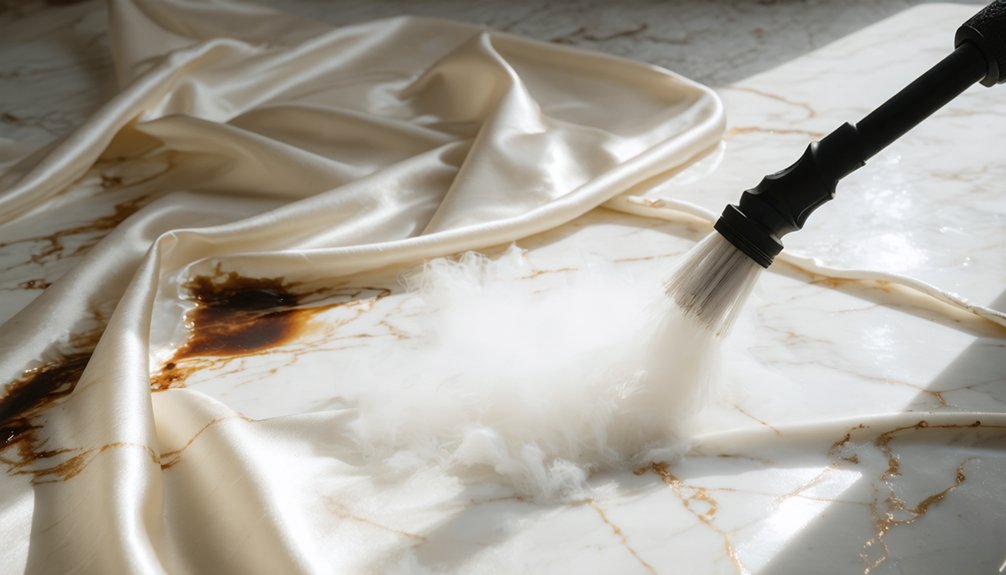
Delicate fabrics require specialized treatment when coffee stains penetrate their fibers beyond home remedies’ reach. Professional dry cleaning procedures offer solvent-based solutions that protect fabric integrity while targeting stubborn discoloration. You’ll benefit from expert fabric care techniques that assess fiber composition before applying treatment protocols.
Professional dry cleaning advantages include:
- Solvent systems that lift coffee compounds without water damage to silk, wool, or synthetic blends
- Pre-spotting treatments that target tannin molecules before the main cleaning cycle
- Controlled temperature and agitation levels that prevent fiber distortion during stain removal
When you select a dry cleaner, specify the stain’s age and previous treatment attempts. This information allows technicians to customize their approach, selecting appropriate solvents and dwell times. Professional intervention maximizes stain removal while maintaining your garment’s structural integrity and appearance.
Preventing Future Stains After Successful Whitening
Your investment in professional teeth whitening demands protective measures to maintain those results long-term. Implement permanent stain prevention by avoiding all dark beverages during the critical 48-hour post-treatment window when enamel remains porous and vulnerable.
Beyond this period, deploy strategic stain management strategies: consume coffee through straws to minimize enamel contact, rinse immediately with water to neutralize acids and flush pigments, and select lighter roasts containing fewer tannin compounds.
Brush twice daily with fluoride whitening toothpaste, but wait 30 minutes post-consumption to prevent abrading softened enamel. Eliminate sugar additives that accelerate plaque accumulation—the actual surface where stains bond.
Schedule professional cleanings biannually to remove calcified deposits harboring discoloration. Your disciplined adherence to these evidence-based protocols directly determines whitening longevity and return on investment.
When to Call Professional Cleaning Services for Coffee Stains
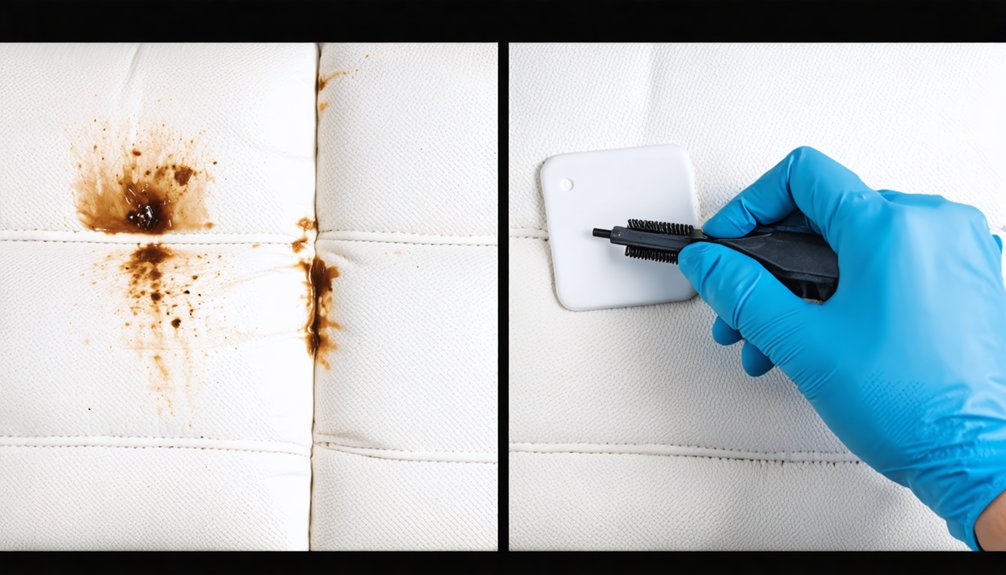
Certain coffee stain scenarios demand professional intervention regardless of your cleaning expertise or determination. When stains persist after three treatment attempts, you’re dealing with embedded residue requiring extraction equipment that DIY limitations overcome through industrial-grade technology.
Professionals deliver guaranteed stain removal through specialized solvents and hot carbonating extraction processes unavailable in consumer products.
Critical indicators demanding immediate professional contact:
- Delicate fabrics including silk, velvet, antique upholstery, or dry-clean-only materials where amateur attempts risk permanent damage
- Stains aged beyond 24 hours where removal effectiveness drops from 70% to under 40% without professional-grade formulas
- Large-scale carpet incidents or light-colored surfaces where visible spreading occurs despite repeated treatment efforts
Professional services prevent the exponential cost increase from failed DIY attempts transforming minor spills into replacement-level damage.
Frequently Asked Questions
Can Coffee Stains Damage Fabric Fibers Permanently Beyond Just Discoloration?
Yes, coffee’s acidic chemical composition permanently degrades fabric structure over time, breaking down natural fibers like cotton and silk. You’ll face weakened material integrity, not just staining, especially if you delay treatment beyond 24 hours.
Do Different Coffee Types Create Harder-To-Remove Stains Than Regular Black Coffee?
Coffee with milk or cream creates harder-to-remove stains than black coffee due to protein compounds. However, roast type variations and brewing method differences don’t markedly impact stain difficulty—you’ll address all coffee stains using tannin-targeting treatments effectively.
Will Repeated Whitening Treatments Weaken or Fade the Original Fabric Color?
Your fabric’s vibrancy remains intact: repeated whitening treatments won’t compromise fabric dye integrity when you follow a consistent whitening process. You’ll maintain control by testing inconspicuous areas first, avoiding heat until stains lift, and confirming removal before drying.
How Long After Staining Occurs Does Coffee Become Considered Permanently Set-In?
Coffee stains don’t follow a fixed stain fixation timeline for permanence. You’ll find coffee composition impact varies, but untreated discoloration persists indefinitely without intervention. Professional whitening reverses even years-old staining, giving you complete control over your smile’s appearance.
Are Natural Whitening Methods Safer for Septic Systems Than Commercial Cleaners?
Yes, natural whitening methods offer superior septic system compatibility compared to commercial cleaners. You’ll preserve beneficial bacteria while minimizing environmental impact of cleaning methods, maintaining ideal pH levels between 6.5-7.5 that prevent costly system failures and soil contamination.