Professional LED whitening uses 35-44% hydrogen peroxide concentrations that are 12 times stronger than at-home kits, delivering immediate results of 6-8 shades in one 60-90 minute session versus 3-5 shades over 2-4 weeks. You’ll pay $600-$900 for professional treatment compared to $50-$300 for at-home devices, but professionals provide protective barriers and precise application that reduce your risk of gum irritation and enamel damage. Understanding the complete picture of efficacy, safety protocols, and long-term maintenance costs will help you make the most informed decision for your specific needs.
Key Takeaways
- Professional treatments use 12x stronger bleaching agents (35-44% carbamide peroxide) versus at-home limits of 10% hydrogen peroxide, accelerating whitening results.
- Professional sessions deliver 6-8 shades improvement in 60-90 minutes; at-home kits achieve 3-5 shades over 10-day periods with daily use.
- Professional treatments cost $600-$900 initially with $200-$400 annual touch-ups; at-home kits cost $50-$300 upfront with reusable devices.
- LED activation increases whitening by 1 shade but doubles sensitivity rates from 26% to 53% with professional-strength peroxide concentrations.
- Professional treatments include protective barriers and precise application; at-home kits require user vigilance to prevent enamel damage and gum irritation.
How LED Whitening Technology Works
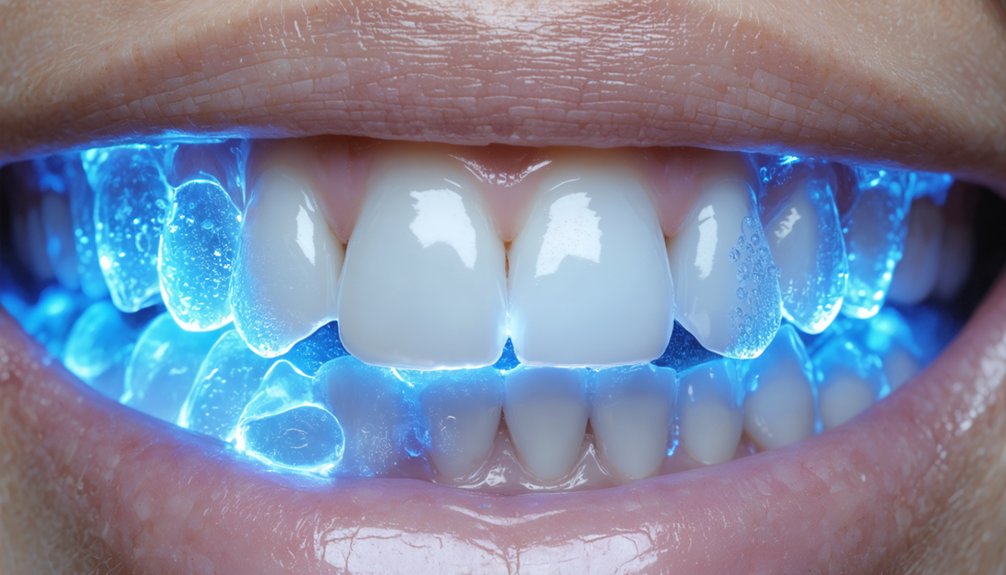
LED whitening technology harnesses blue light wavelengths between 430-520 nanometers to accelerate the chemical breakdown of tooth stains. When you apply hydrogen peroxide gel, the LED light catalyzes it into free radicals that target and oxidize discolored molecules on your teeth. This photobleaching process works through two mechanisms: direct photooxidation of chromophores and photolysis that breaks chemical bonds. The gel remains active for 24 hours post-treatment, continuing the whitening effect.
You’ll find significant benefits over alternatives with LED systems. Unlike UV lights that risk cellular damage, LEDs maintain intrapulpal temperature rises under 5.5°C, preventing enamel harm. They won’t overheat like halogen or plasma arc lamps. When combined with controlled heat, LED technology delivers maximum whitening intensity while ensuring reduced enamel sensitivity throughout treatment.
Comparing Bleaching Agent Strengths
The most striking difference between professional and at-home LED whitening systems lies in their bleaching agent concentrations.
Professional treatments deliver superior strength while managing bleaching agent risks:
- In-office systems: 35-44% carbamide peroxide (equivalent to 15-35% hydrogen peroxide) versus OTC limits of 10% hydrogen peroxide
- Concentration impact: Professional gels are 12x stronger than retail strips, accelerating results
- Individual tooth response: Baseline color, contact time, and gel viscosity determine your outcome
- LED activation: Increases efficacy by 1 shade unit but raises sensitivity from 26% to 53% with 35% hydrogen peroxide
- Safety protocols: Lower professional concentrations (44% carbamide peroxide) achieve greater whitening with minimal sensitivity
You’ll control treatment intensity by selecting concentration levels matching your sensitivity tolerance and desired timeline.
Treatment Process and Time Commitment
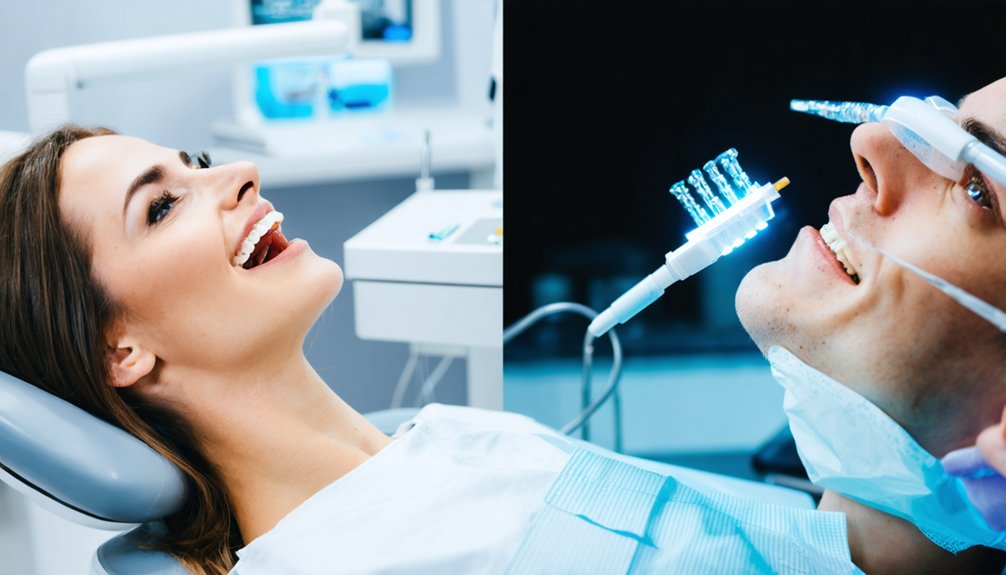
Professional whitening sessions demand significant upfront time but deliver concentrated results in a single appointment. You’ll spend 60-90 minutes in-office while your hygienist applies high-concentration gel, activates it with blue LED light, and monitors your progress through multiple 20-minute cycles. This intensive approach requires patient supervision needs throughout, though staff may step out during activation intervals.
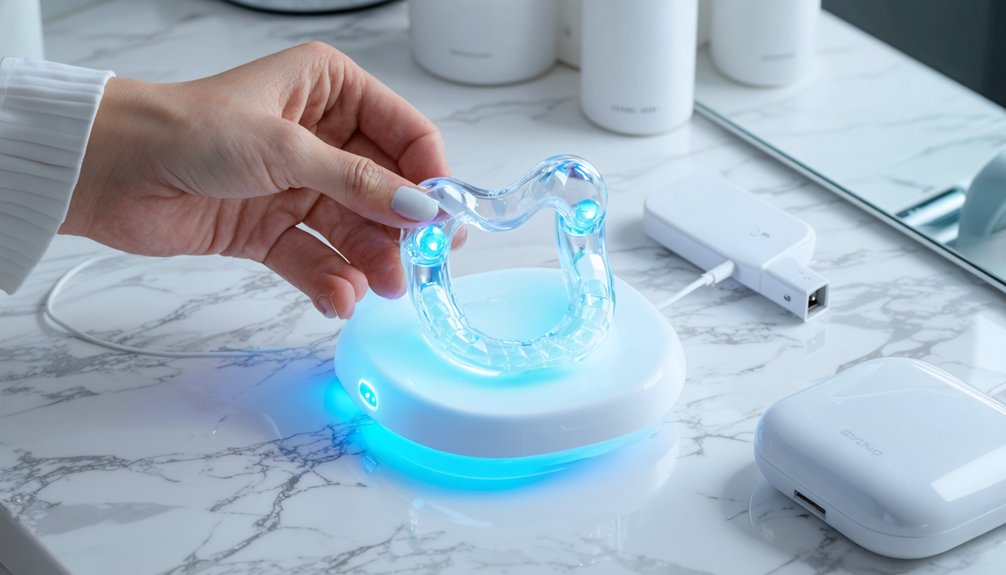
At-home LED kits offer superior treatment time flexibility—you’ll apply gel and use your light device for just 10-16 minutes daily. You control when and where treatments occur over a 10-day period. While the cumulative time investment exceeds a single professional session, you’re managing shorter intervals that fit your schedule. This autonomy eliminates appointment scheduling and allows immediate treatment adjustments based on sensitivity or results.
Expected Results and Shade Improvement
Immediate color changes separate these whitening approaches most dramatically. Professional LED treatments deliver ΔE values averaging 5.9 immediately after application, while at-home systems produce ΔE values around 2.0.
Professional LED whitening shows nearly triple the immediate color change compared to at-home systems, with ΔE values of 5.9 versus 2.0.
You’ll notice in-office procedures lighten teeth 7-8 shades within 60 minutes, creating rapid perceived improvements in confidence and self-esteem.
Shade improvement comparison:
- Professional treatments achieve 4-15 shades lighter depending on system concentration
- At-home kits require 7-10 days for noticeable results
- Six-month ΔE values stabilize at 7.2-7.7 for both approaches
- 70% of patients maintain results beyond one year
- Long-term efficacy proves comparable despite initial differences
Higher peroxide concentrations produce pronounced immediate shifts, yet lower-concentration at-home systems ultimately deliver similar long-term whiteness with consistent use and proper maintenance habits.
Safety Considerations and Risk Management
While achieving dramatic whitening results remains a primary goal, understanding potential adverse effects allows you to make informed treatment decisions. Professional treatments incorporate increased oversight requirements through protective barriers and precise peroxide concentrations, greatly reducing your risk of chemical burns and gum irritation. Dentists guarantee proper mouthguard fit, preventing bleaching gel leakage that commonly causes tissue damage in unsupervised applications.
At-home kits demand your vigilance in minimizing enamel damage through controlled frequency and duration. You’ll face higher sensitivity risks without professional guidance on appropriate peroxide levels. Contraindications include active cavities, gum disease, pregnancy, and age under 16. Overuse causes irreversible enamel translucency and demineralization. Mitigate complications by following manufacturer protocols, using sensitivity toothpaste, and consulting your dentist before treatment initiation.
Cost Analysis and Value Comparison
When evaluating teeth whitening options, you’ll find that pricing structures differ fundamentally between professional and at-home LED systems. Professional treatments deliver 6–8 shades improvement in one 60–90 minute session at $600–$900, while at-home kits achieve 3–5 shades over 2–4 weeks for $50–$300 upfront.
Professional whitening costs $600–$900 for immediate results, while at-home LED kits deliver gradual improvement at $50–$300 upfront investment.
Cost benefit tradeoffs and patient convenience factors include:
- Professional sessions require $200–$400 touch-ups every 6–12 months versus reusable at-home devices
- At-home kits eliminate per-session fees after initial purchase, reducing long-term expenses
- Regional variations impact professional pricing: $791–$982 (West Coast) versus $702–$811 (Midwest)
- Premium systems (Zoom, Philips) add $100–$500+ for branded technology
- OTC maintenance strips cost $20–$100 every 3–6 months
You control timing, frequency, and total investment based on your desired outcome timeline.
Longevity of Whitening Results
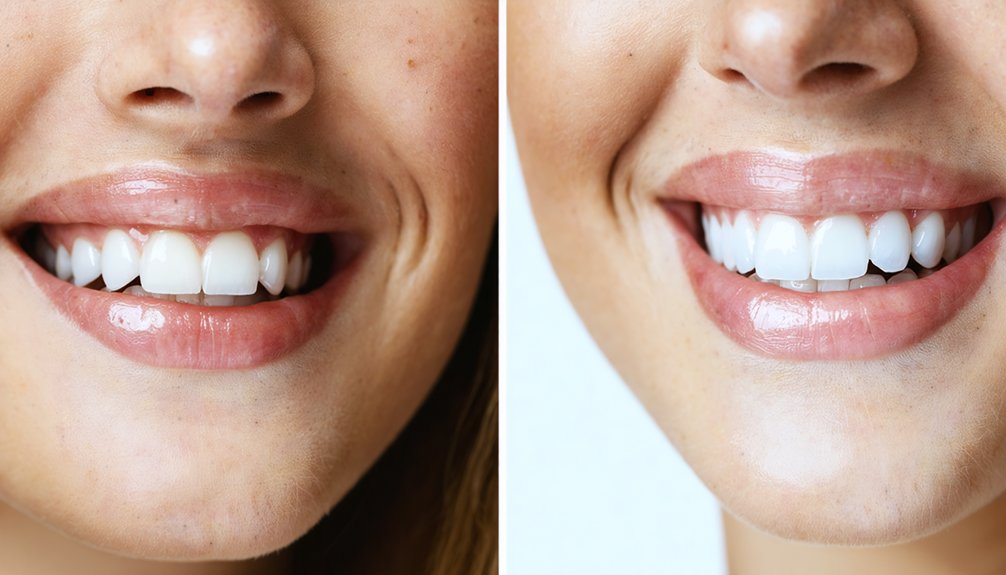
Your whitening investment’s longevity depends enormously on whether you choose professional or at-home LED treatments, with professional results typically lasting 1-3 years compared to just weeks or months for over-the-counter kits.
The difference stems from higher-concentration agents that penetrate deeper stains and deliver more uniform color changes, though you’ll still need periodic touch-ups regardless of method.
Your individual results will vary based on lifestyle factors like coffee consumption, smoking habits, and daily oral hygiene practices—all of which determine how rapidly your teeth return to their pre-treatment shade.
Professional Results Last Longer
One of the most compelling advantages of professional LED whitening is the remarkable longevity of results compared to at-home alternatives. When you invest in professional treatment, you’ll experience brightness lasting 1–3 years with proper care, compared to just 6–12 months from at-home kits.
Your results depend directly on these controllable factors:
- Oral hygiene habits: Regular brushing and flossing preserve whitening effects throughout the entire duration
- Lifestyle choices: Limiting coffee, wine, and tobacco consumption prevents premature fading
- Professional maintenance: Scheduled dental cleanings support long-term brightness
- Bleaching agent concentration: Higher professional-grade formulas penetrate enamel more effectively
- Application precision: Dental supervision guarantees results that resist discoloration
Professional treatments last 4–6 times longer than over-the-counter products, making them the superior choice when you’re seeking sustained, predictable whitening outcomes.
Touch-Up Frequency Comparison
Understanding how long your whitening lasts naturally leads to the question of maintenance schedules. Professional in-office LED treatments require touch-ups only once or twice annually—typically every 6-12 months. You’ll maintain results longer between sessions, reducing overall treatment frequency and sensitivity considerations.
At-home LED kits demand more frequent maintenance. You’ll need touch-ups every 3-6 months, translating to 2-4 sessions yearly. This increased frequency can accumulate sensitivity issues if you’re not careful with application timing.
Your touch-up needs depend on lifestyle factors: heavy coffee or wine consumption necessitates more frequent interventions. Professional treatments offer superior patient satisfaction precisely because they minimize maintenance burden. You’ll schedule touch-ups during routine dental cleanings rather than managing multiple at-home sessions. This convenience, combined with extended results, gives you greater control over your whitening investment.
Factors Affecting Result Duration
Multiple lifestyle and biological factors determine whether your LED whitening results last six months or stretch beyond three years.
Your daily choices directly control treatment longevity:
- Proper dental hygiene habits: Consistent brushing and flossing extend professional results up to three years, while poor oral care markedly shortens both in-office and at-home outcomes.
- Avoiding discoloring substances: Limiting coffee, tea, red wine, and tobacco preserves brightness considerably longer than frequent consumption.
- Tobacco cessation: Smoking and chewing tobacco cause rapid discoloration, drastically reducing whitening duration regardless of treatment method.
- Age and enamel integrity: Younger, healthier enamel maintains brightness longer, while natural thinning with age decreases treatment responsiveness.
- Concentration strength: Professional treatments use higher-concentration agents that produce more durable results than over-the-counter alternatives.
Frequently Asked Questions
Can LED Whitening Damage Existing Dental Work Like Crowns or Veneers?
LED whitening won’t damage your porcelain crowns or veneers—existing dental work compatibility is excellent. However, long-term whitening effects won’t change restoration colors, potentially creating shade mismatches. You’ll need professional assessment before treatment.
Is LED Teeth Whitening Safe During Pregnancy or While Breastfeeding?
Hitting pause on LED whitening protects your growing family—safety concerns outweigh cosmetic benefits during pregnancy and breastfeeding. Schedule dental check-ups for guidance, but postpone whitening treatments until you’ve weaned to maintain control over potential risks.
How Long Should I Wait Between Whitening Treatments to Avoid Damage?
Wait 6-12 months between professional LED treatments and 3-6 months for at-home kits. You’ll protect your tooth enamel sensitivity and prevent damage to sensitive teeth. Monitor your comfort level—it’s your best indicator for safe retreatment timing.
Will LED Whitening Work on Teeth With Tetracycline or Fluorosis Staining?
LED whitening shows limited effectiveness on tetracycline staining due to intrinsic teeth discoloration severity. While mild fluorosis may respond, LED systems lack intensity for deep stains. Your suitability for staining types requires professional assessment—severe cases often need veneers instead.
Does Diet or Lifestyle Affect How Quickly Whitening Results Fade?
Absolutely—unless you’re planning to subsist on water and air alone. Your coffee habit, smoking, and pigmented foods dramatically increase your teeth’s susceptibility to re-staining, slashing whitening duration from potential years down to mere months without disciplined lifestyle modifications.