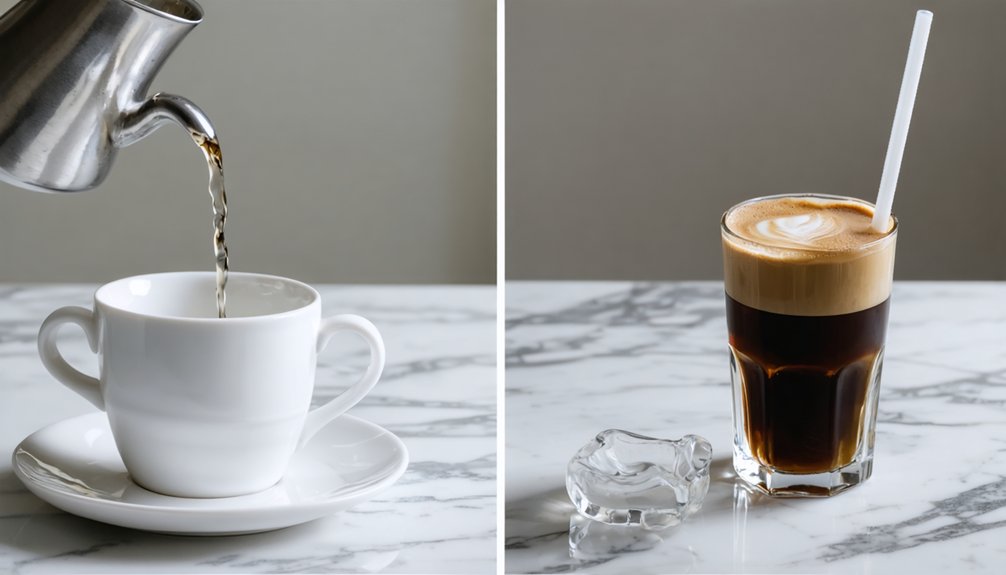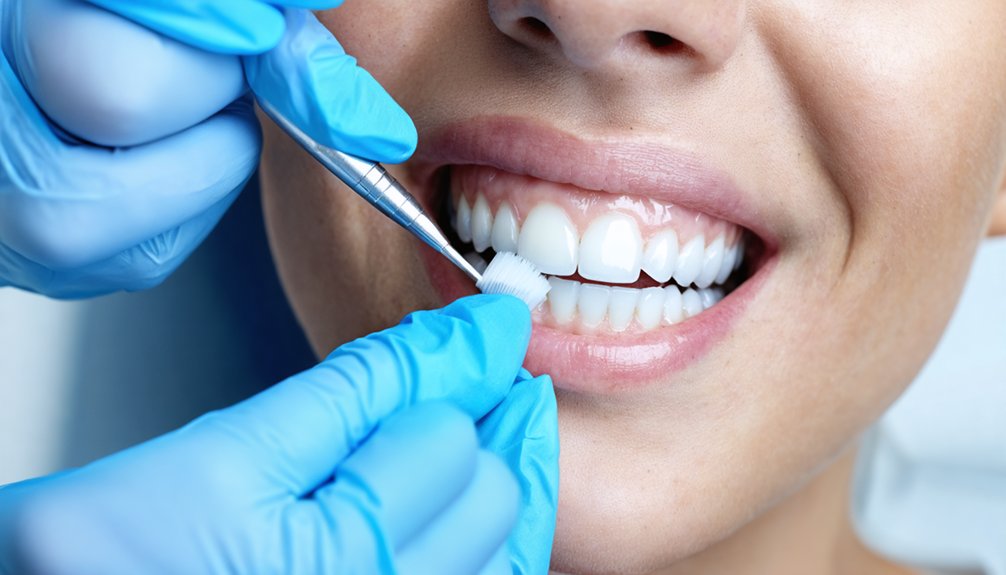
Tea stains bond to your enamel’s hydroxyapatite matrix, making surface cleaning ineffective. Professional whitening uses peroxide-based agents that penetrate enamel and oxidize chromogen molecules, eliminating deep pigmentation that brushing can’t reach. In-office treatments apply professional-grade peroxide gel activated by specialized light across multiple cycles, while take-home kits use custom trays with 10–22% peroxide concentrations. When standard whitening fails, dentists may recommend microabrasion or veneers. Everything you need to make an informed decision is covered ahead.
Key Takeaways
- Dentists apply professional-grade peroxide gel activated by specialized light in three to four 15-minute cycles during a single in-office session.
- Peroxide-based agents penetrate enamel deeply, oxidizing carbon bonds in tea stain molecules to eliminate embedded chromogens conventional brushing cannot reach.
- A thorough dental exam precedes whitening treatment to identify cavities, gum disease, or other conditions affecting procedure suitability.
- Take-home kits use custom-fitted trays with 10-22% peroxide concentrations, offering deeper stain removal than over-the-counter whitening products.
- Persistent discoloration unresponsive to bleaching may require enamel microabrasion, porcelain veneers, or crowns as alternative professional treatments.
Why Tea Stains Go Deeper Than the Surface of Your Teeth
Tea contains tannins—naturally occurring polyphenolic compounds that bind readily to the protein pellicle coating your enamel. Understanding tea composition clarifies why surface cleaning fails: once tannins penetrate the pellicle, they infiltrate the porous enamel structure itself, bonding to calcium ions within the hydroxyapatite matrix.
Daily brushing removes only superficial deposits, leaving chromogens embedded beneath your enamel’s surface layer. Enamel health directly influences stain depth and intensity. Microscopic tubules and surface irregularities in weakened or worn enamel accelerate pigment absorption, creating discoloration that resists mechanical removal.
Acidic tea compounds temporarily soften enamel, widening those tubules and allowing deeper tannin penetration with each cup consumed. This intrinsic staining mechanism explains why professional-grade whitening agents—not abrasives—are required to reverse the discoloration effectively.
Why Brushing and OTC Products Cannot Remove Deep Tea Stains
Once tannins bond within your enamel’s hydroxyapatite matrix, no amount of brushing dislodges them. Brushing targets surface debris, not stain depth.
Whitening toothpastes use mild abrasives that mechanically scrub extrinsic particles but can’t penetrate enamel to reach embedded chromogens.
One of the most persistent whitening myths is that scrubbing harder produces better results. It doesn’t. Aggressive brushing erodes enamel, increasing sensitivity without addressing intrinsic discoloration.
You’re trading structural integrity for zero cosmetic gain.
OTC whitening strips and gels contain low peroxide concentrations, legally capped below therapeutic levels. They lack the chemical strength to oxidize deeply bound tannin molecules.
Without professional-grade peroxide percentages and controlled application, you’re managing surface appearance, not correcting actual stain depth.
Real results require clinical intervention.
How Peroxide Breaks Down Tea Stains Below the Enamel Surface
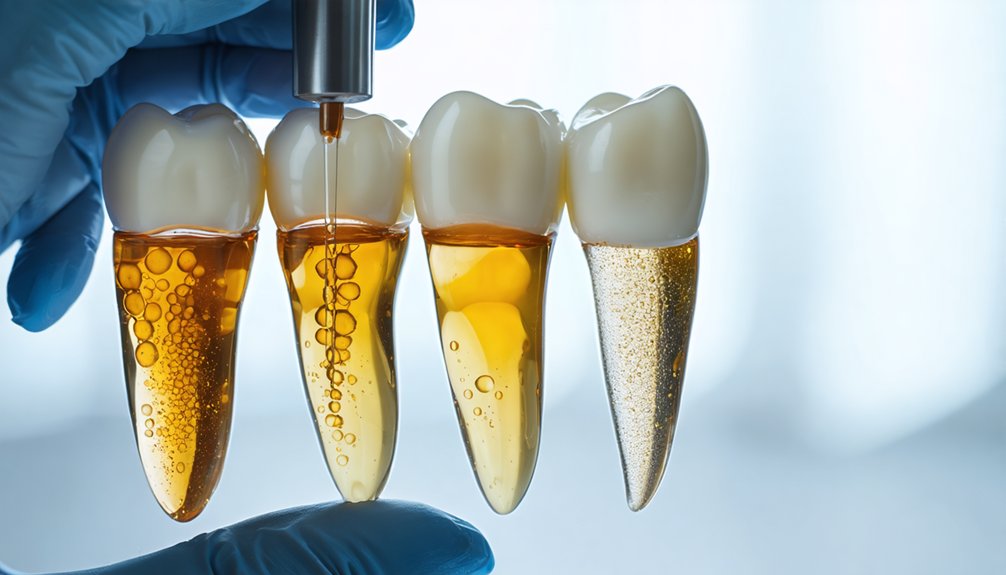
When you undergo professional whitening, the peroxide-based agent penetrates your enamel and targets the chromogen molecules responsible for tea discoloration at their source.
The peroxide oxidizes these stain molecules through a chemical reaction, breaking their carbon bonds and eliminating the pigmentation embedded below the surface.
This process restores your teeth’s natural brightness without altering the enamel structure itself.
Peroxide Penetrates Enamel Deeply
Peroxide penetrates your enamel at a molecular level, reaching the deep-set tea stains that brushing can’t touch. Once applied, the active peroxide compound breaks apart the chromogen molecules responsible for discoloration, oxidizing them into colorless byproducts. This chemical reaction targets pigmented compounds embedded within the enamel matrix, not just surface deposits.
Your enamel care strategy must account for what topical products can’t achieve. Professional-grade peroxide concentrations far exceed OTC formulations, enabling penetration depths that dissolve intrinsic staining effectively.
Stain prevention becomes remarkably easier once these embedded compounds are eliminated, as fewer pigment molecules remain to attract new tea tannins. The result is structurally sound, lighter enamel—achieved through controlled chemistry rather than abrasive mechanical force that risks surface degradation.
Breaking Down Stain Molecules
Because tea tannins bond chemically to organic proteins within your enamel matrix, breaking them down requires more than mechanical disruption—it demands oxidative chemistry.
Peroxide releases free radicals that attack chromogen molecules—the compounds responsible for visible discoloration across different stain types. These radicals sever the conjugated double bonds within tannin-protein complexes, converting large, light-absorbing molecules into smaller, colorless fragments.
Unlike surface whitening methods that address only extrinsic deposits, peroxide penetrates tubules and targets intrinsic staining directly where it originates. The reaction occurs systematically through multiple treatment cycles, ensuring thorough oxidation rather than partial disruption.
You’re not masking discoloration—you’re chemically dismantling it at the molecular level. This precision is what separates professional whitening from consumer-grade alternatives that lack sufficient concentration to initiate meaningful oxidative breakdown.
Restoring Natural Tooth Brightness
Once oxidative chemistry dismantles the chromogen molecules described earlier, the structural outcome directly restores your tooth’s natural brightness by eliminating the discoloration embedded below the enamel surface.
Peroxide penetrates the enamel matrix and clears the pigmented residue that routine natural tooth care methods can’t reach. The process doesn’t alter your tooth’s fundamental architecture; it removes what decades of tea consumption deposited within the enamel’s crystalline structure.
Your teeth don’t become artificially white—they return to their inherent baseline shade, now unobstructed by accumulated chromogens.
Professional-grade peroxide concentrations accomplish this efficiently within controlled clinical cycles, targeting intrinsic staining with precision that over-the-counter products lack entirely.
The result reflects your tooth’s actual optical properties, not a surface coating or chemical alteration of the enamel itself.
What Happens During an In-Office Professional Whitening Session
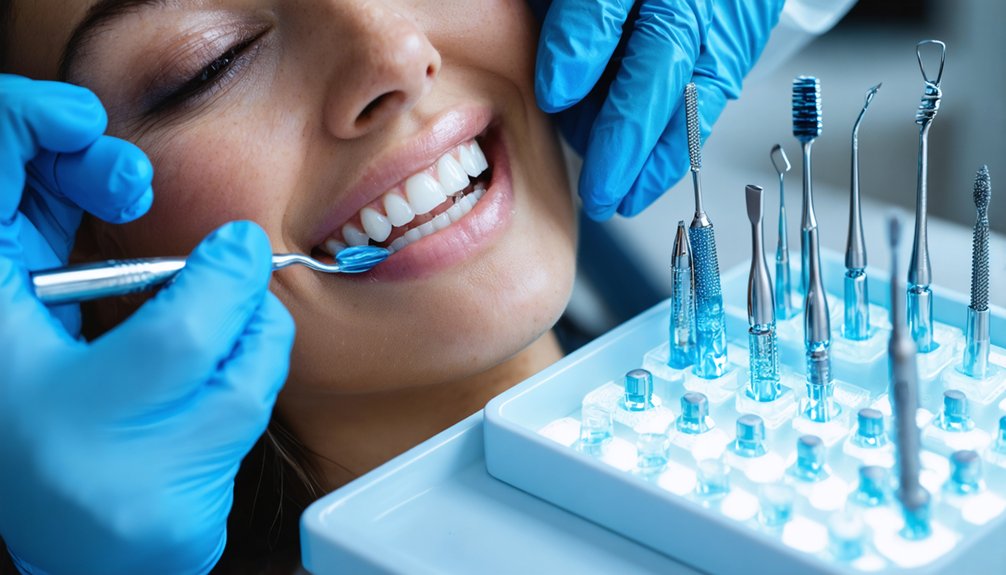
Before any whitening gel touches your teeth, your dentist conducts a thorough exam to check for cavities, gum disease, or exposed roots that could complicate treatment. Addressing these issues first guarantees whitening techniques deliver maximum results without causing damage.
Once cleared, your dentist applies a protective barrier to your gums, then coats your teeth with a professional-grade peroxide gel. A specialized light, such as Zoom, activates the gel to break down deep tea stains efficiently.
You’ll complete three to four 15-minute cycles within a single one-hour session.
Post-treatment, your dentist provides precise aftercare instructions focused on stain prevention, including twice-daily brushing, flossing, and using a straw for tea or coffee.
These steps let you control and maintain your results long-term.
When Tea Stains Do Not Respond to Whitening: What Dentists Recommend Next
Although professional whitening resolves most tea stains, some discoloration runs too deep or stems from structural changes that bleaching agents can’t address.
When standard protocols fail, your dentist will evaluate alternative treatments matched to the severity and origin of the staining.
Enamel microabrasion removes superficial structural defects before retreating with bleach.
Enamel microabrasion eliminates shallow surface defects, creating an optimal foundation for subsequent bleaching treatments to deliver better results.
For intrinsic discoloration that persists, porcelain veneers bond directly to your tooth surface, masking discoloration completely while preserving underlying structure.
Crowns become necessary when compromised tooth integrity limits whitening efficacy.
Your dentist will also reinforce stain prevention strategies at this stage.
Using a straw, eliminating prolonged tea contact, and maintaining consistent oral hygiene reduce recontamination risk.
Controlling these variables post-treatment extends any cosmetic result you achieve through restorative intervention.
Take-Home Whitening Kits vs. Store-Bought Products for Tea Stains
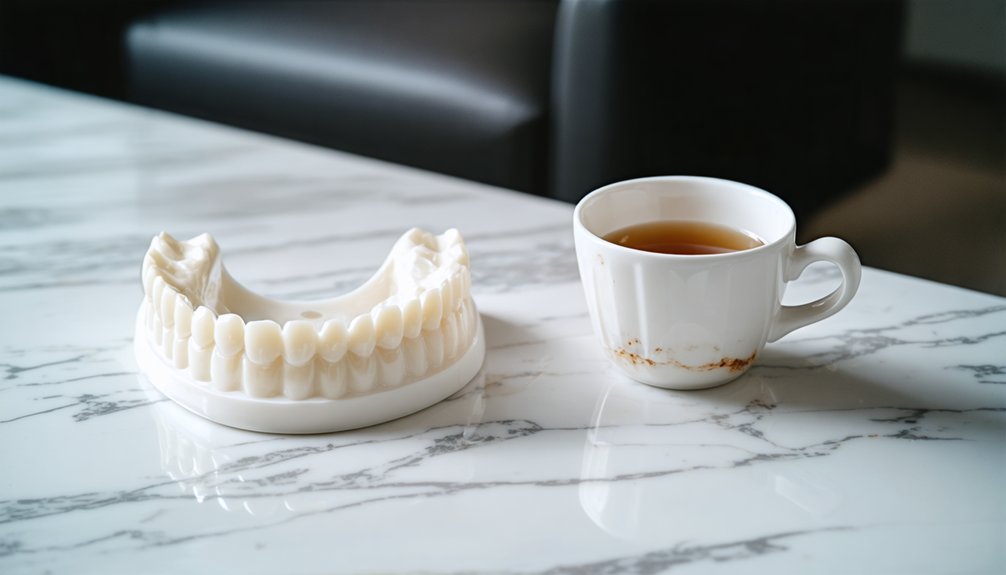
When your dentist provides a take-home whitening kit, you receive custom-fabricated trays molded from impressions of your teeth, ensuring the professional-grade peroxide gel contacts every surface evenly—an advantage store-bought trays can’t replicate.
You’ll also benefit from considerably higher peroxide concentrations than OTC products offer, allowing the gel to penetrate enamel deeply enough to break down stubborn tea stains that drugstore kits simply can’t reach.
Because your dentist supervises the entire process, you can manage sensitivity risks effectively and adjust application protocols as needed, making the treatment both safer and more predictable than unsupervised store-bought alternatives.
Custom Tray Fit Advantage
Custom trays fabricated from dental impressions of your mouth give take-home whitening kits a critical structural advantage over store-bought products. Because the tray conforms precisely to your unique dental arch, the professional-grade peroxide gel maintains consistent, even contact across every tooth surface.
Store-bought trays use generic sizing that creates uneven gel distribution, reducing whitening efficacy while increasing gum exposure and irritation risk.
The custom tray benefits extend beyond aesthetics. You’ll experience personalized comfort that keeps the tray seated correctly throughout each treatment session, preventing saliva dilution of the gel.
This controlled seal maximizes peroxide penetration into enamel where tea stains reside. Dentist-supervised adjustments guarantee the fit remains ideal, giving you direct control over treatment consistency and measurable whitening outcomes over the prescribed treatment period.
Peroxide Strength Comparison
Because peroxide concentration determines how effectively a whitening agent penetrates enamel to break down tea stain molecules, the gap between professional take-home kits and store-bought products is significant.
Store-bought strips and gels typically contain 3–10% hydrogen peroxide, which isn’t strong enough to reach intrinsic tea discoloration embedded within enamel.
Professional take-home kits provide carbamide or hydrogen peroxide concentrations ranging from 10–22%, giving you direct access to deeper stain layers.
Your dentist calibrates peroxide concentration specifically to your enamel sensitivity level, reducing irritation while maximizing penetration.
Store-bought products lack this customization, often triggering unnecessary enamel sensitivity without achieving comparable results.
When you control the concentration through professional guidance, you’re targeting tea stains precisely rather than applying a generalized, underpowered solution.
Dentist-Supervised Whitening Safety
Higher peroxide concentrations in professional kits don’t just deliver better results—they also introduce risks that require careful management, which is where dentist supervision shifts from a convenience to a clinical necessity.
Without dentist expertise, you’re guessing on tray fit, gel volume, and application duration—all variables that directly impact patient comfort and tissue safety. Ill-fitting store-bought trays allow gel contact with gum tissue, causing chemical irritation and uneven whitening.
Your dentist fabricates custom trays from precise impressions, controls peroxide concentration based on your sensitivity threshold, and monitors your progress throughout treatment. If sensitivity spikes, they adjust protocol immediately.
Store-bought kits offer none of that clinical oversight. You’re not just buying a stronger gel—you’re buying a controlled, supervised process that protects your enamel while targeting deep tea stains effectively.
How Long Professional Whitening Results Last With Proper Care
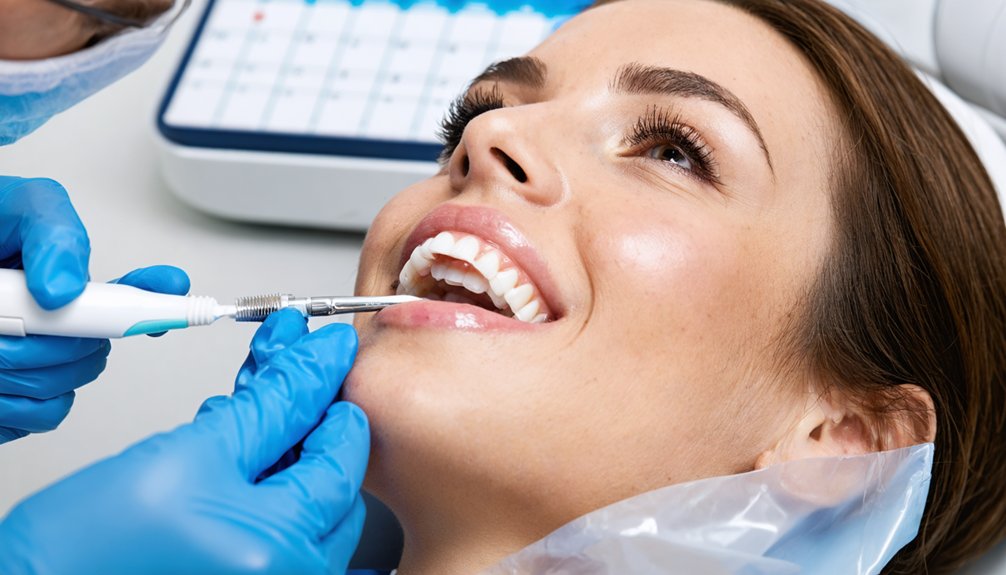
Professional whitening results typically last six months to two years, though your habits after treatment determine where in that range you’ll land.
Whitening longevity depends directly on how consistently you follow maintenance tips your dentist provides post-treatment.
Brush twice daily, floss regularly, and avoid heavy consumption of tea, coffee, and red wine. When you do drink staining beverages, use a straw to minimize enamel contact.
Schedule professional cleanings every six months to remove surface buildup before it penetrates deeper enamel layers.
Temporary sensitivity resolves within days, but don’t skip aftercare during that window.
Touch-up treatments using your custom take-home trays extend results considerably. You control the timeline — disciplined post-treatment habits are the single most decisive factor in preserving your whitening investment.
Daily Habits That Prevent Tea Stains From Returning After Whitening
Protecting your whitening results starts the moment you leave the dental office, and the daily habits you build immediately after treatment determine whether tea stains return within weeks or stay away for years.
Brush twice daily with fluoride toothpaste, floss consistently, and rinse after consuming tea. Your dietary choices directly control stain recurrence, so use a straw when drinking iced tea to minimize enamel contact.
Small daily habits—brushing, flossing, and rinsing after tea—directly determine how long your whitening results last.
Avoid consuming dark beverages during the 48-hour post-treatment window when enamel pores remain open and highly susceptible to pigment absorption.
Preventive habits like scheduling professional cleanings every six months remove accumulating extrinsic deposits before they penetrate deeper.
You control the longevity of your results through disciplined, consistent action rather than reactive treatment cycles.
Frequently Asked Questions
Does Professional Whitening Work on Dental Crowns or Porcelain Veneers?
Like oil and water, whitening gel and restorations don’t mix. Professional whitening won’t fix crown discoloration or improve veneer maintenance—it’s only effective on natural tooth enamel. You’ll need alternative cosmetic procedures instead.
How Many Shades Whiter Can Teeth Become After One Professional Session?
After one professional teeth whitening session, you can achieve up to eight shades lighter results. Your shade comparison will show dramatic improvement, as high-concentration peroxide gel actively breaks down deep enamel stains efficiently and precisely.
Are Custom Whitening Trays Made From Dental Impressions of Your Teeth?
Unlike one-size-fits-all store trays that ironically fit no one, your custom home whitening trays are precisely fabricated from dental impressions of your teeth, ensuring controlled gel delivery while minimizing teeth sensitivity effectively.
Can Enamel Microabrasion Be Combined With Professional Bleaching Treatments?
Yes, you can combine enamel microabrasion with professional bleaching for enhanced enamel benefits. These treatment combinations let you tackle surface defects first, then bleach deeper stains, giving you precise, controlled, layered results your dentist strategically sequences for maximum effectiveness.
Is a Dental Exam Required Before Starting Any Professional Whitening Procedure?
Your smile’s a blueprint—yes, you need a dental exam first. It uncovers cavities and gum issues affecting teeth sensitivity, ensuring whitening maintenance succeeds. Your dentist actively maps your oral health before any professional whitening begins.
References
- https://www.concordlexingtonperiodontics.com/blog/how-professional-teeth-whitening-helps-remove-coffee-tea-and-tobacco-stains/
- https://www.sarasotadentistry.com/dental-blog/how-to-remove-tea-and-coffee-stains/
- https://www.colgate.com/en-us/oral-health/teeth-whitening/does-tea-stain-teeth
- https://myashburndentist.com/stained-to-sparkling-how-professional-whitening-outshines-diy-methods/
- https://www.glenparkdental.com/teeth-whitening/how-to-get-rid-of-coffee-and-tea-stains-on-your-teeth/
- https://www.ada.org/resources/ada-library/oral-health-topics/whitening
- https://www.youtube.com/watch?v=Wd-5CZQEeCE
- https://cosmeticdentistshouston.com/blog/can-in-office-teeth-whitening-remove-deep-coffee-tea-and-wine-stains
- https://dynamicdentalcare.com/p/BLOG-106279-2023.7.10-How-To-Remove-Tea-and-Coffee-Stains-from-Teeth-p.asp?fc=1