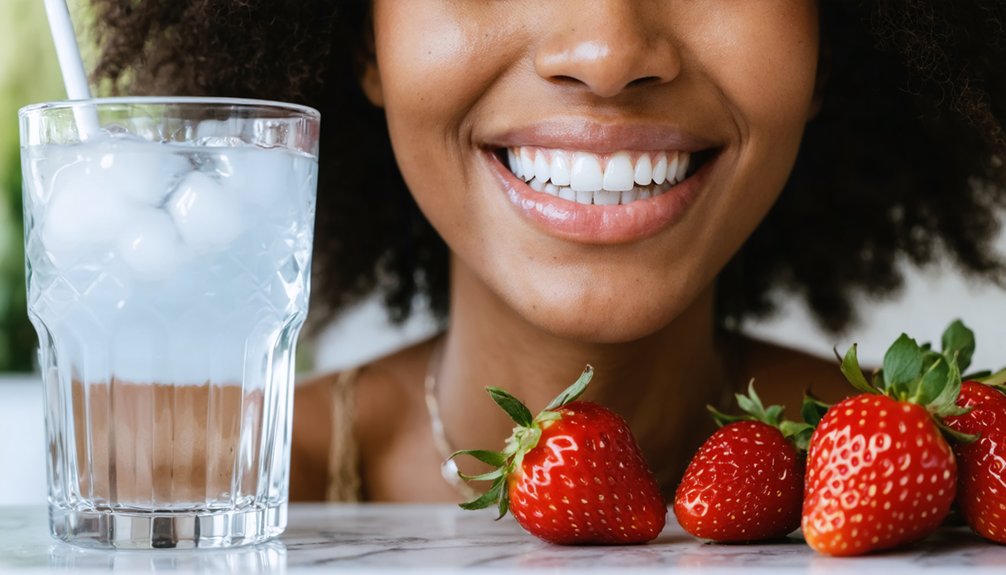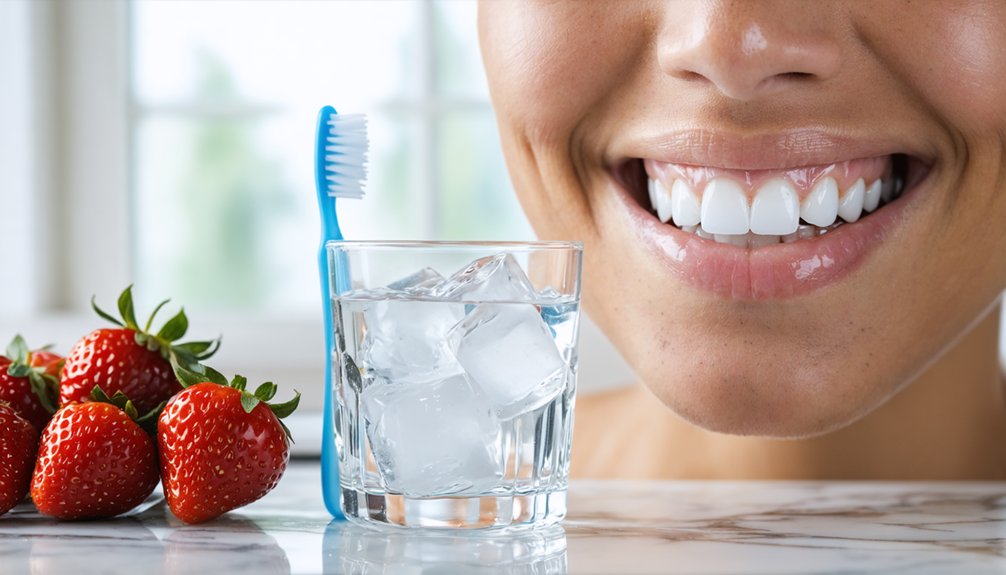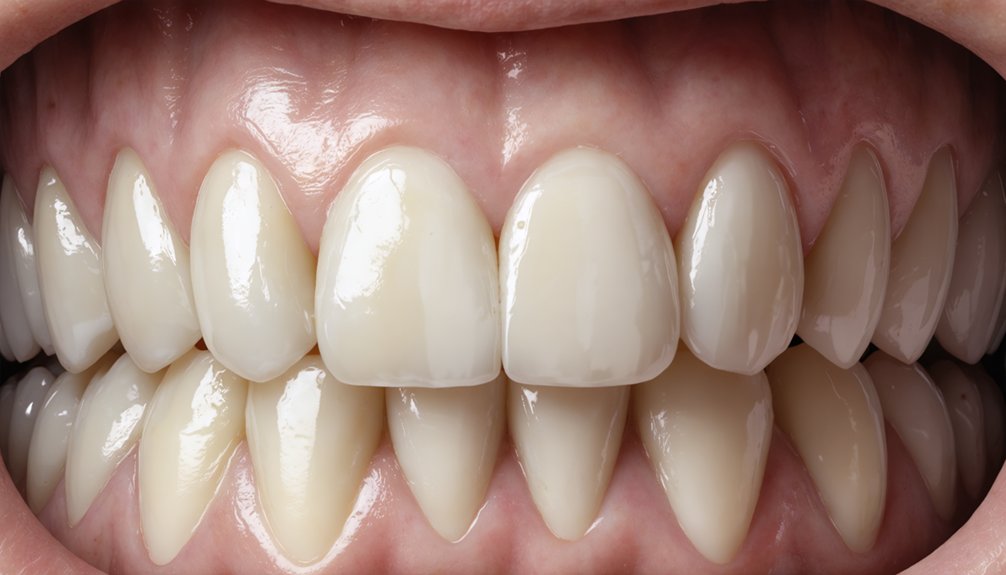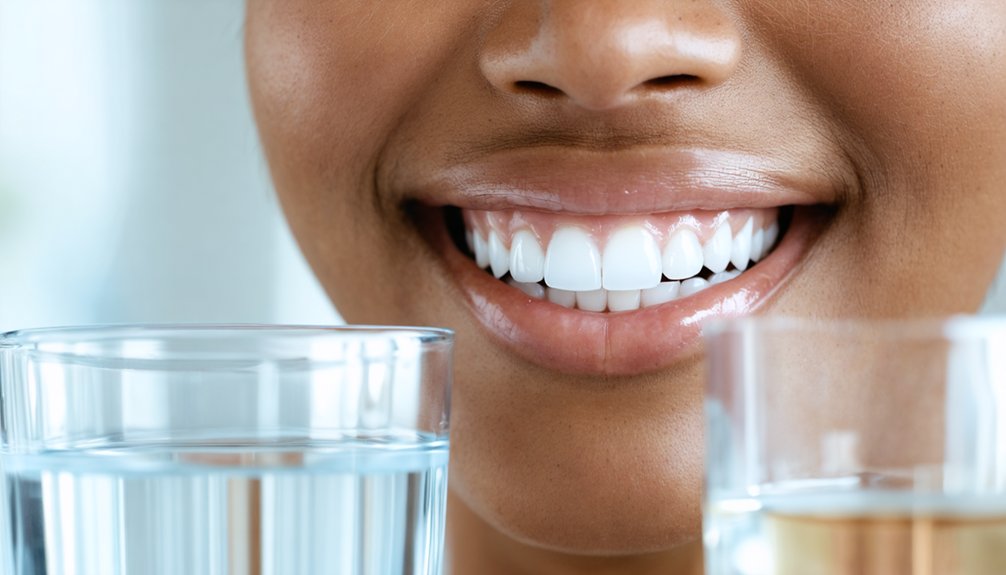
To preserve your whitening results, brush twice daily at a 45-degree angle using an electric toothbrush and floss nightly to prevent interproxial staining. Limit coffee, tea, red wine, and dark sodas that contain tannins and acids that erode enamel. When you do consume staining beverages, use a straw and rinse immediately with water. Maintain your brightness with pH-neutral take-home whitening systems and schedule professional cleanings every six months to remove stubborn surface stains. The strategies below will help you protect your investment for years to come.
Key Takeaways
- Brush twice daily at a 45-degree angle for two minutes and floss nightly to prevent stain-causing plaque buildup.
- Limit coffee, tea, red wine, and dark sodas; use straws and rinse with water immediately after consumption.
- Apply whitening maintenance products like 12% PAP+ gel or carbamide peroxide pens between professional treatments as needed.
- Schedule professional cleanings every six months to remove tartar, polish surfaces, and receive touch-up treatments.
- Clean your tongue daily with a scraper and use hydrogen peroxide mouthwash to eliminate bacteria causing discoloration.
Daily Oral Care Routines That Protect Your Bright Smile
Your daily oral care routine forms the foundation of lasting teeth whitening results. Master whitening toothbrush techniques by angling your brush at 45 degrees against the gum line and maintaining a consistent two-minute duration with an electric toothbrush. Incorporate whitening toothpaste once or twice weekly to polish surface stains without damaging enamel, while using fluoride toothpaste daily for plaque removal.
Floss before bed to eliminate interproximal particles that cause yellowing near your gum line. Effective mouthwash application methods include swishing alcohol-free whitening mouthwash containing hydrogen peroxide for 30 seconds twice daily. Don’t rinse afterward to maintain the protective layer.
Clean your tongue daily with a scraper to remove discoloration-causing bacteria. Drink water after meals to wash away staining particles and neutralize acids that compromise your whitening investment.
Foods and Beverages to Limit for Lasting Whiteness
Certain foods and beverages threaten your newly whitened smile more than others, making dietary awareness essential for maintaining results. Coffee, tea, and red wine contain tannins that adhere to enamel, causing purple-grey discoloration you’ll want to avoid.
Dark sodas combine acids, sugars, and artificial dyes that accelerate enamel wear while promoting plaque formation monitoring becomes paramount. Berries and dark fruit juices deposit vibrant pigments like anthocyanins directly onto tooth surfaces.
Acidic foods—tomato sauce, balsamic vinegar, citrus juices—erode enamel and create pores where chromogens lodge deeper. Effective extrinsic stain management requires limiting these culprits, especially during the first 48 hours post-whitening. When you do consume staining beverages, drink through a straw and rinse immediately with water to minimize contact with your enamel.
Choosing the Right Whitening Products for Maintenance
While dietary discipline protects your investment in whitening, selecting appropriate maintenance products determines how long those brilliant results actually last. You’ll find take-home systems like DayWhite (6-14% hydrogen peroxide) and NiteWhite (10-22% carbamide peroxide) deliver measurable results within two weeks through controlled daily applications.
For peroxide-sensitive patients, 12% PAP+ gel provides enamel-safe whitening without dehydration risks. Prescription formulations containing potassium nitrate prevent sensitivity during repeated use, while pH-neutral options avoid acid-etching between professional treatments. These systems aren’t merely masking discoloration—they’re actively maintaining your shade through calibrated concentrations.
Choose products with over 20% water content to prevent shade relapse. Whitening pens with 44% carbamide peroxide target specific areas between maintenance cycles, giving you precise control over sustained whiteness.
Simple Habits to Prevent Stains Throughout the Day
Between professional whitening appointments, stain prevention comes down to strategic daily decisions that either preserve or compromise your results. You’ll need to modulate drinking habits by using straws for coffee, tea, and red wine to minimize enamel contact. Immediately rinse with water after consuming dark beverages to wash away lingering pigments.
To reduce pigment intake, moderate your consumption of berries, beets, and tomato sauce while adding milk to hot beverages—this neutralizes tannins and strengthens enamel with calcium. Maintain your investment by brushing twice daily with fluoride toothpaste and flossing to remove particle buildup. Chew sugar-free gum between meals to increase saliva flow, which naturally cleanses teeth. Stay hydrated throughout the day, as water consistently rinses staining agents before they settle into enamel.
The Role of Professional Cleanings in Sustaining Results
Even with diligent at-home care, professional dental cleanings remain essential for maintaining your whitening results long-term. These appointments remove hardened tartar and surface stains that daily brushing can’t reach, preventing the yellowing that accumulates over time.
Your dentist’s specialized tools polish teeth to restore brightness and eliminate discoloration-causing plaque buildup.
Regular checkup frequency—typically every six months—allows your dentist to monitor enamel integrity and detect potential issues before they compromise your results. You’ll receive professional assessments tailored to your specific staining tendencies, ensuring sustained whiteness.
Many dental offices offer quick whitening touch-ups during routine cleanings, invigorating your smile when staining returns. Customized maintenance plans combine these cleanings with touch-up schedules, giving you complete control over extending your investment’s longevity while maintaining ideal oral health.
Frequently Asked Questions
Can Teeth Whitening Damage Enamel if Done Too Frequently?
Yes, excessive whitening can cause enamel erosion and sensitivity if you overuse products. You’ll weaken your enamel by whitening more than once every 6-12 months, so stick to recommended intervals to maintain healthy, strong teeth.
How Long Do Professional Teeth Whitening Results Typically Last?
While individual results vary, you’ll typically enjoy professional whitening for six months to three years. You control longevity through your home maintenance routine and scheduling professional touch-ups every nine to twelve months to sustain ideal brightness.
Is Teeth Sensitivity Normal After Whitening Treatments?
Yes, you’ll likely experience some sensitivity—it’s completely normal. Post-whitening irritation and sensitive gums typically resolve within 24-72 hours. Higher peroxide concentrations cause more discomfort, but you can minimize it with desensitizing treatments.
Are Natural Whitening Remedies Effective Compared to Professional Treatments?
Natural remedies aren’t effective compared to professional treatments. Home remedies effectiveness only removes surface stains, while whitening method comparisons show hydrogen peroxide-based professional systems achieve actual enamel whitening with 90% success rates, giving you superior, proven results.
Can Certain Medications Affect Teeth Whitening Results?
Yes, medications like tetracycline antibiotics, antihistamines, and antidepressants can stain your teeth or reduce whitening effectiveness. You’ll maximize results by addressing dry mouth, maintaining excellent drinking habits, pursuing smoking cessation, and consulting your dentist about medication-related discoloration.