Overnight whitening trays do work better than daytime options, and the reason isn’t higher concentration—it’s extended contact time. When you wear custom trays for 6–8 hours, carbamide peroxide breaks down slowly, pushing hydrogen peroxide deeper into enamel to oxidize stubborn stains. Clinical evidence shows that 10% carbamide peroxide worn overnight outperforms 28% used for just 20 minutes. If you want to understand exactly why this works—and how to maximize your results—there’s more worth knowing.
Key Takeaways
- Overnight trays hold carbamide peroxide gel against teeth for 6–8 hours, allowing deeper peroxide penetration than shorter daytime whitening sessions.
- Clinical data shows 10% carbamide peroxide used overnight outperforms 28% carbamide peroxide applied for only 20 minutes.
- Visible results typically appear within 2–3 days, with full results achieved in 1–3 weeks depending on stain severity.
- Custom-fit trays ensure precise gel distribution and minimize gum irritation, making them more effective than one-size-fits-all alternatives.
- Lower-concentration gels used overnight manage sensitivity effectively while still delivering superior clinical outcomes compared to high-concentration short-session treatments.
What Overnight Whitening Trays Actually Do to Your Teeth
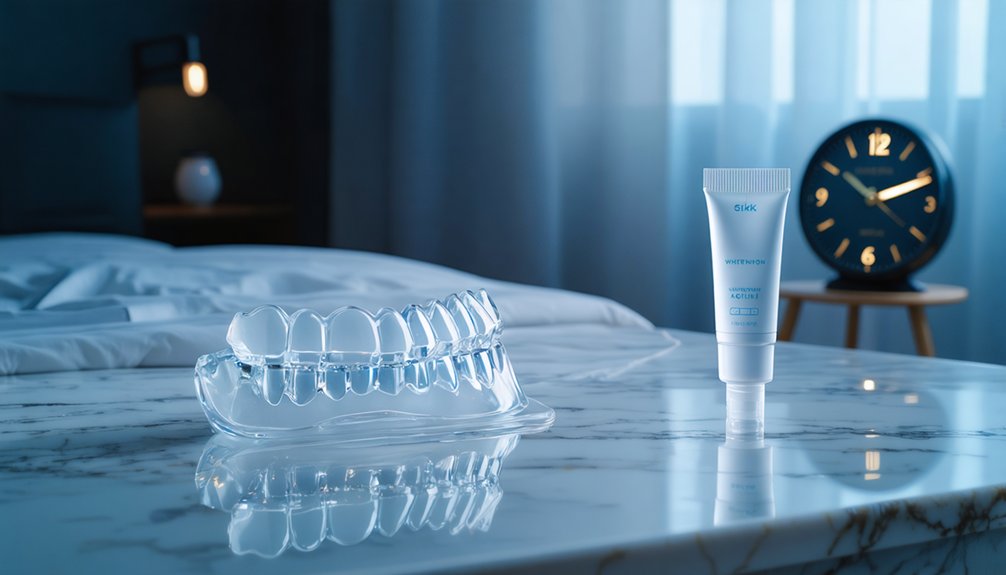
Overnight whitening trays work by holding a carbamide peroxide (CP) gel against your teeth for an extended period, typically 6–8 hours. This allows the active bleaching agents to penetrate the enamel and break down stain compounds.
During this time, CP breaks down into hydrogen peroxide, which drives gel penetration deep into the tooth structure, oxidizing chromogens embedded within the enamel and dentin. Extended contact time distinguishes overnight systems from short daytime sessions—your teeth absorb more active agent per cycle.
Custom-fit trays reinforce this process by maintaining consistent gel distribution across every surface. Lower CP concentrations, typically 10–22%, reduce sensitivity risk while still delivering measurable whitening.
You’re not accelerating the chemistry; you’re giving it adequate time to work precisely and thoroughly.
Do Overnight Trays Whiten Better Than Daytime Trays?
When comparing overnight and daytime whitening trays, the evidence favors overnight systems for overall bleaching effectiveness.
Clinical data shows that 10% carbamide peroxide used overnight outperforms 28% carbamide peroxide applied during short daytime sessions. Overnight efficacy stems from extended gel contact time—6 to 8 hours versus a 20-minute daytime comparison window—allowing deeper, more consistent peroxide penetration.
10% carbamide peroxide worn overnight outperforms stronger 28% formulas applied for just 20 minutes.
Research comparing the Opalescence PF overnight system against the Meta Tray daytime system confirmed superior clinical results with overnight use.
Importantly, both methods produced similar whitening levels at one-year follow-up, meaning your long-term outcome remains stable regardless of approach.
However, if you want stronger initial results within the first one to two weeks, overnight trays give you a measurable clinical advantage over shorter daytime protocols.
Custom-Fit Overnight Trays vs. One-Size-Fits-All Options
Custom-fit overnight trays outperform one-size-fits-all options in both comfort and clinical effectiveness.
Fabricated from dental impressions, these trays deliver precise gel distribution across every tooth surface while minimizing gum contact. That scalloped-edge design gives you better sensitivity control compared to bulky generic alternatives that allow gel to spill onto soft tissue.
One-size trays compromise whitening consistency because uneven contact leaves some areas under-treated. You also risk irritation that disrupts your oral hygiene routine, making compliance harder to maintain.
Custom trays offer superior tray durability, typically lasting years with proper care, and they accommodate patient preferences for either overnight or shorter daily sessions.
If you want predictable, controlled results, a professionally fitted tray is the clinically sound choice.
Why Gel Concentration Matters More Than You Think
Gel concentration directly determines how quickly carbamide peroxide breaks down into hydrogen peroxide and penetrates enamel to oxidize stain molecules.
Overnight gels typically contain 10–22% carbamide peroxide, releasing 3–7% hydrogen peroxide during extended wear. That sustained, lower-concentration release is central to gel efficacy—it whitens effectively while keeping sensitivity manageable.
Sustained, lower-concentration peroxide release isn’t a compromise—it’s the mechanism that makes overnight whitening both effective and tolerable.
Don’t assume higher concentration always means better outcomes. Clinical evidence shows 10% carbamide peroxide used overnight outperformed 28% carbamide peroxide applied in short daytime sessions.
Concentration impact depends heavily on contact time. A lower-concentration gel worn six to eight hours delivers more cumulative peroxide exposure than a high-concentration gel worn twenty minutes.
You’re not just choosing a number—you’re choosing a delivery strategy that controls both your results and your comfort.
How Long Until Overnight Whitening Trays Show Real Results?
You’ll typically notice a visible shift in tooth shade within the first two to three days of consistent overnight use, with full results emerging after one to three weeks depending on your baseline stain level.
Heavily stained teeth may require three to four weeks of nightly application before reaching ideal brightness, while mild discoloration often responds faster.
Your stain severity is the primary variable that determines how quickly the whitening effect accumulates across treatment sessions.
First Results Timeline
Most patients notice a visible difference within the first two to three nights of consistent overnight use, though full results typically emerge after one to three weeks. Your initial changes depend on stain severity, gel concentration, and tray fit.
Clinical evidence confirms that 10% carbamide peroxide applied overnight delivers measurable whitening earlier than short daytime sessions, giving you predictable results expectations from the start.
Heavily stained teeth may require three to four weeks of consistent use before reaching peak brightness. You’ll typically observe the most dramatic shift during the first week, with gradual refinement continuing afterward.
Custom-fit trays guarantee uniform gel contact throughout each session, which directly accelerates your timeline. Tracking shade changes every few days helps you assess progress and adjust treatment duration accordingly.
Full Effect Duration
Once your initial whitening shifts become visible, the question becomes how long until you’ve reached the full effect. For most patients using overnight trays with 10–22% carbamide peroxide, full results emerge within one to three weeks of consistent nightly application.
Heavily stained teeth may require three to four weeks before you’ve maximized your outcome.
Proper application techniques matter here—uneven gel placement or inconsistent wear delays results. Dismissing whitening myths about faster outcomes from skipping nights or overloading gel won’t accelerate your timeline; it compromises it.
Clinical evidence confirms that whitening effects stabilize around the six-month mark with regular tray use.
You control the outcome through disciplined, consistent application—not shortcuts. Treat the protocol as structured, and your results reflect that precision.
Stain Severity Impact
Stain severity directly shapes how quickly overnight whitening trays deliver visible results. Your stain types and stain origins both determine treatment timelines.
Surface stains from coffee, tea, or wine typically respond within one to two weeks of consistent overnight use. Deeper, intrinsic stains—those rooted in aging, fluorosis, or tetracycline exposure—demand three to four weeks of nightly application before meaningful changes appear.
You’ll notice initial lightening within the first few days regardless of severity, but full correction requires patience proportional to how deeply the discoloration is embedded. Heavier extrinsic buildup responds faster than mineralized or drug-induced staining.
Understanding your specific stain origin lets you set accurate expectations and commit to the consistent overnight protocol your case actually requires.
Are Overnight Whitening Trays Safe for Sensitive Teeth?
Overnight whitening trays can be a safe option for sensitive teeth when used correctly, though the experience varies depending on gel concentration and tray fit.
Lower-concentration gels, typically 10–16% carbamide peroxide, reduce sensitivity risk during extended wear. Custom-scalloped trays minimize gel contact with your gingival tissue, further supporting sensitivity management.
Lower-concentration carbamide peroxide gels and custom-scalloped trays work together to meaningfully reduce sensitivity during overnight whitening treatment.
Research confirms that tooth and gingival sensitivity from overnight systems generally remains below a mild threshold.
However, you should prioritize a dental consultation before starting treatment, particularly if you have pre-existing sensitivity or enamel concerns. Your dentist can recommend the appropriate concentration and monitor your response.
If sensitivity occurs, reducing wear frequency or switching to a lower concentration often resolves the issue without sacrificing meaningful whitening progress.
Who Benefits Most From Overnight Whitening Trays?
While sensitivity concerns may influence who chooses overnight trays, suitability extends beyond that single factor.
You’re an ideal candidate if you have heavily stained teeth requiring 3-4 weeks of consistent treatment, a demanding daytime schedule limiting short bleaching sessions, or a preference for controlled, gradual whitening.
The target audience includes professionals who prioritize convenience without sacrificing clinical outcomes.
Research confirms overnight 10% carbamide peroxide systems outperform daytime 28% formulations in bleaching effectiveness, making them particularly advantageous if you want measurable results with lower sensitivity risk.
Custom-fit trays further expand candidacy by ensuring precise gel distribution, reducing gingival exposure.
If you value flexibility, long-term maintenance, and evidence-backed performance over rapid in-office procedures, overnight whitening trays align directly with your whitening goals.
How to Keep Your Overnight Whitening Results Lasting Beyond Six Months
Maintaining your whitening results beyond six months requires consistent tray use paired with stain-prevention habits.
Post-treatment maintenance starts with limiting chromogenic foods and beverages—coffee, red wine, and dark sauces accelerate re-staining. Brush twice daily with a low-abrasion whitening toothpaste to slow surface discoloration without damaging enamel.
Schedule whitening touch-ups every four to six months using your custom trays and a 10% carbamide peroxide gel. A single overnight session or two to three consecutive nights typically restores your baseline shade.
Store your trays in a clean, ventilated case to preserve their fit and integrity between sessions. Attending routine dental cleanings removes extrinsic stains before they embed deeply, making each touch-up session more efficient and requiring less gel overall.
Frequently Asked Questions
Can Overnight Whitening Trays Be Used With Dental Crowns or Veneers?
You can use overnight whitening trays, but you’ll find limited crowns compatibility and reduced veneers effectiveness, as peroxide gels don’t alter restorations. Only your natural teeth will lighten, potentially creating visible shade mismatches.
How Should Whitening Gel Be Stored to Maintain Its Effectiveness?
Store your whitening gel in the refrigerator to maintain its potency. Always check the gel expiration date before use. Following proper storage tips—like avoiding heat and light exposure—ensures you’re getting the most effective, clinically reliable whitening results possible.
Is It Safe to Eat or Drink Immediately After Removing Whitening Trays?
After removing your trays, you shouldn’t eat or drink for at least 30 minutes. This post-treatment care step minimizes side effects like sensitivity and prevents staining while your enamel’s pores remain temporarily open.
Can Teenagers or Children Safely Use Overnight Whitening Trays?
Dentists don’t recommend overnight whitening trays for children or teenagers due to critical safety concerns and strict age restrictions. You should wait until your teeth fully mature, typically after 18, before you pursue professional whitening treatments.
Does Insurance Typically Cover the Cost of Custom Whitening Trays?
Insurance typically won’t cover custom whitening trays, as they’re considered cosmetic. You’ll pay out-of-pocket, but the investment’s justified—clinical evidence confirms superior insurance coverage exclusions don’t diminish whitening effectiveness, delivering long-lasting, controlled results you’ll maintain.
References
- https://www.drbicuspid.com/dental-specialties/smile-design/whitening/article/15359425/nighttime-at-home-bleaching-more-effective-than-daytime
- https://roswellcompletedentistry.com/blog/do-dentist-whitening-trays-work-instantly/
- https://www.chickashadentist.com/cosmetic-dentistry/in-office-vs-take-home-teeth-whitening-which-option-works-best-in-moore-norman-and-mustang/
- https://www.trysnow.com/blogs/news/how-long-to-whiten-teeth-with-trays
- https://www.allinthefamilydental.com/blog/in-office-vs-take-home-whitening/
- https://www.meetdandy.com/learning-center/articles/how-to-explain-to-your-patients-that-your-teeth-bleaching-tray-treatment-is-better-than-over-the-counter-kits/
- https://pmc.ncbi.nlm.nih.gov/articles/PMC3466022/
- https://www.flagstaffsmiles.com/blog/overnight-teeth-whitening-methods-and-effectiveness