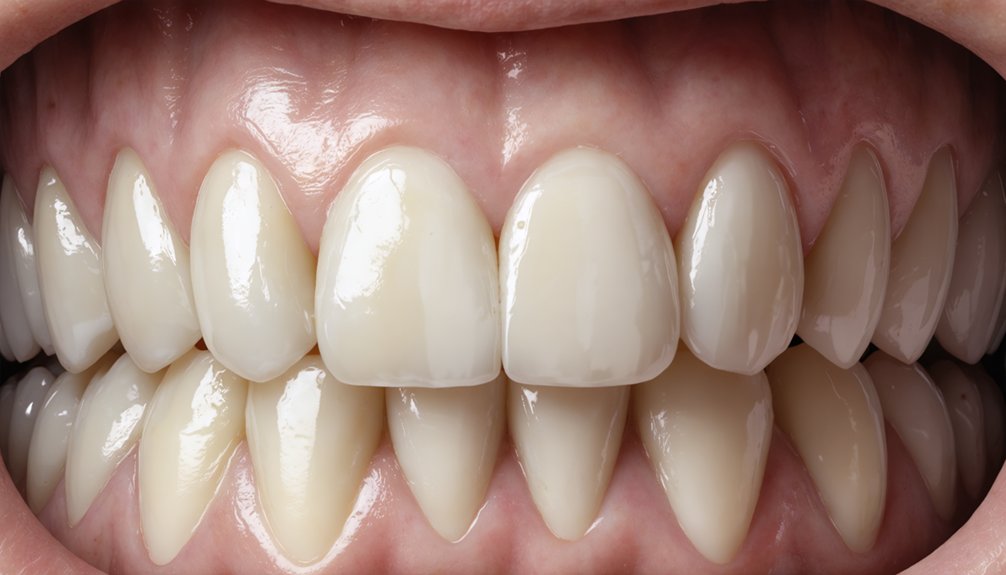
Maintain naturally white teeth by brushing twice daily with fluoride toothpaste, flossing once daily, and limiting staining beverages like coffee and wine. You’ll get the best results from crunchy fruits and vegetables that mechanically clean your enamel, while dairy products help remineralize your teeth. Use ADA-approved whitening toothpastes with mild abrasives for gradual improvement, but avoid acidic remedies like lemon juice that erode enamel. Schedule biannual dental cleanings and consider safe at-home options like peroxide-based formulas for persistent discoloration that daily habits alone won’t address.
Key Takeaways
- Brush twice daily with fluoride toothpaste using a soft-bristled brush and floss once daily to remove plaque between teeth.
- Eat crunchy fruits and vegetables that mechanically scrub enamel and dairy products that neutralize acids and remineralize teeth.
- Avoid acidic remedies like lemon juice that erode enamel; choose ADA-approved whitening toothpastes with mild abrasives instead.
- Minimize consumption of staining beverages such as coffee, tea, and red wine to prevent discoloration over time.
- Schedule biannual professional dental cleanings to maintain whiteness and receive expert monitoring of oral health.
Understanding What Really Works: Evidence-Based Natural Whitening Methods
While countless whitening products promise dramatic results, only a handful of natural methods demonstrate measurable efficacy in clinical settings. You’ll find statistically significant whitening effects from baking soda, activated charcoal, and certain acidic remedies in controlled in vitro studies on extracted teeth.
Baking soda offers the mildest significant whitening without altering enamel crystal size, making it your safest option for surface-level discoloration. However, you must understand the limitations: activated charcoal won’t address genetic or medication-induced stains, while acidic solutions like lemon juice and apple cider vinegar carry substantial enamel erosion risks with prolonged contact. Methods like coconut oil pulling and turmeric lack reliable scientific evidence supporting their whitening claims.
For long term whitening effects, hydrogen peroxide combined with baking soda shows promise in controlled applications without enamel damage.
Foods That Naturally Clean and Brighten Your Smile
Although professional whitening treatments dominate the cosmetic dentistry market, specific foods demonstrate measurable mechanical and chemical properties that remove surface stains and support enamel integrity. You’ll achieve ideal results by incorporating these evidence-based options:
- Crunchy fruits and vegetables: Apples contain malic acid that dissolves stains while their fibrous texture mechanically scrubs enamel. Carrots and celery function as natural abrasives, removing plaque and surface discoloration.
- Enzyme-rich fruits: Strawberries and pineapples contain bromelain and malic acid that break down stain molecules and increase saliva production.
- Dairy products: Lactic acid in cheese and yogurt neutralizes harmful acids while delivering calcium for enamel remineralization.
- Mineral dense plant foods: Antioxidant rich vegetables like broccoli provide iron that protects against acid-producing bacteria, while leafy greens deliver folic acid for gum health.
Safe At-Home Whitening Techniques and Products
You can achieve noticeable whitening results at home through scientifically proven methods that protect your enamel. Whitening toothpastes containing mild abrasives like baking soda and low-level hydrogen peroxide offer gradual improvement with daily use, while custom tray systems from your dentist deliver professional-strength results over two weeks.
Understanding the differences between these options helps you select the safest, most effective approach for your specific needs.
Whitening Toothpaste Options
Whitening toothpastes offer the most accessible entry point for safe at-home tooth brightening, relying primarily on two mechanisms: mild abrasives that polish away surface stains and low-concentration peroxides that penetrate enamel to lighten discoloration. You’ll find over the counter whitening potency varies greatly across formulations, with hydrogen peroxide and carbamide peroxide delivering the most reliable results.
Select products containing complementary whitening agents for excellent efficacy:
- Peroxide-based formulas (1-3% concentration) for gradual, persistent color change
- Baking soda preparations as gentle polishing agents, limited to 1-2 weekly applications
- Mild abrasive compounds that remove extrinsic stains from coffee, wine, and smoking
- ADA-approved options ensuring safety standards and enamel protection
You’ll achieve best results through twice-daily brushing, combined with consistent oral hygiene practices and realistic expectations about treatment timelines.
Custom Tray Systems
Custom tray systems represent the most effective dentist-supervised at-home whitening method, combining professional-grade peroxide formulations with precisely molded appliances that conform to your unique dental anatomy. The custom fit quality guarantees whitening gel maintains direct enamel contact while preventing gum exposure and irritation.
You’ll achieve personalized whitening results of 3-8 shades within 2-4 weeks, vastly outperforming generic alternatives. Professional oversight allows gel strength adjustment for sensitivity management while preventing enamel damage from overuse.
These durable, reusable trays deliver consistent application across all tooth surfaces, eliminating the uneven results from ill-fitting products. While requiring higher initial investment, the trays’ longevity provides cost-effectiveness through multiple future whitening sessions.
You maintain complete control over treatment timing and intensity under your dentist’s protocol, ensuring both safety and efficacy.
Natural Remedies to Avoid: Separating Myths From Reality
While social media influencers tout numerous DIY whitening methods, the scientific evidence reveals a troubling pattern: many popular natural remedies pose significant risks to your enamel.
Despite viral popularity, most DIY whitening remedies lack scientific support and may permanently damage your tooth enamel through erosion and abrasion.
High-Risk Natural Methods:
- Activated charcoal: Despite adsorptive properties, its abrasiveness damages enamel, paradoxically causing yellowing and enamel sensitivity over time
- Lemon juice: Achieves dramatic color changes (ΔE 44.0) but acid erodes protective enamel, exposing you to long-term damage
- Oil pulling and turmeric: Zero reliable evidence supports whitening claims; you’re wasting time on anecdotal methods
- Strawberries: Minimal effect (ΔE 38.2) with sugar content that attracts staining agents
Baking soda remains your only evidence-supported natural option, showing statistically significant whitening after 10 days without immediate enamel damage. However, prolonged use still risks erosion—apply cautiously and monitor surface changes.
Daily Habits for Long-Lasting Tooth Whiteness
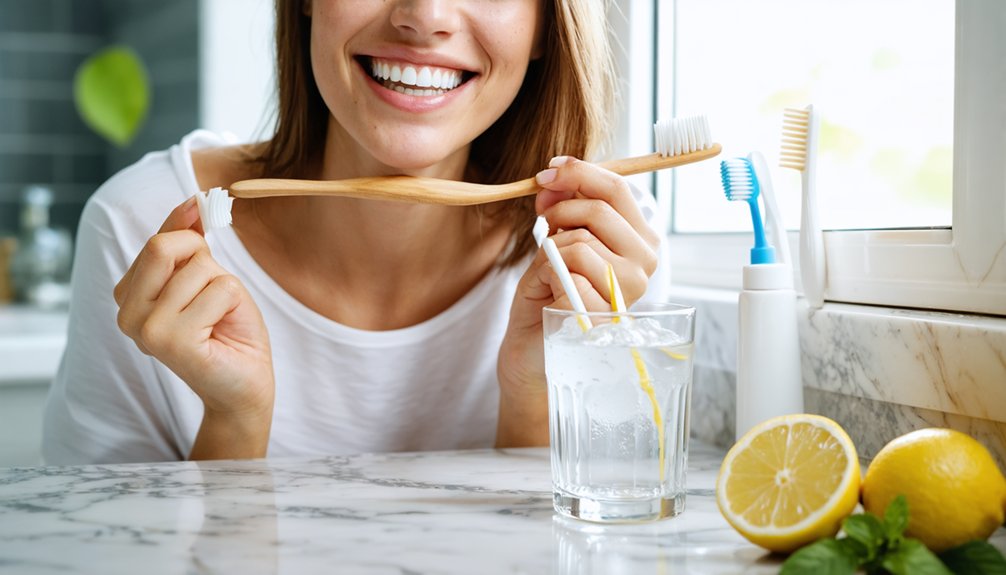
Maintaining your teeth’s whiteness boils down to consistent, evidence-based daily practices that prevent new stains while protecting enamel integrity. Implement proper brushing techniques by using a soft-bristled brush with fluoride toothpaste twice daily for two minutes, applying gentle pressure to avoid enamel erosion. After meals, brush to eliminate debris before stains set.
Floss once daily—preferably before bed—to remove plaque from interdental spaces where discoloration originates. For effective use of mouthwash, swish antitartar or fluoride formulas for 30 seconds twice daily to strengthen enamel and neutralize acids.
Minimize exposure to coffee, tea, and red wine; when consuming these, drink through a straw. Incorporate crunchy vegetables and calcium-rich foods that naturally cleanse teeth. Schedule biannual dental cleanings to maintain professional-grade whiteness you’ve achieved through disciplined home care.
When to Choose Professional Treatment Over Home Solutions
Understanding when home whitening methods fall short helps you make informed decisions about seeking professional dental care. Professional treatment becomes necessary when:
- Deep intrinsic stains from tetracycline or severe age-related yellowing resist over-the-counter solutions
- Pre-existing sensitivity requires regulated concentration adjustments and protective barriers
- Treatment duration constraints demand immediate results—professional sessions achieve 8 shades lighter in one hour versus weeks at home
- Treatment safety concerns arise from cavities, gum disease, or thin enamel requiring expert evaluation
You’ll benefit from professional supervision when stubborn tobacco or coffee stains need laser-activated agents. Dentists customize formulas for your specific discoloration type while preventing complications through proper application techniques.
If you’ve experienced uneven results or increased sensitivity from home kits, professional monitoring certifies controlled, predictable outcomes without risking enamel damage or gum irritation.
Frequently Asked Questions
Can Genetics Determine How White My Teeth Can Naturally Become?
Yes, genetics factors determine your teeth’s natural whiteness by controlling enamel thickness and dentin shade. Genetic tooth discoloration from hereditary conditions like amelogenesis imperfecta limits whitening potential, but you can optimize results through evidence-based treatments tailored to your genetic baseline.
Do Whitening Methods Work Differently on Crowns, Veneers, or Fillings?
Like rain sliding off a waterproof coat, whitening procedures don’t penetrate crowns, veneers, or fillings. Bleaching effectiveness targets only your natural teeth, leaving restorations unchanged. You’ll create mismatched shades unless you strategically plan treatments beforehand.
How Long After Whitening Treatment Should I Avoid Coffee or Wine?
You’ll need to avoid coffee and wine for 48-72 hours after whitening treatment. During this period, also avoid acidic foods that compromise enamel. Limit whitening frequency to twice yearly, allowing your teeth adequate recovery time between sessions.
Are Children’s Teeth Safe for Natural Whitening Methods Like Baking Soda?
Picture fragile enamel dissolving grain by grain—baking soda isn’t safe for children’s developing teeth. Whitening product safety demands caution; abrasives cause irreversible tooth enamel sensitivity. You’ll protect their smiles by waiting until age thirteen when enamel fully matures.
Does Smoking Permanently Stain Teeth or Can Whiteness Be Fully Restored?
Smoking doesn’t permanently stain teeth—professional whitening can restore whiteness. However, continued smoking causes tooth enamel deterioration and re-staining. You’ll maintain results only through staining prevention methods: quitting tobacco and consistent dental cleanings.