You’ll achieve the longest-lasting whitening results through professional in-office treatments using laser or LED technology, which maintain brightness for 1-3 years when properly maintained. Custom dentist trays offer comparable longevity with 80% satisfaction rates, while at-home strips typically last 6 months. Your results depend heavily on avoiding high-risk beverages like coffee and wine, maintaining rigorous oral hygiene, and using desensitizing toothpaste with potassium nitrate before treatment. This guide explores each method’s effectiveness, safety profiles, and maintenance protocols to help you select the most suitable approach.
Key Takeaways
- Custom dentist trays achieve 3-8 shade improvements with 80% satisfaction, delivering visible results in 3-5 days for yellow-toned teeth.
- Professional in-office laser whitening produces 1.88 times greater color change than LED, maintaining effects for 1-3 years with proper care.
- At-home whitening strips with peroxide lighten 1-2 shades in two weeks, providing results lasting up to six months before fading.
- Avoid coffee, tea, red wine, and dark berries while using straws for pigmented beverages to prevent re-staining after whitening treatments.
- Maintain results with whitening toothpaste twice daily and monthly touch-up sessions using custom trays or professional-grade products.
Understanding Why Teeth Turn Yellow Over Time
Enamel erosion stands as the primary structural cause of age-related tooth yellowing, progressing at 1-2 micrometers per decade after age 30. Dental maturation impacts reveal the underlying yellow dentin as protective enamel thins, regardless of your brushing habits.
Bruxism accelerates this wear in 8-10% of adults, while aggressive brushing and acidic exposure compound the damage.
Extrinsic staining mechanisms operate simultaneously. Coffee, tea, red wine, and dark sodas deposit pigments onto enamel surfaces. Acidic foods weaken your enamel structure, increasing stain penetration. Starches, particularly pasta, cause rapid discoloration when combined with pigmented beverages.
Tobacco introduces nicotine and tar, creating severe penetrating stains. Hereditary enamel disorders determine your baseline enamel thickness and natural shade. Tetracycline antibiotics, fluorosis, and systemic conditions produce permanent intrinsic discoloration requiring specialized whitening protocols.
Professional In-Office Whitening: Laser and LED Options
Professional laser whitening harnesses concentrated light beams at 810-980nm wavelengths to catalyze high-concentration hydrogen peroxide gels (35-44%), delivering measurable color changes in a single 60-90 minute session. You’ll achieve 1.88 times greater tooth color change compared to LED alternatives, making laser ideal for severe discoloration and deep stains. However, laser risk vs reward requires consideration—you’ll face higher temporary sensitivity despite dramatic results.
LED whitening offers controlled outcomes through cool blue light activation of lower-concentration peroxide gels (10-15%). You’ll need multiple sessions over several weeks, but you’ll experience reduced sensitivity risks. Suitable candidate selection depends on your stain severity: laser excels for brown discoloration and stubborn stains, while LED effectively addresses yellow-toned teeth. Expect $1,000 for laser treatment versus more affordable LED options, with both requiring future maintenance sessions.
At-Home Whitening Strips and Gels That Actually Work
Whitening strips containing hydrogen peroxide or carbamide peroxide can lighten your teeth by one to two shades when you apply them consistently for 2 weeks. You’ll see visible results within 3 to 14 days depending on your stain severity, with light surface stains responding in as few as 3-5 days.
Selecting the right brand and following precise application protocols—typically 30 minutes twice daily—determines whether you achieve noticeable improvement or waste time on ineffective products.
Top Strip Brands Compared
Multiple at-home whitening systems claim dramatic results, but laboratory testing and consumer trials reveal significant performance variations across leading brands. Strip brand reviews demonstrate Crest 3D Professional Whitestrips deliver superior adherence and visible improvement across 20-day protocols without sensitivity complications.
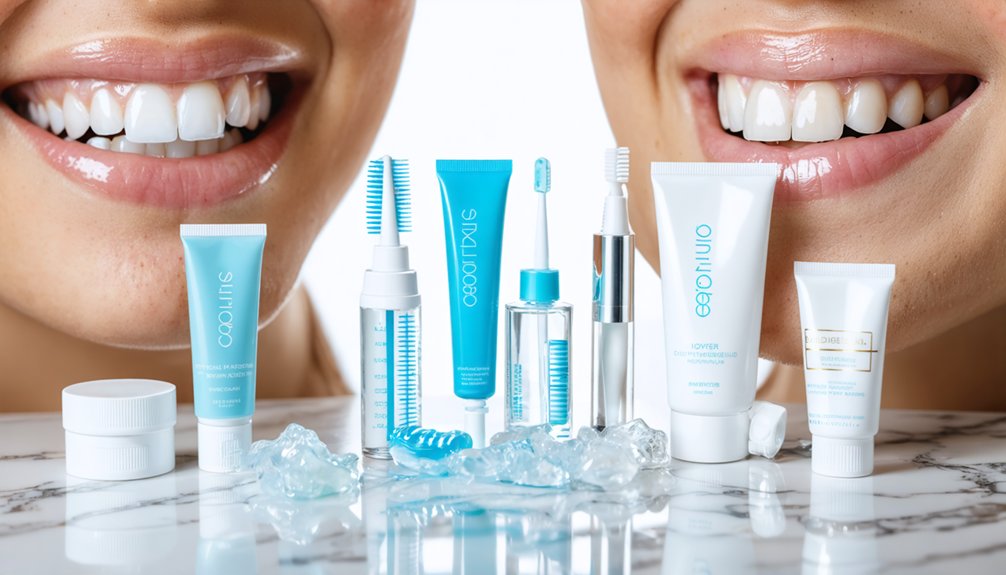
Whitening product comparisons position AuraGlow’s tray-based system as effective for extended treatment cycles, utilizing pre-filled syringes for mess-free application over 10-day intervals. Conversely, Lumineux strips demonstrate insufficient whitening efficacy despite natural formulation benefits, leaving residual gel deposits post-treatment.
Crest Whitening Emulsions’ leave-on format underperforms against traditional strip alternatives in controlled comparisons. You’ll achieve ideal whitening outcomes by selecting adhesive strip technologies over gel-based systems, prioritizing products with documented adherence properties and minimal post-application residue for maximum enamel contact time and stain reduction efficiency.
Application Tips for Results
Since strip adhesion determines treatment efficacy, you’ll need to prepare tooth surfaces properly before application. Clean thoroughly with non-abrasive toothpaste, then dry teeth completely using tissue. Proper strip positioning on front teeth guarantees even color distribution and maximizes contact with enamel surfaces.
Press strips firmly for full adhesion during the 30-minute session. Treatment duration optimization requires 1 hour daily applications for 7-10 days to achieve ΔE values around 2.0.
For gels, dispense carefully into custom trays, avoiding overfill that causes gum irritation. Use 10-16% carbamide peroxide concentrations for 1 hour daily sessions.
Maintain results through 6-12 month retreatments and daily whitening washes. Control sensitivity by reducing peroxide concentration or session length. Avoid eating 1 hour pre-treatment to prevent interference with whitening agents.
Custom Dentist Trays for Superior At-Home Treatment
When pursuing professional-grade whitening results from home, custom dentist trays represent the gold standard in at-home treatment modalities. These precision-fabricated appliances guarantee optimal bleaching gel application through their exact conformity to your dental anatomy, delivering consistent whitening agent contact across all tooth surfaces.
Key advantages of custom tray customization include:
- Superior efficacy: Achieves 3-8 shade improvements with 80% user satisfaction rates
- Enhanced safety: Prevents gel leakage onto gums, eliminating irritation and tissue damage risks
- Extended longevity: Trays last indefinitely with proper maintenance, eliminating repeated purchases
- Accelerated results: Professional-grade concentrations produce visible whitening within 3-5 days
- Uniform coverage: Effectively treats crooked or unevenly spaced teeth where strips fail
Your initial appointment involves impression mold creation, with trays ready within two weeks for immediate treatment initiation.
Natural DIY Remedies for Gradual Brightening
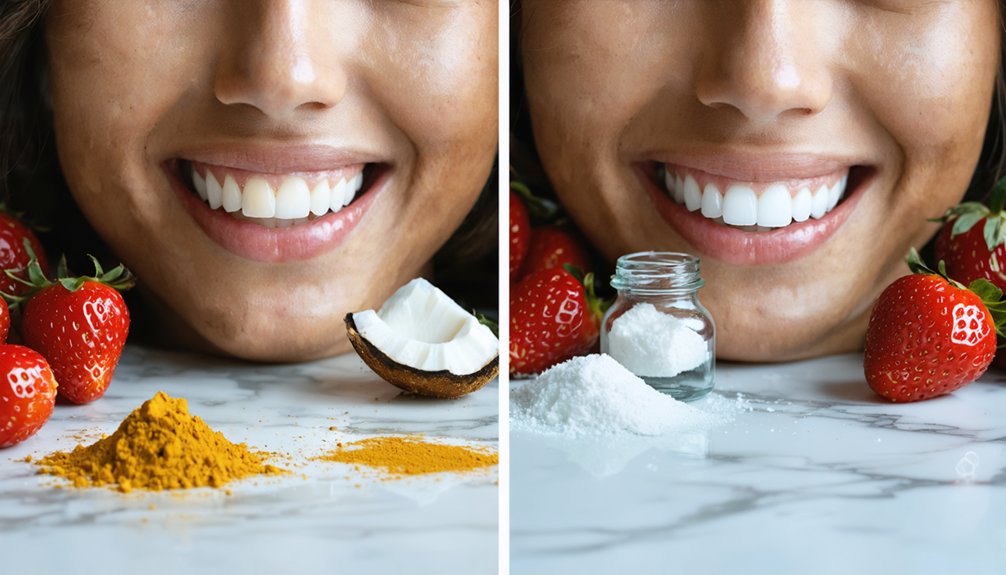
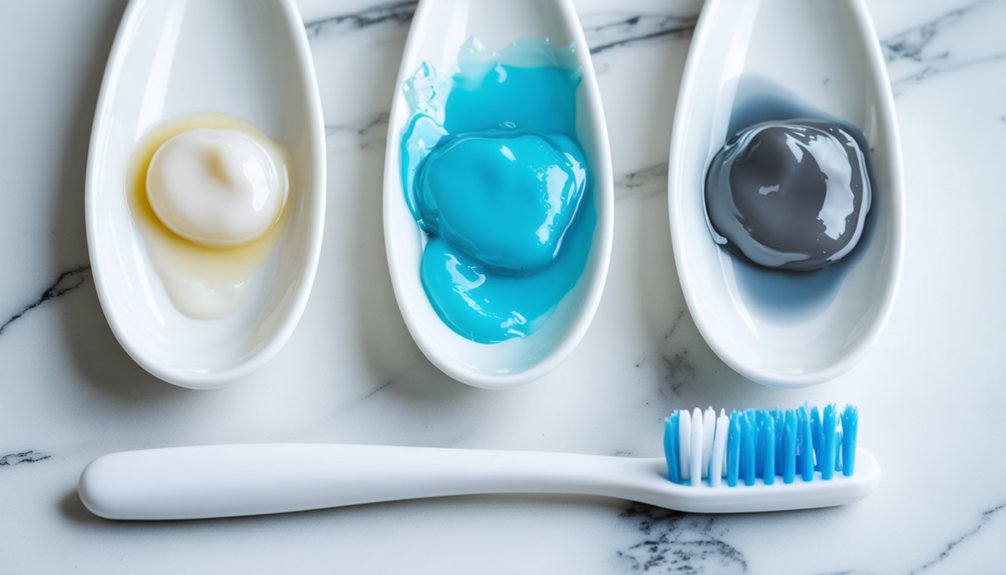
While custom dentist trays deliver professional-grade results, budget-conscious individuals can achieve gradual tooth brightening through evidence-based natural remedies. You’ll find baking soda offers mild abrasive action that removes surface stains—mix with hydrogen peroxide and brush 2-3 times weekly for statistically significant whitening after four weeks.
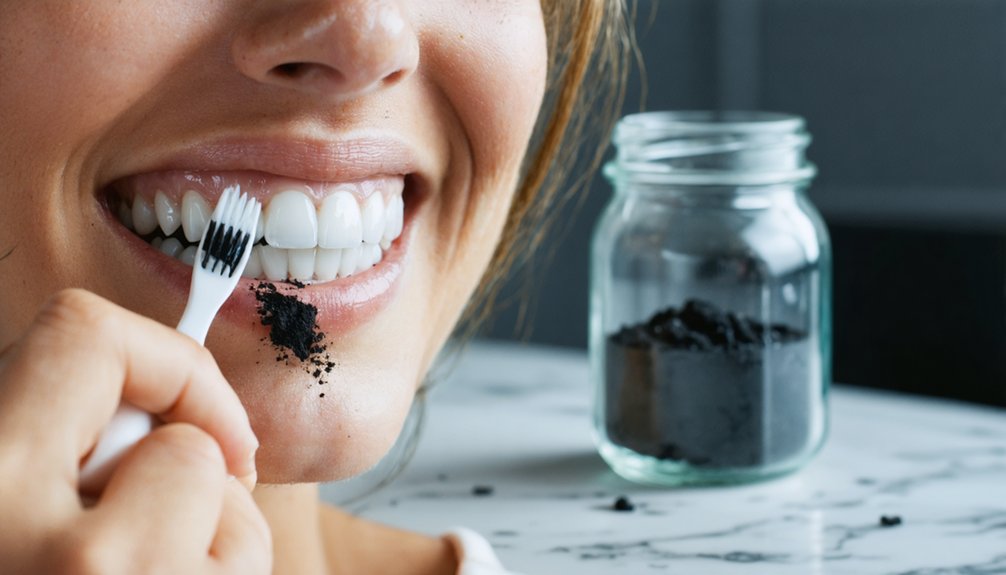
Activated charcoal binds to stains effectively, though you should limit application to 1-2 weekly sessions due to conflicting research on natural ingredients safety.
Oil pulling with coconut oil provides non-abrasive antimicrobial benefits through 10-20 minute swishing sessions.
Exercise caution with acidic options like strawberries, lemon juice, and apple cider vinegar—while these demonstrate measurable whitening effects, frequent use risks enamel erosion. Monitor for common teeth whitening side effects including sensitivity and tissue irritation, adjusting frequency accordingly for controlled, sustainable results.
Daily Oral Care Habits to Maintain White Teeth
Although professional whitening treatments deliver immediate results, you’ll achieve lasting brightness only through disciplined daily oral care protocols that prevent new stains from forming. Electric toothbrush recommendations consistently emphasize models with pressure sensors and timer functions to guarantee thorough plaque removal without enamel erosion.
Whitening toothpaste reviews reveal formulations containing hydrogen peroxide or baking abrasives effectively maintain post-treatment brightness when used methodically.
Your maintenance protocol requires:
- Brush twice daily at 12-hour intervals using fluoride toothpaste with soft bristles
- Floss once daily to eliminate interproximal debris causing discoloration
- Rinse immediately after consuming coffee, tea, wine, or pigmented beverages
- Incorporate fluoride mouthwash to neutralize bacteria in inaccessible areas
- Schedule professional cleanings quarterly for inclusive plaque elimination
Limit staining foods, increase water consumption, and avoid tobacco products to preserve whitening investments long-term.
Comparing Safety and Effectiveness of Whitening Methods
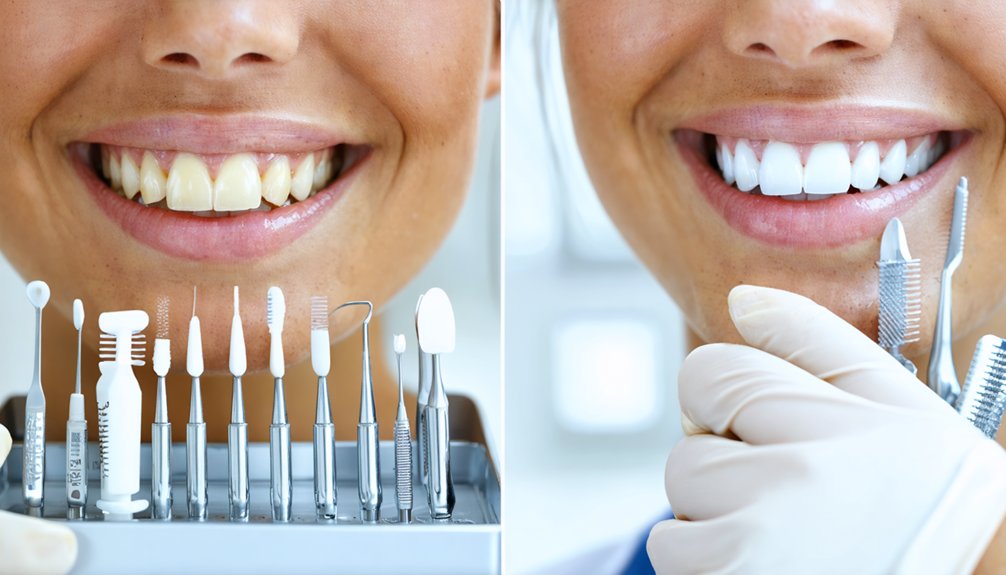
When selecting a whitening method, you’ll need to weigh each option’s safety profile against its effectiveness in removing stains. Professional in-office treatments deliver the fastest, most dramatic results—up to 8-10 shades brighter—but involve higher peroxide concentrations that require dentist monitoring to prevent gum irritation and tooth sensitivity.
At-home kits and over-the-counter products offer gentler alternatives with lower concentrations, though they require longer treatment periods and produce more modest results of 1-2 shades.
Safety Levels by Method
Professional-grade whitening treatments deliver the highest safety profile when administered under dental supervision, combining concentrated bleaching agents with protective protocols that minimize adverse effects. You’ll experience minimal sensitivity risk and enamel damage through precise application techniques that protect surrounding tissues.
Custom-fitted trays offer intermediate safety levels with prescribed peroxide concentrations, while OTC strips present increased risks from improper fit or overuse.
Safety rankings from highest to lowest:
- In-office treatments: Controlled high-concentration gels with professional monitoring prevent misuse
- Custom trays: Dentist-prescribed formulations with potassium nitrate desensitizers manage sensitivity
- ADA-approved strips: Safe at 3% hydrogen peroxide when directions are followed precisely
- Non-peroxide agents: PAP and sodium bicarbonate avoid interprismatic dissolution entirely
- Whitening toothpastes: Lowest concentration but abrasives risk enamel erosion with excessive use
Avoid charcoal products and DIY methods that compromise enamel integrity.
Effectiveness and Risk Trade-offs
Understanding safety parameters means little without examining what each method actually delivers in whitening performance. Professional in-office treatments achieve up to 8 shades lighter in 60-90 minutes using 25-43% hydrogen peroxide under treatment supervision importance, with results lasting 1.5 years. You’ll control deep stain removal and even coverage through systems like Zoom! and Opalescence.
At-home OTC products yield 3-6 shades over weeks using 3-30% peroxide, requiring consistent daily application. Peroxide concentration impacts directly correlate with whitening speed: hydrogen peroxide gels act faster than carbamide peroxide formulations. You’ll find strips effective only on front 6-8 teeth with faster fade rates.
Custom professional trays extend effectiveness beyond store-bought options, delivering 1-2 weeks of full results with supervised peroxide levels that balance safety and performance.
How Long Different Whitening Treatments Last
The longevity of teeth whitening results varies dramatically across treatment methods, with professional in-office procedures maintaining their effects for 1-3 years compared to over-the-counter strips that fade within 6-12 months. Your whitening maintenance cycles depend on your chosen method and lifestyle habits.
Treatment Duration Breakdown:
- In-office whitening: Zoom treatments deliver 7-8 shades lighter, maintaining color stability for 1-3 years with proper care
- Dentist-supervised trays: Results last one year or longer, requiring monthly maintenance sessions using custom trays
- Whitening strips: Superior brands provide up to 6 months of results before fading begins
- Whitening toothpaste: Effects last 3-4 months with twice-daily use, ideal for post-treatment upkeep
- Effects of smoking on whitening: Accelerates fade time from months to 4-6 weeks without intervention
Professional methods consistently outperform over-the-counter options in long-term efficacy.
Preventing Sensitivity During and After Whitening
Tooth sensitivity ranks as the most common side effect patients experience during whitening procedures, affecting up to 78% of users within the first 24-48 hours of treatment. Managing tooth sensitivity requires strategic preparation—apply desensitizing toothpaste containing potassium nitrate for two weeks before your procedure and request professional fluoride treatment to fortify enamel.
Select products with 5-6% peroxide concentrations rather than higher formulations, and limit application times to five minutes per session. During treatment, follow instructions precisely and reduce exposure time if discomfort escalates. For preventing whitening sensitivity post-procedure, avoid extreme temperatures in foods and beverages for 48 hours.
Continue using anti-sensitivity toothpaste like Sensodyne to block pain signals, and maintain gentle brushing with soft bristles. Schedule gradual whitening sessions if sensitivity persists beyond initial treatment.
Foods and Drinks to Avoid for Long-Lasting Results
Your whitening results depend heavily on dietary choices, as specific foods and beverages contain chromogens, tannins, and acids that actively penetrate enamel and accelerate discoloration. Beverages like coffee, tea, red wine, and dark sodas pose the highest staining risk due to their pigment compounds binding to tooth surfaces, while their acidity simultaneously erodes enamel and exposes vulnerable dentin.
Similarly, deeply colored foods—including berries, tomato-based sauces, and curry—contain concentrated pigments that adhere to enamel pores, particularly during the 48-hour post-whitening period when teeth remain most susceptible to staining.
Staining Beverages to Limit
While whitening treatments deliver impressive initial results, certain beverages actively undermine enamel integrity and reintroduce pigmentation that compromises treatment longevity. You’ll need to strategically limit consumption of these primary staining agents:
- Coffee and tea: Tannins bind to enamel, allowing chromogens to create persistent yellow-brown deposits. Stronger brews intensify acid content and staining potential.
- Red wine: Chromogens combined with tannins adhere to enamel surfaces, producing grey-yellow discoloration on anterior teeth.
- Carbonated sodas: High acidity erodes protective enamel, exposing yellowish dentin while caramel colorants penetrate weakened surfaces.
- Limiting citrus based drinks: Acidic formulations compromise enamel structure, increasing porosity for pigment absorption.
- Minimizing sugary beverage intake: Sugar promotes bacterial proliferation, accelerating yellowing through demineralization.
Strategic beverage management preserves whitening investments and maintains ideal results.
Foods That Cause Discoloration
Beyond liquid staining agents, solid foods introduce equally problematic pigments and acids that compromise whitening outcomes. Tomato-based sauces, citrus fruits, and vinegars erode enamel through acidity, exposing dentin’s yellow undertones while increasing porosity for stain absorption. This food nutrient content’s impact on enamel directly determines your teeth’s vulnerability to discoloration.
Darkly pigmented foods present additional challenges. Turmeric-based curries deposit yellow-orange residue, while beets, pomegranates, and berries contain anthocyanins that bond to enamel surfaces. Soy sauce and balsamic vinegar combine dark pigmentation with acid content, creating dual staining mechanisms.
Berry juices intensify pigments and tooth discoloration through concentrated chromogens and sugars that promote bacterial growth. You’ll maximize whitening longevity by eliminating these high-risk foods or consuming them strategically with immediate oral hygiene protocols to prevent permanent enamel staining.
Frequently Asked Questions
Can Yellow Teeth Whitening Damage Dental Crowns or Veneers?
No, whitening won’t damage your crowns or veneers—they’re non-porous and structurally resistant to bleaching agents. However, you’ll notice crown discoloration becomes apparent as natural teeth lighten. Veneer sensitivity isn’t a concern, but color mismatch requires replacement to maintain uniformity.
Is Teeth Whitening Safe During Pregnancy or While Breastfeeding?
Whitening during pregnancy remains questionable territory—you’ll find limited whitening options due to insufficient safety data. You should consult a dental professional before proceeding. While breastfeeding, peroxide-based treatments won’t transfer into breastmilk, offering you controlled whitening possibilities.
What Age Is Appropriate to Start Whitening Treatments for Teenagers?
You should wait until age 14-16 when permanent teeth have fully erupted and enamel has matured. Appropriate age guidelines recommend professional evaluation first, with parental supervision recommendations ensuring you’ll monitor treatment progress and prevent enamel damage or sensitivity issues.
Do Whitening Treatments Work on Gray or Brown Tooth Discoloration?
Whitening treatments work better on brown discoloration than gray. You’ll achieve ideal results on brown extrinsic stains through professional bleaching. Gray intrinsic stains resist most treatments, often requiring multiple sessions or alternative cosmetic procedures like veneers for satisfactory correction.
Can Smokers Achieve Permanent Whitening Results or Only Temporary Improvement?
You’ll only achieve temporary improvement as a smoker—permanent results require complete smoking cessation. The impact of smoking habits and lifestyle factors contributing to restaining will reverse your professional whitening within days, necessitating frequent touch-ups every 1–3 months.