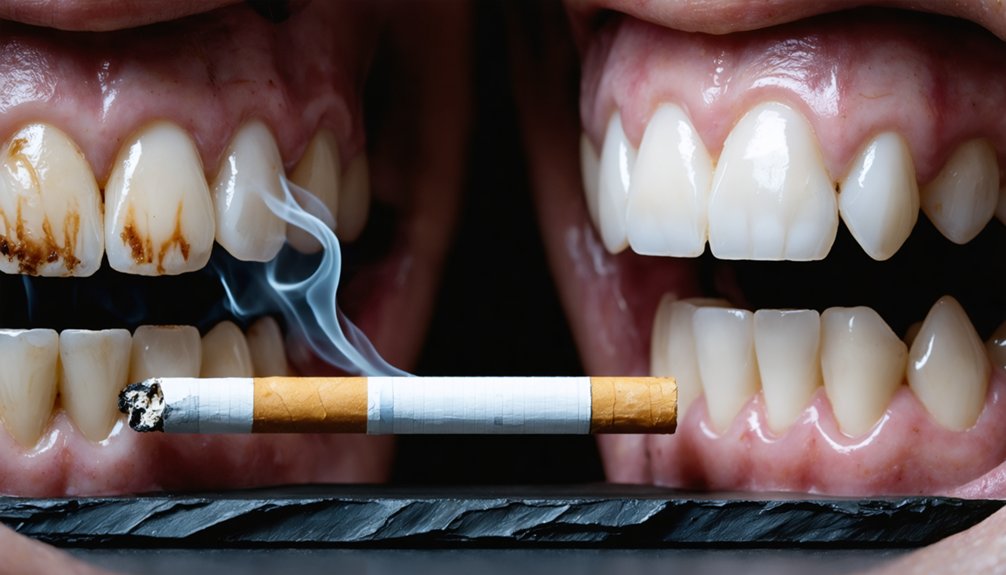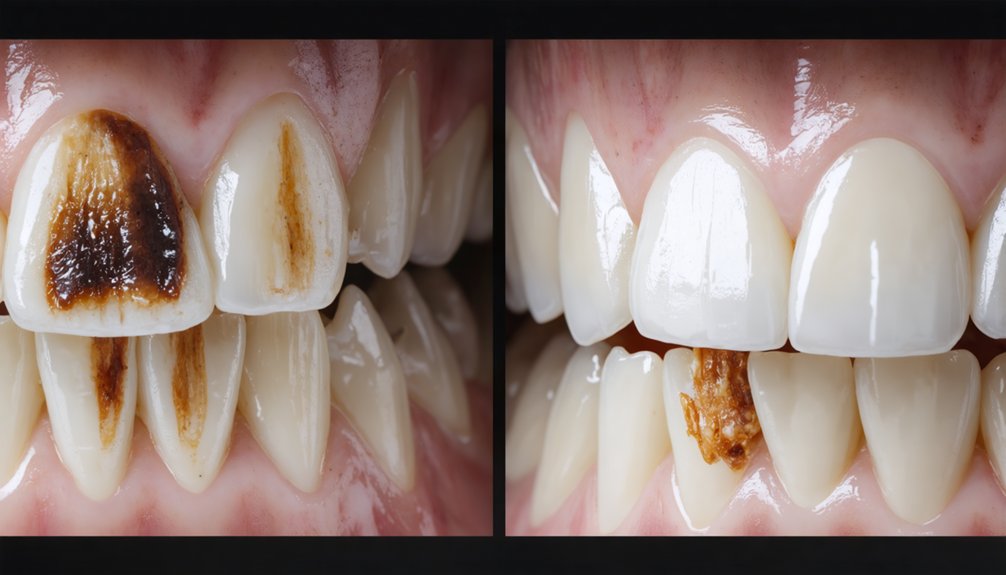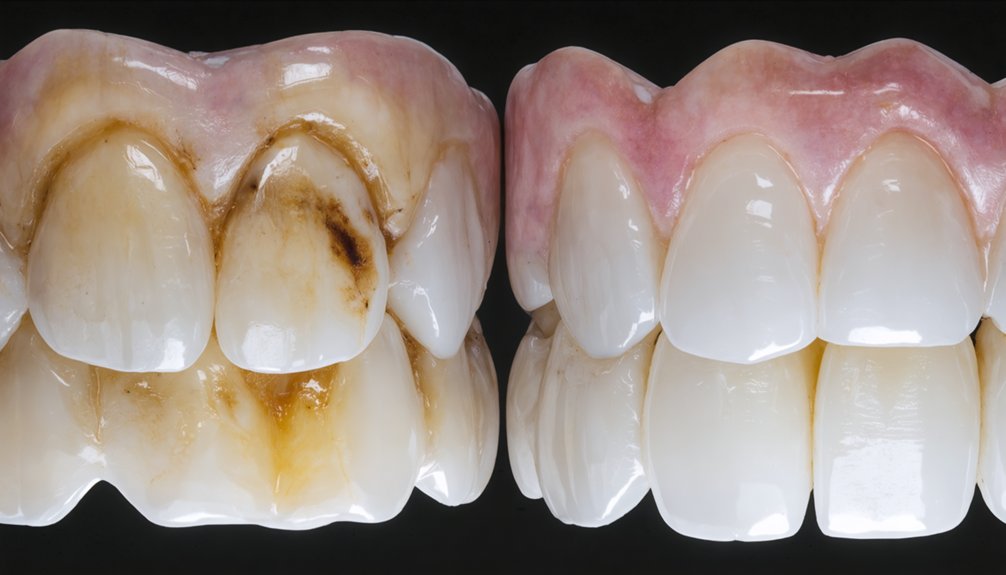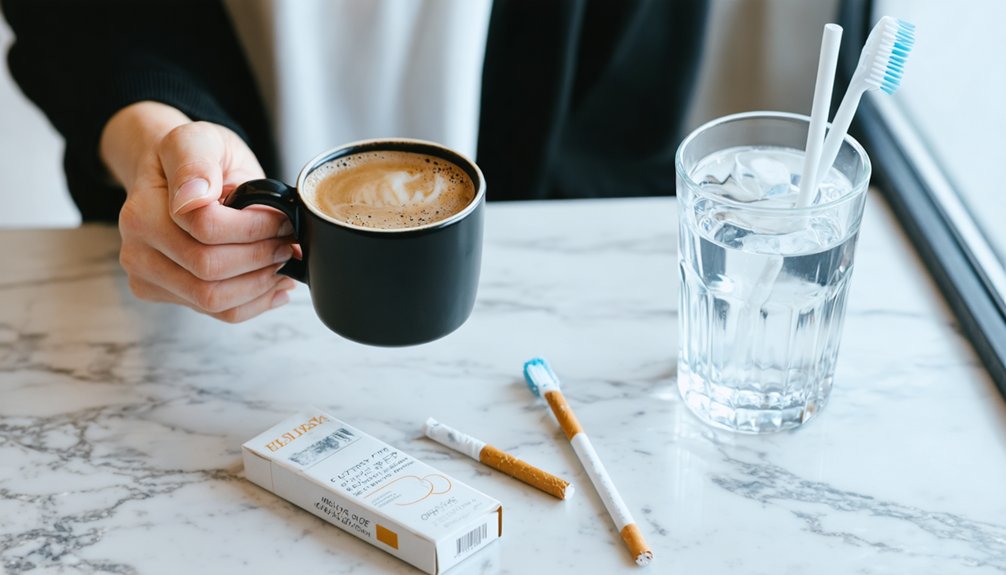
After whitening, your enamel’s pores are wide open and far more vulnerable to tobacco’s tar and nicotine. You’ll want to avoid smoking entirely for the first 48 hours, since absorption peaks immediately after treatment. Rinse with water after any staining exposure, brush consistently, and use remineralizing products to rebuild enamel density. Scheduling professional cleanings every 3–4 months also keeps discoloration from compounding. The full strategy goes much deeper than these basics.
Key Takeaways
- Avoid tobacco completely during the first 48 hours post-whitening, as enamel absorption peaks immediately after treatment, accelerating stain penetration.
- Rinse with water immediately after any tobacco exposure to reduce residue buildup on freshly whitened enamel.
- Use NR-5 technology toothpastes to remineralize enamel, reducing its porosity and resistance to future tobacco staining.
- Drink water consistently to support saliva production, which naturally buffers against tobacco residue and surface discoloration.
- Schedule professional cleanings every 3-4 months, as tobacco accelerates enamel discoloration and requires more frequent maintenance interventions.
Why Tobacco Stains Keep Coming Back After Whitening
Even after a professional whitening session, tobacco stains return because nicotine and tar penetrate the enamel’s microscopic pores rather than sitting on the surface.
Understanding tobacco impact helps you take meaningful control over your results. Whitening opens those pores temporarily, making enamel more receptive to both treatment and re-staining.
Whitening temporarily opens enamel pores — the same vulnerability that lifts stains also invites them back in.
Tar bonds directly to softened enamel, while nicotine oxidizes upon air exposure, turning yellow and embedding deeper over time.
Without deliberate stain prevention strategies, you’re practically undoing your investment with every cigarette.
Whitening doesn’t seal your enamel — it brightens it. That distinction matters.
The same porosity that allows the whitening gel to work also allows tobacco compounds to re-enter.
Controlling what contacts your teeth post-treatment is what determines how long your results last.
Protect Your Enamel in the First 48 Hours After Treatment
The 48 hours following your whitening treatment represent your highest-risk window for tobacco staining. Your enamel absorption rate peaks immediately after treatment, making immediate care non-negotiable.
During this window, your enamel is porous, reactive, and highly vulnerable to pigment infiltration.
Prioritize these protective measures:
- Avoid tobacco completely — nicotine and tar penetrate deeply into freshly treated, open enamel pores
- Eliminate all staining consumables — coffee, red wine, and dark sodas accelerate pigment absorption during this critical phase
- Rinse with water immediately after any unavoidable exposure to reduce surface residue
You control the outcome of your whitening investment.
Every compromise made within this 48-hour period directly undermines the results you’ve paid for. Treat this window as non-negotiable protocol, not optional guidance.
Brushing, Rinsing, and Eating Habits That Block Tobacco Stains
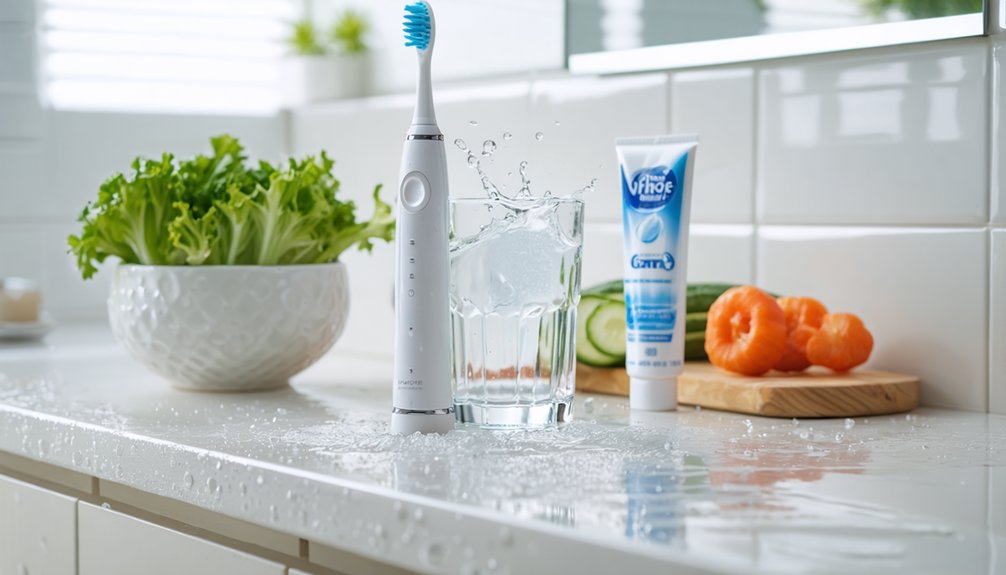
Finally, leverage hydration tips to your advantage.
Consistent water intake sustains saliva production, your body’s natural stain buffer, and continuously clears residue that tobacco and dark foods leave behind between brushing sessions.
Whitening Toothpastes and Enamel Products Worth Using
Brushing and rinsing habits create the foundation, but the products you reach for each day determine how well your enamel holds its brightness against tobacco’s persistent staining compounds.
Selecting the right formulations means prioritizing both whitening ingredients and enamel strengthening properties simultaneously:
- NR-5 technology toothpastes remineralize enamel at the crystalline level, reinforcing structure against nicotine and tar penetration.
- Hydrogen peroxide mouthwash (diluted) targets surface discoloration between brushing sessions without aggressive abrasion.
- Baking soda and peroxide blends lift tobacco residue effectively when used two to three times weekly—not daily.
Avoid fluoride toothpaste immediately following professional whitening, as it interferes with gel absorption during the critical 48-hour window.
Once that period passes, rotate your products strategically to maintain mineral density while continuously addressing surface stain accumulation.
When to Return to Your Dentist to Restore Whitening Results
Even with consistent home care, tobacco exposure accelerates enamel discoloration faster than most maintenance routines can offset—so recognizing the right moment to schedule professional intervention makes the difference between minor touch-ups and full retreatment.
Your dental appointment frequency should reflect your smoking habits. If you’re an active smoker, plan professional cleanings and whitening touch-ups every three to four months rather than the standard six.
Watch for visible yellowing, surface dullness, or increased sensitivity—these signal that at-home whitening maintenance tips alone won’t restore your baseline shade.
Your dentist can apply high-concentration hydrogen peroxide treatments or laser bleaching to reverse tobacco-driven staining before it penetrates deeper enamel layers. Acting early preserves your investment, reduces treatment intensity, and keeps retreatment cycles shorter and more cost-effective over time.
Frequently Asked Questions
Can Vaping Cause the Same Tobacco Stains as Traditional Cigarettes Do?
Ironically, vaping’s “cleaner” image doesn’t spare your enamel. Don’t fall for vaping myths — it still causes discoloration. Prioritize stain prevention by avoiding it completely, especially within the first 48 hours post-whitening.
Does Nicotine Gum or Patches Affect Tooth Whitening Results Over Time?
Nicotine gum and patches don’t directly stain teeth, but nicotine effects can subtly compromise whitening longevity by reducing saliva flow. You’ll maintain brighter results longer by pairing these alternatives with consistent oral hygiene practices.
How Does Smoking Frequency Directly Impact How Fast Stains Return?
Like a sponge absorbing liquid, your enamel reabsorbs tobacco pigments faster with increased smoking duration. The more you smoke, the quicker stain removal becomes necessary, cutting your whitening results from three years down to one.
Are Certain Tobacco Products Less Damaging to Whitened Teeth Than Others?
All tobacco products damage whitened teeth, but a stain comparison shows alternatives like pouches cause less surface discoloration. Still, alternative products don’t eliminate risk—you’re exposing your enamel to staining compounds regardless of the delivery method.
Can Secondhand Smoke Exposure Cause Staining on Recently Whitened Teeth?
Like a sponge soaking up spills, your tooth enamel absorbs secondhand smoke’s tar and nicotine, causing discoloration. Yes, it can stain. Prioritize stain prevention by minimizing exposure environments within your critical 48-hour post-whitening window.
References
- https://parkwaysmiles.com/teeth-whitening-for-smokers/
- https://stevehornedds.com/how-to-avoid-staining-your-teeth-after-whitening-treatments/
- https://www.regeneratenr5.co.uk/blogs/news/teeth-whitening-and-how-to-remove-smoking-stains.html
- https://sounddentalnc.com/how-to-remove-tobacco-stains-from-teeth/
- https://www.pittsfordfamilydental.com/blog/teeth-whitening-for-smoking-stains/
- https://rontostodds.com/blog/teeth-whitening-for-smokers-addressing-stains-from-tobacco-use/
- https://www.advanceddental.com/blog/does-teeth-whitening-remove-smoking-stains
- https://enameldentistry.com/remove-tobacco-coffee-stains-2026/
- https://crest.com/en-us/oral-care-tips/teeth-stains/how-to-remove-nicotine-stains-from-teeth