If you’re over 50, you’ll need a thorough dental evaluation before whitening to identify enamel erosion, gum recession, and existing restorations that won’t change color. Choose lower peroxide concentrations (5-6% for hydrogen peroxide or 10-22% for carbamide peroxide) to minimize sensitivity, and start with desensitizing toothpaste two weeks beforehand. In-office treatments deliver faster results with professional monitoring, while at-home options offer gentler, gradual whitening. Understanding your specific dental condition will help you select the safest approach that delivers results without compromising your oral health.
Key Takeaways
- Schedule a pre-whitening dental evaluation to identify cavities, gum disease, enamel erosion, and determine the safest whitening method.
- Choose lower peroxide concentrations (5-6% hydrogen peroxide or 10-22% carbamide peroxide) to minimize sensitivity from receding gums and thinning enamel.
- Apply desensitizing toothpaste two weeks before treatment and request professional fluoride varnishes to strengthen enamel and reduce discomfort.
- Understand that existing crowns, bridges, and fillings won’t whiten; plan to replace visible restorations 10-14 days after treatment if needed.
- Consider in-office treatments for professional monitoring with severe sensitivity, or at-home options for flexibility with milder age-related concerns.
Understanding Age-Related Changes to Teeth and Gums
Your teeth and gums undergo significant transformations as you age, and understanding these changes is essential before pursuing any whitening treatment. Enhanced tissue fragility becomes apparent as your gums naturally thin and recede, exposing vulnerable root surfaces that weren’t meant for bleaching agents.
Aging gums naturally thin and recede, exposing delicate root surfaces that are particularly vulnerable to whitening chemicals and bleaching agents.
You’ll also experience reduced regeneration capacity—your cells renew more slowly, healing takes longer, and your immune system responds less effectively to potential irritation.
These physiological shifts mean whitening products that worked well in your younger years may now cause excessive sensitivity or damage to exposed roots. Your gum tissue has likely receded over decades, revealing softer root surfaces that are more susceptible to harm from bleaching chemicals.
Additionally, medications reducing your saliva production can intensify whitening-related discomfort and compromise your oral tissues’ natural protection.
The Importance of a Comprehensive Dental Evaluation Before Whitening
Given these age-related vulnerabilities in your teeth and gums, a thorough dental evaluation becomes the necessary first step before you consider any whitening treatment.
Your dentist will identify cavities, gum disease, and enamel erosion that could worsen during whitening. They’ll assess whether existing crowns, bridges, or fillings will match your whitened teeth, preventing costly surprises.
Evaluating oral conditions helps determine the root cause of discoloration—whether it’s surface stains or internal damage requiring different approaches. This examination reveals contraindications like extreme sensitivity or tooth infections that demand correction first.
Avoiding contraindications protects you from severe pain and complications. Your dentist will recommend the safest, most effective whitening method for your specific dental situation, ensuring you achieve ideal results without compromising your oral health.
Managing Enamel Thickness and Tooth Sensitivity in Seniors
As you age, your tooth enamel gradually thins through decades of chewing, grinding, and exposure to acidic foods and beverages. This natural process exposes the underlying dentin, making your teeth more porous and vulnerable to sensitivity during whitening treatments. Understanding how peroxide-based agents interact with thinned enamel empowers you to make informed decisions about concentration levels and application duration.
You can minimize discomfort by selecting treatments with lower peroxide concentrations (five to six percent) and shorter application times. Consider these protective strategies:
- Apply desensitizing toothpaste two weeks before starting whitening treatments
- Request professional fluoride varnishes from your dentist to strengthen enamel
- Implement dietary changes by avoiding extreme temperatures immediately after treatment
Proper bone loss prevention through calcium-rich nutrition supports overall dental health, creating a stronger foundation for successful whitening outcomes.
When dental restorations like crowns, bridges, or fillings already occupy visible positions in your smile, whitening treatments become more complex than simply brightening natural teeth. Whitening agents can’t penetrate sealed restoration surfaces—porcelain, ceramic, and zirconia remain unchanged while surrounding enamel lightens, creating noticeable color mismatches that trigger aesthetic concerns.
Material compatibility matters enormously. Whitening products may soften composite surfaces and even cause mercury release from silver amalgam fillings. You’ll also experience heightened sensitivity compared to patients without restorations.
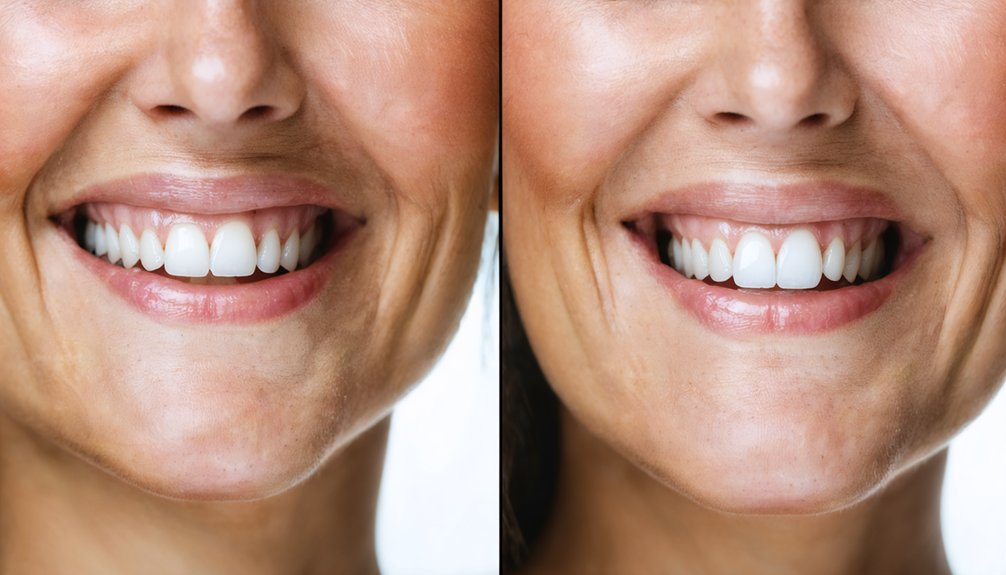
Consider strategic timing: whiten first, then wait 10–14 days before replacing visible restorations to match your brightened shade. Alternatively, if you’re satisfied with newer restorations, you can whiten natural teeth only to their existing level, maintaining uniformity without replacement costs.
Comparing In-Office and At-Home Whitening Solutions
The decision between professional in-office whitening and at-home treatments hinges on factors uniquely relevant to older adults—treatment speed, sensitivity management, budget considerations, and the condition of your enamel and gums.
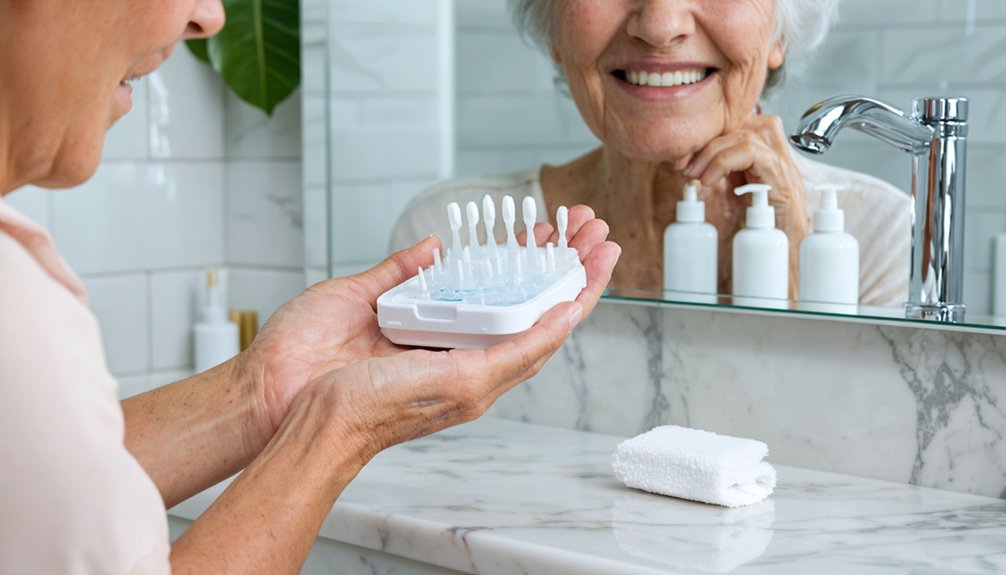
In-office procedures deliver dramatic results in 90 minutes but require verification of provider credentials and thorough pre-treatment assessments of your gum tissue and enamel thickness. At-home solutions offer affordability and scheduling flexibility, though product safety varies considerably by brand quality.
Consider these critical factors when choosing your whitening approach:
- Sensitivity tolerance: Your thinning enamel and receding gums may respond better to controlled at-home applications versus concentrated in-office treatments
- Budget allocation: Professional treatments cost more upfront but last 1-3 years; at-home options require repeated purchases
- Timeline expectations: Immediate results favor in-office; gradual improvement suits at-home methods
Selecting the Appropriate Whitening Agent Concentration
Once you’ve selected between in-office and at-home whitening, you’ll need to determine which peroxide concentration works best for your aging teeth. Your enamel thickness and sensitivity levels should guide this decision. If you’re experiencing thinning enamel or exposed dentin, you’ll want lower hydrogen peroxide concentrations to minimize discomfort while achieving results.
Professional monitoring becomes essential with higher concentrations. In-office treatments using 35% gels deliver faster results, but your dentist can make concentration adjustments based on your specific oral health. For at-home systems, carbamide peroxide between 10%-22% offers gentler action for receding gums.
Before selecting any concentration, address underlying issues like cavities or gum disease. Your dentist will customize strength levels to match your enamel condition, ensuring safe whitening without excessive exposure.
Establishing a Safe Treatment Schedule and Frequency
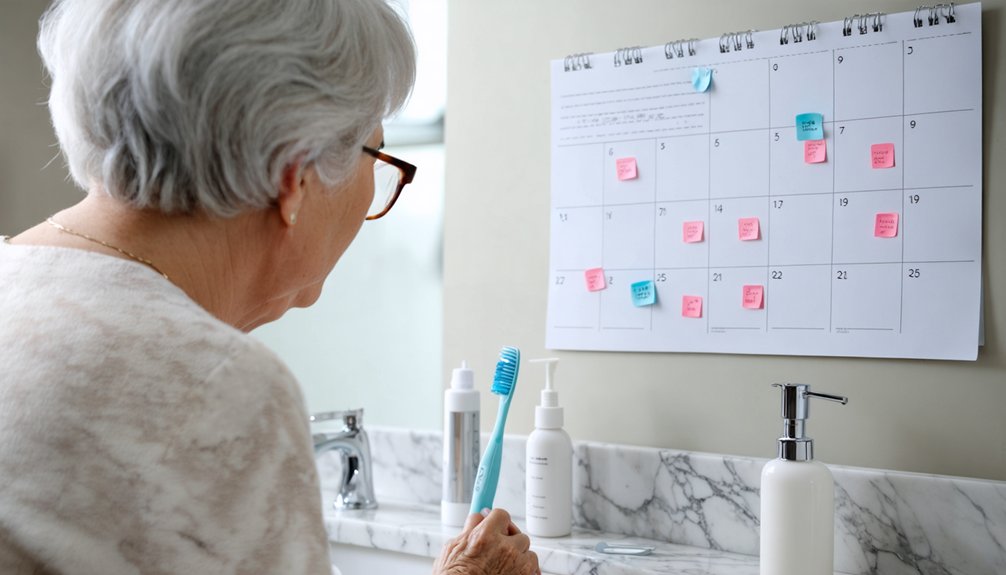
After determining the right concentration for your needs, you’ll need to establish how often you can safely whiten without compromising your enamel. Your age-related enamel changes require personalized treatment recommendations that balance effectiveness with protection.
Safe whitening frequency depends on your unique enamel condition and age-related changes—one-size-fits-all approaches can compromise your dental health.
In-office treatments typically work well every 12-18 months, while at-home professional kits can be used every 6-12 months under dentist supervision. Over-the-counter products should remain limited to twice yearly maximum.
Key scheduling considerations for your treatment plan:
- Monitor your sensitivity levels between sessions to determine if you’re reducing application frequency enough
- Account for your lifestyle habits like coffee consumption or smoking that accelerate staining
- Schedule professional evaluations before each treatment to assess your current enamel condition and existing dental work
Your dentist will adjust timing based on your individual response and oral health status.
Long-Term Maintenance Strategies for Lasting Results
Maintaining your whitening results requires consistent daily habits combined with strategic professional care. You’ll need to brush twice daily with fluoride toothpaste and floss regularly to prevent new stains from forming.
Limit your exposure to staining agents like coffee, red wine, and tobacco while rinsing your mouth after meals. Schedule dental check-ups every six months so your dentist can monitor your progress and provide professional cleanings that remove stubborn buildup.
Request personalized whitening recommendations based on your enamel condition and sensitivity levels. Your professional whitening regimen should include at-home maintenance products like whitening strips or custom trays used every few months.
Incorporate fluoride treatments to strengthen thinning enamel and reduce sensitivity. These combined strategies protect your investment while safeguarding your oral health.
Frequently Asked Questions
Can Whitening Treatments Interfere With Medications Commonly Taken by Older Adults?
Whitening agents can interact with your medications, so you’ll need to discuss dental hygiene considerations with your dentist first. They’ll evaluate potential interaction with chronic conditions and guarantee the treatment won’t compromise your medication effectiveness or safety.
Are There Specific Health Conditions That Prevent Seniors From Whitening Teeth?
Yes, untreated cavities, gum disease, severe enamel erosion, and uncontrolled systemic conditions can prevent whitening. You’ll need proper dental hygiene routine maintenance first. Your dentist may recommend diet restrictions and treatment of underlying issues before proceeding safely.
How Does Dry Mouth in Older Adults Affect Whitening Treatment Effectiveness?
Don’t let dry mouth dampen your results—salivary flow reduction actually doesn’t prevent whitening effectiveness. However, you’ll need gentler products since enamel thickness changes with age, making sensitivity management imperative for your comfort and safety throughout treatment.
Will Whitening Make Age-Related Tooth Discoloration From Antibiotics Worse?
Whitening won’t worsen antibiotic stains, but it’ll make deep tetracycline discoloration more noticeable as surface stains lighten. You’ll need to address tooth enamel changes and dietary habits impact, then consider veneers if bleaching proves ineffective for severe cases.
Can Whitening Treatments Affect Dentures or Partial Dentures Worn by Seniors?
Whitening treatments don’t brighten dentures or partials like polishing tarnished silver—they’ll damage them. You’ll face gum irritation concerns and potential dental implant complications if chemicals contact prosthetics. Remove dentures first, then use dentist-approved products for your natural teeth only.