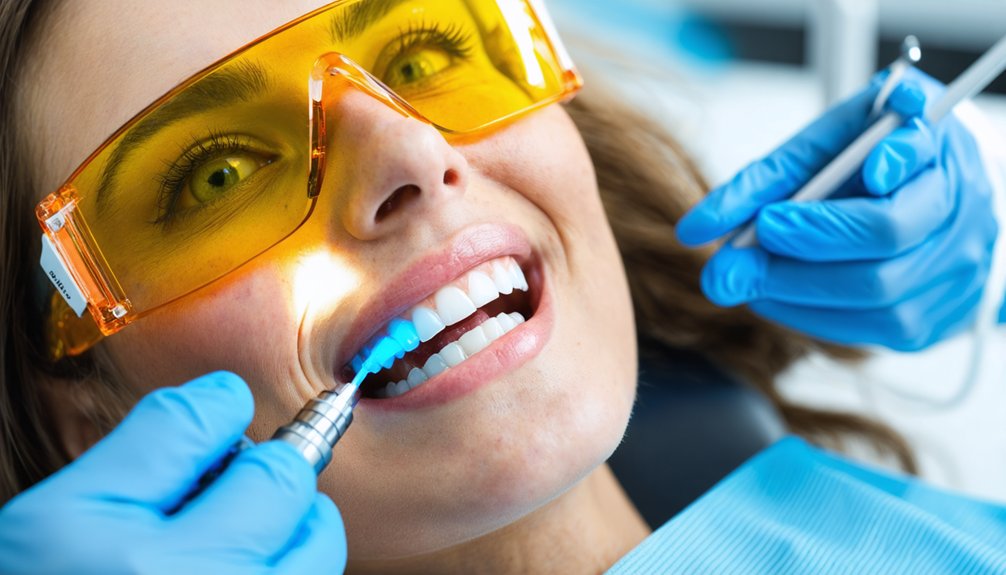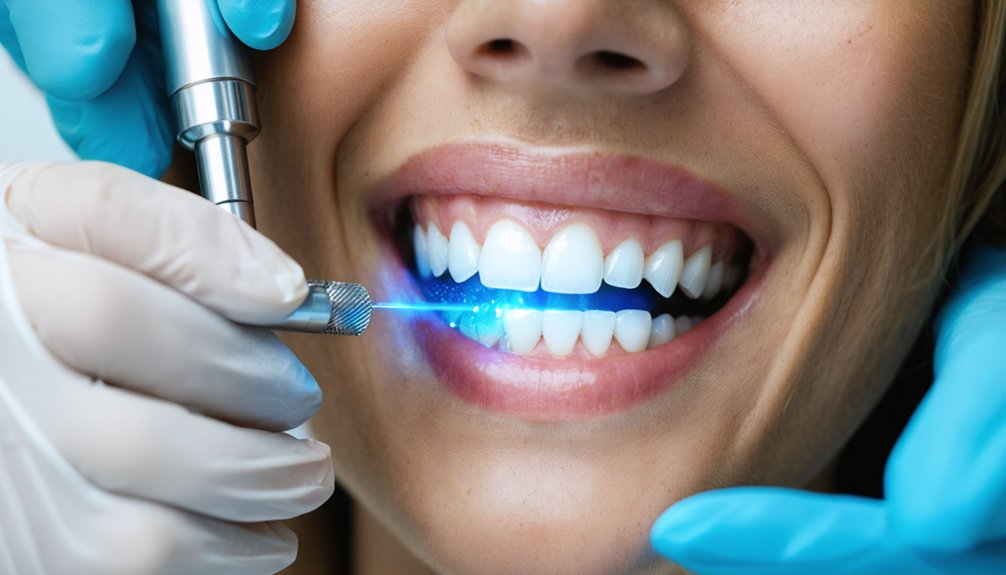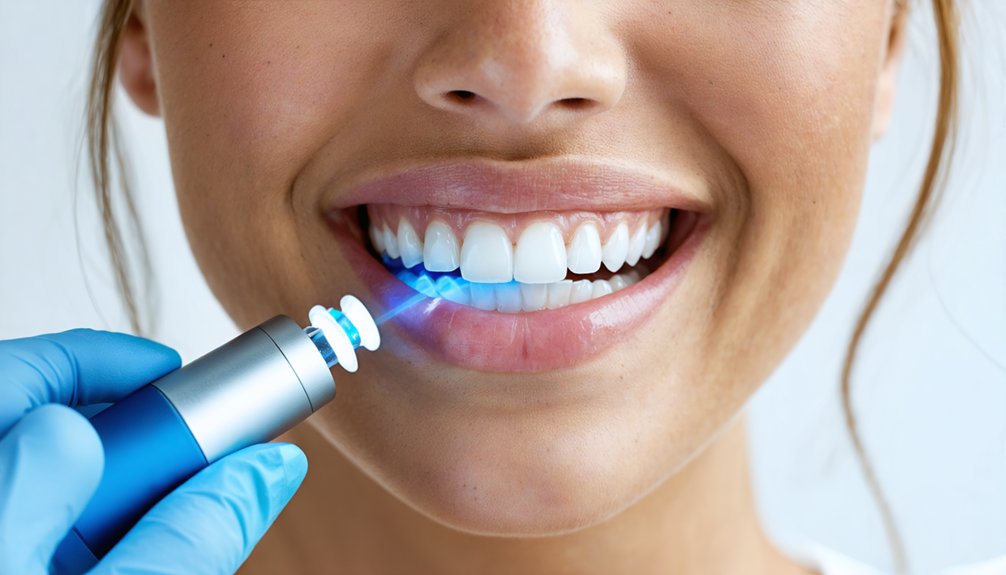
Most people need just one 60-minute laser whitening session to see noticeable results. However, your specific stain type and starting shade determine whether you’ll need one to three sessions to reach your goal. Surface stains typically respond quickly, while intrinsic or stubborn stains often require additional treatments spaced days or weeks apart. Your dentist will assess your individual needs and personalize your treatment plan accordingly. Keep exploring to understand exactly what shapes your whitening journey.
Key Takeaways
- Most patients see noticeable results after just one 60-minute laser whitening session.
- Surface stains typically respond within a single session, while intrinsic stains may need 1–3 treatments.
- Heavily discolored teeth usually require follow-up sessions scheduled back-to-back or weeks apart.
- Dentists personalize session frequency by assessing your starting shade and whitening goals.
- Under standard conditions, limit in-office laser whitening to once yearly to protect enamel.
How Many Laser Whitening Sessions Do Most People Need?
Most patients achieve noticeable results after just one 60-minute in-office laser whitening session, with improvements of several shades in a single visit.
However, your session expectations should account for individual variables that influence outcomes. If you have stubborn or deeply set stains, you may require one to three sessions to reach your desired shade.
Treatment personalization is central to effective whitening — your dentist will assess your starting tooth shade, stain type, and whitening goals before recommending a protocol.
Some patients complete three to four back-to-back cycles within a single appointment, while others need sessions spaced weeks apart.
Understanding these variables helps you set realistic goals and make informed decisions about your treatment plan from the outset.
When One Laser Whitening Session Isn’t Enough
While a single laser whitening session delivers significant results for many patients, certain conditions make additional treatments necessary. Stain types play a decisive role—surface discoloration responds quickly, while intrinsic stains from medications, trauma, or fluorosis penetrate deeper into enamel and resist standard single-session protocols.
Your starting tooth shade also determines the outcome. Heavily discolored teeth rarely reach your target brightness in one visit. In these cases, dentists schedule follow-up sessions weeks apart, allowing enamel to recover between treatments and reducing sensitivity risk.
Treatment customization becomes essential when your goals extend beyond subtle improvement. Dramatic shade changes require strategic planning across multiple visits.
Your dentist evaluates your response after each session and adjusts the protocol accordingly, giving you precise control over your final results.
What Actually Happens During a Laser Whitening Session?
A typical laser whitening session unfolds in three distinct phases, each serving a specific clinical purpose.
During pre-treatment preparation, your dentist isolates your gums using protective barriers, shielding soft tissue from the bleaching agent. They then apply a high-concentration hydrogen peroxide gel directly onto your enamel surfaces.
Next comes activation. A laser or specialized light targets the gel, accelerating the chemical reaction that breaks apart stain molecules embedded in your enamel. This phase typically runs in back-to-back cycles within a single 60-to-90-minute appointment.
Post-treatment care instructions follow immediately. Your dentist removes the gel, assesses your shade improvement, and provides dietary guidelines to protect your results.
You’ll likely receive a list of foods and beverages to avoid during the initial 48-hour stabilization period.
Why Surface Stains and Deep Stains Require Different Laser Whitening Treatments
The type of staining you have directly determines how many laser whitening sessions you’ll need.
Surface stains from coffee, tea, or wine typically respond within a single session, as the whitening gel penetrates and breaks down these superficial deposits quickly.
Deep or intrinsic stains, however, resist faster treatment, often requiring multiple sessions spaced weeks apart to achieve comparable results.
Surface Stains Respond Faster
Surface stains and deep stains don’t respond to laser whitening at the same rate, which directly affects how many sessions you’ll need.
Surface stain types—including those caused by coffee, tea, wine, and tobacco—sit on the enamel’s outer layer, making them more accessible to whitening agents. Because the laser-activated gel targets these deposits directly, treatment effectiveness is markedly higher, often producing noticeable results within a single 60-minute session.
Your starting shade and stain concentration still influence the outcome, but surface stains generally require fewer sessions than intrinsic discoloration.
If you maintain good oral hygiene and limit staining foods, one session can deliver substantial improvement. Understanding your stain type gives you a clearer picture of what to realistically expect before committing to treatment.
Deep Stains Need More
While surface stains respond predictably to a single session, deep or intrinsic stains operate by different rules.
These stains sit within the enamel or dentin, requiring stronger agents and repeated exposure to improve stain removal effectiveness.
Your dentist will likely recommend:
- Multiple sessions spaced weeks apart to allow enamel recovery
- Higher-concentration gel to penetrate deeper structural discoloration
- Combined approaches pairing in-office laser treatment with take-home trays
- Realistic expectation-setting since deep stain treatments rarely achieve full correction in one visit
You’re not dealing with a simple polish — you’re restructuring how light reflects through compromised enamel.
Skipping recommended intervals risks sensitivity and enamel damage.
Trust the clinical timeline your dentist establishes; it’s built around your tooth’s response, not convenience.
Does Your Starting Tooth Shade Affect Laser Whitening Results?
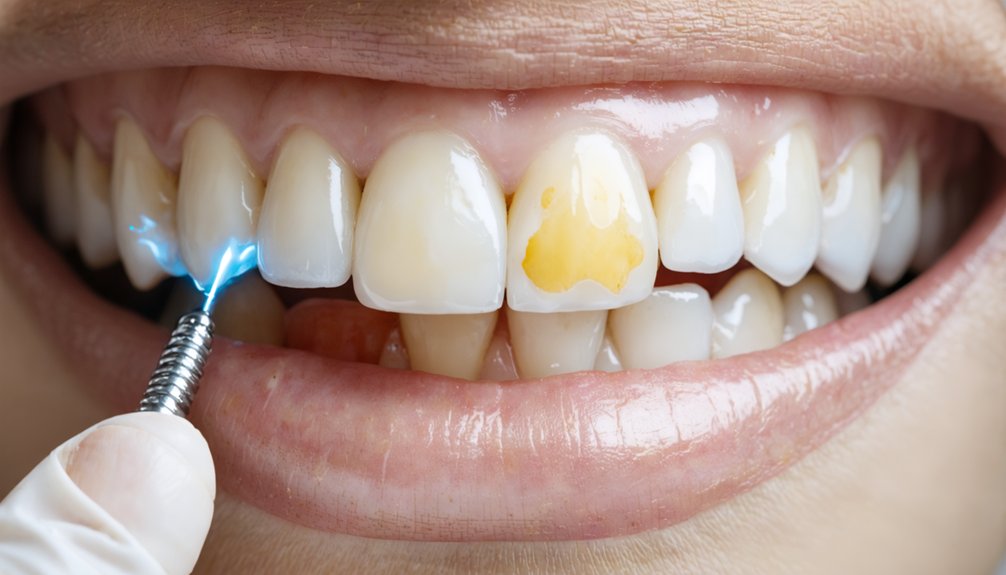
Your starting tooth shade plays a direct role in determining how many laser whitening sessions you’ll need to reach your desired result.
A dentist will assess your baseline shade before treatment to set realistic expectations and map out an appropriate treatment plan.
If your teeth are considerably discolored or carry deeper staining, you’re likely to require more sessions than someone starting with a lighter natural shade.
Shade Assessment Before Treatment
Shade assessment is a critical step before undergoing laser whitening, as your starting tooth color directly influences how many sessions you’ll need and what results you can realistically expect.
A thorough pre-treatment assessment gives you precise, actionable data rather than guesswork.
During shade evaluation, your dentist typically examines:
- Baseline tooth color using a standardized shade guide to measure current whiteness
- Stain type, distinguishing surface discoloration from deeper intrinsic staining
- Enamel condition, identifying sensitivity risks or structural vulnerabilities
- Realistic outcome range, projecting achievable shades based on your tooth’s current state
This clinical process guarantees your treatment plan is tailored, not generic.
You’ll understand exactly what’s achievable, how many sessions are likely necessary, and whether adjunct take-home treatments should complement your in-office procedure.
Stain Depth and Sessions
Once your dentist establishes your baseline shade, that measurement does more than document where you’re starting — it directly predicts how many laser whitening sessions you’ll need.
Surface stain types, like those from coffee or wine, respond faster to laser whitening methods than intrinsic discoloration embedded within enamel layers. If your starting shade is considerably darker, expect session scheduling across multiple visits rather than a single appointment.
Your lifestyle impacts how deeply stains penetrate, which affects treatment costs and overall session count. Smoking or frequent staining beverage consumption often requires 1–3 sessions spaced weeks apart.
Patient preferences for dramatic versus subtle results also shape the plan. Prioritizing enamel care between visits and following your dentist’s maintenance tips helps you extend results and reduce future retreatment frequency.
How Long Do Laser Whitening Results Last?
How long your laser whitening results last depends on several factors, including your lifestyle habits and how well you maintain your oral hygiene. Results longevity typically ranges from six months to two years, giving you significant control over outcomes through deliberate maintenance tips and behavioral choices.
Your lifestyle habits and oral hygiene routine directly determine how long your laser whitening results last.
Key factors influencing your results include:
- Diet: Limit coffee, red wine, and tobacco to prevent premature staining.
- Oral hygiene: Brush twice daily and floss consistently to preserve brightness.
- Professional touch-ups: Schedule treatments every six to twelve months as needed.
- Follow-up care: Use dentist-recommended take-home products between visits.
Your dentist will personalize a maintenance schedule based on how quickly your teeth restain and your whitening goals.
How to Tell When Your Laser Whitening Is Fading Faster Than It Should
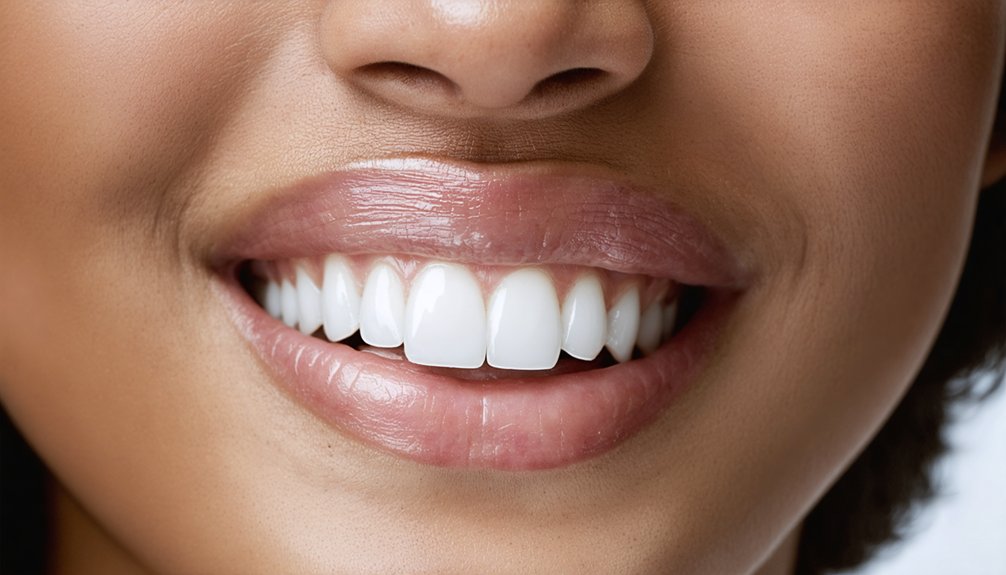
Recognizing when your whitening results are fading prematurely can help you intervene before considerable discoloration sets in. Compare your current shade against post-treatment photos taken immediately after your session. If noticeable yellowing returns within two to three months rather than the typical six to twenty-four months, your whitening maintenance schedule likely needs adjustment.
Key indicators include uneven discoloration, surface dullness concentrated around dietary stain sources, and returning sensitivity issues that signal enamel vulnerability from repeated exposure to staining agents.
Accelerated fading often points to lifestyle factors—frequent coffee, tea, wine, or tobacco use—that require behavioral modification or more frequent touch-ups.
Consult your dentist promptly if fading occurs considerably earlier than expected, as underlying enamel erosion or intrinsic staining may require a modified treatment protocol.
How Often Can You Safely Get Laser Whitening?
Safety margins for laser whitening depend on how frequently your enamel can withstand the treatment’s bleaching agents without sustaining cumulative damage.
Managing whitening frequency carefully protects your long-term dental health while preserving your results.
Follow these evidence-based maintenance tips to stay within safe parameters:
- Professional treatments: Limit in-office sessions to once yearly under standard conditions
- Touch-up intervals: Schedule maintenance every 6–9 months only if staining actively returns
- At-home products: Avoid frequent over-the-counter use between professional visits to prevent enamel erosion
- Dentist oversight: Let your provider adjust your whitening frequency based on your enamel’s measurable response
Exceeding these boundaries risks sensitivity and irreversible enamel damage.
Your dentist tracks cumulative exposure and calibrates your schedule accordingly, giving you precise control over both safety and outcomes.
How Coffee, Wine, and Smoking Determine Your Laser Whitening Frequency
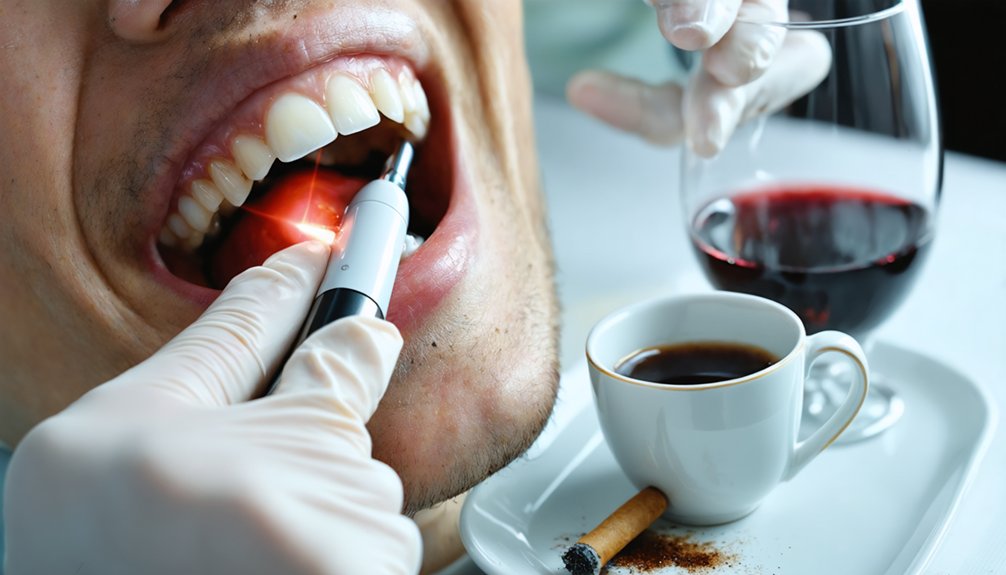
Your lifestyle habits directly shape how often you’ll need laser whitening to maintain visible results.
Coffee impact and wine effects accelerate extrinsic staining, often requiring touch-ups every six to nine months. Smoking influence penetrates enamel more deeply, potentially shortening your results to under six months per session.
You control your whitening maintenance schedule through deliberate dietary choices and lifestyle adjustments. Reducing chromogenic beverages, using a straw, and rinsing immediately after consumption supports stain prevention and extends aesthetic goals between professional visits.
Enamel care remains critical throughout this process. Frequent re-exposure to staining agents combined with repeated treatments increases sensitivity management concerns.
Your dentist will calibrate your whitening frequency based on how aggressively your habits counteract results, optimizing outcomes without compromising enamel integrity.
Frequently Asked Questions
Can Laser Whitening Work on Dental Crowns, Veneers, or Implants?
laser whitening won’t change their color. You’ll need replacements if they’ve discolored. Only your natural enamel responds to whitening treatments.
Is Laser Whitening Safe for People With Sensitive Teeth or Gums?
You can undergo laser whitening with sensitive teeth or gums, but you’ll need proper sensitivity management. Your dentist adjusts gel concentration and timing, while post-treatment care—including desensitizing agents—helps you maintain comfort and minimize adverse reactions effectively.
How Much Does a Professional Laser Whitening Session Typically Cost?
Professional laser whitening typically costs $300–$1,000 per session. You’ll find the cost comparison worthwhile given the treatment duration of 60–90 minutes delivers dramatically whiter teeth, making it a clinically efficient, controlled investment in your smile.
At What Age Can Someone Safely Begin Laser Whitening Treatments?
Most dentists recommend you wait until you’re 18 before starting laser whitening treatments. Age recommendations and safety guidelines exist because younger teeth have larger pulp chambers, making them more sensitive and vulnerable to potential damage from whitening agents.
Does Pregnancy Affect Whether You Can Get Laser Whitening Done?
During your expecting journey, you shouldn’t pursue laser whitening due to pregnancy safety concerns. Limited research exists on risks to the baby, so you’ll want to schedule a dental consultation to explore safer timing options.
References
- https://www.houstoncosmeticdental.com/how-often-are-laser-teeth-whitening-treatments-needed/
- https://veytsmandds.com/ask-dr-v/how-often-are-laser-teeth-whitening-treatments-needed
- https://www.willowrundental.net/blog/2025/07/12/how-many-teeth-whitening-sessions/
- https://www.zumbrofamilydental.com/blog/how-many-whitening-sessions-will-i-need/
- https://drimplantdentist.com/en/blog/teeth-whitening/how-many-sessions-does-teeth-whitening-take/
- https://stgeorgedentalcare.com/laser-teeth-whitening-the-number-and-length-of-sessions/
- https://www.docayer.com/blog/2025/06/how-many-teeth-whitening-sessions-will-i-need/
- https://www.mydaytonadentist.com/blog/2025/10/21/how-many-teeth-whitening-sessions-will-i-need-to-enhance-my-smile/
- https://www.belmontdentistry.com/how-often-do-i-need-in-office-teeth-whitening/