How long it takes to whiten yellow teeth depends on the method you choose and how severe your discoloration is. In-office treatments can lighten your teeth by seven to eight shades in just one session. At-home professional kits typically show visible results within one to two weeks. Over-the-counter options like strips can work in as little as three to four days. There’s plenty more to ponder before choosing your best path forward.
Key Takeaways
- In-office whitening delivers the fastest results, achieving 7-8 shades lighter in a single 1-2 hour session.
- At-home professional kits show visible results within 1-2 weeks, with maximum whitening achieved in 2-4 weeks.
- Whitening strips show visible effects in 3-4 days, while whitening toothpaste requires 2-6 weeks of consistent use.
- Extrinsic stains respond faster than intrinsic stains, meaning yellowing severity directly impacts overall whitening duration.
- Age, diet, tobacco use, and enamel condition can slow progress, requiring additional sessions for desired results.
How Long Does It Actually Take To Whiten Yellow Teeth?
The time it takes to whiten yellow teeth depends on the method you choose and the severity of your discoloration. Different whitening techniques produce results at vastly different rates, so understanding your options helps you take control of the outcome.
The time it takes to whiten yellow teeth depends on your chosen method and the severity of discoloration.
In-office treatments deliver the fastest results, often lightening teeth 7-8 shades within a single 60-90 minute session.
At-home professional kits typically require 1-4 weeks of consistent daily use.
Over-the-counter products work more gradually, taking anywhere from 10 days to 3 months.
Stain types also considerably affect your timeline.
Extrinsic surface stains respond quickly across most whitening techniques, while intrinsic stains embedded deeper in the enamel require prolonged treatment.
Yellowish discoloration responds faster than blue-grey tones, which can take up to two months.
In-Office Whitening: The Fastest Results for Yellow Teeth
When speed matters, in-office whitening delivers results no at-home method can match. A single 60-90 minute session produces significant, measurable changes—often 7-8 shades lighter with professional-grade systems like Zoom Whitening.
That’s one of the clearest in-office benefits: concentrated outcomes within a controlled clinical environment.
You’re not waiting weeks to see progress. Yellowish stains typically respond within 1-2 hours, and mild discoloration often resolves in one or two visits.
Your dentist manages every variable—gel concentration, light activation, and treatment comfort—so you’re not guessing at effectiveness.
If your schedule demands fast, reliable results, in-office treatment gives you precise control over the outcome.
No strips, no trays, no uncertainty—just clinically supervised whitening with measurable results from your very first appointment.
How Long Do At-Home Professional Kits Take?
If you’re using an at-home professional whitening kit, you can typically expect visible results within one to two weeks of consistent daily use.
Most kits require you to wear custom-fitted trays filled with a professional-grade bleaching gel for one to two hours per day, or overnight, depending on the formulation.
With adherence to the recommended regimen, you’ll generally achieve maximum whitening results within two to four weeks.
Typical Treatment Duration
At-home professional whitening kits typically require consistent daily use over a period of one to four weeks to achieve noticeable results.
Your patient expectations should align with realistic timelines, as duration factors like discoloration severity and stain types directly influence outcomes.
Extrinsic stains often respond within one to two weeks, while deeper intrinsic discoloration may require the full four-week treatment cycle.
Most protocols recommend one hour of daily wear, though some systems allow overnight application.
When comparing professional vs. at-home treatment options, at-home kits offer controlled, gradual improvement.
Lifestyle influences, such as diet and tobacco use, can slow progress.
Incorporating maintenance tips, like avoiding staining foods during treatment, helps maximize and sustain your results throughout the whitening process.
Daily Usage Requirements
Most at-home professional whitening kits require one hour of daily wear, though some systems permit overnight application for extended contact time. Integrating treatment into your daily routine guarantees product consistency, which directly influences how quickly you’ll see measurable results.
Typically, you’ll apply your custom-fitted trays once per day, maintaining this schedule for 7–14 days. Overnight formulas use lower-concentration gels to accommodate extended contact safely, while higher-concentration options require shorter, more precise application windows.
Missing sessions disrupts the cumulative chemical process, slowing your progress. Your results depend less on any single application and more on sustained, disciplined use across the full treatment period.
Adhering strictly to your kit’s prescribed protocol maximizes efficacy and reduces the risk of sensitivity from compensatory overuse.
Expected Whitening Results
When used consistently, professional at-home whitening kits typically deliver visible results within 1–2 weeks, with ideal outcomes achieved between 2–4 weeks of daily use.
Your results depend heavily on stain types—naturally yellow teeth respond faster than blue-grey discoloration, which may require extended treatment. Whitening techniques and gel concentration also influence timelines, so follow your dentist’s protocol precisely.
Treatment costs reflect personalized tray fabrication and higher-grade peroxide formulations, which outperform over-the-counter alternatives.
Lifestyle factors like coffee, wine, and tobacco consumption can compromise outcomes, making avoidance essential during treatment. If sensitivity issues arise, reduce application frequency rather than discontinuing entirely.
Maintenance tips include periodic touch-up sessions and consistent oral hygiene to extend results beyond the typical few-month duration of at-home whitening.
Over-the-Counter Products for Yellow Teeth: Realistic Timelines
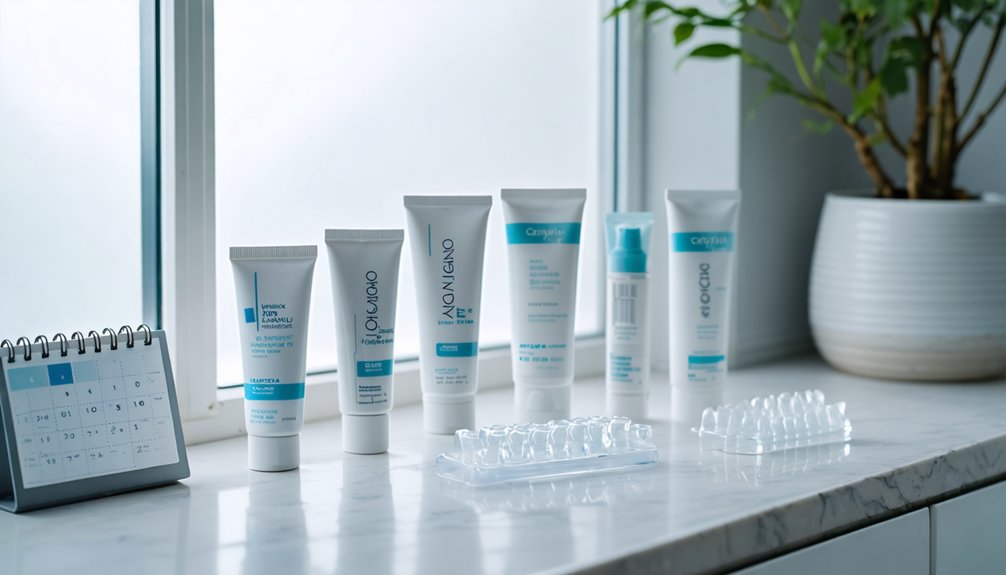
If you prefer a more convenient and budget-friendly approach, over-the-counter products offer several options, each with distinct timelines.
Whitening toothpaste typically requires twice-daily use for 2–6 weeks, while strips can deliver results in as few as 3–4 days, with ideal outcomes around 10–12 days.
Whitening mouthwash works the slowest, requiring up to 3 months, whereas OTC kits generally require nightly use for about one month.
Whitening Toothpaste Timeline
Whitening toothpaste is one of the most accessible over-the-counter options, but it’s important to set realistic expectations about its timeline. Most whitening toothpaste ingredients, including mild abrasives and low-concentration peroxides, work gradually by targeting surface stains only.
You’ll typically notice initial changes within 2 weeks of consistent use, with more significant results appearing around 6 weeks.
Your whitening frequency matters considerably here. Twice-daily brushing is standard for achieving measurable outcomes, and skipping sessions will delay your results.
Unlike professional treatments, whitening toothpaste won’t alter intrinsic stains or dramatically change tooth color. It’s most effective for maintaining brightness or addressing light surface discoloration.
If your yellowing is moderate to severe, toothpaste alone won’t deliver the transformation you’re likely seeking.
Whitening Strips Results
Strips are one of the faster-acting over-the-counter options, with many users noticing visible results in as little as 3-4 days. For maximum whitening strips effectiveness, you’ll typically reach peak results within 10-12 days of consistent use.
Your application techniques directly influence outcomes — apply strips precisely along the gumline, avoid overlapping soft tissue, and maintain contact for the full recommended duration.
Yellow teeth generally respond well to strips since they target extrinsic surface stains effectively. However, deeper intrinsic discoloration won’t respond as predictably.
Results you achieve will last roughly 1-3 months before retreatment becomes necessary. Following the manufacturer’s protocol without skipping applications is essential — inconsistent use extends your timeline and reduces overall whitening strips effectiveness considerably.
Mouthwash And Kits
Two other over-the-counter options worth understanding are whitening mouthwashes and complete whitening kits, each with distinctly different timelines.
Mouthwash effectiveness is limited compared to other methods, requiring consistent use for up to three months before you’ll notice meaningful changes. It’s best used as a maintenance tool rather than a primary whitening solution.
Whitening kits offer greater kit convenience by combining multiple products, such as gels, trays, and sometimes LED devices, into one system.
With nightly use, you can expect visible results within approximately one month. Your commitment to consistent application directly determines your outcome. If you skip sessions, you extend your timeline.
Understanding these realistic expectations allows you to choose the product that best aligns with your schedule and whitening goals.
Why Do Some Yellow Teeth Whiten Faster Than Others?
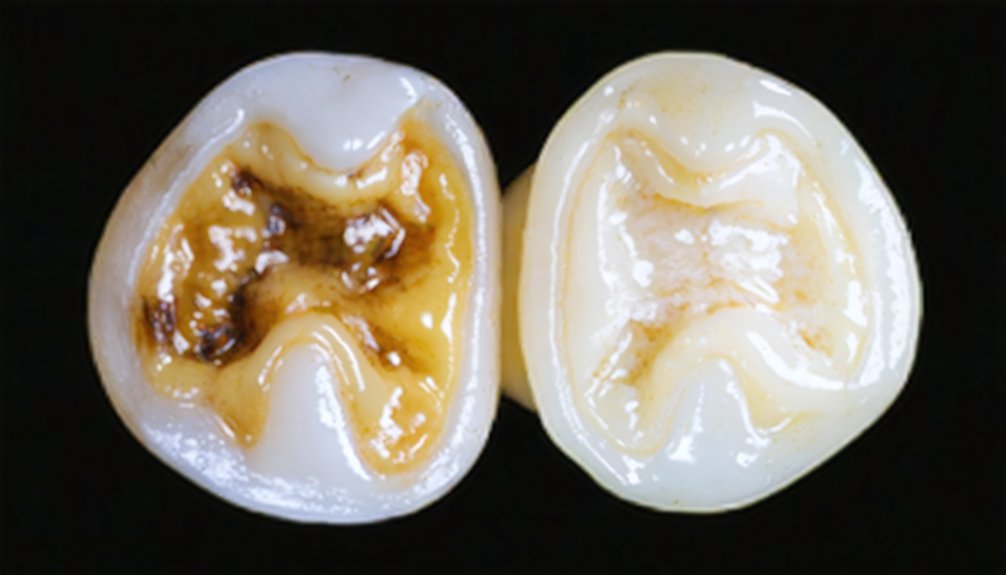
Not all yellow teeth respond to whitening treatments at the same pace, and the reason comes down to the nature of the staining itself.
Extrinsic stains, caused by dietary habits like coffee or wine consumption, sit on the enamel surface and respond faster to most treatment methods. Intrinsic stains embedded within the tooth structure require longer, more intensive protocols.
Several variables determine your whitening speed:
- Discoloration severity — deeper staining demands more sessions
- Stain type — extrinsic stains clear faster than intrinsic stains
- Enamel condition — compromised enamel absorbs agents inconsistently
- Age factors — older teeth have denser, more resistant dentin
- Lifestyle factors — ongoing tobacco or dietary habits counteract progress
- Dental hygiene — consistent maintenance accelerates and preserves results
Understanding these variables lets you set accurate expectations and choose the most effective approach.
How Long Do Whitening Results Last on Yellow Teeth?
Whitening results don’t last forever, and how long they persist depends largely on the method used and your maintenance habits.
Whitening results are temporary—how long they last depends on your chosen method and daily maintenance habits.
In-office treatments offer the strongest whitening longevity, lasting anywhere from six months to three years. At-home professional kits typically sustain results for several months, while over-the-counter products fade within one to three months.
Yellow teeth factors like diet, tobacco use, and oral hygiene directly influence how quickly discoloration returns.
You’ll extend your results by avoiding staining foods and beverages, brushing twice daily, and scheduling routine dental cleanings. Periodic touch-up treatments also help maintain brightness.
Ultimately, the more consistently you manage these variables, the longer your whitening investment holds—giving you measurable control over your smile’s sustained appearance.
Habits That Make Yellow Teeth Take Longer To Whiten

Certain daily habits can considerably extend how long it takes to whiten yellow teeth, making even the most effective treatments less efficient.
Dietary influences like coffee, tea, and red wine deposit persistent stains that resist whitening agents. Smoking habits introduce tar and nicotine, creating deep discoloration that prolongs treatment considerably.
Neglecting oral hygiene accelerates plaque accumulation, blocking whitening agents from penetrating enamel effectively.
Aging effects and genetic factors naturally thin enamel, making teeth more susceptible to staining and slower to respond. Poor enamel condition from acidic foods or medication effects can compromise treatment outcomes further.
Understanding your specific stain types allows you to modify behaviors strategically, reducing treatment duration and maximizing the efficiency of whichever whitening method you choose.
Frequently Asked Questions
Can Yellow Teeth Become Fully White or Only Lighter Shades?
your yellow teeth can reach near-white shades. Through natural remedies or professional treatments, you’ll achieve considerably lighter results—but biological limits mean truly “paper white” isn’t always realistic for everyone.
Is Teeth Whitening Safe for People With Sensitive Teeth or Gums?
Yes, you can safely whiten sensitive teeth by prioritizing sensitivity management—using lower-concentration gels, desensitizing toothpaste, and shorter sessions. Your dentist can recommend appropriate whitening alternatives tailored to minimize discomfort while effectively achieving your desired results.
At What Age Should Someone Start Whitening Their Yellow Teeth?
Studies show enamel fully matures by age 16, making it your ideal starting point for whitening techniques. You should consider age considerations carefully, as younger teens’ developing teeth require professional guidance before beginning any whitening regimen.
Can Yellow Teeth Be Whitened if Dental Crowns or Veneers Are Present?
Whitening treatments won’t change your crowns or veneers’ color, as they don’t respond to bleaching agents. Crown whitening and veneer maintenance require replacement if you want them matching your newly whitened natural teeth.
Does Teeth Whitening Work on Yellow Teeth Caused by Medications?
Like a fortress resistant to siege, medication-induced yellow teeth often resist standard whitening options. Medication effects can cause intrinsic stains, making professional treatments your most effective route, though results you’ll achieve may remain limited.
References
- https://www.okundentistry.com/blog/how-much-time-does-it-take-to-whiten-yellow-teeth
- https://www.alisocreekdental.com/blog/how-long-does-teeth-whitening-take-cip104/
- https://www.healthline.com/health/how-long-does-teeth-whitening-last
- https://www.gentledental.com/resources/articles/how-long-professional-teeth-whitening-last
- https://studiobsmiles.com/blog/how-long-does-it-take-to-go-from-yellow-to-white-teeth/
- https://www.suttonpda.com/teeth-whitening-results/
- https://www.nspali.com/how-long-does-teeth-whitening-last/
- https://www.belladentaloxnard.com/education/can-my-yellow-teeth-be-white-again/
- https://www.dentistryofoldtownscottsdale.com/dental-blog/how-long-does-teeth-whitening-really-last/