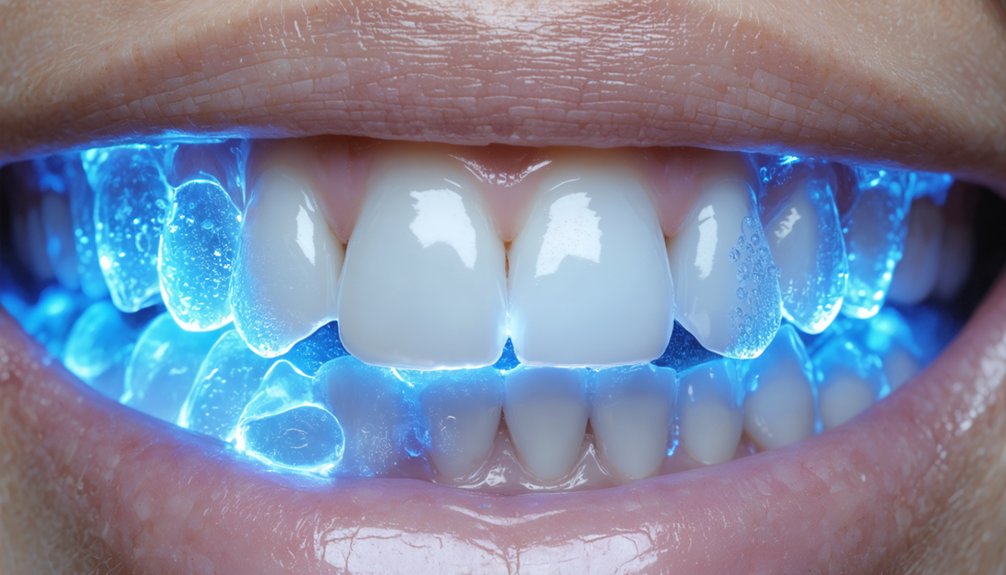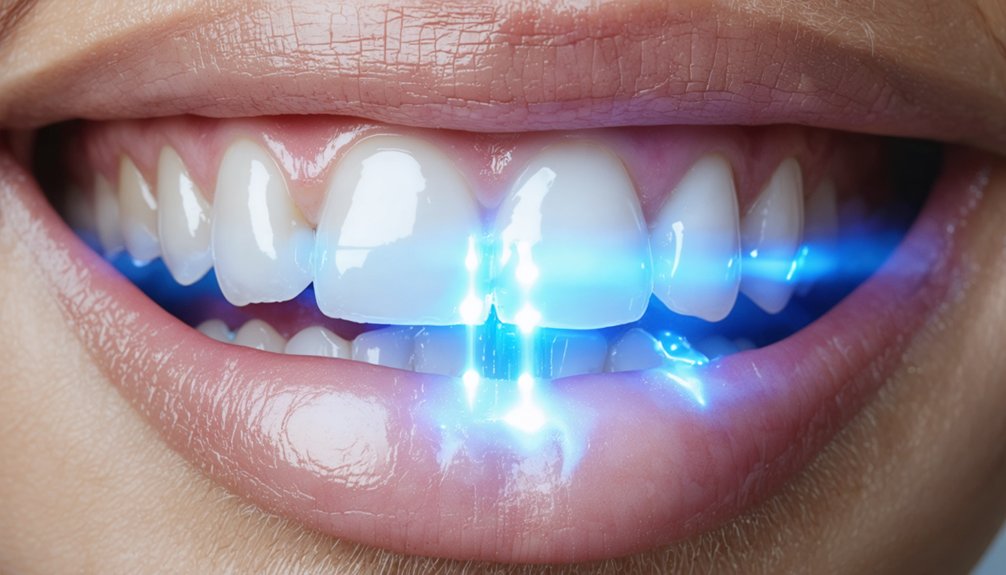
Blue light accelerates teeth whitening by targeting hydrogen peroxide molecules in your whitening gel, catalyzing their breakdown through photocatalysis at wavelengths between 480–520 nm. This process speeds up oxygen free radical production, which bonds with stain particles through oxidation to lift discoloration. However, clinical research shows mixed results—while laboratory studies demonstrate faster peroxide decomposition, real-world trials haven’t consistently proven that light activation improves outcomes compared to peroxide alone. Understanding these scientific nuances helps you make informed whitening decisions.
Key Takeaways
- Blue LED light (480–520 nm) catalyzes hydrogen peroxide breakdown through photocatalysis, accelerating oxygen free radical production in whitening gel.
- Light photons disrupt chemical bonds in stain molecules, enabling faster oxidation when combined with peroxide at 465nm wavelength.
- Laboratory studies show accelerated peroxide decomposition with blue light, but clinical trials find minimal real-world whitening improvement.
- LED-assisted treatments may achieve 2.3 additional shades, though systematic reviews show no significant advantage over peroxide alone.
- In-office blue light treatments provide professional application precision, but biological factors limit acceleration benefits seen in controlled laboratory settings.
The Science Behind Blue Light and Peroxide Activation
Blue LED light technology operates within the 480–520 nm wavelength range, precisely targeting hydrogen peroxide molecules in your whitening gel. These high-energy photons catalyze peroxide decomposition through photocatalysis, accelerating the breakdown process without altering the gel’s chemistry. This energy penetration speeds gel absorption into your enamel while producing oxygen free radicals that attack stain compounds.
The dual-action mechanism delivers superior results. Direct photobleaching targets light-sensitive chromophores, while photon-assisted oxidation enhances peroxide’s effectiveness. This combination enables stain dismantling across three distinct chromophore fractions: those responsive to light alone, peroxide alone, or only to combined treatment. By simultaneously attacking all fractions, you’ll achieve 4–8 shade improvements within two weeks—significantly faster than gel-only applications while reducing overall treatment time.
Understanding the Photochemical Reaction Process
When chromophores in your teeth absorb visible light energy, they enter an excited state that triggers a cascade of chemical reactions. This photon absorption breaks chemical bonds through photolysis, while excited chromophores lose electrons during photooxidation.
Light-activated chromophores in dental tissue undergo photolysis and photooxidation, initiating chemical bond disruption that fundamentally alters molecular structures responsible for discoloration.
You’ll achieve optimal ideal results when blue light at 465nm combines with hydrogen peroxide, creating chromophore peroxide interactions that accelerate oxidation rates substantially considerably.
The process initiates molecular structure changes as light activates the whitening gel, releasing free radicals from peroxide decomposition. Oxygen atoms then bond with stain particles through oxidation, breaking down discoloration on and within your enamel.
This dual mechanism attacks chromophores that resist single-agent treatments, producing measurable color changes (ΔE) and reaching near-white values for stubborn stains.
What the Research Reveals About Light-Assisted Whitening
You’ll find that scientific research on light-assisted whitening presents a contradictory picture. While laboratory studies demonstrate that blue light can accelerate the breakdown of peroxide and attack more stain compounds, a 2014 extensive review of clinical research concluded that light activators don’t noticeably speed up whitening or improve your results compared to peroxide alone.
This gap between what happens in controlled lab conditions and what you’ll actually experience in a dental office suggests the real-world effectiveness may fall short of the promise.
Mixed Clinical Study Outcomes
Scientific evidence on light-assisted teeth whitening presents a paradox: some studies demonstrate measurable acceleration while others find no advantage over gel alone. You’ll find randomized trials showing LED groups achieving 2.3 additional shades, while systematic reviews analyzing decade-long research conclude light activators don’t improve outcomes.
This inconsistency stems from confounding variables like initial tooth color, stain type, and patient age—factors that profoundly influence results independent of light exposure. Many studies also rely on subjective evaluation methods rather than standardized colorimetric measurements.
The Cochrane review acknowledges these mixed findings, noting that while some patients experience immediate gains, others show complete relapse within weeks. Understanding these contradictions helps you set realistic expectations and recognize that your individual results may vary considerably from published averages.
In-Vitro Vs Real-World Data
Laboratory findings paint a dramatically different picture than clinical outcomes when it comes to light-assisted whitening. In-vitro studies show impressive ΔE values of 14.2-15.6 when combining blue light with hydrogen peroxide, compared to just 4.3-4.9 with peroxide alone. However, these controlled environments can’t replicate your mouth’s tissue response, saliva flow, or temperature variations.
Extracted teeth lack the biological factors present in living tissue—no protective dentin response, no pulp chamber reactions, no individual structural differences affecting treatment. That’s why a 2014 systematic review of clinical research concluded light activators didn’t substantially improve real-world results. The acceleration you’ll see in controlled laboratory settings doesn’t necessarily translate to faster whitening when those same techniques are applied to your living teeth during actual treatment sessions.
Step-by-Step Blue Light Whitening Treatment
Before you begin your blue light whitening treatment, proper preparation sets the foundation for ideal results. You’ll brush and floss thoroughly, then verify your teeth are free from dental work that won’t respond to whitening.
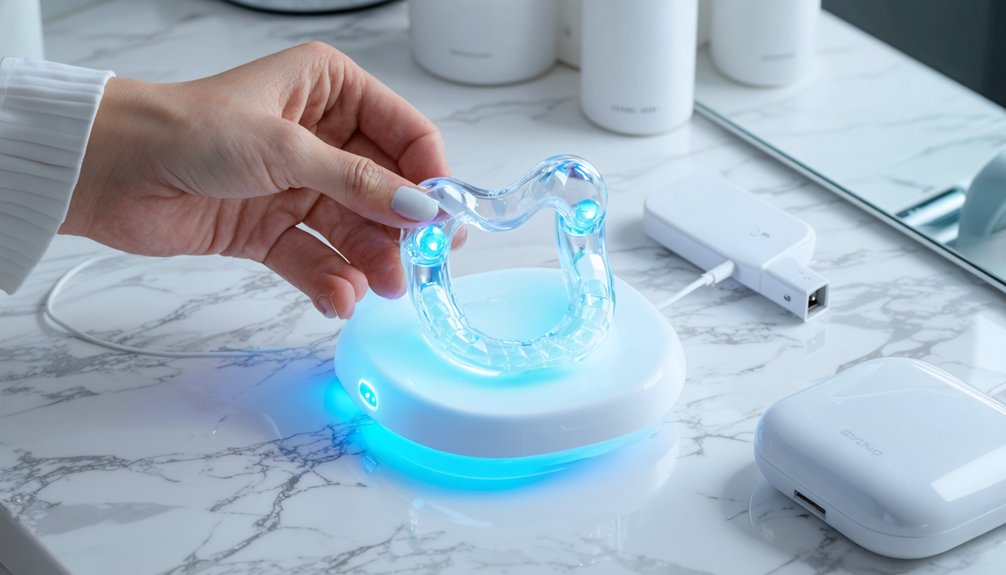
Apply the gel carefully to your custom tray or strips, using 0.5ml per arch for the front six to eight teeth. Follow gel application precautions by wiping excess from your gums and avoiding spread near tray edges.
Press both buttons on your LED device to activate the blue light, positioning it directly against your teeth. The light treatment duration runs five minutes, with the device auto-shutting off. Your gel remains on teeth for 10-60 minutes depending on concentration strength, then you’ll rinse completely and repeat daily until achieving your desired shade.
Why Blue Light Targets Multiple Types of Tooth Stains
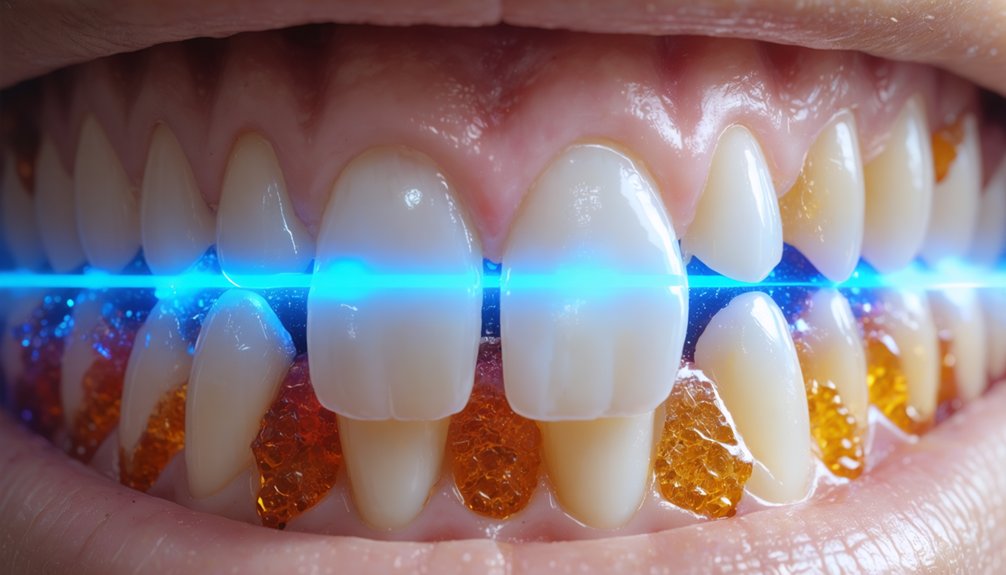
Your teeth contain three distinct chromophore fractions that respond differently to whitening treatments—some bleach with light alone, others with peroxide alone, and a third group requires both working together.
Blue light accelerates your whitening results by attacking stains through two simultaneous photonic reactions: direct photobleaching of light-sensitive chromophores and photon-assisted oxidation that amplifies peroxide’s effectiveness. This dual-action mechanism allows the treatment to target all chromophore categories at once, delivering faster and more thorough/extensive/exhaustive stain removal than peroxide or light could achieve independently.
Three Chromophore Fraction Categories
Tooth stains don’t fit into a single chemical category—they fall into three distinct chromophore fractions based on their molecular structure and location within your enamel. Organic chromophores contain double bonds in carbonyl or aromatic groups that absorb visible light, creating yellow or brown reflections from foods and tobacco.
Inorganic chromophores consist of transition metal ions like Fe2+, Cu2+, and Mn2+ that incorporate directly into your hydroxyapatite lattice through chromophore binding mechanisms. Surface-adsorbed chromophores remain on your enamel exterior as hydrophobic compounds.
This classification system explains why different stains respond differently to treatment—organic types require oxidation, inorganic ions need lattice disruption, and surface deposits respond to mechanical removal. Understanding chromophore chemical structure determines which whitening approach will deliver your desired results.
Photonic and Peroxide Synergy
Blue light doesn’t simply speed up hydrogen peroxide—it triggers three independent bleaching mechanisms that target different chromophore fractions in your enamel. First, it activates peroxide molecules for standard oxidation. Second, it initiates direct photobleaching of light-sensitive chromophores that resist peroxide alone. Third, it enables photon-assisted oxidation that attacks compounds requiring both energy sources simultaneously.
This synergistic approach means you’re targeting more stain types than either treatment achieves independently. You’ll notice faster results because all three mechanisms work in parallel from your first session. The comparative peroxide dosage required decreases considerably with light activation, while application time optimization becomes possible through accelerated chemical reactions.
This triple-mechanism attack explains why combined treatments deliver substantially higher color change values than peroxide-only applications.
Time-Saving Benefits of Light-Accelerated Whitening
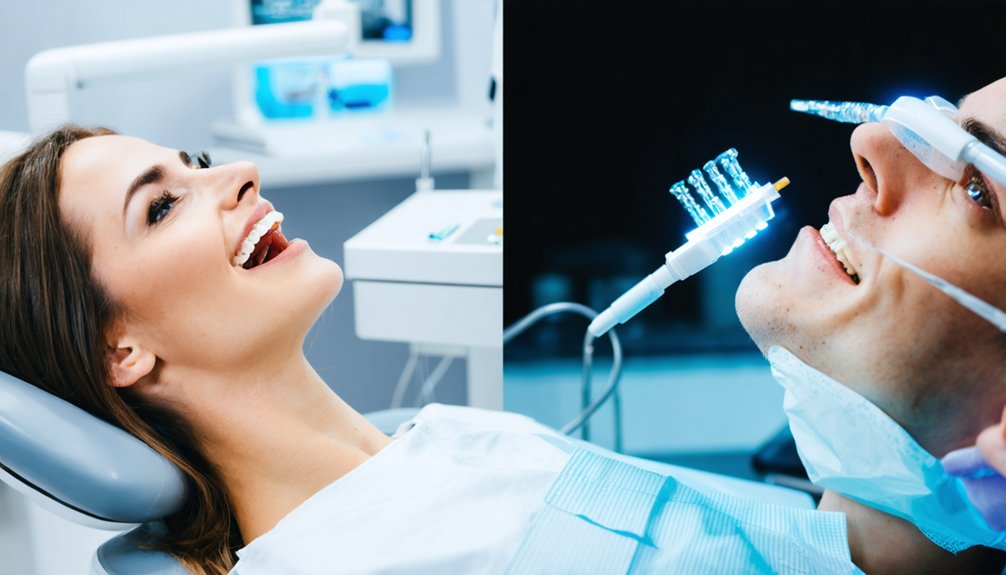
When time matters most, light-accelerated whitening delivers dramatic results in a single office visit that would otherwise require weeks of at-home treatment. You’ll experience three 20-minute applications of 35% hydrogen peroxide gel with LED activation, achieving color improvements of ΔE 12.9–15.3 in just one session. This represents enhanced patient satisfaction through measurable shade increases that stabilize within 24 hours.
The system cuts your chair time dramatically through accelerated gel activation, while reduced treatment times fit seamlessly into demanding schedules. You can choose in-office sessions completing in under two hours or convenient 10-minute daily at-home LED treatments with lower-concentration peroxide. Either approach delivers faster penetration of stains than traditional methods, with results you’ll maintain long-term while requiring fewer appointments overall.
Safety Guidelines and Professional vs. At-Home Use
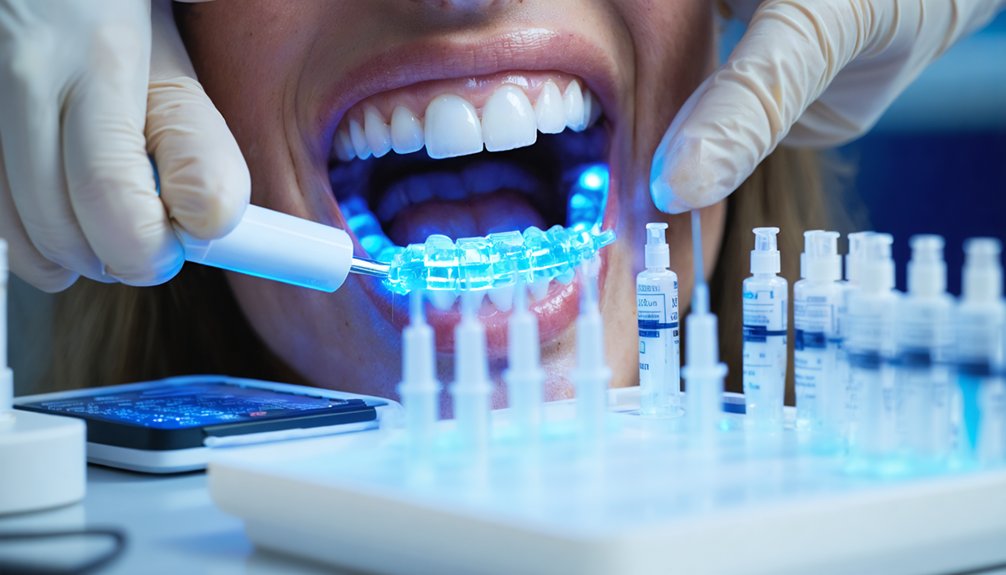
While achieving rapid whitening results matters, protecting your oral health during treatment remains paramount. Key safety considerations include preventing gum irritation through proper gel application and avoiding enamel damage from overuse. You’ll experience better outcomes with expert professional guidance, where dentists measure baseline shade, apply protective barriers, and control peroxide concentration during supervised cycles. In-office treatments minimize risks through custom fitting and precise application techniques.
At-home kits offer convenience but carry higher side effect risks from improper gel amounts or prolonged light exposure. If you choose home treatments, select sensitivity-formulated products and follow instructions meticulously. Temporary tooth sensitivity commonly occurs but typically resolves quickly. Consult your dentist before starting any whitening regimen, especially if you have existing dental conditions or sensitive teeth, ensuring safe treatment protocols.
Current Limitations and What Studies Still Need to Confirm
Despite widespread marketing claims about blue light’s whitening power, research reveals significant gaps in confirming its actual effectiveness. You’re facing evidence quality limitations across studies—inconsistent protocols, varying concentrations, and inadequate control of variables like initial tooth color make direct comparisons nearly impossible.
Result interpretation challenges complicate matters further: what you perceive as whitening might actually be temporary tooth dehydration. Studies show teeth rehydrate within 24 hours, often causing “complete relapse” to darker shades.
The 2014 systematic review found no significant advantage with light activation, yet some in-vitro studies showed promising results that didn’t translate clinically. Researchers haven’t adequately distinguished between dehydration-related color shifts and genuine bleaching efficacy, leaving you without definitive answers about blue light’s true contribution to your whitening outcomes.
Frequently Asked Questions
How Long Do Blue Light Teeth Whitening Results Typically Last?
“Good things don’t last forever”—your blue light teeth whitening results typically fade over several months to three years. Whitening longevity depends on your habits: avoiding staining foods, maintaining excellent oral hygiene, and using touch-ups extend your brightness.
Can Blue Light Whitening Work on Dental Crowns or Veneers?
Blue light whitening won’t work on dental crowns or veneers because their non-porous materials resist peroxide-based agents. You’ll achieve veneer whitening only through replacement. Whiten your natural teeth first, then match restorations to your desired shade for ideal control.
Does Blue Light Whitening Cause Increased Tooth Sensitivity or Pain?
Like a sunburn that fades quickly, you’ll likely experience heightened discomfort during blue light whitening, but it’s temporary. Higher concentrations cause more sensitivity, though proper supervision prevents increased enamel damage. You’ll recover within 24 hours.
How Much Does Professional Blue Light Whitening Cost Compared to At-Home?
Professional whitening services cost $300–$1,000 per session, while affordable treatment options include at-home blue light kits at $85–$300. You’ll get immediate results with professional treatments, but at-home alternatives deliver gradual whitening within 1–2 weeks.
Are There Specific Foods to Avoid After Blue Light Whitening Treatments?
Your enamel’s 48% more porous post-treatment, making dietary choices vital. You’ll minimize acidic foods like citrus and tomatoes while avoiding colored beverages such as coffee, red wine, and dark sodas to maintain your brilliant results effectively.