If you’re dealing with genetic tooth discoloration, you’ll need targeted treatments since intrinsic stains originate beneath your enamel. Professional in-office whitening delivers 3-8 shade improvements by addressing stains at their source, while porcelain veneers provide permanent solutions for severe cases like amelogenesis imperfecta. You’ll also benefit from dental crowns for structurally compromised teeth, customized fluoride treatments based on your enamel profile, and strategic dietary modifications to prevent additional staining. The following detailed guide explores each treatment option’s effectiveness for your specific genetic condition.
Key Takeaways
- Professional in-office whitening treatments target intrinsic genetic stains, achieving 3-8 shade improvements in a single customized appointment.
- Porcelain veneers permanently mask severe genetic discoloration from conditions like amelogenesis imperfecta with natural-looking, durable results.
- Dental crowns restore severely compromised teeth while providing complete coverage and the option to select brighter shade options.
- Maintain oral hygiene with twice-daily brushing, daily flossing, and antibacterial mouthwash to prevent additional staining on genetic discoloration.
- Schedule professional dental cleanings every six months to remove tartar and polish teeth affected by genetic discoloration.
Understanding Your Specific Type of Genetic Tooth Discoloration
Genetic tooth discoloration originates beneath your enamel surface, making it fundamentally different from external stains caused by coffee, tobacco, or poor oral hygiene. You’ll need to identify whether you’re dealing with amelogenesis imperfecta, which produces yellow-brown, gray, or opaque discoloration through enamel formation issues, or dentinogenesis imperfecta, characterized by grayish, transparent enamel.
These conditions create intrinsic staining that appears as yellow, brown, gray, or orange hues beneath the surface. Genetic discoloration typically accompanies structural tooth weaknesses, including brittleness and increased susceptibility to chipping and decay. Even natural genetic variations in enamel thickness and transparency influence your baseline tooth color—thinner enamel allows more dentin visibility, producing yellowish teeth.
Understanding your specific type determines which whitening approaches will prove effective and which alternatives you’ll need to examine.
Professional In-Office Whitening Treatments for Genetic Stains
When genetic discoloration affects your dentin layer, professional in-office whitening delivers concentrated peroxide formulations that penetrate beneath your enamel surface to target intrinsic stains at their source. You’ll achieve 3-8 shade improvements in one appointment—results that surpass home whitening efficacy through higher-concentration gels and light activation technology. Your dentist customizes treatment strength based on your stain severity and monitors progress in real-time.
The procedure takes under one hour with controlled gum barriers preventing irritation. Pre-treatment evaluation confirms your candidacy by examining enamel thickness, stain type, and existing restorations. Patient satisfaction outcomes improve dramatically when professionals supervise the process, adjusting for sensitivity while ensuring even whitening across visible teeth. You’ll experience immediate visible results with safer enamel preservation compared to unsupervised methods.
Porcelain Veneers and Bonding Solutions for Severe Discoloration
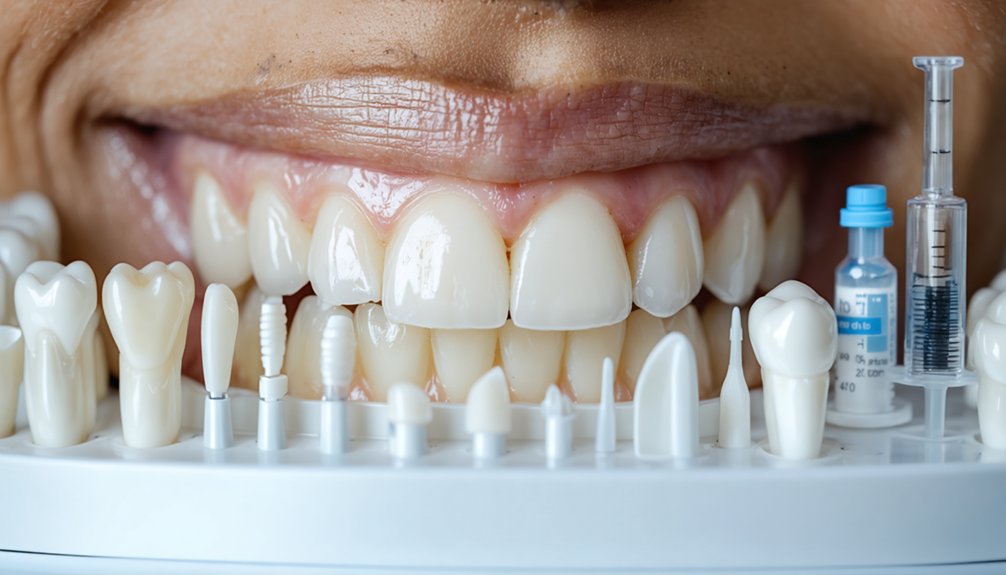
For severe genetic discoloration unresponsive to bleaching treatments, porcelain veneers offer a permanent cosmetic solution by bonding ultra-thin ceramic shells directly to your tooth surfaces. These custom-fabricated restorations effectively mask tetracycline staining, fluorosis, and enamel hypoplasia that expose discolored dentin layers beneath.
Veneers deliver superior longevity compared to composite bonding—lasting 20+ years versus 5-7 years—while providing enhanced translucency that mimics natural enamel. The procedure requires minimal tooth preparation, followed by precise impressions for laboratory fabrication.
Tooth shade selection proves critical; you’ll want to whiten any unaffected teeth beforehand to guarantee uniform brightness across your smile.
Aesthetic considerations for veneers include matching natural tooth texture and optimizing light reflection properties. For reversibility, minimal-prep options like Lumineers preserve more enamel structure while still concealing deep intrinsic stains that resist all conventional whitening methods.
Dental Crowns to Restore and Whiten Genetically Compromised Teeth
While veneers excel at masking superficial genetic discoloration, dental crowns provide thorough, exhaustive, or detailed restoration when tooth structure itself has become severely compromised by genetic conditions like amelogenesis imperfecta or dentinogenesis imperfecta.
Crowns deliver comprehensive solutions for genetically compromised teeth:
- Custom fabrication matches your desired shade, including brighter options that bypass genetic enamel limitations
- Crown replacement strategy involves whitening remaining natural teeth first, then fabricating new crowns to match
- Complete coverage encases severely discolored teeth unresponsive to bleaching treatments
- Crown maintenance practices include professional cleanings and polishing to preserve appearance
- Long-term durability with modern porcelain and zirconia materials resisting future discoloration
You’ll achieve permanent color correction while simultaneously restoring structural integrity. This dual-purpose treatment eliminates intrinsic stains while protecting weakened tooth structure.
Daily Oral Hygiene Practices to Prevent Further Staining
Though genetic factors determine your baseline tooth color, meticulous daily oral hygiene practices prevent extrinsic stains from compounding inherited discoloration. Implement proper brushing technique twice daily for two minutes using soft-bristled brushes with ADA-approved fluoride toothpaste to strengthen enamel and remove surface deposits.
Maintain a regular flossing routine to eliminate plaque between teeth where stains accumulate and traditional brushing can’t reach. Apply antibacterial mouthwash daily to combat plaque formation on tooth surfaces. Rinse your mouth with water immediately after consuming coffee, tea, or other staining beverages to minimize pigment absorption.
Schedule professional dental cleanings every six months to remove hardened tartar that home care can’t eliminate. This all-encompassing approach prevents secondary staining from intensifying your genetically predetermined tooth color, giving you maximum control over your smile’s appearance.
Dietary Modifications to Minimize Additional Discoloration
Strategic dietary modifications markedly reduce additional tooth discoloration when you’re managing genetically determined baseline coloration. Your preferred dietary choices directly impact staining prevention beyond baseline pigmentation.
Your dietary choices significantly influence tooth staining beyond genetic factors, making strategic food selection crucial for maintaining optimal whiteness.
You’ll achieve superior results by eliminating high-tannin beverages like coffee and tea, or adding milk to neutralize staining compounds. Acidic foods weaken enamel, exposing dentin and amplifying discoloration—limit citrus fruits and sodas accordingly.
Essential dietary adjustments to reduce tooth staining:
- Use straws for dark beverages to minimize direct enamel contact
- Avoid pigmented foods (berries, tomato sauces, balsamic vinegar) for 48 hours post-whitening
- Limit sugary drinks to 120ml daily to prevent enamel erosion
- Incorporate crunchy vegetables and dairy products that naturally clean teeth and neutralize acids
- Rinse immediately with water after consuming staining foods
You’ll maintain your whitening investment through consistent dietary discipline and strategic food timing.
Customized Fluoride Treatments Based on Your Genetic Enamel Profile
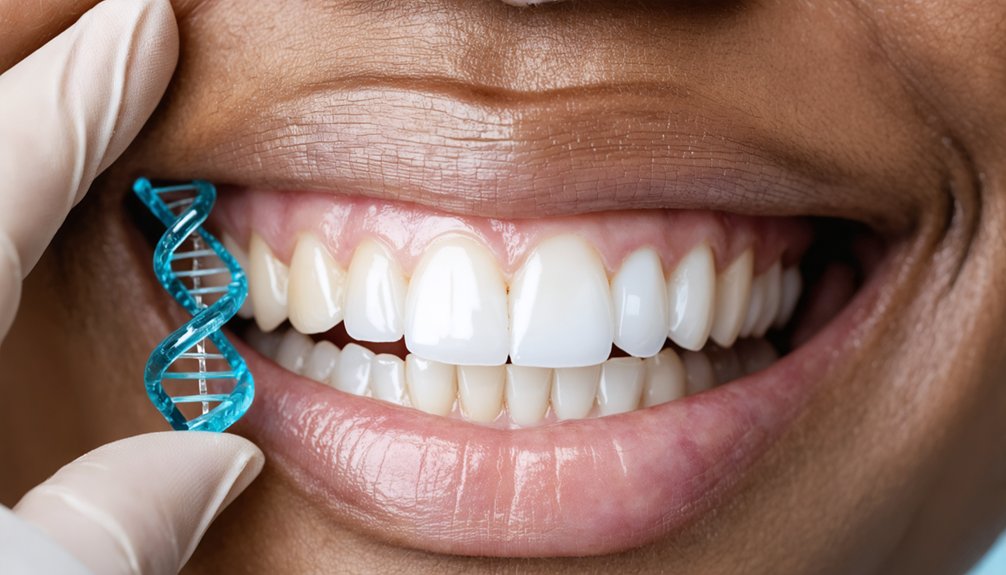
Your genetic enamel profile determines the ideal fluoride concentration and application frequency needed to strengthen tooth structure while supporting whitening treatments.
Professional assessment of your enamel density, mineralization patterns, and genetic predispositions enables dentists to customize fluoride protocols that address your specific vulnerabilities.
Monitoring your enamel’s response over time allows for treatment adjustments that maximize protection against discoloration while maintaining the structural integrity required for effective whitening procedures.
Assess Your Enamel Strength
Precision in enamel assessment transforms whitening outcomes for patients with genetic tooth discoloration. You’ll benefit from genetic risk assessment that identifies mutations in AMELX, ENAM, AMBN, and COL17A1 genes—markers directly affecting your enamel’s structural integrity. Molecular enamel analysis through DNA sequencing methods enables you to understand your specific genetic profile before initiating whitening protocols.
Clinical Assessment Methods for Enamel Strength:
- Genetic Testing: smMIPs technology provides rapid, cost-effective screening for amelogenesis imperfecta variants
- Imaging Analysis: Backscatter electron imaging quantifies mineral density across enamel thickness
- Predictive Modeling: C5.0 algorithms achieve 85.30% accuracy in classifying enamel characteristics
- Microscopy Evaluation: Polarizing microscopy measures hypomineralization at occlusal, middle, and cervical regions
- Family History Review: Document relatives’ enamel weakness patterns for thorough genetic risk stratification
Tailor Fluoride Concentration Levels
When you understand your genetic enamel profile, fluoride treatments become precision instruments rather than standardized interventions. You’ll assess genetic risk factors like DLX3 and ESR1 variants that determine your susceptibility to fluorosis—the mottled discoloration resulting from excessive fluoride exposure. Your dentist can calibrate concentration levels specifically for your enamel’s fluoride metabolism capacity, preventing white or brown spots while maintaining cavity protection.
This targeted approach matters because tooth fluoride concentration correlates with environmental exposure, but fluorosis severity depends on your genetic makeup. You’ll optimize daily fluoride use by matching topical applications to your enamel’s resistance threshold. Individuals with protective DLX3 polymorphisms tolerate higher concentrations, while ESR1 variants affecting ameloblast responsiveness require reduced levels. This customization prevents iatrogenic discoloration while delivering therapeutic benefits aligned with your unique enamel profile.
Monitor Long-Term Genetic Response
Long-term genetic response monitoring transforms fluoride treatments from static interventions into dynamic protocols that adapt to your enamel’s evolving needs. Your genetic profile determines baseline enamel thickness, remineralization capacity, and saliva composition—all factors requiring systematic tracking to optimize whitening outcomes.
Salivary gland function evaluation reveals how effectively your body supports enamel recovery post-treatment, while periodontally accelerated osteogenic orthodontics may influence fluoride absorption patterns in patients undergoing concurrent procedures.
- Document enamel translucency changes every 6-12 months using standardized shade guides
- Track sensitivity thresholds to identify genetic limitations requiring protocol modifications
- Measure salivary pH and flow rate to assess natural remineralization capacity
- Record whitening maintenance intervals revealing genetic predisposition toward discoloration recurrence
- Adjust fluoride concentrations based on cumulative enamel response data rather than fixed schedules
Frequently Asked Questions
Can Genetic Tooth Discoloration Be Passed Down to My Children?
Yes, you’ll likely pass inherited enamel weaknesses and familial tooth staining patterns to your children. These genetic traits transmit through dominant or recessive genes, affecting enamel thickness, dentin color, and structural integrity across generations, requiring proactive treatment planning.
Are There Specific Genes Tested to Predict Tooth Discoloration Risk?
No specific genes are currently tested to predict your tooth discoloration risk. DNA markers for enamel formation exist, but epigenetic factors and environmental influences dominate outcomes, making genetic testing unreliable for predicting discoloration susceptibility in clinical practice.
Does Insurance Cover Whitening Treatments for Genetic Tooth Conditions?
Most insurance plans won’t cover genetic tooth whitening due to insurance coverage limitations classifying it as cosmetic. You’ll need documented medical necessity and dentist prescription to qualify. Treatment cost factors include your plan’s annual maximums and required waiting periods.
Can Breastfeeding Mothers With Genetic Tooth Issues Affect Baby’s Enamel Development?
Though genetics don’t transfer through breastfeeding nutrition, you’ll protect your baby’s enamel development by maintaining adequate vitamin D levels and calcium intake. Your breast milk’s protective proteins actively strengthen teeth, minimizing enamel development risks regardless of your dental genetics.
How Long Do Veneer or Crown Solutions Last for Genetic Discoloration?
The expected lifespan of dental veneers ranges 10-15 years, while crowns last similarly with proper care for long-lasting crowns. You’ll maintain ideal results through excellent hygiene, avoiding damaging habits, and attending regular checkups—potentially extending durability beyond 20-30 years.