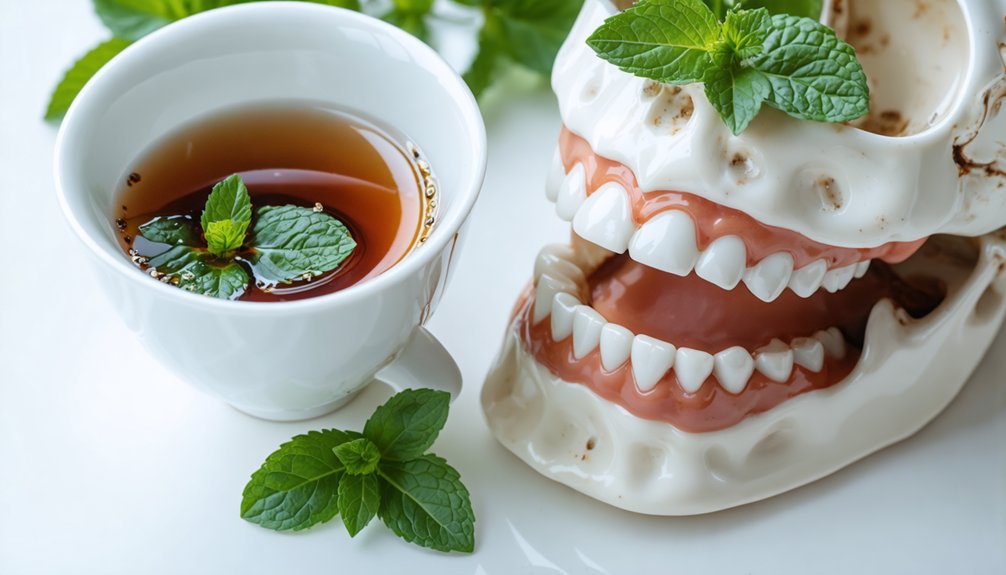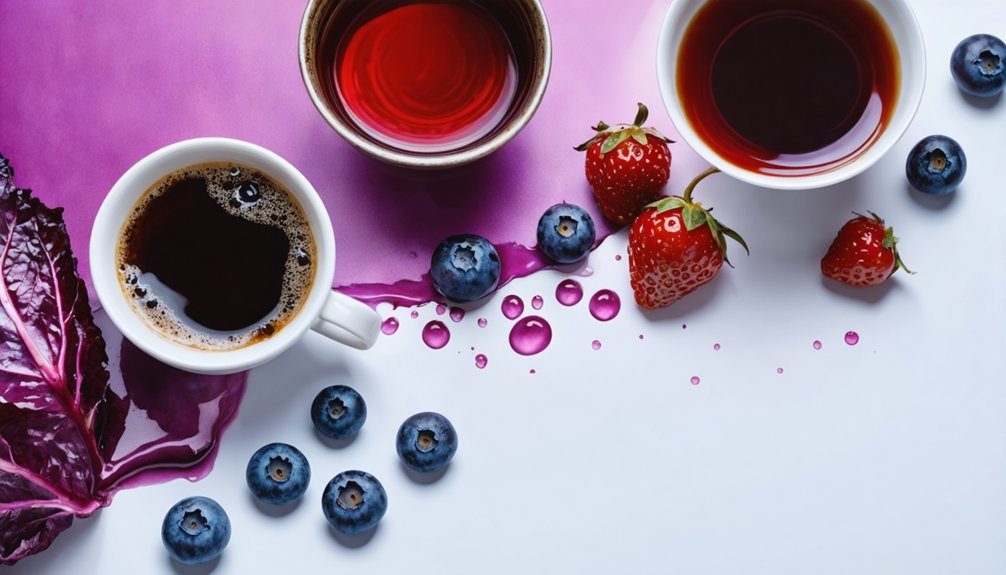
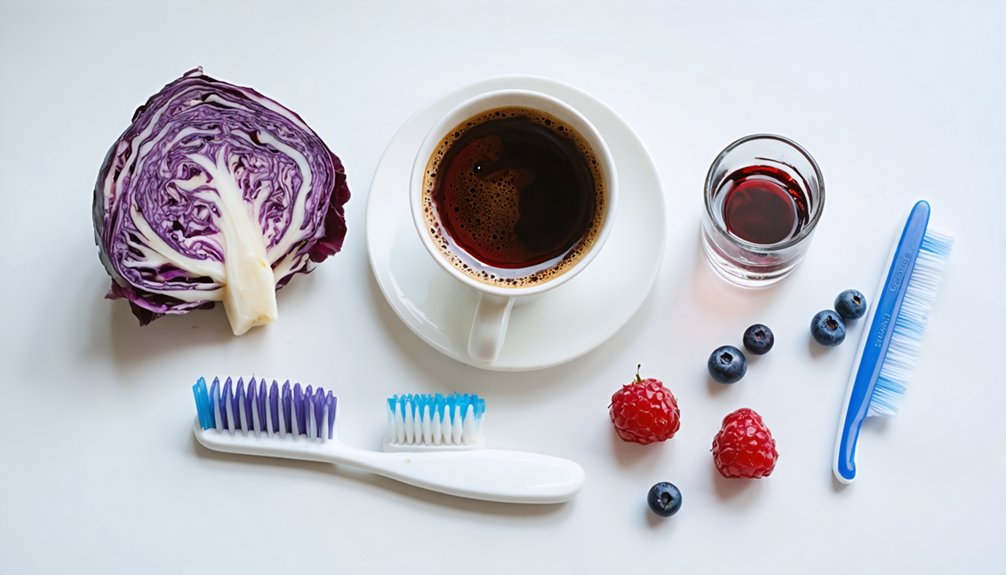
Your teeth face staining from chromogen-rich foods and acidic beverages that penetrate enamel microstructures. Coffee, red wine, and tea deliver tannins that bind to porous enamel, while dark berries and beetroot deposit persistent pigments. Red cabbage’s anthocyanin concentration matches dark berries’ staining capacity, and its acidic pH creates porous surfaces for deeper penetration. Soy sauce, tomato products, and curry compounds intensify discoloration through acid-pigment interactions. Strategic preventive measures—including immediate water rinsing, optimized consumption timing, and professional whitening—can effectively counteract these chromogenic effects and preserve your smile’s brightness.
Key Takeaways
- Red cabbage contains high anthocyanin levels and acidic pH that create porous enamel surfaces, enabling deeper pigment penetration.
- Coffee, red wine, and tea stain teeth through tannins that bind to enamel and facilitate chromogen adhesion.
- Dark berries like blueberries and blackberries deliver concentrated chromogens and tannins that cause persistent tooth discoloration.
- Acidic beverages demineralize enamel, creating microscopic pockets where pigments from staining foods deposit and anchor deeply.
- Immediate water rinsing within 60 seconds after consuming staining foods dislodges chromogens before they bond to enamel.
Beverages That Leave Their Mark on Your Smile
Your daily beverage choices play a significant role in tooth discoloration through two primary mechanisms: chromogen adhesion and enamel erosion.
Coffee, red wine, and tea demonstrate the highest staining potential due to tannins that bind dark pigments to enamel proteins. The truth about tea stains reveals black varieties cause more discoloration than green, even when consumed with milk. Red wine produces the most severe yellowing in controlled studies, combining chromogens with erosive acidity.
The impact of acidic foods on enamel extends to sodas and energy drinks, where phosphoric and carbonic acids weaken protective surfaces, enabling caramel colorings and artificial pigments to attach. Understanding these staining pathways allows you to implement targeted prevention strategies before permanent discoloration occurs.
The Surprising Role of Tannins in Tooth Discoloration
Tannins are organic compounds that bind to your tooth enamel’s porous surface, creating a substrate for chromogens and bacterial adhesion. These polyphenolic molecules don’t just discolor your teeth—they actively facilitate plaque accumulation and acid production that erodes enamel integrity.
Understanding which tannin-rich foods pose the greatest staining risk enables you to implement targeted prevention strategies before extrinsic discoloration becomes permanent.
How Tannins Bind Enamel
When staining compounds contact your tooth surface, polyphenolic tannins initiate a complex binding process that progressively alters enamel microstructure. Through specific absorption kinetics, these molecules adhere to your enamel surface, creating three-dimensional protein-tannin complexes.
The chemical interaction mechanisms involve:
- Direct surface adhesion where tannins bind to your enamel’s crystalline structure
- Protein attraction that pulls additional chromogenic compounds onto bound tannin molecules
- Progressive pigment layering that deepens discoloration over repeated exposures
This binding process reduces your enamel’s pH to 4-5, creating acidic conditions that enhance staining penetration. The tannins’ high molecular weight slows diffusion but strengthens adherence once bound. Understanding these mechanisms enables you to implement targeted preventive strategies against time-dependent discoloration progression.
Tannin-Rich Foods To Avoid
Certain plant-based foods deliver concentrated tannin doses that’ll substantially accelerate tooth discoloration through the binding mechanisms you’ve just learned. Prioritize limiting beverages containing peak levels: black tea, red wine from oak barrels, and tart cherry juice (1254.99 mg/L proanthocyanidins).
Minimize dark chocolate consumption, as cacao beans contain 6100–8100 mg/100g proanthocyanidins. Fiber rich legumes, particularly red beans (up to 830 mg/100g), warrant moderation despite their nutritional benefits. Mineral rich nuts require strategic consumption—pecans (238-695 mg/100g) and hazelnuts (125-645 mg/100g) present highest staining risks.
Grape products, including juice and whole fruit with seeds (6050 mg/100g), demand careful intake. You’ll maintain enamel brightness by choosing lower-tannin alternatives while implementing immediate rinsing protocols after consuming these chromogenic foods.
Dark-Colored Fruits and Vegetables as Staining Culprits
Dark-colored fruits and vegetables contain high concentrations of chromogens—pigments that adhere directly to tooth enamel and create visible discoloration. Berries such as blueberries, blackberries, and cranberries rank among the most severe staining culprits due to their deep pigmentation and tannin content, which enhances chromogen adherence to enamel surfaces.
Beetroot similarly poses significant staining risk, as its bright red pigments leave persistent color deposits on teeth that can accumulate over time without proper preventive measures.
Berries and Pigment Adhesion
Although berries deliver substantial antioxidant and nutritional benefits, their vibrant pigments pose significant risks for dental discoloration. Chromogens—the compounds responsible for berries’ intense colors—adhere tenaciously to enamel, while tannins amplify this binding effect. The acidity further compromises enamel integrity, creating porous surfaces that trap pigments more effectively than sugar content’s impact alone would suggest.
The highest-risk berries for staining include:
- Blueberries: Deep-blue chromogens penetrate enamel micropores, creating persistent discoloration
- Blackberries: Equally potent pigmentation compounds that bond strongly to tooth surfaces
- Raspberries: Deceptively high chromogen levels despite lighter appearance, with seeds lodging between teeth
You can preserve antioxidant benefits of berries while minimizing staining by rinsing immediately post-consumption. Water swishing disperses chromogens before they set, and prompt brushing removes residual pigments effectively.
Beetroot’s Strong Staining Power
While beetroot delivers cardiovascular and anti-inflammatory benefits through nitrates and phytochemicals, its betalain pigments present formidable staining challenges that exceed most other vegetables’ discoloration potential. These chromogens penetrate porous enamel surfaces, achieving ΔE=11.53±1.27 in dental composites—outperforming carrot, tomato, and pomegranate in controlled studies.
You’ll notice beetroot juice alters tooth color variables E, C, and H (p=0.000) profoundly, with stain persistence on natural teeth intensifying across 3-, 5-, and 7-day exposure periods. The solution’s plaque index sensitivity of 73.24% confirms its pigment-binding capacity, while low pH amplifies enamel erosion that deepens discoloration pathways. Without immediate rinsing, the deep purple-red hue evolves to stubborn brown staining that resists standard brushing protocols.
Why Red Cabbage Deserves Special Attention
- Anthocyanin concentration exceeding most vegetables, matching dark berries’ staining capacity
- Acidic pH lowering oral environment, creating porous surfaces for deeper pigment penetration
- Polyphenolic compounds resisting saliva’s natural cleaning mechanisms
Your preventive protocol requires waiting 30-60 minutes post-consumption before brushing, allowing enamel remineralization. Understanding stain removal effectiveness depends on immediate rinsing with water and strategic timing of oral hygiene practices. Red cabbage’s pigment profile demands the same vigilance you’d apply to red wine or balsamic vinegar.
Sauces and Condiments That Compromise Tooth Whiteness
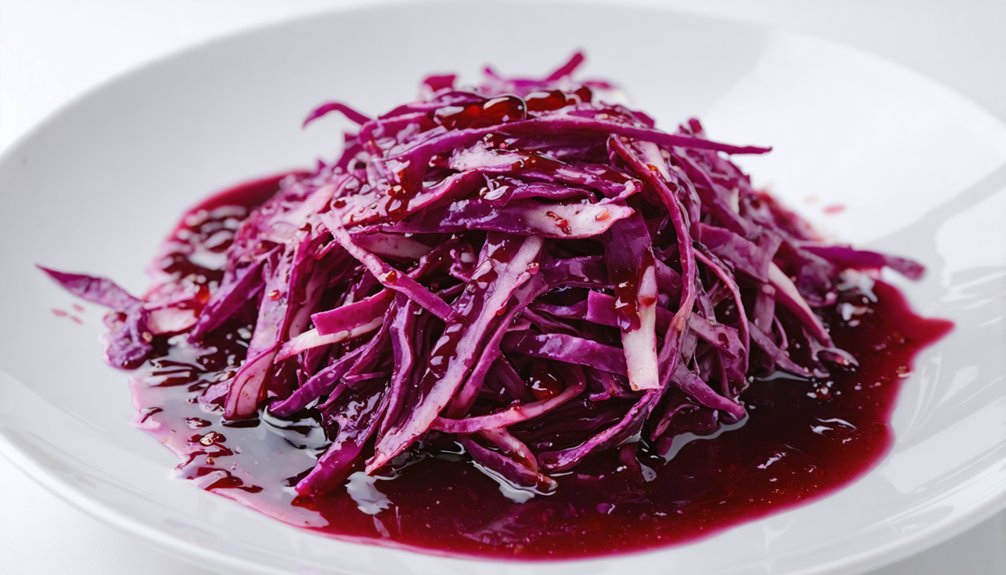
Your everyday condiments harbor concentrated chromogens and acidic compounds that systematically compromise enamel integrity through dual-action staining mechanisms. Soy sauce’s melanoidin pigments penetrate weakened enamel surfaces, causing discoloration comparable to tinted oral rinses. Its low viscosity ensures maintains prolonged tooth exposure while high sodium content reduces protective saliva flow.
Tomato-based products combine chromogenic pigments with enamel-eroding acidity, creating porous surfaces that trap discoloration. Balsamic vinegar’s sticky consistency allows dark pigments to adhere persistently after acid-induced enamel weakening. Chromogenic spice mixes in curry sauces, particularly turmeric-containing varieties, deposit yellow pigments through repeated exposure.
Barbecue and mustard condiments deliver concentrated pigmentation alongside acid-based enamel degradation. Immediate oral rinsing following consumption reduces chromogen penetration risk. Consuming leafy greens with acidic condiments creates protective barriers against pigment adhesion.
Sweet Treats and Acidic Drinks Causing Yellow Tints
Research identifies these maximum-damage beverages:
- Coca-Cola and Mountain Dew — demonstrated highest demineralization rates and discoloration scores in laboratory testing
- Lemon and orange juices — maintain acid loads comparable to carbonated drinks despite nutritional benefits
- Sugar-free carbonated beverages — retain erosive potential through carbonic acid formation
You’ll notice progressive yellowing, increased sensitivity to temperature changes, and minor chipping as structural integrity diminishes. Implement protective strategies: limit consumption frequency, use straws, rinse immediately with water.
How Pigments and Acids Work Together to Stain Enamel
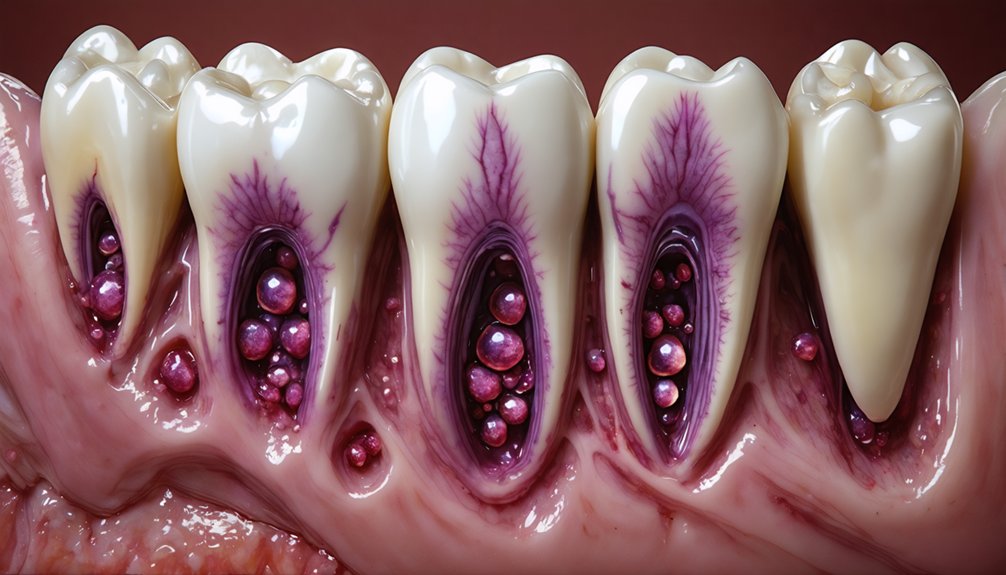
When acidic beverages contact your enamel, they initiate a chemical cascade that dramatically amplifies pigment adhesion. The increased hydrogen ion concentration dissolves hydroxyapatite crystals, triggering enamel demineralization pigment binding that creates porous, honeycomb-like surfaces. This structural alteration provides retention sites where chromogens deposit and anchor.
You’ll notice acidic drinks like red wine don’t just erode—they form microscopic surface pockets that trap pigments deeper within your enamel. The molecular composition staining intensity depends on how specific chromogens interact with demineralized areas. Anthocyanins from red cabbage, tannins from tea, and chromogens from soy sauce exploit this acid-softened terrain differently based on their chemical structure.
This synergistic relationship between pH and pigment concentration determines your staining risk. Controlling acid exposure intervals limits porosity development, reducing chromogen penetration before irreversible discoloration occurs.
Daily Habits to Minimize Food-Related Tooth Staining
Understanding the biochemical mechanisms behind enamel staining enables you to implement targeted prevention strategies that interrupt the pigment-adhesion process. Optimized meal timing—consuming staining foods during main meals rather than prolonged snacking—reduces cumulative exposure. Proactive whitening techniques include immediate water rinsing to eliminate tannins before enamel bonding occurs.
Establish these evidence-based protocols:
- Post-consumption rinsing: Swish water vigorously within 60 seconds of consuming pigmented beverages like coffee, red wine, or berry smoothies to dislodge chromogens.
- Strategic straw positioning: Direct dark liquids past anterior teeth surfaces, minimizing contact with visible enamel.
- Enhanced mechanical cleaning: Utilize electric toothbrushes twice daily for superior plaque disruption, preventing pigment entrapment in biofilm matrices.
Pair cheese with wine—the casein creates a protective barrier. Schedule biannual professional cleanings for extrinsic stain removal beyond daily maintenance capabilities.
Protective Measures for Maintaining a Brighter Smile
Beyond daily rinsing and mechanical cleaning, professional dental interventions provide the most effective pathway for reversing established discoloration and safeguarding enamel integrity. Professional whitening services deliver 5-10 shade improvements through high-concentration bleaching agents (25-40% peroxide), with results lasting 1-3 years when properly maintained. Your dentist assesses enamel condition before treatment, adjusting gel strength to prevent damage while incorporating desensitizing agents to minimize transient sensitivity.
Custom take home treatments complement in-office procedures, offering precise tray fit and controlled application over 1-3 weeks for 4-8 shade enhancement. You’ll achieve superior depth and uniformity compared to over-the-counter alternatives. Sustain results through monthly touch-ups, routine cleanings to remove surface buildup, and repeat sessions every few months as needed. This combined regimen guarantees ideal outcomes under professional oversight.
Frequently Asked Questions
Can Teeth Staining From Red Cabbage Be Reversed With Professional Treatments?
Yes, you’ll successfully reverse red cabbage staining through professional dental cleaning that removes surface pigments. For maintenance, you can use home teeth whitening treatments between appointments. These evidence-based interventions effectively eliminate extrinsic chromogenic discoloration when applied consistently.
How Long Does It Take for Chromogens to Permanently Stain Teeth?
Chromogens don’t permanently stain teeth instantly—you’ll see surface discoloration within hours, but true enamel penetration requires repeated exposure over weeks. Your saliva composition and chromogen absorption rate dramatically influence staining speed, making prevention through prompt rinsing essential.
Are Certain Tooth Enamel Types More Resistant to Food-Based Staining?
Your enamel composition determines staining resistance—denser, more mineralized enamel resists chromogen penetration better. You’ll strengthen this protective barrier through professional fluoride treatments, which enhance enamel crystalline structure and reduce surface porosity that traps pigments.
Do Probiotics in Fermented Foods Reduce or Increase Tooth Staining Risk?
Probiotic content in fermented foods may offer staining reduction benefits by controlling pathogenic bacteria and plaque accumulation. However, you’ll need to balance this against acidic properties in certain fermented beverages that can compromise enamel and increase staining susceptibility.
Can Oil Pulling Remove Existing Stains From Tannin-Rich Foods?
Oil pulling effectiveness lacks evidence for removing existing tannin stains—one RCT showed reduced stain index versus chlorhexidine (p=0.0002), but no enamel surface changes or whitening occur. You’ll need professional treatments for actual stain removal.