Yellowing happens when pigments from coffee, tea, tobacco, or aging penetrate your enamel or dentin. You can prevent further staining by rinsing after consuming staining foods, flossing daily, and eating crunchy vegetables that scrub surface deposits. At-home options like baking soda, hydrogen peroxide, and ADA-approved whitening toothpastes deliver consistent results when used regularly. For stubborn intrinsic stains, professional laser treatments or custom trays offer stronger outcomes—and there’s much more to uncover about choosing the right approach for your specific situation.
Key Takeaways
- Rinse or brush after consuming staining foods like coffee, tea, and red wine to prevent surface discoloration from setting.
- Use baking soda combined with hydrogen peroxide as an effective at-home remedy for lifting and bleaching surface stains.
- Quit tobacco use, as its compounds deeply penetrate enamel, causing stubborn pigmentation that resists standard whitening methods.
- Apply ADA-approved whitening toothpastes consistently, since sporadic use produces minimal results compared to a regular daily routine.
- Seek professional laser whitening or custom trays if OTC products fail after weeks of consistent use.
What Actually Causes Yellow Teeth?
Before reaching for a whitening product, it helps to understand what’s actually turning your teeth yellow in the first place. The causes of discoloration fall into two categories: extrinsic and intrinsic.
Not all yellow teeth have the same story—knowing whether your discoloration is extrinsic or intrinsic changes everything.
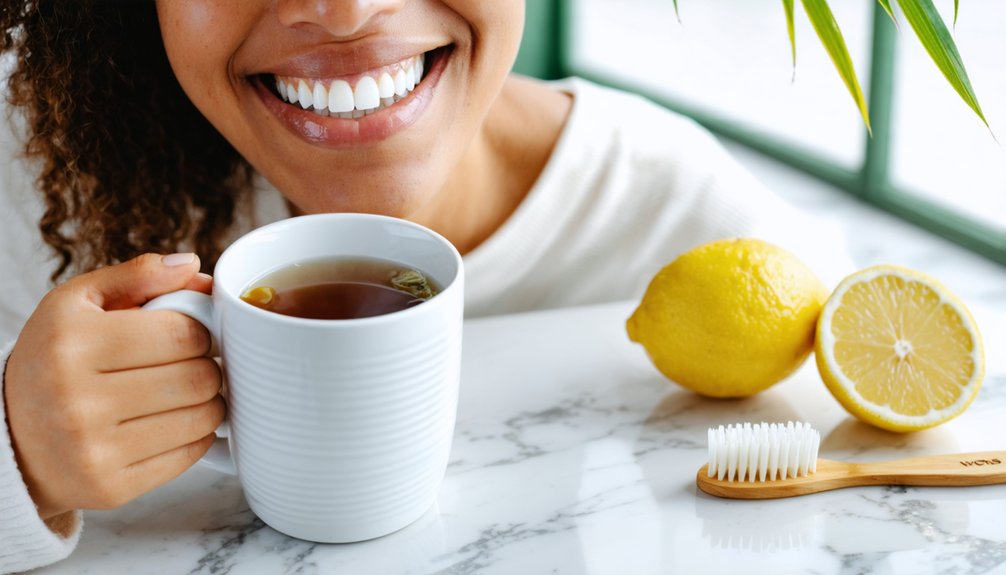
Extrinsic stains develop on your enamel’s surface from dietary impacts like coffee, tea, red wine, and acidic foods that erode protective layers. Tobacco compounds penetrate enamel deeply, producing stubborn pigmentation.
Intrinsic discoloration originates inside the tooth itself, resulting from aging, certain medications like tetracyclines, or excessive fluoride exposure during development.
Poor oral hygiene accelerates plaque and tartar accumulation, compounding surface yellowing. Identifying your specific cause matters because it determines which whitening approach will actually work for you versus which will waste your time and money.
Daily Habits That Prevent Yellow Teeth From Coming Back
Keeping yellow teeth from returning requires consistent daily habits that address both surface staining and enamel protection. You’ll need to rinse or brush immediately after consuming coffee, tea, or wine to neutralize staining compounds before they bond to enamel.
Incorporate preventive measures like daily flossing and antibacterial rinses to eliminate plaque buildup that accelerates discoloration.
Your dietary choices directly impact long-term whiteness. Limit acidic foods like citrus, which erode enamel and expose yellower dentin underneath. Instead, eat crunchy vegetables and fruits that mechanically scrub surface stains during chewing.
Quitting tobacco produces the most dramatic color improvement of any single lifestyle change.
Brush twice daily using an ADA-approved whitening toothpaste to maintain brightness and reinforce enamel integrity consistently.
The At-Home Whitening Methods That Actually Work
Although daily habits protect your enamel, targeted at-home whitening methods can actively reverse existing discoloration. You’ve got several clinically supported options worth incorporating into your routine.
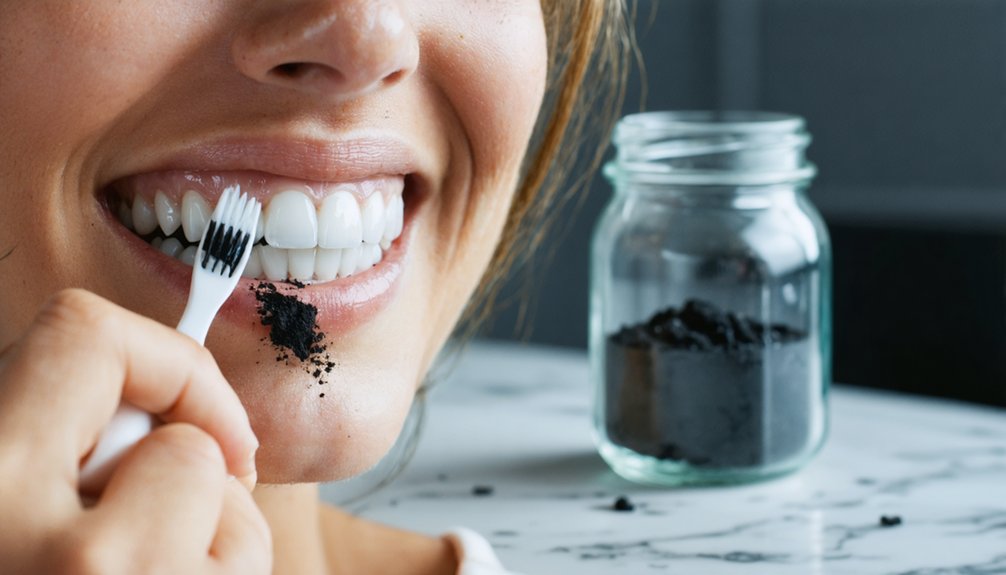
Baking soda acts as a mild abrasive, lifting surface stains without compromising enamel integrity when used correctly. Pair it with hydrogen peroxide, which bleaches discoloration at a surface level, and you’ve got a cost-effective combination that delivers measurable results.
For deeper staining, at-home professional kits with custom trays and prescription-strength peroxide outperform standard OTC strips. Dentist-supervised use minimizes sensitivity while maximizing penetration.
Whitening toothpastes containing baking soda variants carry ADA approval and reinforce daily gains.
Choose methods matched to your stain severity. Consistency determines outcome—sporadic application yields minimal change, while disciplined, regular use produces visible whitening within weeks.
Signs Your Yellow Teeth Need Professional Whitening
When at-home methods consistently fail to produce visible results, professional whitening becomes the clinically appropriate next step.
Recognizing yellow teeth indicators early helps you act with whitening urgency before discoloration deepens.
Early recognition of yellow teeth indicators empowers timely action, preventing discoloration from deepening beyond simple correction.
Seek professional intervention when you notice:
- Persistent yellowing despite weeks of OTC product use
- Internal staining from tetracycline, trauma, or fluorosis that surface treatments can’t penetrate
- Uneven discoloration suggesting structural concerns beyond topical solutions
- Sensitivity escalating with continued at-home attempts
- Stains linked to tobacco use, which require stronger bleaching agents
Professional laser treatments activate high-strength gels, targeting internal stains unreachable by consumer products.
A single session delivers immediate, multi-shade improvement.
If you’re cycling through strips and pastes without measurable change, your teeth are signaling that clinical-grade intervention is necessary.
Which Professional Whitening Option Is Right for You?
Once you’ve confirmed that professional whitening is the right path, choosing between available clinical options depends on your stain type, timeline, and budget.
Laser bleaching delivers immediate, multi-shade results in a single session, targeting internal discoloration that over-the-counter products can’t reach. It’s the strongest option when time is limited or stains are severe.
If you prefer gradual, controlled whitening, custom trays fitted by your dentist distribute prescription-strength peroxide evenly, minimizing sensitivity while penetrating deep stains over several weeks.
Laser bleaching costs more upfront but requires fewer sessions. Custom trays demand consistency but offer flexibility.
For permanent coverage of stains resistant to bleaching, veneers or bonding provide structural solutions.
Match the method to your stain severity, schedule, and long-term dental goals.
Frequently Asked Questions
Can Yellow Teeth Affect Self-Confidence and Mental Health Long-Term?
Yes, yellow teeth can diminish your self-esteem impact and restrict your social interactions long-term. You’ll likely avoid smiling, withdraw from conversations, and experience heightened anxiety, directly undermining your confidence and overall mental well-being over time.
Are Whitening Treatments Safe for People With Dental Implants?
Whitening options don’t actually whiten implants—they’re made of porcelain or composite, unaffected by peroxide. You must prioritize proper dental implant care and consult your dentist to match surrounding teeth without damaging restorations.
Does Teeth Whitening Work on Crowns, Bridges, or Veneers?
Whitening options won’t alter crown materials, bridges, or veneers—they don’t respond to peroxide. For veneer care and color-matched restorations, you’ll need professional treatments to replace or recolor them to achieve your desired shade.
How Does Aging Naturally Change the Color of Your Teeth?
As you age, tooth enamel thins, exposing yellower dentin beneath. The aging process accelerates discoloration when lifestyle habits like tobacco use and dietary impacts from coffee or wine compound natural pigmentation changes over time.
Can Certain Medications Permanently Stain Teeth From the Inside Out?
Up to 80% of tetracycline users develop internal staining. Yes, certain medications permanently stain your teeth from the inside out through medication effects that embed pigments deep within dentin, making them unreachable by standard whitening treatments.
References
- https://www.caloosadental.com/make-yellow-teeth-white/
- https://mintdentistry.com/dentist/dfw/denton/blog/whats-the-best-way-to-whiten-my-teeth
- https://canyonstatedental.com/say-goodbye-to-yellow-teeth-expert-whitening-tips/
- https://www.medicalnewstoday.com/articles/322421
- https://www.youtube.com/watch?v=LPNMkhJXmqc
- https://www.healthpartners.com/blog/safe-teeth-whitening/
- https://www.rodeodental.com/blog/dental-health/get-rid-of-yellow-teeth-the-best-way-to-whiten-teeth-at-home
- https://www.colgate.com/en-us/oral-health/teeth-whitening/whitening-aging-teeth
- https://www.aarp.org/health/conditions-treatments/teeth-whitening/