Your enamel’s 96% mineral composition forms a non-renewable crystalline structure that can’t regenerate once damaged by harsh whitening agents. Traditional peroxide-based treatments at 35% concentration cause significant phosphate ion loss, reduce enamel protein by up to 50%, and create permanent translucency that exposes yellowed dentin beneath. Modern enamel-safe alternatives like PAP-based formulations with LED activation deliver clinical-grade results without demineralizing your tooth structure, while protective protocols incorporating fluoride treatments and custom trays guarantee you’ll achieve lasting brightness without compromising your oral health foundation.
Key Takeaways
- Enamel is non-renewable; traditional whitening methods using high-concentration peroxide can cause permanent damage and translucency.
- 35% hydrogen peroxide strips phosphate ions and reduces enamel protein by 50%, compromising structural integrity.
- Peroxide-based treatments disrupt oral microbiome balance, increasing cavity risk while exposing dentin and triggering sensitivity.
- PAP-based formulations with LED activation deliver clinical-grade whitening without demineralizing enamel or harming pulp cells.
- Enamel-safe systems preserve tooth structure while preventing chemical burns, translucency, and irreversible weakening from aggressive bleaching.
Understanding Enamel’s Critical Role in Oral Health
When you consider teeth whitening options, understanding enamel’s structure becomes essential for protecting your oral health. Your enamel composition consists of 96% mineral content—primarily hydroxyapatite crystals—with only 4% organic material and water. This makes it your body’s hardest substance, yet it’s non-renewable once damaged since ameloblasts are lost after tooth eruption.
The structural organization features hexagonal calcium phosphate crystals arranged in complex rod patterns, with crystallites aligned at specific 65-degree angles. This architecture provides exceptional strength but creates vulnerability to acid dissolution, particularly when bacterial acids target magnesium-rich regions.
Understanding this irreplaceable barrier helps you make informed whitening decisions. Since enamel can’t regenerate or repair itself, you’ll want treatments that preserve its mineral integrity while achieving your aesthetic goals.
The Hidden Dangers of Traditional Whitening Methods
Traditional whitening methods frequently compromise the enamel structure you’ve just learned is irreplaceable. High-concentration peroxide penetrates enamel, exposing dentin and triggering sensitivity that persists beyond treatment completion. You’ll experience increased vulnerability to temperature extremes and acidic foods, directly proportional to chemical concentration and application duration.
Overuse creates translucent teeth, revealing yellowed dentin beneath weakened enamel. When you combine professional sessions with over-the-counter products without adequate recovery periods, you’re risking permanent structural damage. Understanding individual risk factors—existing cavities, gum disease, enamel erosion—determines your susceptibility to nerve irritation and internal pulp damage.
Peroxide-based treatments disrupt your oral microbiome, creating dysbiosis that increases cavity formation. Ill-fitting application trays cause chemical burns on gingival tissue. Identifying emerging whitening alternatives that preserve enamel integrity becomes essential for maintaining long-term oral health.
How Peroxide-Based Products Affect Tooth Structure
Although peroxide-based whitening agents target chromophores within your enamel to achieve lighter tooth shades, they simultaneously initiate biochemical changes that extend beyond surface aesthetics. Whitening agent concentration directly determines the extent of structural modifications you’ll experience.
While 35% hydrogen peroxide delivers enhanced whitening through increased free radical generation, it causes significant phosphate ion loss and structural alterations in your enamel when exposure exceeds 60 minutes. You should understand that both hydrogen and carbamide peroxide variants reduce your enamel’s protein content by up to 50%, creating pathways for deeper agent penetration.
This penetration impact on dental cells becomes particularly concerning—35% carbamide peroxide concentrations prove lethal to pulp cells, while lower 5% formulations minimize cellular damage, allowing you to maintain dental health while achieving whitening results.
Professional Whitening Systems Versus Over-the-Counter Solutions
When you’re considering teeth whitening options, professional systems offer distinct advantages over over-the-counter products in protecting your enamel while achieving effective results. Your dentist provides customized treatment following a thorough oral health assessment, ensuring the whitening protocol matches your specific enamel condition and sensitivity threshold.
This controlled application under professional supervision delivers superior long-term outcomes while minimizing risks of enamel damage or adverse reactions.
Customized Treatment and Assessment
Professional whitening systems distinguish themselves through thorough diagnostic assessments that evaluate your oral health status before treatment begins. Your dentist conducts focused diagnosis to identify cavities, gum disease, or enamel damage that could compromise whitening outcomes or cause complications. This evaluation distinguishes surface stains from coffee or tobacco versus deep discoloration from aging, ensuring appropriate treatment selection.
Custom-fitted trays molded precisely to your teeth deliver personalized recommendations based on your enamel condition and sensitivity profile. Unlike standardized over-the-counter strips that create gaps and uneven results, professional trays maintain consistent gel contact while protecting sensitive gum tissue. Your dentist adjusts whitening agent concentration and treatment duration specifically for your needs, accommodating unique tooth structure variations. This targeted approach addresses stubborn stains effectively while minimizing risks of irritation or enamel erosion that one-size-fits-all solutions can’t prevent.
Controlled Application and Safety
Since professional whitening systems employ hydrogen peroxide or carbamide peroxide concentrations up to 40%, they penetrate enamel layers more effectively than over-the-counter products limited to 3-10% strength for unsupervised use. You’ll benefit from controlled application methods that guarantee uniform gel application across tooth surfaces, preventing the gaps and overlaps common with generic strips or trays.
Custom-fitted trays molded precisely to your dentition eliminate gel leakage onto soft tissues, minimizing irritation while maximizing contact with enamel. Professional supervision reduces risks of sensitivity and adverse reactions through pre-treatment assessments that identify cavities or gum conditions affecting outcomes.
You’ll avoid the overuse patterns typical of OTC products, where lack of oversight leads to uneven results or enamel damage. In-office protocols deliver monitored exposure, while take-home professional kits provide paced whitening tailored to your sensitivity profile.
Long-Term Results and Protection
How long your whitening results endure depends considerably on whether you choose professional systems or over-the-counter alternatives. Professional treatments penetrate deeper into enamel, extending durability through thorough stain removal. You’ll maintain your results longer when dentists customize application with fitted trays that guarantee uniform coverage while protecting surrounding tissues.
Professional maintenance strategies include follow-up plans with touch-up treatments using prescription-strength gels, reducing re-treatment frequency compared to OTC options.
Over-the-counter products fade quicker, requiring frequent repurchases and repeated applications that increase enamel exposure to bleaching agents. The enamel preservation benefits of professional supervision become apparent over time—dentists adjust protocols based on your enamel condition, preventing cumulative damage from excessive bleaching.
Custom trays enable controlled at-home maintenance between office visits, while professional guidance on lifestyle modifications safeguards your investment in brighter, healthier teeth.
Modern Enamel-Safe Whitening Agents and Technologies
You’ll find that modern whitening systems have shifted from traditional hydrogen peroxide to phthalimidoperoxycaproic acid (PAP)-based formulations, which oxidize stains without demineralizing your enamel structure.
These advanced agents work synergistically with LED light activation technology, allowing targeted wavelengths to accelerate whitening reactions while maintaining precise control over treatment intensity. This combination delivers clinical-grade results in markedly less time than conventional methods while protecting your enamel integrity throughout the process.
Advanced PAP-Based Formulations
What distinguishes PAP (Phthalimido-Peroxy-Caproic acid) from traditional whitening agents is its fundamentally different oxidation mechanism that preserves enamel integrity while delivering clinical results.
PAP strengths include zero nanoscale roughness when combined with nano-hydroxyapatite, maintaining surface microhardness equivalent to water controls in SEM analysis. You’ll achieve eight VITA Bleachedguide shades lighter after six 10-minute treatments without hypersensitivity. Clinical trials confirm PAP’s Baeyer-Villiger oxidation effectively targets chromogens across three levels—surface, sub-enamel, and dentine—without generating free radicals that compromise enamel or irritate gingival tissue.
PAP drawbacks center on slower oxidation kinetics compared to high-concentration hydrogen peroxide systems, though this trade-off enables the controlled, non-invasive breakdown of organic double bonds responsible for discoloration while preserving structural tooth integrity.
LED Light Activation Technology
Chemical whitening agents achieve ideal results when paired with targeted light activation systems that accelerate oxidation while maintaining thermal safety thresholds. Blue LED wavelengths function as phototoxic catalysts, generating free radicals that decompose peroxide 2x faster than gel alone while limiting intrapulpal temperature increases below 5.5°C. You’ll achieve 6-8 shade improvements in single sessions through enhanced gel penetration and accelerated reaction speeds, reducing treatment duration to 10-30 minutes.
Multi-color protocols incorporate red light therapy for gum inflammation reduction and yellow wavelengths for odor neutralization, cycling through 5-minute segments for expansive oral benefits. FDA-cleared systems replace UV technology’s cellular mutation risks while maintaining superior activation profiles. Clinical evidence confirms accelerated stain removal without extended longevity advantages, though fluorescent indicators demonstrate improved patient convenience and immediate shade transformation versus non-activated protocols.
Essential Protection Strategies for Safe Whitening
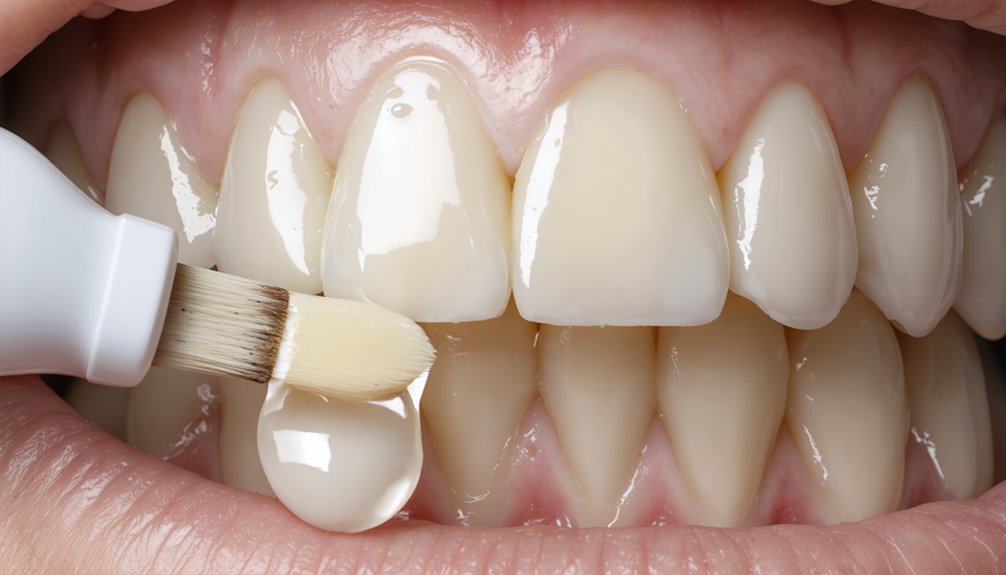
While achieving a brighter smile remains a top priority for many patients, protecting your enamel during the whitening process requires evidence-based strategies that balance aesthetic goals with long-term dental health. Home whitening protocols should incorporate fluoride treatments before and after application to remineralize enamel and reduce sensitivity.
You’ll maximize safety by using custom dentist trays that guarantee even gel distribution while preventing gum contact. Professional whitening methods offer controlled peroxide concentrations tailored to your enamel thickness, minimizing damage risk.
Avoid abrasive combinations like baking soda with lemon juice, which erode protective layers. Instead, select products containing potassium nitrate to reduce bleaching sensitivity. Limit treatment frequency to recommended intervals, and maintain a calcium-rich diet with dairy products to strengthen enamel between sessions, safeguarding sustainable results.
The Importance of Customized Treatment Plans
Because every patient presents unique dental anatomy, staining patterns, and sensitivity thresholds, standardized whitening approaches frequently produce suboptimal results or unnecessary complications. Your dentist’s thorough assessment examines medical history, existing dental work, and aesthetic goals to design an individualized protocol.
Custom mold fabrication guarantees precise tray fitting that matches your bite’s nuances, preventing gel leakage while delivering uniform bleaching solution coverage. This personalized approach addresses your specific risk factors and sensitivity levels through controlled gel concentrations and protective barriers.
Long-Term Benefits of Enamel Preservation
When administered through professional protocols, enamel-friendly whitening systems trigger natural remineralisation processes that actually strengthen your tooth structure beyond its pre-treatment state. Your saliva’s calcium and phosphate ions facilitate this recovery within 24-48 hours, while fluoride and calcium phosphate accelerants optimize enhanced enamel durability.
Professional whitening protocols activate your enamel’s natural strengthening mechanisms, delivering structural improvements that exceed your teeth’s original condition through accelerated remineralisation.
Balanced functional gains include:
- Sustained microhardness stability – Professionally supervised whitening prevents long-term deterioration, with controlled concentrations preserving enamel strength despite initial microhardness reduction
- Extended aesthetic results – Customized treatments yield shade improvements lasting six months to three years through proper maintenance protocols
- Reduced dental vulnerability – Strengthened enamel acts as a superior barrier against decay and staining, while pre-treatment assessments prevent unsafe application on compromised areas
Your investment in professional systems delivers both immediate cosmetic enhancement and structural fortification that surpasses over-the-counter alternatives.
Maintaining Results While Protecting Tooth Integrity
Your whitening results depend on strategic post-treatment protocols that simultaneously preserve enamel integrity and prevent rapid shade regression. You’ll achieve optimum whitening outcomes by implementing scheduled maintenance intervals that allow natural remineralization between sessions.
Incorporate low-abrasive dentifrices containing sodium bicarbonate to sustain brightness without compromising surface structure. During the critical rehydration phase, eliminate stain-enhancing foods while saliva naturally restores mineral content depleted by treatment. You can prevent enamel demineralization mitigation failure by spacing applications according to professional guidelines rather than continuous use.
Apply sensitivity-reducing toothpastes containing remineralizing agents to reinforce enamel composition. Your maintenance protocol should prioritize sustained oral hygiene practices that protect structural integrity while extending aesthetic results. This controlled approach prevents the erosion risks associated with aggressive retreatment cycles.
Frequently Asked Questions
Can Children or Teenagers Safely Use Enamel-Friendly Whitening Systems?
Teenagers over 14 can safely use enamel-friendly systems with supervised use by your pediatric dentist. You’ll achieve gradual whitening while protecting developing enamel. However, you shouldn’t pursue whitening if you’re under 13, as your tooth structures remain vulnerable.
How Long Do Enamel-Safe Whitening Results Typically Last?
Your smile’s brightness mirrors your commitment—enamel-safe results last six months to three years. Whitening duration considerations depend on treatment type and proper teeth maintenance. You’ll control longevity through consistent oral hygiene, dietary choices, and strategic touch-ups every twelve to twenty-four months.
Are Enamel-Friendly Whitening Systems Safe During Pregnancy or Breastfeeding?
Most dentists recommend postponing whitening until after pregnancy and breastfeeding due to limited safety data, potential dental sensitivity from hormonal changes, and unknown effects on oral microbiome. You’ll want to consult your dentist for personalized guidance first.
Do Enamel-Safe Whitening Products Work on Dental Veneers or Crowns?
No, enamel-safe whitening products don’t alter dental veneers or crowns since these restorations are non-porous. While crown whitening safety isn’t a concern, you’ll need proper dental veneers care through professional cleaning, not bleaching, to maintain their appearance.
What Foods Should Be Avoided Immediately After Enamel-Friendly Whitening Treatments?
You’ll need to avoid citrus fruits, dark berries, tomato-based sauces, and hot beverages for 24-48 hours post-treatment. These foods contain acids and pigments that’ll penetrate your temporarily porous enamel, causing staining and sensitivity.