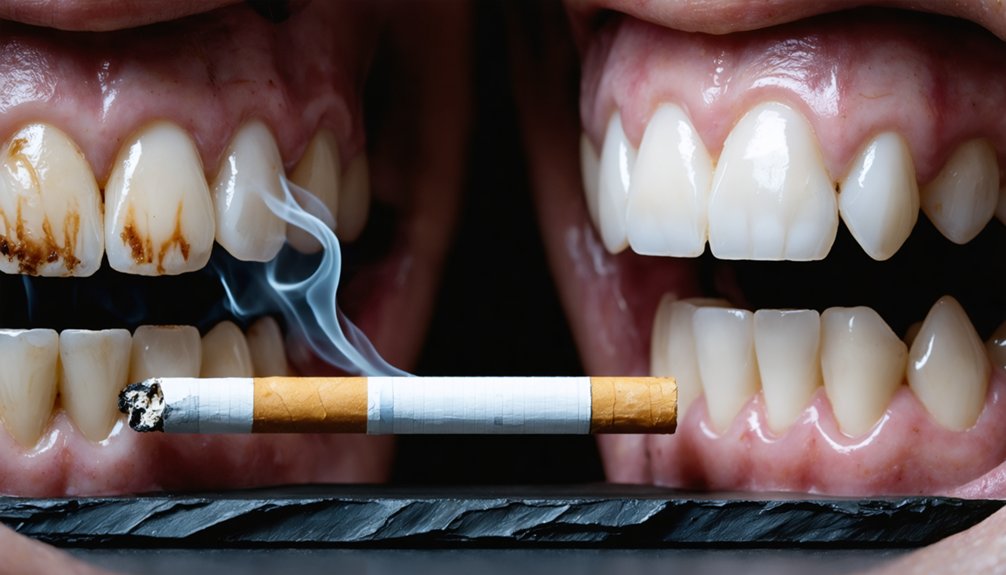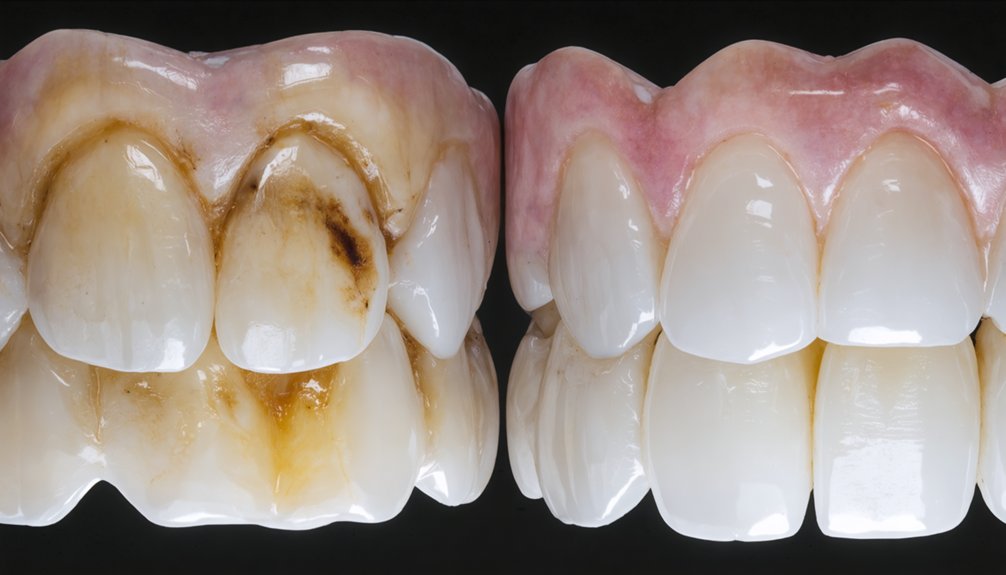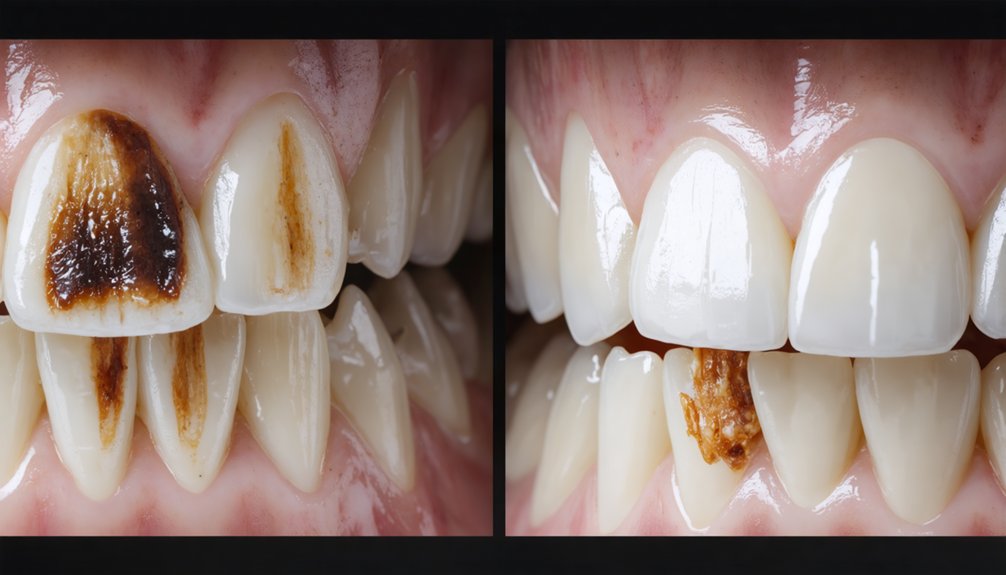
Smoking greatly undermines your teeth whitening efforts through multiple mechanisms. Nicotine and tar penetrate deep into your enamel’s porous structure, creating stubborn stains that resist whitening agents. You’ll experience less dramatic results compared to non-smokers, with discoloration returning within just 3-6 months post-treatment. The acidic environment from tobacco erodes your enamel, exposing yellowish dentin and increasing sensitivity during whitening procedures. Additionally, reduced saliva production accelerates plaque accumulation, which traps staining compounds and creates persistent discoloration. Understanding these specific challenges can help you optimize your whitening strategy.
Key Takeaways
- Smoking causes deep enamel staining as nicotine and tar penetrate porous tooth surfaces, making whitening less effective than for non-smokers.
- Tobacco creates acidic conditions that erode enamel, exposing yellowish dentin and limiting achievable brightness from whitening treatments.
- Dry mouth from reduced saliva allows rapid plaque buildup, trapping tobacco residue and causing whitening results to fade within 3-6 months.
- Smokers experience heightened tooth sensitivity and gum irritation during whitening due to exposed dentin and chemical interactions with tobacco compounds.
- Professional whitening treatments significantly outperform over-the-counter products for smokers, though results remain modest compared to non-smokers.
How Nicotine and Tar Create Stubborn Stains on Teeth
When you inhale cigarette smoke, two primary culprits—nicotine and tar—immediately begin altering your tooth enamel’s appearance through distinct chemical processes. Nicotine oxidizes upon saliva contact, transforming from colorless to yellow and penetrating enamel’s microscopic pores like dye saturating fabric.
Meanwhile, tar—a dark, adhesive substance—clings to rough enamel surfaces, accumulating layer-by-layer with each cigarette and bonding with dental plaque to deepen stains from yellow to brown-black. Your enamel’s natural porosity traps these compounds deep within its structure, making tooth enamel discoloration resistant to regular brushing.
This continuous chemical assault creates an environment conducive to smoking induced tooth decay, as tar generates bacterial films while reduced saliva flow fails to neutralize these processes. Evidence shows smokers experience nearly double the moderate-to-severe discoloration rate compared to non-smokers.
The Impact of Enamel Erosion From Smoking
As tobacco smoke repeatedly contacts your teeth, it initiates a progressive deterioration of enamel that extends far beyond surface staining. The heat, nicotine, and tar create an acidic environment that breaks down your enamel’s mineral structure, increasing enamel porosity.
Tobacco smoke doesn’t just stain—it systematically dismantles your enamel’s protective mineral structure through heat, chemicals, and relentless acid exposure.
This compromised barrier exposes underlying dentin, triggering sensitivity to temperature and touch while making your teeth vulnerable to bacterial invasion.
The effects of smoking on enamel directly sabotage whitening efforts. Porous enamel absorbs stains deeper into tooth layers, where bleaching agents can’t effectively penetrate. Rough, eroded surfaces trap discoloration permanently, creating uneven whitening results.
Even after professional treatment, ongoing erosion accelerates new stain formation. You’ll face a frustrating cycle: weakened enamel resists whitening while simultaneously becoming more susceptible to the very discoloration you’re trying to eliminate.
Dry Mouth and Plaque Accumulation in Smokers
Beyond enamel degradation, smoking triggers a cascade of salivary dysfunction that fundamentally compromises your oral environment’s self-cleaning mechanisms. Tobacco chemicals directly inhibit your salivary glands, reducing saliva flow that normally neutralizes acids and removes food particles. This altered saliva composition effects create persistent xerostomia (dry mouth), accelerating bacterial proliferation and plaque accumulation on tooth surfaces.
Your compromised saliva can’t effectively wash away staining compounds, allowing them to penetrate enamel faster. Plaque traps tobacco residue, creating stubborn discoloration that resists whitening treatments. You’ll likely experience rapid re-staining within 3-6 months post-whitening versus 12-24 months in non-smokers.
Smoking cessation benefits include restored salivary function within weeks, reducing plaque formation rates by 40-50%. This normalization enhances whitening longevity and reduces your professional cleaning frequency requirements greatly.
Initial Whitening Treatment Results for Smokers
These salivary and structural complications directly impact how your teeth respond to whitening interventions. Your initial whitening outcome will likely show less dramatic improvements compared to non-smokers, as years of tobacco exposure weaken enamel structure and hinder hydrogen peroxide penetration. The porous enamel exposes yellowish dentin, limiting achievable brightness levels from the outset.
Your stain removal effectiveness faces significant challenges since nicotine and tar penetrate deeply into enamel, resisting standard whitening agents. Professional in-office treatments with stronger concentrations and advanced technology deliver your most noticeable results against embedded tobacco discoloration. Custom take-home kits with professional-grade gel offer substantial improvement, though you’ll typically require touch-ups sooner than non-smokers. Expect modest gains initially, with professional methods consistently outperforming over-the-counter options for tobacco-stained teeth.
Why Whitening Results Fade Faster for Smokers
Your whitening results deteriorate more rapidly as a smoker due to continuous exposure to nicotine and tar, which redeposit onto enamel surfaces within days of treatment. The chemical composition of tobacco smoke compromises enamel integrity, creating a more porous structure that absorbs pigments faster than healthy enamel.
Clinical studies demonstrate that while non-smokers maintain whitening outcomes for 6 months to 2 years, you’ll likely experience significant color relapse within 3-6 months, with visible yellowing often appearing within weeks of resumed smoking.
Nicotine and Tar Re-Staining
When you smoke after whitening your teeth, nicotine and tar begin re-staining the enamel almost immediately, drastically shortening the lifespan of your treatment results. This immediate re-staining occurs because these chemical compounds bond aggressively to freshly whitened surfaces, leading to limited whitening persistence compared to non-smokers.
Timeline of Re-Staining Effects:
- Weeks 1-2: New yellow discoloration appears as colorless nicotine oxidizes and tar deposits accumulate on treated enamel
- Months 1-3: Blotchy patterns emerge where porous areas absorb stains faster than surrounding tooth surfaces
- Month 12: Professional whitening results completely fade for smokers, versus three-year duration for non-smokers
- Ongoing: Weakened, rougher enamel texture traps additional staining particles, accelerating discoloration beyond pre-treatment levels
Reduced Color Stability Duration
If you smoke regularly, your whitening results will fade considerably faster than those of non-smokers—often within six months compared to up to three years for patients who don’t use tobacco. Your smoking exposure duration directly accelerates restoration discoloration rates, with studies showing you’re 2-3 times more likely to develop yellow or brown stains post-treatment.
Cigarette smoke causes clinically unacceptable color changes (ΔE > 3.3) across all restorative materials, including resin composites, ceramics, and porcelain-fused-to-metal crowns. You’ll face shortened intervals between maintenance sessions because nicotine and tar penetrate deep into enamel immediately after whitening. This constant reintroduction of staining agents compromises your color stability metrics, requiring more frequent professional interventions.
Cessation remains the most effective strategy for extending your whitening longevity and maintaining brightness levels.
Enamel Damage Accelerates Darkening
Beyond the shortened timeline of color stability, structural changes to your tooth enamel fundamentally alter how whitening treatments perform and persist. Smoking increases enamel permeability, creating pathways for rapid stain reabsorption that compromise your treatment investment.
How Enamel Damage Drives Rapid Discoloration:
- Porous Structure Formation – Tobacco chemicals create microscopic channels in enamel, allowing nicotine and tar to penetrate deeper than surface-level stains, establishing discoloration persistence that resists standard whitening protocols.
- Dentin Exposure Acceleration – Erosion exposes the underlying yellowish dentin layer, which absorbs stains more readily than intact enamel.
- Surface Roughness Amplification – Degraded enamel texture traps particles more effectively, accelerating visible darkening.
- Compromised Protective Barrier – Weakened enamel fails to shield against continuous tobacco exposure, necessitating increasingly frequent interventions.
Tooth Sensitivity and Health Concerns During Whitening
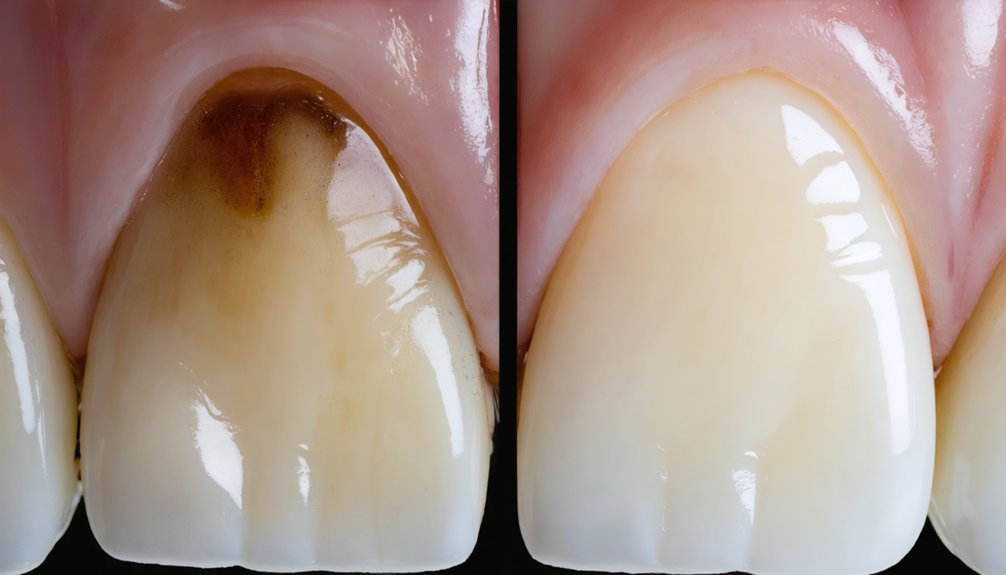
If you’re a smoker considering teeth whitening, you’ll likely experience heightened sensitivity during and after treatment due to your already-compromised enamel.
Whitening agents like hydrogen peroxide can penetrate more deeply through smoking-damaged enamel, reaching the dentin layer and triggering sharper, more persistent discomfort than non-smokers typically experience.
Additionally, your inflamed gum tissues—a direct result of tobacco use—face increased irritation when exposed to whitening products, creating a compounded risk that can make the treatment process considerably more uncomfortable.
Heightened Sensitivity in Smokers
When you smoke regularly, your tooth enamel gradually weakens, compromising the protective barrier that shields the underlying dentin layer. This degradation creates an increased pain response during whitening treatments, as hydrogen peroxide penetrates more deeply into vulnerable tooth structures. Diminished protective factors from tobacco use leave you particularly susceptible to discomfort.
Your heightened sensitivity manifests through several mechanisms:
- Nicotine and tar compounds irritate nerve endings in exposed dentin, amplifying pain signals during chemical whitening
- Reduced saliva production eliminates natural buffering against bleaching agents, prolonging irritant contact
- Enamel permeability increases post-treatment, allowing chemical penetration that triggers pronounced discomfort
- Plaque accumulation from smoking traps whitening agents unevenly, causing localized sensitivity spikes
Evidence-based protocols require customized approaches to manage your unique vulnerability profile during cosmetic dental procedures.
Gum Irritation Risk Factors
While whitening treatments temporarily increase gum permeability in all patients, your tobacco use compounds this vulnerability through direct chemical irritation and compromised healing capacity. Nicotine constricts blood vessels, creating a compromised immune response that prevents your gums from defending against bacterial invasion through bleaching-induced micro-wounds. You’ll experience intensified inflammation as hydrogen peroxide interactions with smoke compounds accelerate tissue damage.
Delayed wound healing becomes your primary concern when continuing tobacco use post-whitening. Your body’s natural repair mechanisms can’t effectively regenerate gum tissue while nicotine suppresses immune function and reduces blood flow. This creates infection vectors at bleaching sites, accelerating periodontal disease progression. Professional treatments require strict smoking cessation during recovery periods to prevent chemical burns from worsening and receding gums from developing permanently.
Strategies to Maintain Whitening Results While Smoking
Although smoking considerably undermines teeth whitening outcomes, you can implement targeted maintenance strategies to extend your results. Evidence-based lifestyle management requires deliberate intervention to counteract nicotine and tar penetration.
Your maintenance protocol should include:
- Tobacco cessation or reduction – Cutting back cigarette consumption substantially slows enamel weakening and stain recurrence, with complete cessation offering ideal longevity of several months
- Professional care intervals – Schedule cleanings every 3-6 months to remove stubborn tobacco stains more efficiently than at-home products
- Post-treatment compliance – Abstain from smoking 24-48 hours after whitening when enamel remains porous and susceptible to rapid re-staining
- Enhanced oral hygiene – Use electric toothbrushes with whitening toothpaste twice daily, combined with antibacterial mouthwash to combat reduced saliva production and bacterial accumulation
Frequently Asked Questions
Can I Use Whitening Toothpaste if I Smoke Cigarettes Daily?
You can use whitening toothpaste while smoking daily, but you’ll experience reduced whitening effectiveness due to persistent tar and nicotine exposure. It’ll temporarily address surface discoloration, though you’ll need frequent reapplication and professional treatments for meaningful results.
How Long Should I Wait to Smoke After Professional Whitening?
You should wait at least 24-48 hours after professional whitening before smoking. This period limits whitening treatment duration damage and allows enamel recovery. Consult your dentist for guidance on extending results and minimizing stain recurrence from tobacco exposure.
Are Vaping Devices Less Harmful to Teeth Whitening Than Cigarettes?
Cigarettes show 2-3 times higher stain likelihood than baseline. Vaping device usage lacks combustion tar, suggesting reduced whitening impairment compared to cigarettes. However, nicotine exposure still risks discoloration. You’ll maintain better results by avoiding both substances entirely.
Will Quitting Smoking Reverse Existing Tobacco Stains on My Teeth?
Quitting smoking won’t fully reverse existing stains—teeth discoloration severity depends on your smoking cessation timeline and professional intervention. You’ll need cleanings or bleaching to remove embedded tar, but cessation prevents new staining and improves whitening effectiveness considerably.
Do Electric Cigarettes Cause the Same Whitening Problems as Traditional Ones?
Where there’s smoke, there’s fire—but e-cigarettes aren’t identical. You’ll experience less staining since device performance impacts tar exposure, though nicotine absorption levels still cause discoloration. Research remains limited, so you’re facing uncertain long-term whitening challenges compared to traditional cigarettes.