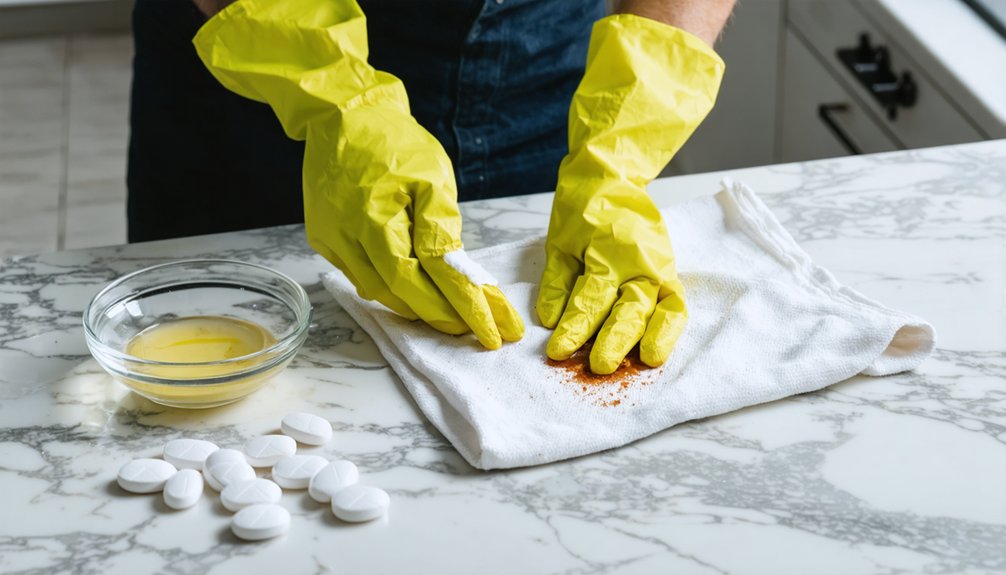
You’ll need different approaches depending on the medication type, as chemical reactions vary tremendously. For iodine stains, apply 75% rubbing alcohol or sodium thiosulfate solution directly to the affected area. Treat mercurochrome with diluted bleach on white fabrics or specialized color removers on colored items. Remove gentian violet using baking soda paste or rubbing alcohol, while hydrogen peroxide stains require cold water flushing followed by Dawn dishwashing liquid application. Enzyme-based medication stains demand targeted enzyme cleaners with 15-30 minute dwell times. The guide below provides detailed protocols for each stain type.
Key Takeaways
- Treat blood and protein-based medication stains with cold water and enzyme detergent to prevent heat from setting them permanently.
- Remove iodine stains using 75% rubbing alcohol or sodium thiosulfate solution, working from edges inward before rinsing thoroughly.
- Eliminate mercurochrome stains with diluted bleach on whites or oxygen-based bleach on colored fabrics after testing first.
- Address hydrogen peroxide discoloration by flushing with cold water, then applying Dawn dish soap mixture for ten minutes.
- Apply undiluted enzyme cleaner directly to enzyme-based medication stains, allowing 15-30 minutes dwell time before laundering.
Understanding Different Types of Medication Stains
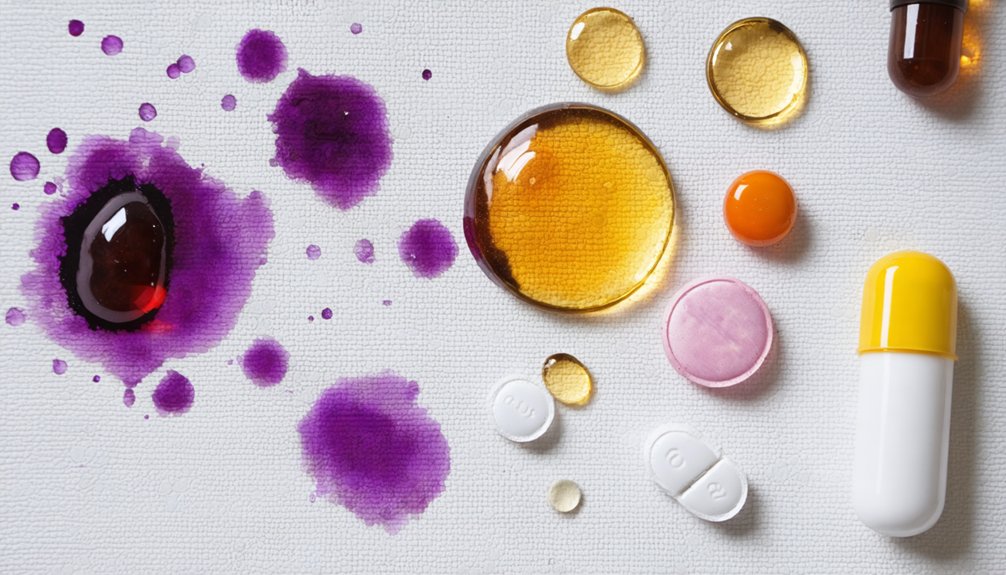
Blood stains present one of the most challenging laundry issues in healthcare settings, appearing frequently on hospital linens, bed sheets, and surgical gowns. You’ll find these protein-based marks solidify when exposed to high temperatures, causing permanent fiber adherence and deformation.
Blood stains solidify under heat, making them among healthcare laundry’s most persistent challenges requiring careful low-temperature treatment protocols.
Identifying protein content helps you determine the correct treatment approach for blood, body fluids, pus, and mucus. These secretions penetrate deeply into fibers and carry bacterial contamination risks.
Yellow medication stains react with chlorine bleaches, creating oxidative brown discoloration that’s difficult to reverse. Antiseptic solutions like mercurochrome and gentian violet bind firmly to natural fibers, while polymyxin ointments and benzoyl peroxide gels rank among the most stubborn chemical stains.
Acrylic fabric treatment requires specialized protocols depending on the specific medication compound.
Removing Iodine Stains From Fabric
For rapid iodine stain removal, you’ll achieve best results by applying ethyl alcohol directly to the affected area using a clean cotton pad, dabbing repeatedly until the discoloration lifts.
If the stain persists after alcohol treatment, you can apply an enzyme-based detergent solution and allow it to penetrate the fabric fibers for several hours before laundering.
Both methods work effectively on povidone-iodine formulations commonly found in antiseptic solutions and surgical scrubs.
Initial Treatment With Alcohol
When iodine contacts fabric, rubbing alcohol (75% medical-grade) serves as an effective first-line treatment due to its ability to break down iodine’s molecular structure. This solvent demonstrates superior chemical resistance while promoting stain dissolution through targeted molecular interaction.
Application Protocol:
- Apply rubbing alcohol directly onto the iodine-stained area without pre-rinsing
- Use a clean, white cloth to dab the stain, transferring dissolved iodine particles to the absorbent material
- Work from the stain’s outer edge inward to prevent peripheral spreading
- Avoid rubbing motions that compromise fabric integrity and expand the affected area
- Follow immediately with cold water rinse and standard laundering cycle
Test alcohol on an inconspicuous fabric section first to verify compatibility. This method provides you with rapid stain intervention, maximizing removal success before iodine permanently bonds with textile fibers.
Enzyme Solution Application Method
Although alcohol-based treatments effectively address fresh iodine stains, sodium thiosulfate provides a chemically superior alternative through its direct neutralization of iodine molecules. Dissolve one teaspoon in half a cup of warm water, ensuring complete crystal dissolution before application. Test the solution on a hidden area first for fabric color protection—this prevents unexpected discoloration on visible surfaces.
Apply the solution directly to your water-diluted stain using a dampened pad. Blot outward from the center, avoiding rubbing motions that embed iodine deeper. Flush thoroughly with cold water after treatment. Solution reapplication frequency depends on stain persistence; repeat the complete process if discoloration remains. Prepare fresh sodium thiosulfate for each treatment cycle, as aged solutions lose neutralizing effectiveness. This method works on acetate, cotton, polyester, wool, and synthetic carpets.
Treating Mercurochrome Stains on Clothing
For stubborn mercurochrome stains on colored fabrics, you’ll need specialized commercial color removers designed for dye-based medications, as standard detergents won’t break down the chromophore structure.
If you’re treating white cotton or light-colored blends, a diluted bleach soak offers an effective alternative: mix 3-5 ml of chlorine bleach diluted 15-20 times in cold water and soak the garment for 2-4 hours.
Always test your chosen method on an inconspicuous area first, since both commercial removers and bleach solutions can alter fabric colorfastness.
Professional Removers for Colors
Several specialized stain removal products target mercurochrome’s persistent pigmentation without compromising fabric integrity. These professional formulations address the antiseptic’s unique binding properties through controlled pre treatment techniques that surpass standard household chemical applications.
Color-Safe Professional Treatment Options:
- Oxygen-based bleach powders safely penetrate fabric fibers without color damage, making them ideal for delicate garments
- Specialty stain removers formulated for colored stains effectively break down mercurochrome compounds at molecular levels
- Workbench application allows precise control over treatment concentration and contact time before laundering
- Heat-sensitive fabric solutions provide alternatives when high-temperature washing isn’t feasible
- Targeted formulations account for specific fiber compositions, ensuring compatibility with synthetic and natural materials
You’ll achieve most effective results by selecting products matching your fabric type and following manufacturer-specified application protocols precisely.
Diluted Bleach Soaking Method
When commercial stain removers prove insufficient for stubborn mercurochrome discoloration, a systematic multi-step approach offers reliable results for bleach-safe fabrics. You’ll need to confirm your garment’s bleach compatibility before proceeding.
Prepare your diluted bleach solution by mixing 3-5 milliliters of chlorine bleach with 15-20 times that volume in cold water—this concentration maximizes effectiveness of diluted bleach solution while minimizing fabric damage. Submerge the garment completely and turn it frequently during the first 30 minutes to guarantee even treatment. Determining required soaking duration depends on stain severity, typically ranging from 2-4 hours. Monitor the stain’s progress periodically.
Once the discoloration lifts, rinse the fabric thoroughly with clean water. This method should follow initial detergent and vinegar treatments for ideal results.
Eliminating Gentian Violet Stains
Gentian violet, a topical antiseptic dye used to treat fungal infections and oral thrush, leaves distinctive purple stains on skin that can persist for several days. You’ll achieve ideal removal through gentle scrubbing techniques combined with natural skin regeneration:
Gentian violet’s stubborn purple staining requires patient removal strategies that work with your skin’s natural exfoliation process rather than against it.
- Baking soda paste: Mix with water and rub affected areas to neutralize pigment molecules
- Rubbing alcohol application: Soak cotton pads in 70% isopropyl alcohol or vodka, then wipe stained skin thoroughly
- Mild exfoliation: Use pumice stone sparingly to accelerate cellular turnover without causing irritation
- Fine sandpaper technique: Apply light pressure followed by moisturizing hand cream
- Regular washing: Enhance natural exfoliation through frequent handwashing with dish soap
Stains typically fade within one week through consistent treatment. Test remedies on small areas first to prevent adverse reactions.
Getting Rid of Hydrogen Peroxide Stains
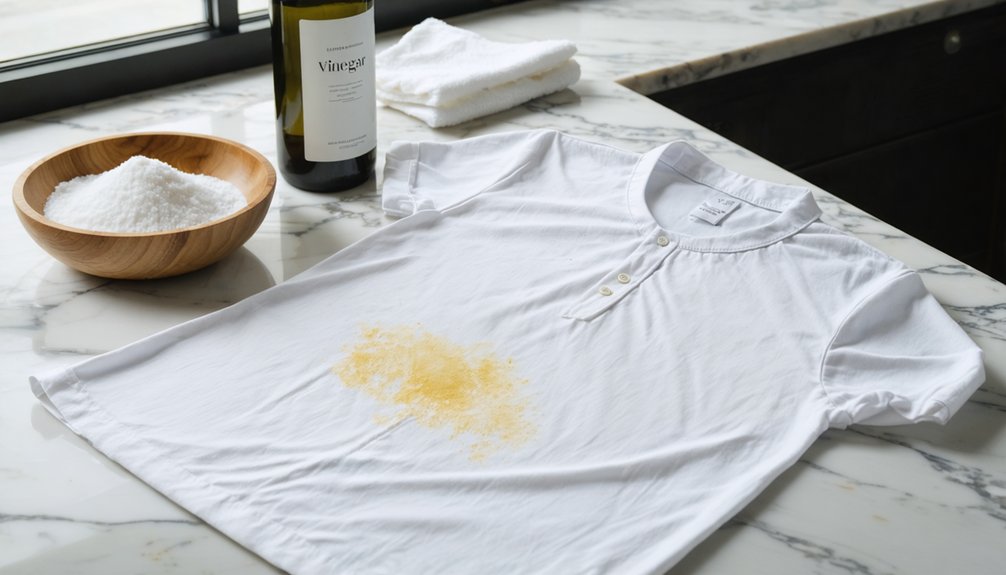
Hydrogen peroxide ironically creates its own stains despite being a powerful cleaning agent, particularly when blood, organic matter, or certain medications contact fabrics and undergo oxidation reactions that leave brownish or yellowish discoloration.
For preventing hydrogen peroxide discoloration, you’ll need to act immediately by flushing the affected area with cold water for several minutes. Diluting hydrogen peroxide concentration through thorough rinsing stops the oxidation process before permanent color changes occur.
Apply a mixture of one part Dawn dishwashing liquid with two parts water directly to the stained area, gently working it through the fibers with your fingers. Let it dwell for 10 minutes before laundering as usual.
For set-in peroxide stains, soak the garment in cool water with enzyme-based detergent for several hours before washing.
Handling Enzyme-Based Medication Stains
Certain medications contain enzymes or enzyme-triggering compounds that create persistent stains on clothing, bedding, and medical textiles through biological catalysis rather than simple pigment transfer. Evaluating medication stain severity determines your enzyme-based cleaning process approach.
Treatment Protocol:
- Identify the stain composition – protein-based enzyme medications require protease cleaners, while lipid-soluble formulations need lipases
- Apply targeted enzyme cleaner directly to the affected area using undiluted concentration for stubborn pharmaceutical residues
- Allow 15-30 minute dwell time for enzymatic hydrolysis to break molecular bonds at the stain’s core
- Avoid heat exposure before treatment, as it denatures proteins and sets stains permanently into fabric fibers
- Rinse thoroughly with cold water after the catalytic breakdown completes, then launder normally
Multiple enzyme blends handle complex pharmaceutical formulations most effectively.
Removing General Antiseptic Solution Stains
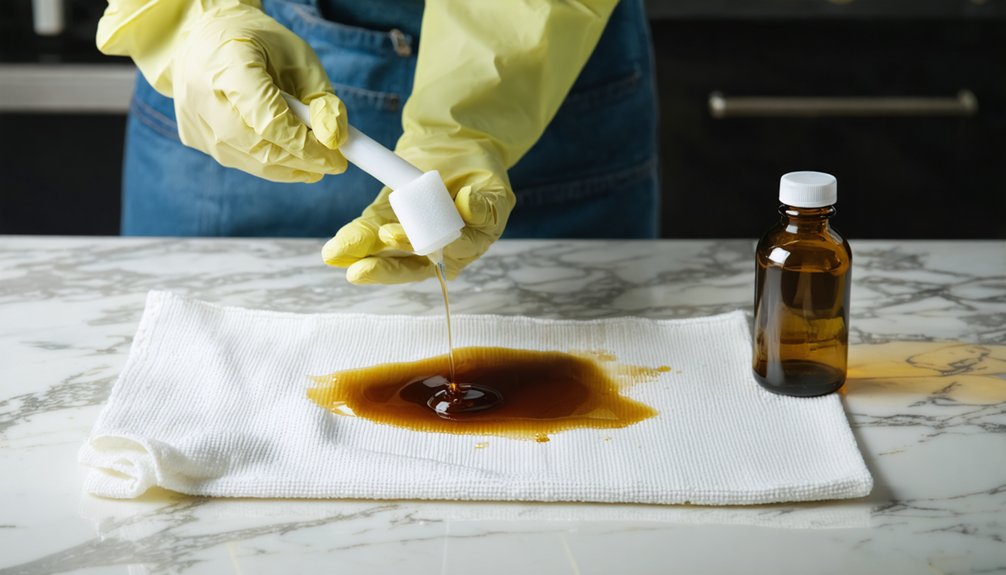
Antiseptic solutions create chemically complex stains that demand immediate intervention and substance-specific treatment protocols. You’ll need to identify whether you’re neutralizing chemical residues from acidic or alkaline antiseptics—apply vinegar for acidic compounds, baking soda paste for alkaline solutions. Blot excess immediately with clean cloth; never rub, as this embeds staining agents deeper into fabric fibers.
After neutralization, rinse thoroughly with cold water—hot water permanently sets these stains. For iodine-based antiseptics, you’ll achieve ideal results using sodium thiosulfate solution (1 teaspoon per 1/2 cup water) with several ammonia drops. Hydrogen peroxide treatments require 3% concentration plus 1-2 ammonia drops, maintaining moisture for one hour.
Complete treatment by washing garments in cold water with detergent, safely disposing chemical waste according to local regulations.
Essential Stain Removal Supplies and Precautions
Before treating any medication stain, you’ll need to assemble the proper supplies and understand critical safety protocols that protect both your fabrics and your health. Proper pretreatment methods require specific tools and cleaning agents tailored to medication chemistry.
Essential supplies include:
- Clean white cloths and soft-bristle brushes for controlled agitation
- White vinegar and baking soda as acid-base treatment options
- Enzyme cleaners like Norwex for protein-based medication residues
- Nitrile gloves and spray bottles for safe chemical handling
- Cold water and dish soap for initial oily residue removal
Always test removers on inconspicuous fabric areas first. Avoid hot water on protein stains, as heat permanently sets molecular bonds. Work in well-ventilated spaces when using commercial products. Effective storage techniques require keeping all stain removers away from children and pets in labeled containers.
Frequently Asked Questions
Can Medication Stains Be Removed From Carpets and Upholstery?
Medication stains can vanish like magic when you’re armed with proper spot cleaning techniques. You’ll achieve ideal results using d-limonene-based gels, enzyme cleaners, or vinegar solutions. For stubborn residues, you’ll want professional carpet cleaning services to prevent permanent damage.
How Do I Remove Old Medication Stains That Have Been Set?
Soak the set medication stain in cold water for several hours, then apply an enzyme cleaner directly to break down protein residues. Let it sit 30 minutes before laundering; you’ll likely need repeat applications for complete removal.
Will Medication Stains Damage Washing Machines or Dryers?
No, you won’t experience machine damage from medication stains—they’re chemically inert to washer components. However, drying effects can permanently set untreated stains through heat exposure, so you’ll need complete stain removal before using your dryer.
Can Natural Remedies Remove Medication Stains as Effectively as Chemicals?
Natural cleaning agents like hydrogen peroxide and baking soda can match enzyme-based detergents’ effectiveness on medication stains when you apply proper dwell times and agitation. You’ll achieve ideal results combining both approaches rather than relying on either alone.
What Should I Do if Medication Stains My Skin or Hands?
When discoloration occurs, you’ll want immediate control: rinse within 3 minutes using cold water under 25°C, then use soap and water. Apply stain remover immediately—rubbing alcohol or sodium thiosulfate solution effectively neutralizes iodine-based pigmentation.