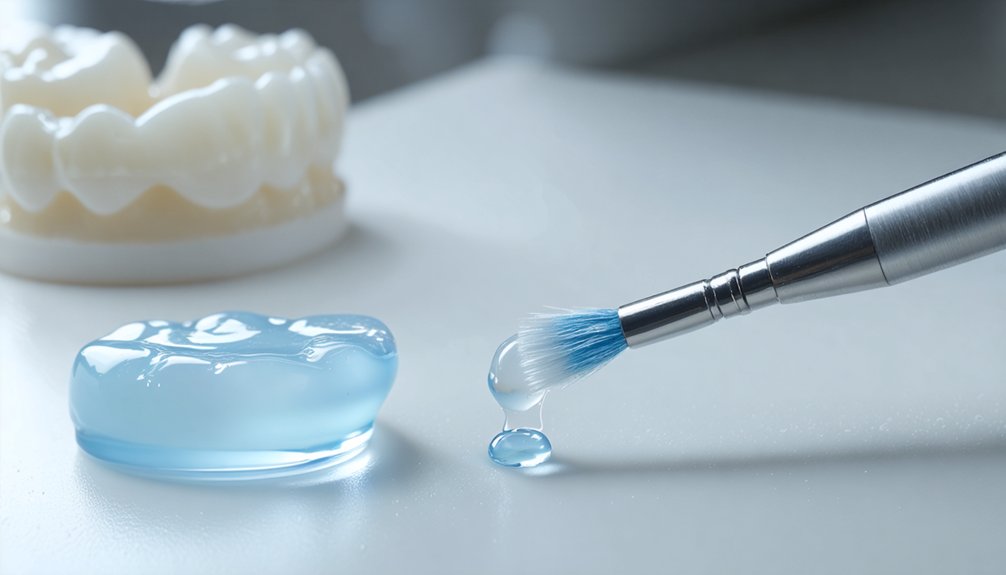
For sensitive teeth, you’ll want whitening gels containing 10% carbamide peroxide or 3-6% hydrogen peroxide combined with potassium nitrate or stannous fluoride as desensitizing agents. These lower concentrations effectively remove stains while minimizing peroxide penetration into dentin tubules that trigger nerve irritation. Professional formulations with custom-fitted trays provide superior gum protection compared to over-the-counter strips that often leak onto soft tissues. Dentist-supervised treatments allow for concentration calibration based on your specific enamel condition and sensitivity threshold, ensuring you’ll achieve noticeable whitening without compromising comfort throughout the process.
Key Takeaways
- Choose formulations with 10% carbamide peroxide or 3-6% hydrogen peroxide to minimize sensitivity while achieving effective whitening results.
- Look for gels containing potassium nitrate or stannous fluoride, which block nerve signals and seal exposed dentin tubules.
- Professional treatments offer customized concentrations, protective barriers, and real-time monitoring to prevent gingival irritation and discomfort.
- Avoid concentrations above 20% hydrogen peroxide, as they increase sensitivity risk by 67% compared to lower-strength formulations.
- Use custom-fitted trays to prevent gel leakage onto gums and ensure precise application away from the gumline.
Understanding Why Whitening Products Cause Tooth Sensitivity
The primary mechanism behind whitening-induced sensitivity involves peroxide compounds penetrating enamel and dentin to reach the tooth’s pulp chamber. This process occurs within 5-15 minutes of exposure, irritating nerve endings and triggering immediate discomfort.
Peroxide compounds reach the tooth’s pulp chamber within 5-15 minutes, directly irritating nerve endings and causing immediate sensitivity.
Higher peroxide concentrations—whether in professional treatments or OTC strips—correlate directly with increased sensitivity complaints. You’ll experience heightened vulnerability if you have thin or worn enamel, as dentin tubules become more exposed to active agents.
Preexisting conditions like cavities, gum recession, or cracked teeth amplify peroxide penetration to vulnerable areas. Minimizing immediate irritation requires understanding that bleaching agents oxidize gum tissue and can leak from ill-fitting trays.
Reversing enamel erosion demands discontinuing abrasive products and overuse patterns that compromise your enamel’s protective barrier, leaving dentin permanently exposed to external stimuli.
Key Ingredients That Reduce Discomfort During Whitening
Fortunately, modern whitening formulations incorporate specific compounds designed to counteract peroxide-induced nerve irritation while maintaining bleaching efficacy. These active ingredients work through distinct mechanisms to protect your enamel and reduce discomfort.
Primary desensitizing agents include:
- Potassium nitrate – Nerve desensitization compounds that block pain signal transmission along dental pathways. Clinical studies confirm effectiveness when applied twice daily before whitening treatments, specifically targeting peroxide-related sensitivity.
- Stannous fluoride – Tubule blocking agents that seal exposed dentin channels while strengthening enamel. Professional-grade varnishes (up to 5% sodium fluoride) provide relief lasting eight weeks.
- Lower peroxide concentrations – Carbamide peroxide at 16% or hydrogen peroxide at 5.3-6.5% considerably reduces sensitivity risk compared to professional-strength formulations (35-40%), while delivering gradual whitening results you can control.
Professional Versus Over-the-Counter Whitening Solutions
When selecting whitening treatments for sensitive teeth, you’ll encounter significant differences between professional and over-the-counter solutions in their formulation strength, application protocols, and protective measures.
Professional treatments provide customized peroxide concentrations tailored to your enamel condition and sensitivity threshold, while OTC products use fixed formulas that can’t account for individual oral health variations.
Dentist-supervised options include gum barriers and desensitizing agents that minimize tissue irritation, whereas self-administered products lack these safeguards and increase your risk of chemical burns or prolonged sensitivity.
Customized Treatment Strength Options
Selecting between professional and over-the-counter whitening solutions fundamentally alters your treatment’s peroxide concentration, application precision, and sensitivity management. Professional protocols deliver controlled results through:
- Concentration Calibration: Dentists adjust carbamide or hydrogen peroxide levels (typically 10-35%) based on your sensitivity threshold, whereas OTC products offer fixed 10-22% concentrations without personalization.
- Custom Tray Engineering: The proper fitting of custom trays prevents gel migration onto gingival tissue, eliminating 40% of sensitivity complaints associated with ill-fitting generic trays that cause uncontrolled peroxide exposure.
- Integrated Desensitization: Professional formulations incorporate potassium nitrate and fluoride directly into treatment protocols, blocking dentin tubules while strengthening enamel.
The durability of professional whitening extends beyond aesthetic outcomes—customized strength parameters guarantee you maintain therapeutic control while minimizing adverse neurological responses in dental pulp.
Safety Monitoring and Protection
Beyond concentration calibration and custom tray fabrication, professional whitening environments establish critical safety protocols that aren’t replicated in at-home applications. Your dentist conducts pre-treatment oral health assessments to verify that no decay, thinning enamel, or gum disease exists before applying optimized bleach concentration.
During treatment, professionals monitor for adverse reactions and provide immediate intervention if you experience discomfort or zingers. Protective equipment including eyewear shields your eyes, while dental dams isolate soft tissues from whitening agents. This real-time supervision enables customized application methods that adapt to your sensitivity levels.
FDA-approved formulations combined with equipment sterilization protocols minimize risks that OTC products can’t address. Post-treatment desensitizing agents and specific care instructions guarantee you maintain results while protecting compromised enamel throughout the whitening process.
Risk of Gum Irritation
Although both professional and over-the-counter whitening products contain peroxide-based bleaching agents, they differ markedly in their potential to cause gingival irritation. Professional treatments employ custom-fitted trays and protective barriers that minimize gel contact with soft tissues, while OTC strips and ill-fitting trays frequently allow leakage onto gums. Two-thirds of OTC users report transient gingival inflammation, compared to lower incidence with supervised procedures.
Key factors for managing gingival irritation and controlling chemical burns include:
- Application precision – Proper gel placement away from the gumline prevents direct peroxide exposure and reduces inflammation risk
- Exposure duration – Limited contact time decreases chemical burn severity and accelerates tissue recovery
- Product concentration – Lower peroxide formulations minimize irritation while maintaining efficacy for sensitive cases
Professional oversight guarantees appropriate treatment frequency and immediate intervention if symptoms develop.
Choosing the Right Peroxide Concentration for Sensitive Teeth
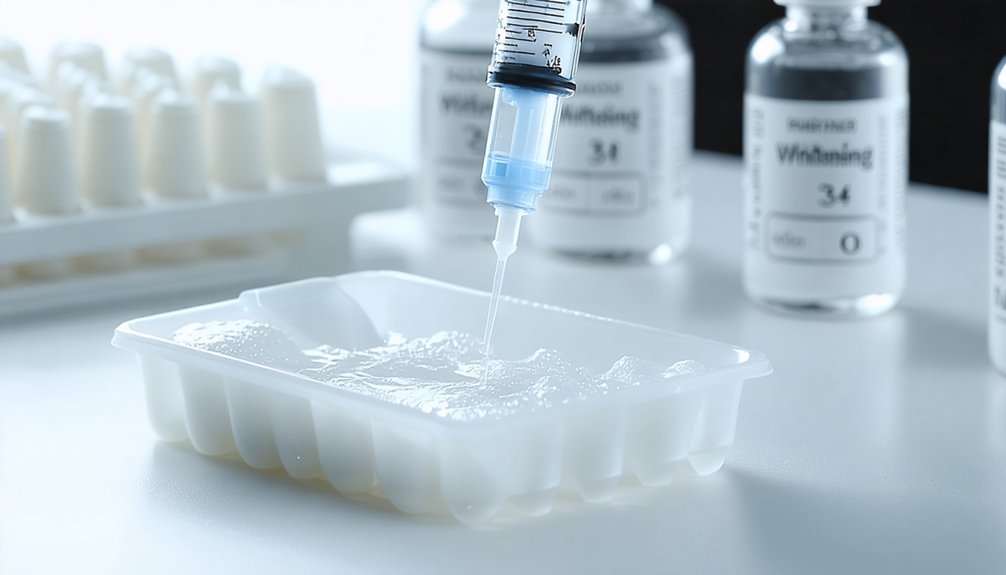
For sensitive teeth, you’ll achieve ideal results by selecting peroxide concentrations between 3%–6% carbamide peroxide or up to 3.5% hydrogen peroxide, as clinical evidence demonstrates these ranges considerably reduce sensitivity risk compared to higher concentrations.
Meta-analyses confirm that hydrogen peroxide levels above 20% increase sensitivity by 67% (p=0.04), while formulations at 6%–10% hydrogen peroxide provide effective whitening with minimal discomfort.
Understanding the potency difference between carbamide and hydrogen peroxide—where carbamide requires three times the concentration for equivalent results—enables you to make informed decisions that balance efficacy with comfort.
Lower Concentrations Reduce Discomfort
When selecting whitening products for sensitive teeth, peroxide concentration directly determines both efficacy and discomfort levels. Lower concentrations—typically 10% or less—significantly reduce sensitivity risk by minimizing peroxide penetration into dentin layers where nerve endings reside. Professional treatments using 40% concentrations present heightened sensitivity risks, making reduced-strength formulations essential for building tolerance through progressive reduction.
Optimal concentration selection requires consideration of:
- Starting concentration baseline – Begin with the lowest effective peroxide percentage to establish your sensitivity threshold
- Extended treatment duration – Lower concentrations achieve comparable results through longer application periods rather than chemical intensity
- Desensitizing agent incorporation – Potassium nitrate and sodium fluoride additions enhance tolerance when combined with reduced peroxide levels
Professional guidance guarantees you select concentrations aligned with your enamel thickness and existing sensitivity parameters.
Carbamide Vs Hydrogen Peroxide
Peroxide concentration matters less than peroxide type when managing sensitivity during whitening treatments. Carbamide peroxide breaks down gradually, releasing hydrogen peroxide at approximately one-third the strength, which reduces nerve irritation intensity. Clinical trials comparing 37% carbamide peroxide against 35% hydrogen peroxide demonstrate noticeably lower sensitivity with carbamide formulations while maintaining professional whitening results.
Hydrogen peroxide acts rapidly, releasing oxidative free radicals that penetrate dentin tubules and trigger immediate inflammation. Research shows 35% hydrogen peroxide caused sensitivity in all patients during in-office treatments. You’ll achieve better outcomes by selecting carbamide peroxide for customized whitening protocols, particularly if you’ve experienced previous sensitivity issues. The extended treatment duration required for carbamide peroxide delivers gentler results without compromising efficacy, giving you control over your whitening experience.
Preparing Your Teeth Before Starting Whitening Treatment
Before initiating any whitening treatment, you’ll need to establish a thorough preparation routine to minimize sensitivity and optimize results. The usage of anesthetic toothpastes containing desensitizing agents like Sensodyne or CPP-ACP should begin two weeks prior, as their efficacy is cumulative. These formulations block dentin tubules, preventing whitening gel from reaching tooth nerves.
Your pre-treatment protocol should include:
- Desensitizing toothpaste application twice daily with a soft-bristled brush using circular motions to minimize gum irritation and enamel abrasion
- Implementing desensitizing rinses with fluoride-based mouthwashes to strengthen enamel against peroxide-induced irritation
- Dietary modifications eliminating acidic foods, carbonated beverages, and temperature extremes that exacerbate dentin sensitivity
Schedule a dental consultation to address underlying conditions like cavities that contraindicate whitening, ensuring your treatment plan aligns with your oral health status.
Application Techniques That Minimize Sensitivity
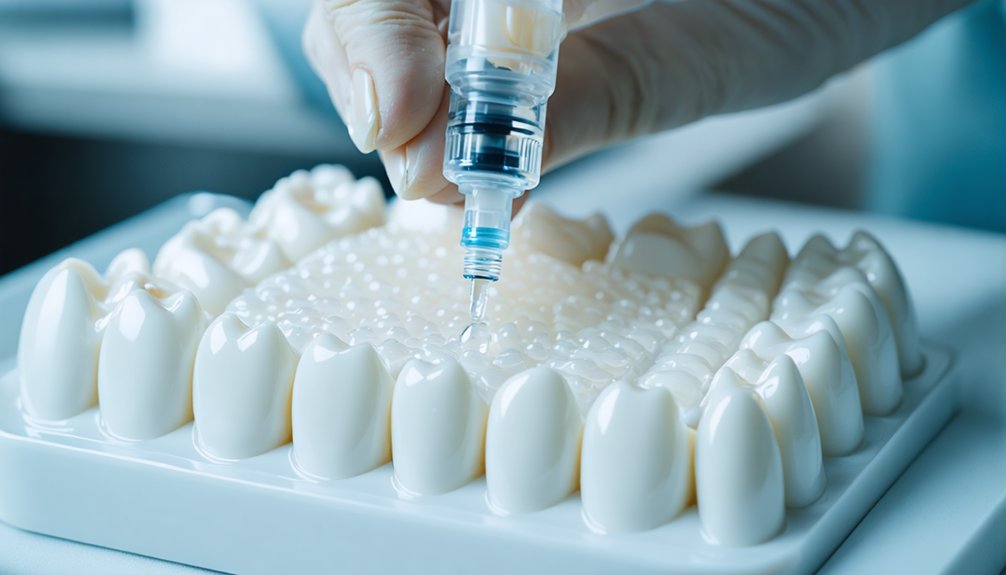
Proper application technique directly impacts both whitening efficacy and sensitivity levels, making methodical tray preparation essential for ideal outcomes. Your gel application methods should employ precise dosing—place a rice grain to half pea-sized drop per tooth compartment, targeting only the front 6-8 teeth with approximately 0.5ml per arch. Position gel halfway up the tray’s inner front surface without spreading to prevent gum contact.
Execute tray insertion techniques by seating trays firmly against teeth for uniform distribution, then immediately wipe excess gel from gums using your finger or tissue. If sensitivity develops, you’ll benefit from shortened 30-minute sessions with 10-16% carbamide peroxide formulations.
Post-treatment, remove residual gel through thorough rinsing, then line trays with desensitizing toothpaste for 10-minute intervals to mitigate discomfort.
Managing Sensitivity While Using Whitening Gel
Strategic sensitivity management requires implementing desensitizing protocols before, during, and after whitening treatments to maintain patient comfort while achieving ideal aesthetic results.
Evidence-Based Sensitivity Control Protocol:
- Pre-Treatment Desensitization: Apply potassium nitrate toothpaste (5% concentration) twice daily for one week before initiating whitening procedures. Professional fluoride varnish applications provide relief lasting up to 8 weeks.
- Personalized Whitening Schedules: Adjust hydrogen peroxide concentrations (5.3-6.5% for sensitive cases) and treatment intervals based on individual tolerance thresholds. Discontinue immediately if pain persists beyond 48 hours.
- Symptom Monitoring During Treatment: Track sensitivity levels using standardized pain scales. Apply amorphous calcium phosphate gels post-treatment to accelerate enamel remineralization. For severe hypersensitivity, prescribe higher-fluoride alternatives like PreviDent 5000.
Precise gel dosage and strict adherence to manufacturer-specified application times prevent unnecessary irritation and optimize therapeutic outcomes.
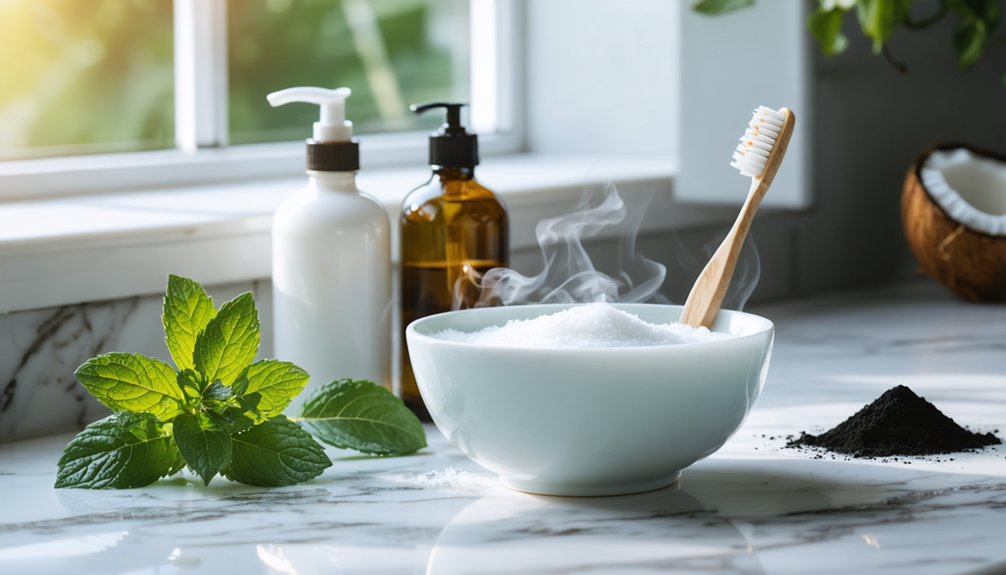
Plant and Mineral-Based Alternatives for Gentle Whitening
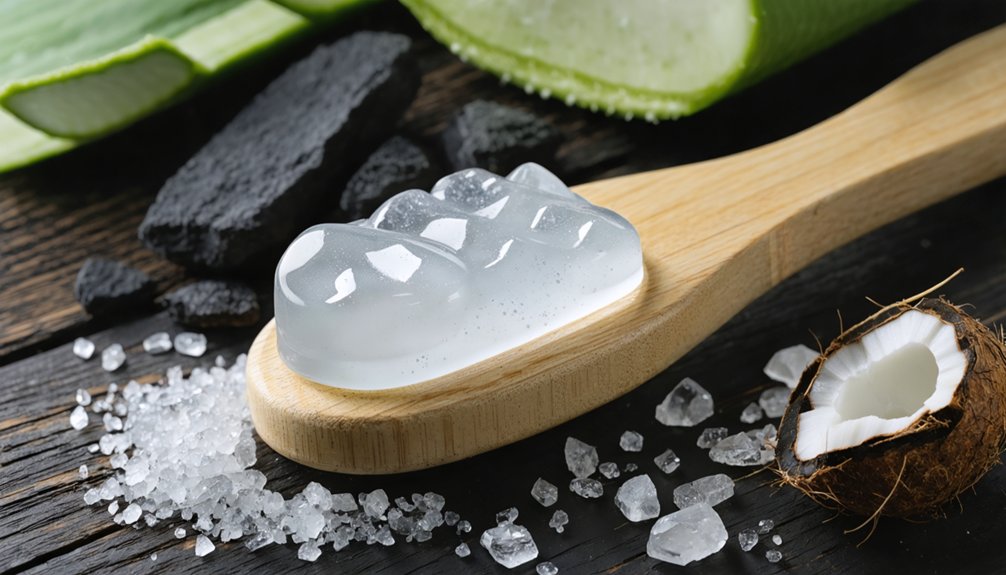
As consumer demand for natural oral care intensifies, plant and mineral-based whitening formulations have emerged as scientifically validated alternatives that deliver aesthetic improvements without compromising enamel integrity. You’ll find nano-hydroxyapatite in products like Boka Kids’ toothpaste, which simultaneously strengthens enamel while enhancing tooth enamel protection during the whitening process.
Activated charcoal powders leverage mineral properties to achieve stain removal rates comparable to traditional peroxide formulas. Afterglo’s plant-based gels incorporate essential minerals that actively repair enamel while their built-in desensitizers address sensitivity concerns. SNOW’s formulations utilize plant-derived components with stabilizers that prevent oxidation, maintaining consistent effectiveness.
Coconut oil-based options like Whiteglo’s 4.9-rated toothpaste provide natural stain removal through mechanical action rather than chemical bleaching, giving you complete control over your whitening regimen’s intensity.
Frequently Asked Questions
How Long Does Tooth Sensitivity Last After Finishing Whitening Treatments?
Like Icarus’s temporary discomfort, you’ll experience tooth sensitivity duration of 24-48 hours typically. Your whitening sensitivity duration extends up to one week in most cases, with 54% reporting mild symptoms that resolve quickly through proper management.
Can I Whiten My Teeth if I Have Gum Recession?
You can whiten with gum recession under professional supervision. Your dentist will assess gum tissue protection needs and recommend appropriate whitening alternatives. They’ll evaluate root exposure severity and apply desensitizers to minimize sensitivity while achieving safe, effective results.
Should I Use Desensitizing Toothpaste Before or After Whitening?
You’ll find it’s no coincidence that pre-treatment works best—start desensitizing toothpaste one to two weeks before whitening. Apply whitening gel carefully during treatment, then monitor tooth sensitivity levels while continuing the toothpaste for several days post-whitening.
What Foods Should I Avoid While Using Whitening Gel?
Avoid dark-pigmented beverages, acidic foods, and colored condiments that compromise enamel integrity. You’ll achieve ideal results by eliminating staining agents like berries, tomato-based sauces, and citrus. Consider consuming dairy products, which neutralize acids and protect your whitened teeth effectively.
Do Soft-Bristled Toothbrushes Really Help Reduce Whitening Sensitivity?
Like a velvet touch versus sandpaper, soft-bristled toothbrushes considerably reduce whitening sensitivity. You’ll benefit from softer brushing motions and increased flossing frequency, which clinically prevent enamel abrasion while maintaining ideal oral hygiene during your whitening regimen.