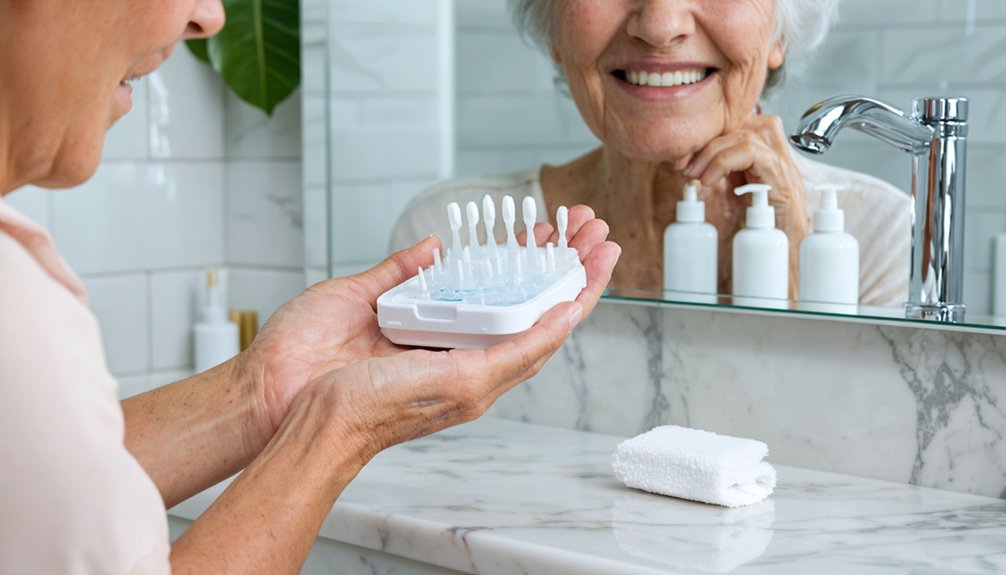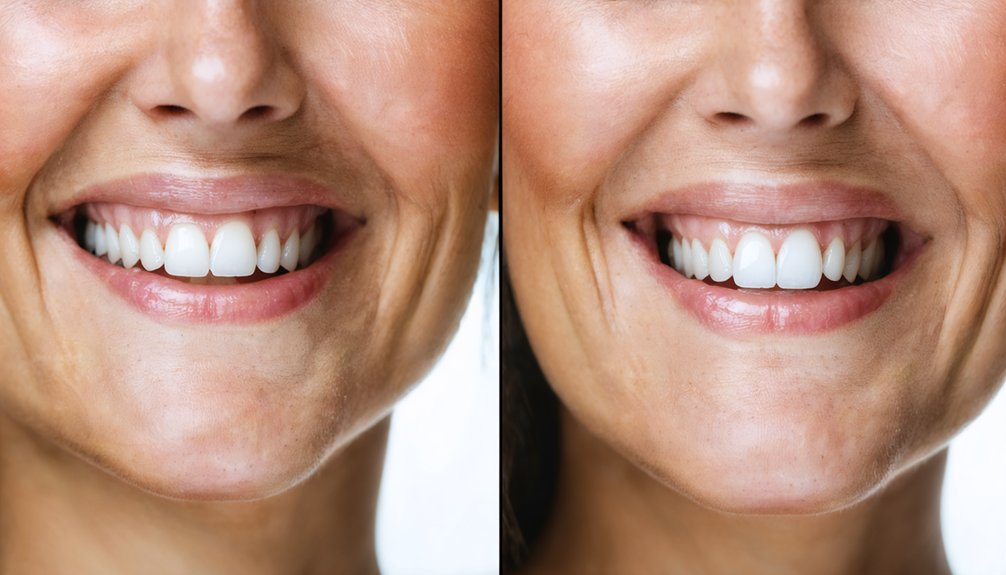
Teeth whitening can partially address age-related discoloration, but you’ll see better results on surface enamel stains than on deeper dentin darkening. Professional treatments with higher peroxide concentrations penetrate more effectively than over-the-counter options, though they can’t fully reverse the yellowing that occurs as your dentin naturally darkens and enamel thins over time. Your dentist can customize treatment strength based on your specific dental structure and combine whitening with desensitizing agents to protect thinning enamel. Understanding what’s causing your discoloration helps set realistic expectations for improvement.
Key Takeaways
- Teeth whitening works partially on age-related discoloration, effectively treating surface enamel stains but not deeper dentin darkening.
- Thinning enamel and dentin accumulation cause intrinsic yellowing that conventional whitening treatments cannot fully penetrate or reverse.
- Professional whitening with higher peroxide concentrations achieves better results on age-related stains than over-the-counter products.
- Whitening effectiveness decreases with age as dentin darkens internally and enamel thins, reducing overall light reflection.
- Results typically last 6 months to 2 years, requiring customized treatment plans for individual dental conditions and structural changes.
How Aging Changes Your Tooth Structure and Color
Your teeth undergo significant structural transformations as you age, fundamentally changing their appearance from the inside out. Dentin thickens progressively, narrowing the internal chamber and reducing fluid circulation. This dehydration makes teeth brittle while calcified dentin shows through thinning enamel as yellow discoloration.
Tooth enamel erosion accelerates over time, diminishing your teeth’s protective barrier and resilience against daily stress. Gum recession exposes vulnerable root surfaces, creating the “long in the tooth” appearance while increasing root surface sensitivity. Your pulp chamber shrinks as secondary dentin deposits accumulate, and nerves retreat inward. Simultaneously, periodontal ligaments loosen and bone density decreases, causing teeth to shift position.
These compounding structural changes create multiple pathways for discoloration—from internal dentin darkening to surface-level mineral loss—requiring targeted whitening approaches that address age-specific conditions.
Why Enamel Thinning Makes Teeth Appear Yellower Over Time
The translucent layer protecting your teeth steadily wears away with age, creating an optical illusion that masks even the most diligent oral hygiene routines. As enamel mineralization loss progresses, the yellowish dentin beneath dominates your tooth’s appearance. This isn’t surface staining you can brush away—it’s structural exposure that fundamentally alters how light interacts with your teeth.
Your thinning enamel reflects less light, making teeth appear darker and duller. Acidic foods, teeth grinding, and aggressive brushing accelerate this wear, while acid reflux and dry mouth create tooth staining precursors that compound discoloration. The roughened enamel surface further diminishes brightness.
Standard whitening treatments can’t penetrate to mask dentin exposure. You’ll need targeted interventions: remineralization protocols to restore lost minerals, protective rinsing after acidic intake, and calcium-rich dietary adjustments that strengthen remaining enamel structure.
The Role of Dentin Darkening in Age-Related Discoloration
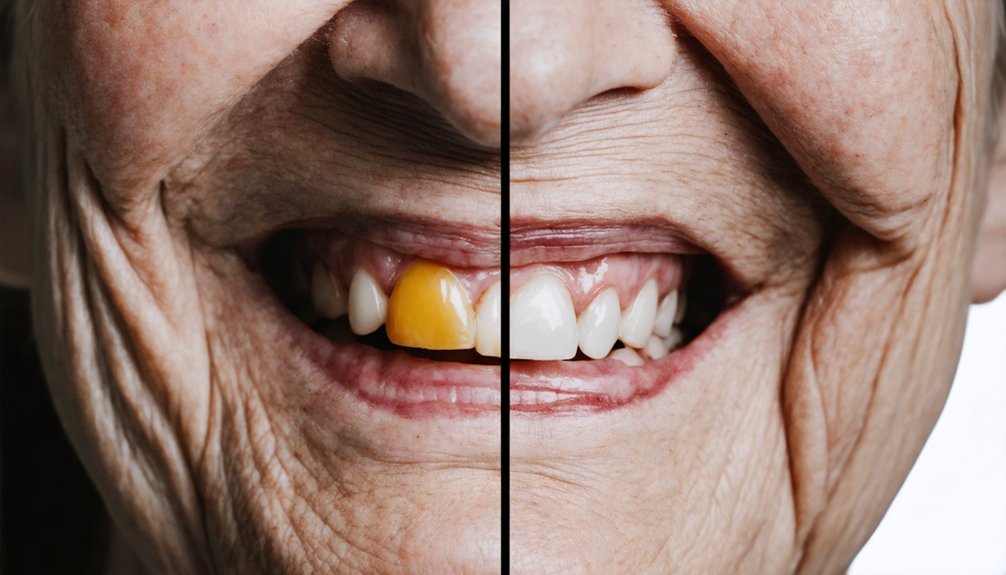
As your enamel thins with age, the naturally yellow dentin beneath becomes more visible, but a more significant problem occurs within the dentin itself—it darkens and accumulates secondary layers that deepen discoloration from the inside out.
This internal darkening process makes age-related yellowing particularly stubborn because the stains embed deep within dentin’s softer, more porous structure rather than sitting on your tooth’s surface. You’ll need to understand how dentin’s aging process differs from enamel wear to determine whether standard whitening treatments can penetrate deeply enough to reverse this internal discoloration.
Dentin’s Natural Aging Process
While enamel thinning plays a visible role in age-related discoloration, dentin’s internal transformation beneath the surface drives the most significant color changes over time.
Your dentin undergoes continuous structural modification as odontoblasts deposit secondary dentin layers throughout your lifetime. This process alters dentin composition, creating a denser, darker tissue that shows through your increasingly translucent enamel.
The pulp chamber narrows as secondary dentin accumulates, reducing internal light reflection and producing a duller appearance. Additionally, age-related changes in dentin mineralization create a yellower, more opaque structure.
These internal modifications occur independently of external staining factors, meaning you’re facing a biological transformation rather than surface-level discoloration. Understanding this distinction is pivotal when evaluating whitening treatment options, as conventional surface-based approaches won’t address these deeper structural changes.
Whitening Limitations on Dentin
Conventional whitening treatments face a fundamental barrier when confronting dentin’s age-related darkening—they can’t reach the discoloration source. Your standard whitening products work exclusively on enamel’s surface stains, achieving 94.45% efficacy for extrinsic pigmentation but failing against internal dentin discoloration.
Bleaching agent penetration limits explain why external treatments don’t deliver results on darkened dentin. Hydrogen and carbamide peroxide oxidize enamel-level stains effectively but can’t penetrate deep enough to address the gray or brown tones developing within your dentin layer as you age.
This creates clear internal bleaching requirements for genuine dentin discoloration. Walking bleach techniques applying 40% hydrogen peroxide intracoronally access dentin’s pigmented tubules directly, achieving shifts from VITA shade C4 to C1—results impossible through external whitening alone.
Can Whitening Treatments Reverse Years of Tooth Discoloration?
Years of tooth discoloration don’t have to be permanent, though whitening treatments work differently on aging teeth than younger ones. Professional bleaching agents penetrate your enamel to lighten teeth several shades, removing stubborn surface stains and some deeper discoloration. You’ll see noticeable improvements despite age-related changes like dentin darkening and enamel thinning.
However, you won’t achieve complete reversal. Discoloration caused by medications and deep intrinsic stains resist full treatment effectiveness. The impact of prescription drug use creates persistent darkening that limits whitening results. Your thinner enamel also reduces light reflection needed for maximum brightness.
Expect visible improvements rather than dramatic transformations. Customized treatment plans account for your individual tooth condition, delivering realistic outcomes while maintaining safety through professional supervision and manufacturer-tested products.
Professional Whitening Solutions for Older Adults
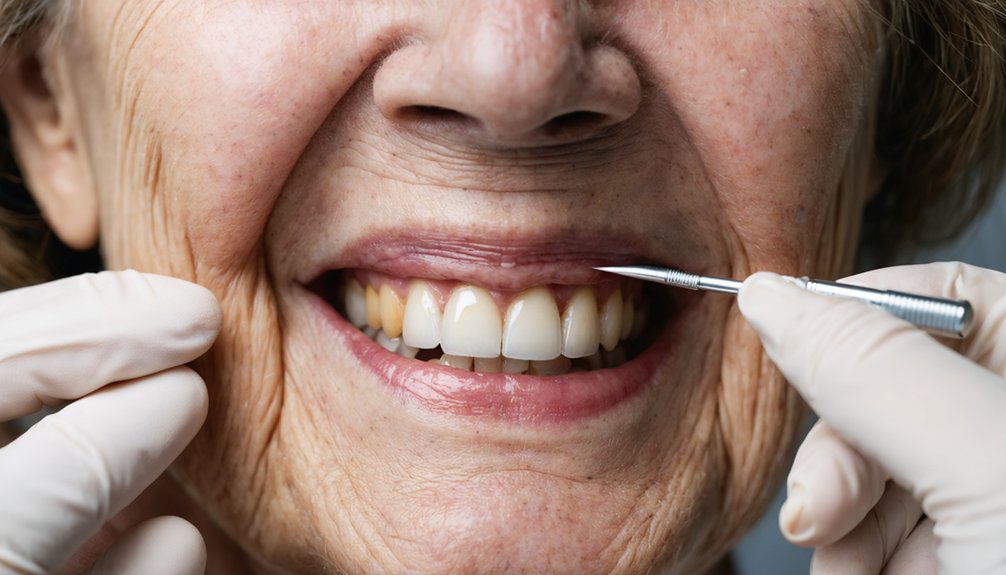
Professional whitening treatments deliver stronger results for older adults than over-the-counter alternatives through higher peroxide concentrations that target deep, age-related stains. You’ll achieve several shades of brightening in one session—results that require 16 days with store-bought products.
Professional whitening delivers dramatically faster results than drugstore options, brightening teeth several shades in one visit versus over two weeks.
Your dentist customizes treatment strength based on your specific dental structure, ensuring long term whitening outcomes while minimizing sensitivity from thinning enamel or receding gums. Dental professional guidance proves essential for managing complications like existing restorations that won’t whiten.
Expect these key advantages:
- Controlled application with desensitizing agents and fluoride treatments to prevent discomfort
- Customized gel strength adjusted for your enamel condition and sensitivity levels
- Coordinated restoration replacement to match whitened natural teeth with updated crowns or bridges
Results typically last six months to two years with proper maintenance.
Common Causes of Tooth Staining as You Age
Your teeth naturally accumulate discoloration from multiple sources as you age, making it essential to identify which factors affect your specific situation. Enamel erosion patterns develop through years of consuming acidic foods like citrus, tomatoes, and soda, which create pathways for stains to penetrate deeper layers.
Coffee, tea, red wine, and cola deposit chromogens that bind to your enamel’s microscopic pores. Your dentin thickens and darkens naturally, showing through thinning enamel as yellow or gray tones.
Tobacco stain removal presents unique challenges since tar creates stubborn brown deposits that resist basic cleaning. You’ll also experience reduced saliva production, which compromises your mouth’s natural defense against staining agents. Medications further decrease saliva flow, accelerating plaque buildup and discoloration.
What Results Can You Realistically Expect From Whitening?
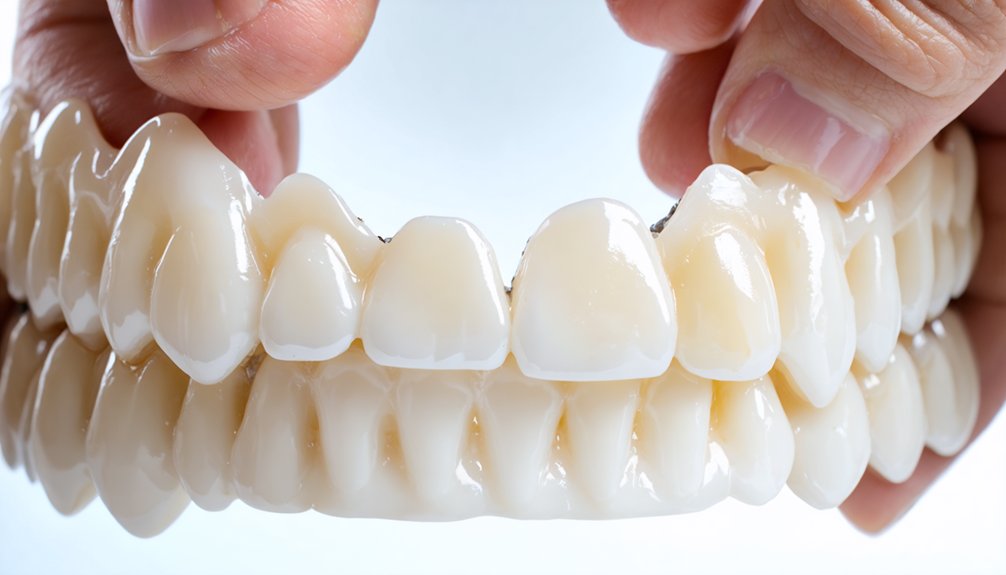
Your realistic outcomes depend on three critical variables:
Understanding these three variables helps set appropriate expectations for your teeth whitening journey as you age.
- Dentin condition – Increased mineralization and natural darkening reduce whitening potential compared to younger patients
- Treatment type – Professional procedures deliver faster, longer-lasting results than over-the-counter products for deep discoloration
- Maintenance commitment – Touch-up treatments every six months preserve brightness, while avoiding staining foods extends results
Expect noticeable improvements rather than dramatic transformations. Under qualified supervision, you’ll achieve safe, effective whitening despite age-related limitations.
Maintaining Your Brighter Smile After Treatment
After investing time and money into whitening treatment, you’ll need a strategic maintenance plan to protect your results. Your whitening maintenance plan starts with twice-daily brushing using whitening toothpaste and daily flossing to prevent new stains from forming.
Rinse your mouth with water immediately after consuming coffee, tea, or red wine—waiting 30 minutes before brushing to protect softened enamel. Schedule professional cleanings every six months to remove tartar and surface discoloration your home care misses.
Implement stain prevention strategies by limiting tobacco use and darkly colored beverages. Use dentist-provided touch-up treatments monthly if needed, but don’t overuse them to avoid sensitivity. Your hygienist can recommend low-concentration maintenance products specifically designed to preserve your whiter smile between professional visits.
Frequently Asked Questions
Are There Age Limits for Safe Teeth Whitening Treatments?
You’ll find no strict age limits for safe teeth whitening treatments. You can pursue age-appropriate whitening methods at any adult age, though whitening risks for seniors include sensitivity from thinner enamel—requiring your dentist’s customized approach for ideal results.
How Much Does Professional Whitening Cost Compared to Drugstore Products?
Professional whitening costs $300-$1,500 per session versus drugstore products at $5-$100, creating a significant cost comparison. You’ll achieve faster, more dramatic results with professional treatments, though product effectiveness varies based on your specific discoloration needs and budget.
Can Whitening Damage Fillings, Crowns, or Other Dental Work?
Whitening won’t damage your fillings or crowns—they’re built to withstand bleaching agents. However, you’ll face increased sensitivity risks with restorations. Check whitening product compatibility with your dentist first to control results and avoid mismatched shades afterward.
How Long Do Whitening Results Typically Last in Older Adults?
You’ll see results lasting 6-12 months typically, though whitening longevity factors like enamel wear affect outcomes. Through proper patient expectations management and customized maintenance plans, you can control brightness with strategic touch-ups every few months.
Are Natural Whitening Remedies Effective for Age-Related Discoloration?
Natural home remedies’ effectiveness is limited for age-related discoloration. You’ll see minimal results even with consistent whitening regimen duration. Professional treatments deliver superior control over deeper intrinsic staining that develops as you age, unlike surface-only home remedies.