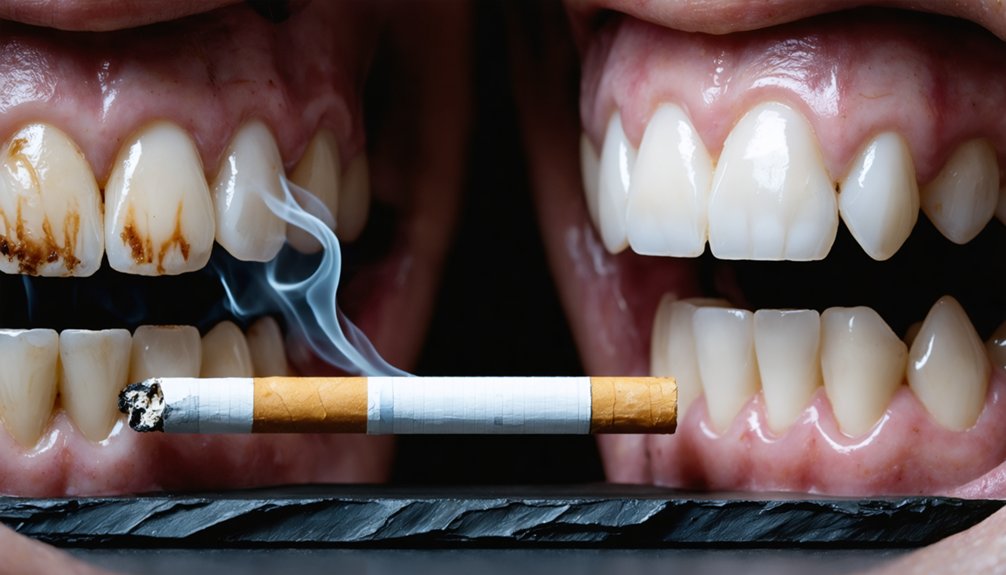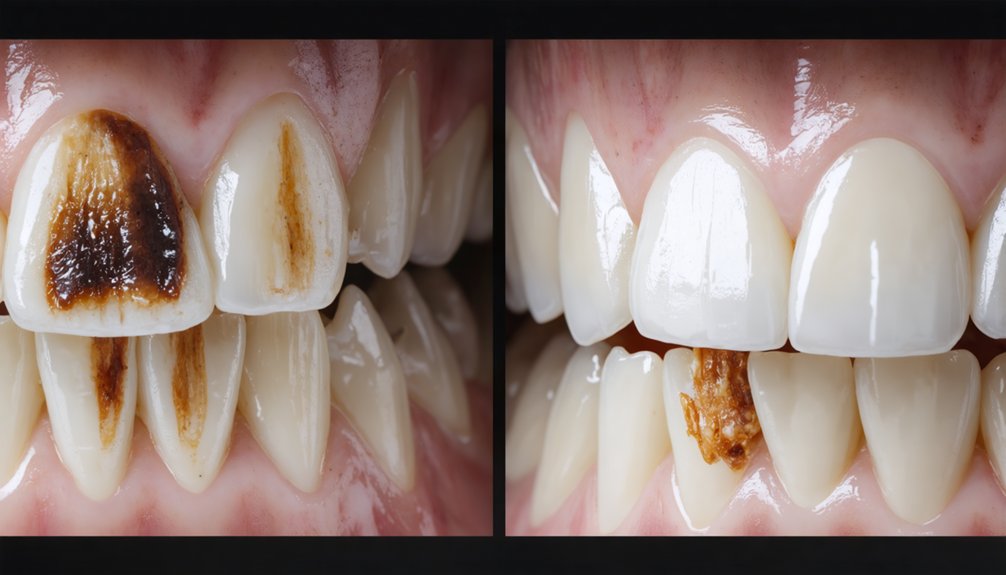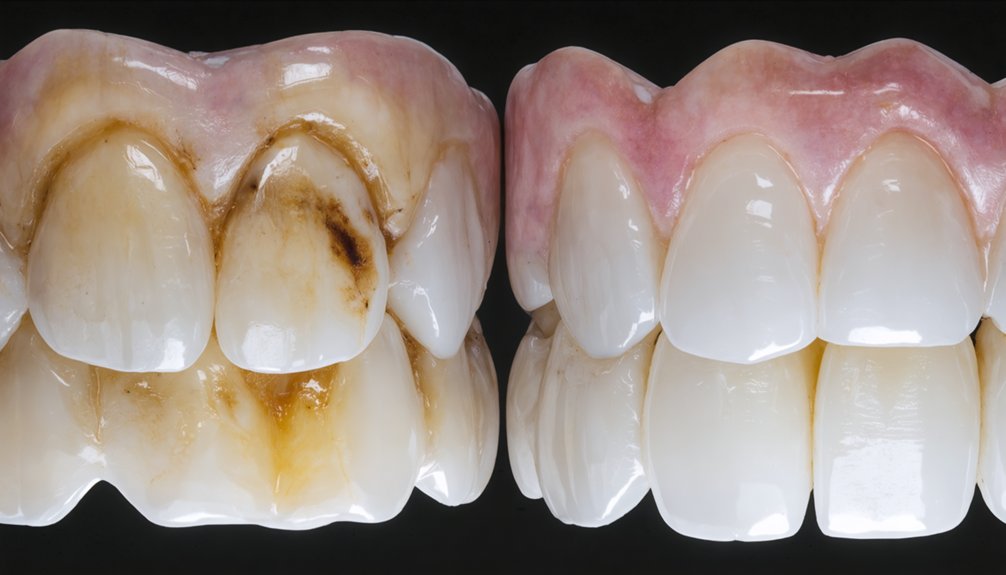
When you quit smoking, your teeth can naturally lighten as your saliva production normalizes and begins washing away surface tar deposits. Your enamel also starts remineralizing, which helps restore its natural appearance. However, deeply penetrated stains that have reached your dentin won’t resolve on their own—these require professional whitening treatments. The degree of natural improvement you’ll experience depends on your smoking duration and intensity. Understanding the complete restoration process, from immediate changes to long-term professional options, will help you set realistic expectations for your smile’s transformation.
Key Takeaways
- Quitting smoking allows natural tooth whitening as normalized saliva production gradually removes surface stains and tar deposits.
- Enamel remineralizes after quitting, accelerating structural regeneration and supporting more even tooth color restoration.
- Improved gum health following smoking cessation enhances overall tooth appearance and supports natural whitening processes.
- Fluoride treatments become significantly more effective at reversing tobacco-related tooth damage after quitting smoking.
- While some natural improvement occurs, deeply penetrated stains often require professional whitening treatments for complete removal.
How Smoking Causes Yellow and Brown Tooth Stains
When you inhale cigarette smoke, nicotine and tar immediately begin depositing chemical compounds onto your tooth surfaces. Nicotine oxidizes upon oxygen exposure, transforming from colorless to yellow, while tar adds brown pigmentation directly. These substances penetrate your enamel’s microscopic pores, embedding deeply within the tooth structure and extending into the underlying dentin layer.
The enamel penetration patterns concentrate particularly between teeth and along your gumline, where accumulation intensifies. Visual color progression advances from initial yellow discoloration to yellowish-brown tones as you continue smoking. Stain intensity correlates directly with your smoking frequency—heavier consumption accelerates discoloration rates.
As these pigments settle deeper over time, they resist standard cleaning methods. Once stains penetrate beyond enamel into dentin, you’ll require professional whitening interventions to achieve removal.
The Connection Between Tobacco Use and Plaque Accumulation
Beyond surface staining, tobacco use fundamentally alters your mouth’s bacterial environment, triggering a cascade of plaque-related complications. Research demonstrates you’ll accumulate three times more plaque as a smoker compared to non-smokers, measured through light-induced fluorescence technology.
Smoking reduces your saliva flow, creating conditions where harmful bacteria like Streptococcus mutans thrive and form biofilms that shield them from your immune response.
You’ll also experience higher plaque calcium levels—studies confirm greatly elevated concentrations in heavy smokers. This leads to faster plaque mineralization, accelerating the transformation of soft bacterial film into hardened tartar within 48 hours.
The increased calcium-to-phosphorus ratio indicates abnormal mineral deposits that promote subgingival tartar buildup, creating pockets where periodontal pathogens colonize and persist.
Why Smokers Face Greater Gum Disease Risks
This aggressive plaque environment directly compromises your periodontal health, placing you at vastly elevated risk for gum disease. You’re twice as likely to develop advanced periodontitis compared to non-smokers, with risk escalating to five times greater if you smoke over 1.5 packs daily.
Nicotine constricts your blood vessels, reducing antibody delivery and oxygen to gum tissue while impairing white blood cell function. This weakened immune response creates potential for irreversible gum damage and bone loss. The vascular constriction also masks typical warning signs—your gums may appear pink despite active infection, delaying critical diagnosis.
Additionally, you’ll experience decreased taste and oral sensation alongside compromised healing capacity. Treatment outcomes prove markedly less effective, making you three times more likely to lose teeth from periodontal disease.
Natural Improvements After You Stop Using Tobacco
Your body initiates remarkable oral recovery within hours of tobacco cessation, with tooth appearance beginning its natural restoration process. Tooth structure regeneration accelerates as enamel remineralizes without continuous acid and tar exposure.
You’ll experience normalized saliva production that delivers natural saliva benefits—removing residual pigments and strengthening enamel through enhanced mineral delivery. Surface stains diminish progressively as your saliva scrubs away tar deposits that no longer accumulate. Fluoride treatments become substantially more effective, penetrating restored enamel to reverse yellowing from previous damage.
Your whitening interventions will maintain results for years rather than months, as re-staining agents are eliminated. Within weeks, improved gum health supports even color restoration across all teeth, while stabilized dentin-layer stains prevent further deepening of discoloration.
Professional Whitening Options for Former Smokers
While your body’s natural healing mechanisms improve tooth appearance after quitting, targeted professional interventions accelerate whitening results beyond what time alone can achieve. In-office treatments utilize high-concentration hydrogen peroxide gels activated by blue light, delivering dramatic improvements in single sessions through three to four 20-minute rounds.
Laser whitening breaks down stubborn tar and nicotine deposits more rapidly, though at higher cost. Your dentist can provide custom-fitted trays for at home whitening methods, ensuring even gel distribution with gradual stain removal. These approaches require professional guidance for maintenance through specialized toothpastes and routine cleanings.
For severe discoloration unresponsive to whitening, your dentist may recommend veneers. Combining professional interventions with consistent daily care maximizes your whitening outcomes while preventing future staining.
Frequently Asked Questions
How Long After Quitting Smoking Will My Teeth Start Looking Whiter?
You’ll notice initial whitening within 2–4 weeks as nicotine deposition patterns reverse and gum tissues stabilize. Following your smoking cessation timeline, natural whitening accelerates with professional cleaning, proper hygiene, and increased saliva flow restoring your enamel’s appearance.
Can Diet Changes Help Whiten Teeth Faster After Quitting Smoking?
Yes, you’ll accelerate whitening by incorporating healthy snack choices like crunchy vegetables and calcium-rich foods while avoiding staining substances. Combined with consistent oral hygiene routines including proper brushing and flossing, you’ll maximize enamel restoration and stain removal.
Are There Effective At-Home Whitening Methods Safe for Former Smokers?
Yes, custom whitening trays prescribed by dentists provide safe, effective results. You’ll achieve ideal whitening by combining professional cleaning services with at-home treatments and maintaining proper plaque removal techniques through consistent brushing and flossing routines.
Will My Teeth Return to Their Original Color After Quitting?
Your teeth won’t fully return to their original color, but you’ll see improvement. Quitting enables natural remineralization and tooth enamel restoration, positioning your whiteness between smokers and never-smokers. Professional treatments can further enhance results you control.
Does Vaping Cause the Same Tooth Discoloration as Traditional Cigarettes?
No, vaping causes less tooth enamel discoloration than cigarettes. Like coffee versus espresso staining, vapor residue buildup produces lighter yellowing without tar. You’ll experience minimal discoloration with zero-nicotine options, while cigarette smoke creates severe, persistent stains requiring professional intervention.