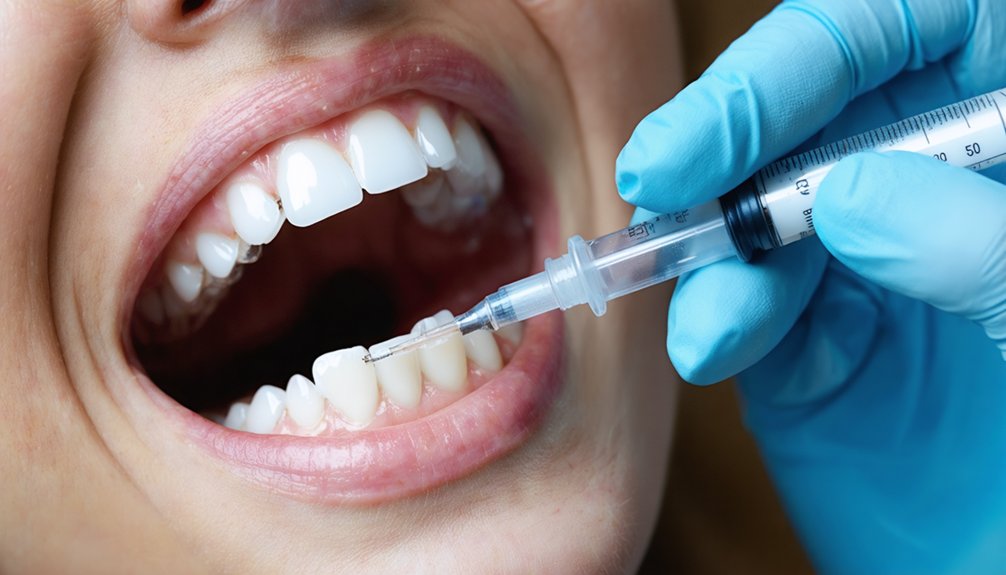
Hydrogen peroxide can damage your tooth enamel, but the risk depends on concentration and exposure time. Professional treatments using 35-40% hydrogen peroxide typically cause minimal harm when applied correctly with protective measures, while over-the-counter products (3-10%) may actually increase damage through prolonged use. Research demonstrates that improper application leads to decreased enamel microhardness, increased surface roughness, and calcium loss. You’ll experience the safest whitening results when you understand concentration thresholds, recognize warning signs like sensitivity, and follow evidence-based application protocols.
Key Takeaways
- Hydrogen peroxide can damage enamel depending on concentration, exposure time, and application method used during whitening treatments.
- Studies show 3-30% hydrogen peroxide decreases enamel microhardness, with high concentrations creating surface degradation like crater-like formations.
- Professional treatments minimize damage through controlled exposure, fluoride remineralization, and barrier protection despite using higher concentrations.
- Low-quality over-the-counter gels cause greater enamel harm, including 14.2% microhardness loss and increased surface roughness from extended use.
- Warning signs include tooth sensitivity, gum irritation, and translucent tooth edges indicating potential enamel stripping and nerve irritation.
Understanding Hydrogen Peroxide Concentrations in Whitening Products
Hydrogen peroxide concentrations in whitening products span a clinical spectrum from 3% to 40%, with formulation strength dictating application setting, treatment duration, and supervision requirements. You’ll find at-home kits contain 3-10% for gradual whitening, while professional chairside treatments utilize 35%+ for rapid results. Carbamide peroxide formulations (10-44%) break down slower, releasing approximately 3.5% hydrogen peroxide equivalents suitable for overnight applications.
Proper storage techniques maintain potency—you must refrigerate professional gels and use brown bottles to prevent light degradation. User application methods vary by concentration: 3-12% products don’t require professional oversight, whereas 17.5-35% formulations mandate gingival barriers and monitored 15-20 minute sessions. Higher concentrations generate more free radicals, achieving 4-8 shade improvements through accelerated oxidative stain breakdown.
How Hydrogen Peroxide Affects Tooth Enamel Structure
When hydrogen peroxide contacts enamel surfaces, it initiates concentration-dependent structural alterations detectable through FT-IR spectroscopy analysis of phosphate bands (PO₄ ν₁ and ν₂). These enamel structural changes intensify proportionally with both concentration levels (10%, 20%, 30%) and exposure duration (30, 60, 120 minutes), showing no spontaneous reversibility within one week post-treatment.
Hydrogen peroxide penetration occurs rapidly through enamel to underlying dentin, triggering measurable calcium and phosphorus ion release that increases markedly with concentration (p<0.025 versus controls). You'll observe decreased Vickers microhardness values (p<0.05) following exposure to solutions ranging from 3% to 30%. High-concentration applications (38%) produce distinct morphological features including volcanic craters, crystallite loss, and increased porosity. Laboratory evidence confirms that prolonged daily exposure accelerates demineralization across both enamel and dentin structures.
Research Findings on Enamel Safety and Damage
Research evidence presents conflicting assessments of hydrogen peroxide’s impact on enamel integrity. Most in vitro studies confirm bleaching safety for enamel and dentin, with no significant microsurface alterations at 10-20% carbamide peroxide or 35% hydrogen peroxide concentrations.
However, some investigations report surface degradation, including shallow depressions, increased porosity, and decreased microhardness. Pulp penetration data reveals hydrogen peroxide passes rapidly through enamel layers, with 23-26 micrograms reaching pulp tissue after seven hours at 3.5-12% concentrations—levels insufficient to inhibit pulpal enzymes. Yet 35% carbamide peroxide causes documented pulp cell mortality.
Tooth sensitivity concerns warrant immediate discontinuation and professional consultation. The ADA certifies peroxide-containing products as safe when you follow instructions precisely, though two clinical cases document serious enamel damage from over-the-counter misuse.
Comparing Professional Treatments to Over-the-Counter Products
When selecting a tooth whitening method, you’ll encounter significant differences in hydrogen peroxide concentrations between professional treatments (10-45%) and over-the-counter products (3-10%). These concentration disparities directly influence application protocols, with dentist-supervised treatments using high-strength formulas for brief exposures while OTC products require extended wear times under your own monitoring.
Understanding these distinctions is essential for evaluating both the efficacy timelines and potential enamel safety risks associated with each approach.
Concentration Levels and Safety
Professional dental whitening treatments utilize hydrogen peroxide concentrations up to 40%, while over-the-counter products typically contain 10% or less. You’ll find that higher concentrations require shorter contact time, which paradoxically reduces enamel damage risk compared to prolonged exposure from weaker solutions. Studies demonstrate that 35% hydrogen peroxide applied professionally causes no significant microsurface alterations, whereas low-ranked OTC gels can produce 14.2% enamel microhardness loss.
Your individual susceptibility to enamel changes varies, making professional oversight essential. Long term usage effects differ substantially between properly administered high-concentration treatments and unsupervised OTC applications. Professional protocols include fluoride remineralization and tailored exposure times, while extended OTC use often leads to increased surface roughness, demineralization, and cavity risk. Concentrations between 3.5-12% show minimal enamel morphology changes when used correctly.
Application Methods and Controls
How you apply hydrogen peroxide determines both efficacy and safety outcomes more than concentration alone. OTC methods limit you to 3% solutions with swish durations of 30-60 seconds or weekly paste applications, preventing enamel overexposure.
Professional treatments employ concentration management through 6-35% formulations delivered via custom-fitted trays that eliminate gum contact and guarantee precise placement. Proper usage timing extends to 10-20 minutes under clinical supervision, with pre-assessments identifying cracks or recession that contraindicate treatment.
Dentists incorporate pre-cleaning protocols for uniform penetration and apply desensitizing agents to mitigate sensitivity. This controlled approach achieves 8-shade improvements in single sessions with sustained results, whereas OTC products risk gum irritation and deliver modest outcomes.
Professional precision protects enamel integrity while maximizing whitening effectiveness through tailored application parameters.
Risk of Enamel Damage
Enamel safety profiles differ markedly between professional and over-the-counter whitening protocols despite peroxide remaining the active agent in both. Professional 35% hydrogen peroxide treatments demonstrate no significant surface microhardness reduction or morphological alterations when properly controlled, whereas OTC products have documented serious adverse effects on enamel structure.
You’ll find that high-concentration professional gels (6-35%) prove safe across exposure regimens, while OTC formulations at similar concentrations (44%) cause decreased calcium and phosphorus content. Long term enamel consequences include increased wear susceptibility from 5.3% hydrogen peroxide and reduced surface hardness from carbamide peroxide variants.
Pulp sensitivity concerns escalate with improper application timing and concentration mismanagement. Professional protocols minimize these risks through controlled exposure duration and barrier protection systems unavailable in home kits.
Common Side Effects and Warning Signs
While hydrogen peroxide effectively whitens teeth, it carries risks that you’ll need to recognize and monitor. Tooth sensitivity represents the most common side effect, manifesting as sharp pain when consuming hot or cold items. This occurs when peroxide strips enamel and irritates underlying nerves.
You’ll also want to watch for gum health considerations, including burning sensations, inflammation, or irritation when whitening gel contacts soft tissue. Over-the-counter products present higher risks than professional treatments. Warning signs demanding immediate attention include translucent tooth edges, indicating enamel thinning, and increased surface roughness.
Research demonstrates that low-quality OTC gels cause 14.2% enamel microhardness loss. Maximizing enamel protection requires adherence to recommended application times and peroxide concentrations, particularly avoiding daily long-term use that weakens tooth structure.
Risk Factors That Increase Enamel Damage
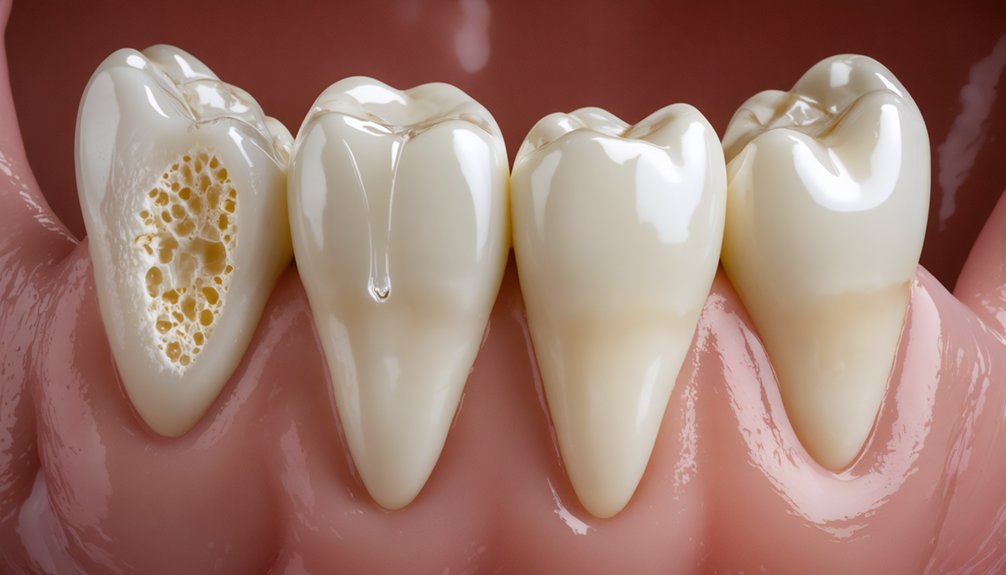
Several key factors amplify hydrogen peroxide’s erosive effects on dental enamel, with concentration levels serving as the primary determinant of damage risk. Store-bought products reaching 10% peroxide pose less immediate threat than professional treatments at 40%, though application duration inversely correlates with concentration safety.
Your frequency of whitening treatments directly impacts enamel integrity—continuous use prevents salivary remineralization, accelerating erosion and cavity formation. Pre-existing enamel weakness, including sensitivity or thinning, magnifies peroxide-induced structural changes comparable to acidic beverages.
Failure to follow instructions creates substantial risk; household 3% hydrogen peroxide lacks dental-grade formulation safeguards, while overnight tray misapplication increases pulp penetration beyond safe thresholds. Incorrect application methods—including crown contact and excessive gum exposure—compound chemical damage through unintended reactions and prolonged contact times.
Best Practices for Safe Teeth Whitening
Achieving ideal whitening outcomes requires structured professional oversight that mitigates hydrogen peroxide’s inherent risks to dental structures. Under dentist supervision, you’ll receive controlled peroxide concentrations, protective gum barriers, and custom-fitted trays that minimize soft tissue exposure.
Select products bearing the ADA Seal of Acceptance to guarantee rigorous safety validation. Adhere strictly to manufacturer protocols regarding application duration and frequency—deviations compromise enamel integrity.
For tooth sensitivity reduction, choose formulations containing potassium nitrate or fluoride. Maintain your results through daily fluoride brushing, flossing, and antiseptic rinses. Limit consumption of coffee, tea, and red wine, using straws when possible.
Discontinue treatment immediately if gum inflammation develops. Schedule periodic professional cleanings and repeat whitening cycles as natural aging and dietary factors diminish initial results.
Frequently Asked Questions
Can I Use Hydrogen Peroxide Whitening if I Have Existing Dental Fillings?
You’ll find favorable flexibility with hydrogen peroxide whitening despite existing dental fillings compatibility. Professional assessment guarantees proper whitening gels application technique, minimizing risks. You’re advised to consult your dentist beforehand for tailored treatment planning and ideal restoration evaluation.
How Long Should I Wait Between Whitening Treatments to Protect Enamel?
You should wait 2-3 months between whitening treatments to allow enamel remineralization. Appropriate timing between treatments prevents cumulative damage, while monitoring enamel sensitivity during whitening helps you determine if extended recovery periods are necessary for ideal protection.
Does Natural Enamel Thickness Affect Hydrogen Peroxide Whitening Safety?
Your enamel’s natural thickness acts as a shield—thinner enamel allows deeper peroxide penetration, altering enamel microstructure changes and enamel mineral composition. You’ll experience heightened sensitivity and damage risk, requiring professional assessment before whitening treatments.
Are Whitening Toothpastes Safer for Enamel Than Hydrogen Peroxide Gels?
Whitening toothpastes are generally safer for your enamel than hydrogen peroxide gels due to lower whitening agent effectiveness and briefer contact time. Toothpaste composition typically includes milder abrasives and reduced peroxide concentrations, minimizing demineralization risks you’d face with gels.
Will Drinking Acidic Beverages Worsen Enamel Damage During Whitening Treatments?
Yes, acidic beverages worsen enamel damage during whitening by penetrating peroxide-weakened surfaces, increasing tooth sensitivity and gum irritation. You’ll minimize risks by avoiding acidic drinks throughout treatment and consulting your dentist if symptoms develop.