You can remove coffee’s surface stains using baking soda paste 2-3 times weekly, which mechanically lifts tannin buildup through mild abrasion. Over-the-counter whitening strips containing hydrogen peroxide achieve 1-2 shade improvements, while whitening toothpastes offer minimal color change. Coconut oil pulling reduces bacteria but lacks substantial whitening evidence. However, overusing abrasive methods risks enamel wear and sensitivity, and DIY approaches can’t address intrinsic discoloration. Professional treatments deliver superior results—7-8 shades lighter—though understanding proper application techniques and safety protocols maximizes your outcomes.
Key Takeaways
- Baking soda paste applied 2-3 times weekly mechanically removes surface stains through mild abrasion and acid-neutralizing alkaline properties.
- Whitening toothpastes use abrasives for surface stain removal with minimal color change compared to hydrogen peroxide-based strips.
- Over-the-counter whitening strips achieve 1-2 shade improvements using higher peroxide concentrations than standard toothpastes.
- Coconut oil pulling reduces plaque and bacteria but lacks substantial evidence for whitening coffee-stained teeth.
- Limit coffee sipping frequency, maintain proper hydration, and avoid aggressive brushing to prevent enamel damage and stain buildup.
Understanding How Coffee Stains Your Teeth
While your morning coffee provides a caffeine boost, its tannins—polyphenolic compounds that break down in water—simultaneously initiate a staining process on your dental enamel. These chromogenic molecules adhere to microscopic imperfections in your enamel’s porous surface, creating a yellowish residue that intensifies with daily consumption.
You’re facing a dual threat: coffee’s acidity causes acid erosion that wears down protective enamel layers, exposing the darker dentin underneath while creating additional surface roughness. This enamel damage amplifies stain adhesion, as pigments settle more readily into compromised areas.
Even a single daily cup suffices for tannin buildup. The staining mechanism operates gradually through repeated exposure, with darker roasts producing more pronounced discoloration. Your risk escalates with frequent sipping, dry mouth conditions, and aggressive brushing techniques that further compromise enamel integrity.
Baking Soda Paste for Surface Stain Removal
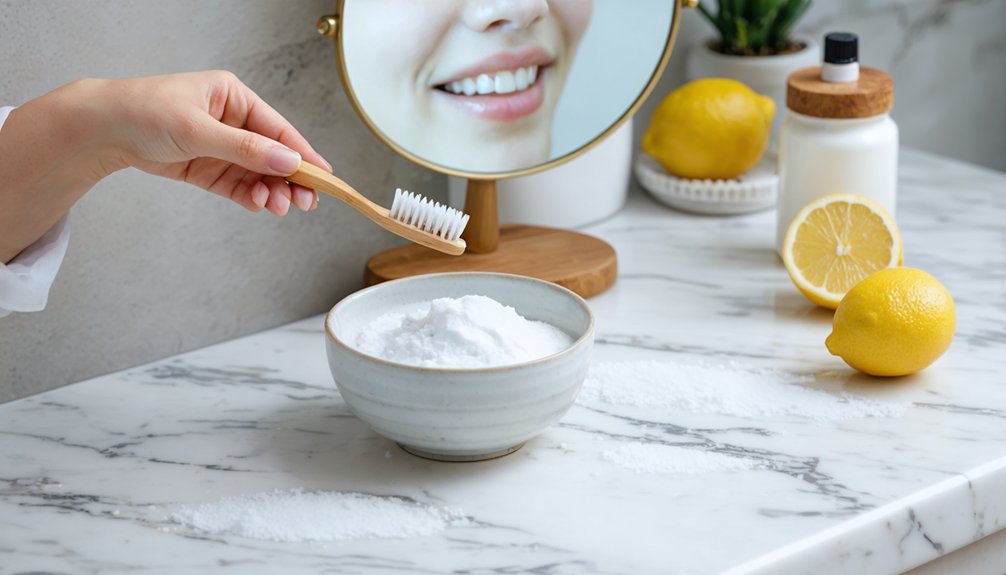
Baking soda’s mild abrasive properties mechanically remove extrinsic stains from enamel while its alkaline pH neutralizes acids that contribute to discoloration.
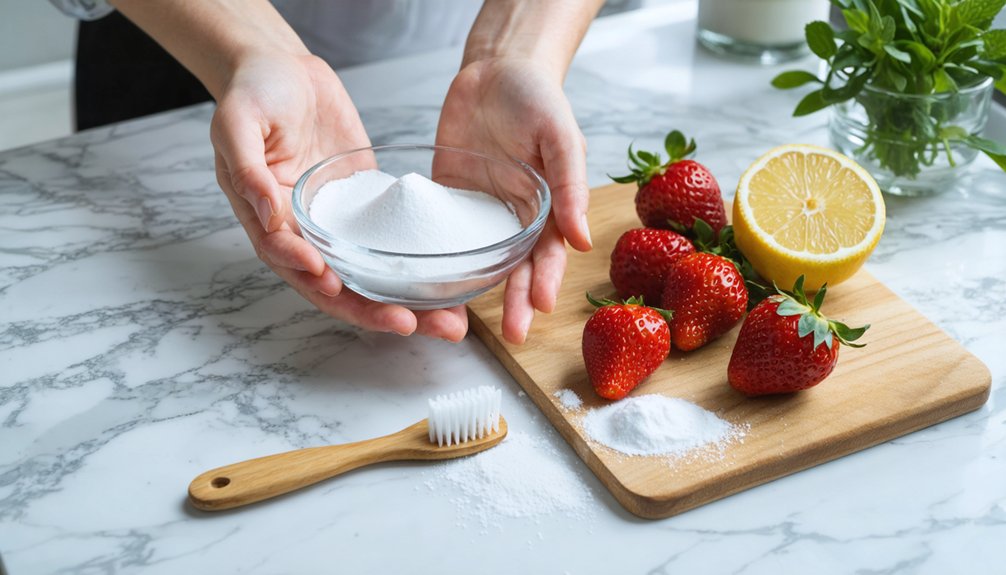
You’ll need to prepare a paste by combining one tablespoon of baking soda with equal parts water, then apply it using a soft-bristled toothbrush in gentle circular motions for two minutes. However, you must limit use to 2-3 times weekly maximum, as excessive application erodes protective enamel and exposes the yellow dentin layer beneath.
How Baking Soda Works
Understanding the mechanism behind baking soda’s whitening effect requires examining its dual action on tooth enamel. Its mildly abrasive nature provides polishing action that mechanically removes extrinsic stains from coffee, tea, and wine without excessive enamel damage. The alkaline properties neutralize bacterial acids while buffering acid-based stains for enhanced removal. In vitro studies demonstrate significant color changes (ΔE 7.7 to 39.3), confirming efficacy for surface-level stain elimination.
However, you must recognize critical limitations. Baking soda can’t penetrate enamel to address intrinsic stains or alter natural tooth color. While low abrasivity supports enamel protection compared to harsher agents, overuse still risks wear and sensitivity. The absence of fluoride eliminates cavity prevention benefits. You’ll achieve ideal results by pairing baking soda with fluoride toothpaste and limiting application frequency.
Creating the Whitening Paste
Since various baking soda formulations offer distinct whitening mechanisms, you’ll need to select the appropriate paste based on your specific stain type and oral health status. For surface stains, combine one tablespoon baking soda with water, monitoring paste consistency until you achieve a spreadable texture.
The hydrogen peroxide variant—mixing half teaspoon baking soda with 3% hydrogen peroxide—breaks stain bonds through oxygen release but requires precise timing the paste application at one to two minutes maximum.
While you can incorporate baking soda directly into your toothpaste for daily maintenance, avoid the lemon juice formulation beyond two minutes due to citric acid’s enamel-eroding properties.
The coconut oil mixture lacks substantial whitening evidence despite its popularity. Apply your selected paste using circular motions for two minutes, then rinse thoroughly.
Safe Application and Frequency
Proper application frequency determines whether baking soda whitening delivers results or causes irreversible enamel damage. You’ll achieve optimum outcomes by limiting plain baking soda paste to occasional use—not daily application.
The effective frequency involves gentle brushing motions with light pressure, avoiding aggressive techniques that erode your enamel’s protective layer. Daily use creates significant dental health risks: enamel thinning prevents regeneration, increases cavity susceptibility, and exposes underlying yellow dentin. Without fluoride, you’re leaving teeth vulnerable to bacterial growth and decay.
Clinical evidence supports moderation for sustained oral health. Select fluoride-containing baking soda dentifrices for daily use instead, as their formulation balance guarantees safety. Consult your dentist before implementing routine changes, particularly if you experience sensitivity. Overuse necessitates costly professional treatments for damage you can’t reverse.
Whitening Toothpaste and Over-the-Counter Products
Over-the-counter whitening products contain markedly lower peroxide concentrations (3-10%) than professional treatments (25-40%), limiting their ability to address intrinsic discoloration.
Whitening toothpastes rely primarily on abrasive agents like sodium bicarbonate that remove surface stains but demonstrate minimal color change compared to placebo in meta-analyses.
Whitening strips represent the most effective OTC option, utilizing higher hydrogen peroxide concentrations with extended enamel contact time to achieve 1-2 shade improvements on extrinsic stains.
How Whitening Toothpaste Works
Whitening toothpastes employ two primary mechanisms to reduce dental discoloration: mechanical abrasion and chemical oxidation. Toothbrush abrasion levels depend on agents like silica and dicalcium phosphate, which scrub extrinsic stains from coffee, tea, and tobacco while remaining softer than enamel to prevent permanent damage.
Chemical whitening mechanisms utilize low-concentration peroxides that penetrate enamel’s interprismatic spaces within 15 minutes. Hydrogen peroxide generates free radicals that break chromogen molecular bonds, degrading stain compounds through oxidation. Carbamide peroxide releases one-third hydrogen peroxide content but achieves similar lightening effects.
Critical limitations you should consider:
- Results appear slower than strips due to reduced peroxide concentrations
- Heavy tobacco or wine stains may require professional intervention
- Aggressive use risks enamel demineralization from acidic pH fluctuations
ADA-approved formulations balance efficacy against tooth sensitivity and structural integrity.
Whitening Strips and Kits
Hydrogen peroxide strips deliver concentrations ranging from 6% to 14%—substantially higher than toothpaste formulations—enabling penetration through enamel’s interprismatic spaces into the underlying dentin layer where chromogens accumulate. Clinical study results demonstrate one-to-two-shade improvements following twice-daily 30-minute applications over 14 days, with strip user experiences varying by stain severity: light discoloration responds within 3-5 days, moderate staining requires 7-10 days, and stubborn deposits demand the full two-week protocol.
You’ll achieve superior outcomes on extrinsic coffee stains compared to intrinsic discoloration from medications or genetics. Higher concentrations accelerate efficacy but proportionally increase sensitivity risk. Professional treatments remain necessary for significant color changes, as strips provide limited interdental and gingival coverage. Results maintain viability for six months post-treatment when properly executed.
Coconut Oil Pulling for a Cleaner Smile
While coconut oil pulling has gained considerable attention as a natural oral hygiene practice, it’s imperative to understand its actual capabilities and limitations. This ancient Indian remedy involves swishing one tablespoon of coconut oil in your mouth for 10-20 minutes daily on an empty stomach.
Research demonstrates measurable oil pulling effects on oral bacteria:
- Reduces Streptococcus mutans in saliva after two weeks (p=0.03)
- Decreases plaque index scores enormously (p=<0.001)
- Comparable efficacy to chlorhexidine mouthwash for gingivitis reduction
However, coconut oil pulling does not whiten teeth. It lacks peroxide-based bleaching agents necessary for dental enamel health improvement through stain removal. The ADA confirms insufficient evidence supporting whitening claims. You’ll achieve better hygiene outcomes, not cosmetic whitening. Consider this an adjunctive practice rather than a primary whitening solution.
Safety Concerns With Common DIY Whitening Methods
Millions of individuals pursue DIY teeth whitening without understanding the significant risks these methods pose to dental health. Abrasive substances like baking soda and activated charcoal remove surface stains while simultaneously destroying protective enamel that can’t regenerate.
High-concentration hydrogen peroxide solutions cause chemical burns, gum tissue irritation, and permanent recession when applied without protective barriers. Enamel erosion leads to irreversible dentin exposure, triggering severe sensitivity to temperature and sweet stimuli that persists for weeks or months.
You’ll face microscopic scratches that increase future staining susceptibility, creating a cycle requiring progressively aggressive treatments. Generic trays produce uneven whitening and blotchy appearances due to inconsistent contact with tooth surfaces.
Without professional oversight, you’re unable to prevent permanent damage to enamel structure, increasing vulnerability to decay and sensitivity.
When to Consider Professional Whitening Treatments
Consider professional treatment when you need:
Professional whitening delivers immediate, dramatic results of 7-8 shades lighter with customized protocols that prevent uneven outcomes and ensure lasting improvements.
- Immediate, dramatic shade improvement (7-8 shades lighter in single sessions)
- Professional customization benefits to prevent uneven results
- Higher-concentration protocols (35-40% hydrogen peroxide) for severe coffee or tobacco discoloration
You’re an ideal candidate if you possess healthy enamel without thinning risks and seek results lasting one to three years. Professional protocols deliver superior ΔE values (approximately 3.3) compared to at-home alternatives.
Daily Habits That Naturally Prevent Stains
Professional whitening delivers rapid results, but daily preventive habits offer a complementary approach that maintains whiteness while protecting enamel integrity. You’ll achieve ideal outcomes through nutrient-rich snacking on fibrous vegetables like celery and carrots, which mechanically remove surface debris while stimulating protective saliva flow. Implement saliva-boosting hydration by consuming eight glasses of water daily to neutralize acids and flush stain-causing compounds before they adhere to enamel surfaces.
Exercise caution with citrus-based whitening methods—excessive exposure to malic acid erodes protective enamel despite temporary brightening effects. You should rinse immediately after consuming pigmented beverages and incorporate antimicrobial foods like shiitake mushrooms to inhibit bacterial colonization. Brush three times daily using fluoride toothpaste containing xylitol, which prevents bacterial adhesion while strengthening demineralized enamel structures for sustained stain resistance.
Maintaining Your Results Long-Term
Your whitened teeth will gradually revert to their pre-treatment shade without strategic maintenance protocols, as enamel’s porous microstructure remains susceptible to chromogenic compounds from dietary sources and environmental exposures. Implement biannual dental visits for professional cleanings that eliminate tartar accumulation and surface discoloration beyond home care capabilities. Dental hygienists utilize specialized equipment to preserve whitening outcomes while providing personalized whitening recommendations based on your consumption patterns.
Critical maintenance interventions include:
- Touch-up treatments every 6-12 months to counteract progressive staining from continued coffee intake
- Daily whitening toothpaste containing hydrogen peroxide or low-abrasive agents for surface stain prevention
- Immediate water rinsing post-consumption to neutralize chromogenic compounds before enamel penetration
Warning: Avoid all dark beverages for 48 hours post-whitening, as bleaching agents temporarily increase enamel porosity and staining vulnerability.
Comparing DIY Methods to Professional Options
While DIY whitening kits offer accessible entry points for enamel bleaching, they demonstrate markedly reduced efficacy compared to professionally administered treatments that utilize pharmaceutical-grade concentrations typically 3-4 times stronger than over-the-counter formulations. Professional whitening methods achieve 8-shade improvements within 1-2 hours under controlled conditions, whereas DIY alternatives require weeks of daily 1-2 hour applications for 3-6 shade changes.
You’ll face increased risks of uneven application and gum irritation from ill-fitting generic trays without dental supervision. The cost effectiveness comparison reveals DIY kits average $50 initially versus $300+ professional sessions, though frequent reapplications escalate cumulative expenses. Professional treatments provide superior longevity through deeper agent penetration, reducing maintenance frequency.
Consider your tolerance for gradual results against immediate, dentist-monitored outcomes when selecting your approach.
Frequently Asked Questions
How Long Does It Take to See Whitening Results From DIY Methods?
You’ll notice noticeable improvements within 5-7 days for surface stains, though patience required for deeper coffee stains by week 2-3. Peak results occur around week 4, but you must maintain consistent daily application and monitor for enamel sensitivity.
Can I Combine Multiple DIY Whitening Methods for Faster Results?
Don’t combine methods—you’ll risk irreversible enamel damage. Using baking soda and lemon together creates harmful acid erosion. Combining whitening strips and oil pulling provides no proven benefits while intensifying chemical exposure beyond safe thresholds you can control.
Will Whitening Treatments Work on Dental Crowns or Veneers?
No, whitening treatments won’t work on crowns or veneers due to their nonporous materials. Whitening effects on dental restorations remain ineffective—only natural teeth respond. The impact of existing dental work on whitening creates mismatched shades, requiring you to replace restorations post-treatment.
Are There Specific Coffee Types That Stain Teeth Less Than Others?
Yes, lighter coffee bean roast levels produce less staining than dark roasts due to lower tannin concentrations. However, your coffee drinking habits—including frequency and duration of exposure—ultimately determine discoloration severity regardless of roast selection.
How Often Should I Repeat DIY Whitening Treatments Safely?
You’ll need once-weekly maximum applications—not daily—alongside proper brushing technique using whitening toothpaste recommendations. Exceeding this frequency risks irreversible enamel erosion and dentin hypersensitivity. Your dentist must evaluate individual tolerance before establishing personalized treatment intervals.