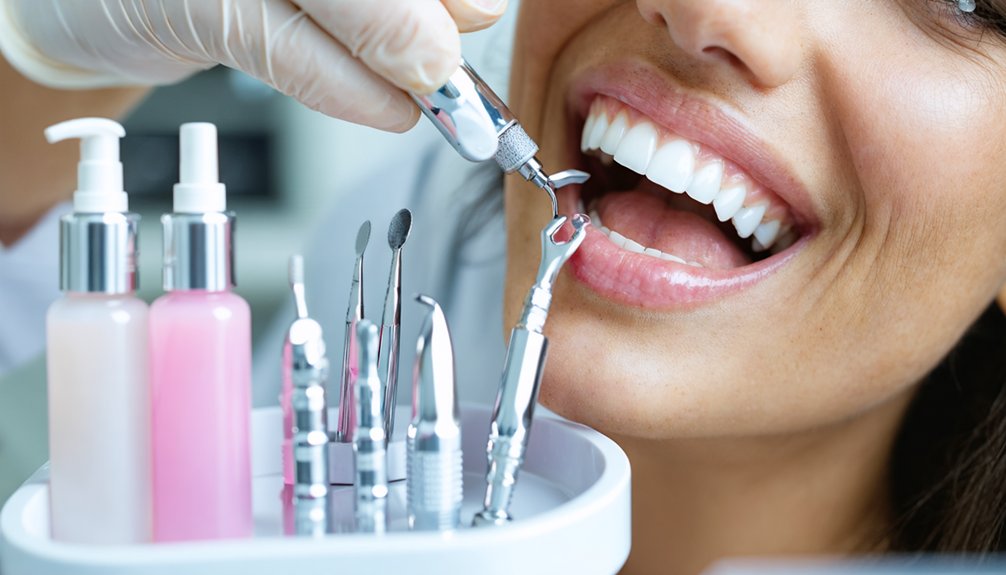
You’ll find effective teeth whitening at accessible price points through peroxide-based strips that deliver one-to-two-shade improvements over 10-14 days, or LED-activated gel systems achieving up to twelve-shade advancement in 15-30 minute sessions. Whitening pens offer targeted application for Rs. 500-3,500, while daily-use toothpastes and mouthwashes containing 1.5-2% hydrogen peroxide provide gradual results within 6-12 weeks. Natural alternatives like baking soda provide mild abrasive action for surface stain removal. The following sections detail each method’s clinical efficacy, application protocols, and cost-benefit ratios.
Key Takeaways
- Over-the-counter whitening strips containing peroxide lighten teeth one to two shades with 10-14 days of daily use.
- Whitening gels and pens offer portable touch-ups costing Rs. 500-3500, delivering one-to-four-shade improvements through targeted application.
- LED whitening kits provide professional-level results at home with 15-30 minute sessions, achieving up to twelve-shade advancement.
- Whitening toothpastes and mouthwashes produce gradual lightening over 6-12 weeks with consistent twice-daily application.
- Natural DIY methods using baking soda and hydrogen peroxide remove surface stains affordably through mild abrasive action.
Over-the-Counter Whitening Strips: Affordable and Effective
Over-the-counter whitening strips function through a straightforward mechanism: thin, flexible plastic strips coated with peroxide-based gel adhere directly to your teeth, allowing the active ingredients—typically hydrogen peroxide or carbamide peroxide—to penetrate the enamel. These agents oxidize surface-level stains from coffee, tea, and tobacco, demonstrating measurable efficacy on extrinsic discolorations.
Clinical studies published in the Journal of the American Dental Association document average lightening of one to two shades following a complete treatment cycle. The convenience factor enables you to apply treatments at home for 30-60 minutes daily over 10-14 days without scheduling professional appointments.
Long term affordability makes these products particularly advantageous for managing minor staining, though their lower peroxide concentrations limit effectiveness on deeper intrinsic discolorations. Results require consistent adherence to manufacturer protocols for ideal outcomes.
Whitening Gels and Pens for On-the-Go Touch-Ups
Portability defines the primary advantage of whitening pens and gels, which deliver peroxide-based or alternative bleaching agents through compact, twist-activated dispensers. You’ll achieve one-to-four-shade improvements through targeted application, with results visible within seven days on properly prepared surfaces. These formulations utilize timed release ingredients that penetrate enamel while minimizing gingival contact.
Application Protocol:
- Precision targeting – Brush applicators enable custom dosage levels for specific discolored areas, addressing interproximal stains without full-mouth exposure
- Cost efficiency – Rs. 500-3500 price points deliver multiple applications versus Rs. 7000-35000 professional alternatives
- Reduced sensitivity – Peroxide-free variants eliminate irritation entirely, while lower-concentration hydrogen peroxide formulations decrease adverse reactions compared to strip-based systems
You’ll maximize efficacy by maintaining dry tooth surfaces during 10-30-minute contact periods, though deep intrinsic stains require clinical intervention.
LED Whitening Kits: Professional Results at Home
Light-emitting diode technology bridges clinical whitening protocols and consumer accessibility through handheld systems that combine carbamide or hydrogen peroxide gels (10-15% concentration) with blue-spectrum wavelength activation. You’ll experience straightforward protocols: apply gel to custom trays, position LED units against dentition, and activate 15-30 minute treatment cycles.
LED whitening systems democratize professional-grade treatments through calibrated peroxide gels and blue-light activation in convenient at-home protocols.
This easy application process delivers measurable chromatic shifts—clinical data demonstrates 1.8 ΔE units improvement, with select formulations achieving twelve-shade advancement within fourteen days.
Long lasting whitening results persist multiple months when you maintain post-treatment protocols, though outcomes remain subordinate to professional applications utilizing 25-40% peroxide concentrations. You control treatment frequency and duration while minimizing sensitivity risks through enamel-safe formulations and UV-free light wavelengths.
Wireless, water-resistant designs accommodate variable schedules without compromising efficacy parameters.
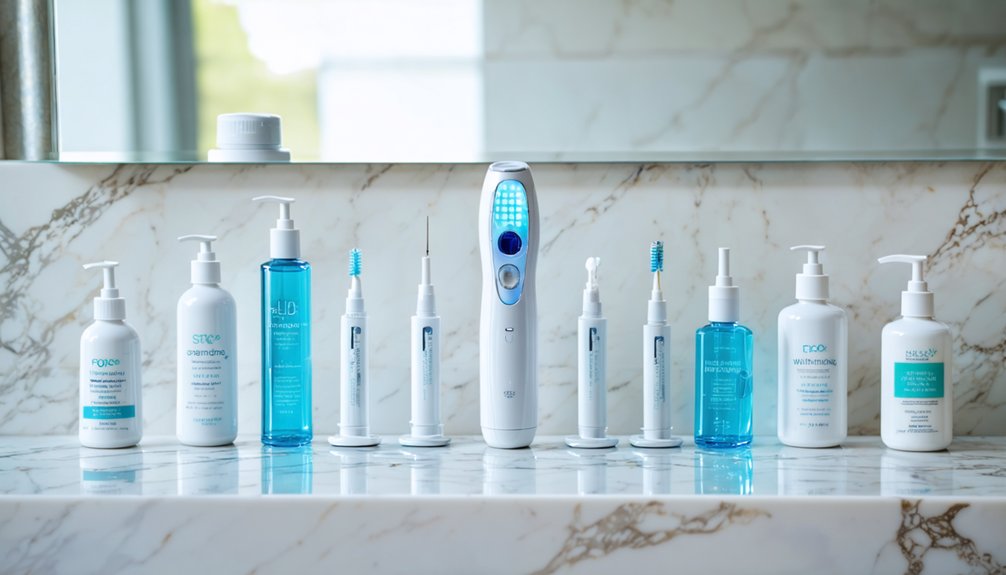
Daily Whitening With Toothpastes and Mouthwashes
While concentrated peroxide systems and LED acceleration deliver accelerated chromatic modifications, daily maintenance products provide consistent surface stain management through routine oral hygiene integration.
Whitening toothpastes utilize abrasive particles for enamel surface cleaning, while mouthwashes containing 1.5-2% hydrogen peroxide address extrinsic discoloration. The duration of whitening effects extends over 6-12 weeks with twice-daily application, demonstrating comparable efficacy to professional maintenance protocols.
Optimal implementation strategies:
- Sequential application protocol: Brush with whitening toothpaste before mouthwash administration to maximize active ingredient contact time
- Controlled exposure duration: Maintain 60-second swishing intervals without immediate post-rinse dilution
- Dietary modification: Limit chromogenic beverage consumption and apply products immediately following stain-inducing foods
Regarding safety and side effects, these formulations permit daily use in dentally healthy adults, though sensitivity manifestations may necessitate gentler alternatives. Overuse of abrasive formulations risks enamel degradation.
Natural DIY Methods to Brighten Your Smile
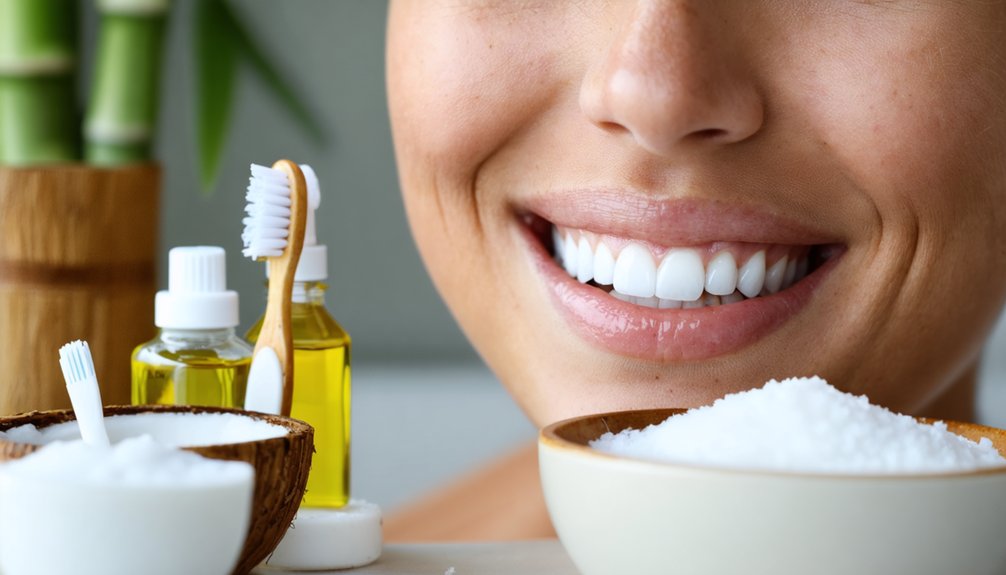
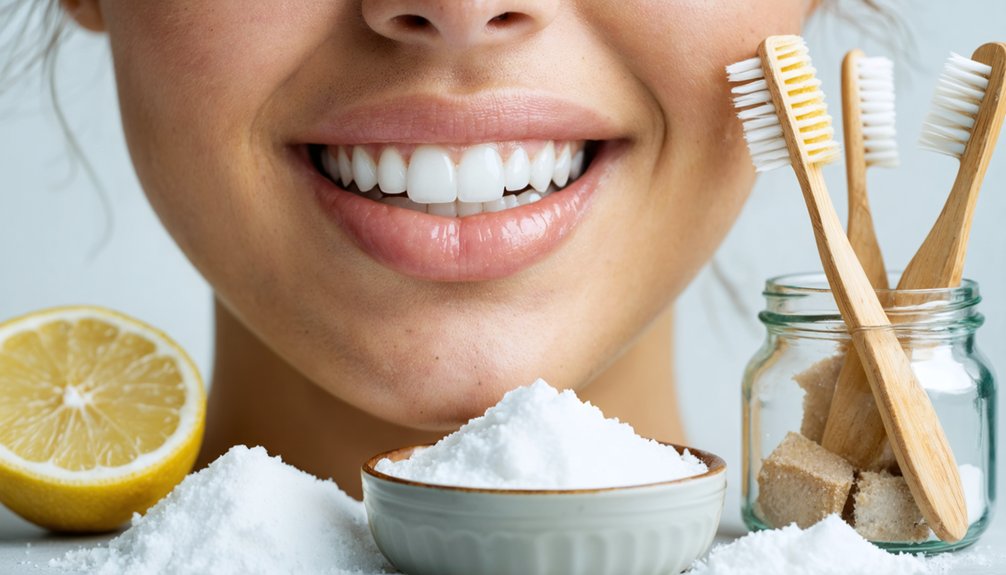
Natural whitening alternatives offer accessible, cost-effective interventions for individuals seeking gradual chromatic enhancement without professional dental expenditures. You’ll find baking soda‘s mild abrasiveness effectively removes surface stains when mixed with water and applied several times weekly. Research demonstrates toothpastes containing baking soda considerably reduce plaque and gingival inflammation compared to standard formulations.
Hydrogen peroxide serves as a natural bleaching agent; dilute it for rinses or combine with baking soda for controlled application. Clinical trials confirm higher-concentration peroxide toothpastes deliver superior whitening after twelve weeks. However, activated charcoal risks include enamel damage and increased sensitivity despite trending popularity.
Oil pulling effectiveness remains limited for direct whitening, though coconut oil’s antimicrobial properties may reduce plaque-related discoloration. Crunchy vegetables like carrots and celery mechanically remove surface deposits while stimulating protective saliva production.
Frequently Asked Questions
How Long Do Teeth Whitening Results Typically Last Before Retreatment Is Needed?
Your whitening maintenance schedule depends on the treatment method—professional results last 1-3 years, at-home trays 6-12 months, and OTC products 3-6 months. Teeth sensitivity factors and lifestyle habits like smoking dramatically affect longevity, requiring retreatment accordingly.
Are There Specific Foods to Avoid After Using Whitening Products?
You’ll need to avoid acidic foods and limit consumption of staining beverages for 48-72 hours post-whitening. Dark-pigmented items, coffee, red wine, and citrus compromise enamel permeability, reducing treatment efficacy and causing premature discoloration.
Can Teeth Whitening Cause Permanent Damage to Tooth Enamel Over Time?
You’ll find that properly administered whitening won’t permanently damage enamel. However, long-term whitening effects from overuse present potential enamel weakening risks. You’re safeguarding your teeth by consulting professionals who monitor peroxide concentrations and implement fluoride remineralization protocols.
What Causes Tooth Sensitivity During Whitening and How Can It Be Prevented?
Peroxide penetrates enamel exposing dentinal tubules, triggering nerve irritation. You’ll prevent sensitivity by selecting lower-concentration products, modifying whitening application methods with shorter intervals, using desensitizing toothpaste containing potassium nitrate, and applying fluoride treatments to remineralize enamel effectively.
Are Whitening Products Safe for People With Dental Work Like Crowns?
Whitening products won’t harm your crowns but produce zero whitening effect on them. You’ll experience different sensitivity levels on natural teeth versus restorations. Consider alternative whitening methods like professional treatments first, or you may need crown replacement to match.