You’ll find effective teeth whitening at home for under $50 by choosing products with carbamide or hydrogen peroxide—the same active ingredients dental professionals use. Top-rated options like PurelyWHITE DELUXE Kit ($29.99) and Crest 3DWhitestrips ($29.99-$44.99) deliver clinical-grade results through proper peroxide concentrations. Look for formulas that include desensitizing agents like potassium nitrate and avoid harsh abrasives like activated charcoal. When you apply these products correctly with consistent daily use, you can remove up to 95% of surface stains. The following guide breaks down exactly which ingredients work and how to maximize your results.
Key Takeaways
- Effective kits under $50 include PurelyWHITE DELUXE ($29.99), Fairywill Strips ($14.79), and Ollm’s system ($19.89) with professional-grade results.
- Look for carbamide peroxide or hydrogen peroxide formulas that penetrate enamel to break down stains without excessive abrasiveness.
- Avoid products with overly concentrated bleaching agents, non-custom trays, or activated charcoal that can damage enamel structure.
- Apply gel to clean, dry teeth for 10-30 minutes daily over 1-2 weeks for optimal whitening effectiveness.
- Choose kits with desensitizing ingredients like fluoride or potassium nitrate to prevent tooth sensitivity during treatment.
Active Whitening Ingredients That Deliver Results
Understanding which active ingredients power your at-home whitening kit directly impacts your treatment outcomes. Hydrogen peroxide penetrates enamel to break down stains effectively and appears in products like ACT Whitening + Anticavity Fluoride Mouthrinse. Carbamide peroxide, preferred by dental professionals, breaks apart into urea and hydrogen peroxide while proving less abrasive on teeth.
You’ll find abrasive agents like calcium carbonate and hydrated silica remove surface stains through mechanical action. Sodium pyrophosphates prevent tartar formation and guard against additional staining. Long term safety considerations include monitoring potential side effects like tissue irritation and tooth sensitivity.
Fluoride and potassium nitrate address sensitivity concerns during treatment. Natural alternatives like bromelain and papain offer enzyme-based stain removal for those seeking gentler formulations.
Top Affordable Products Under $50
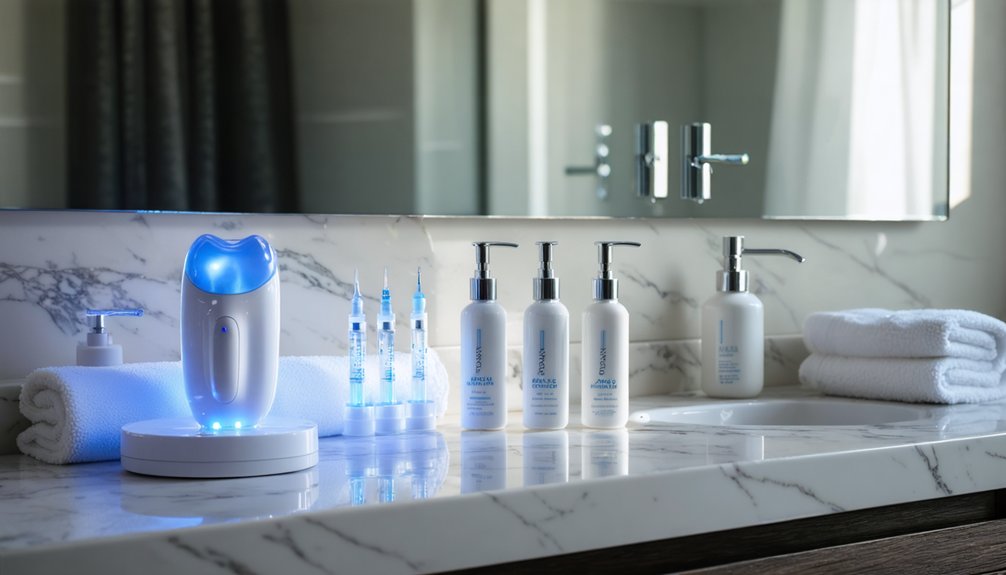
Quality teeth whitening doesn’t require a substantial investment, as numerous clinically effective products deliver professional-grade results for under $50. The PurelyWHITE DELUXE Kit ($29.99) removes 95% of stains with carbamide peroxide, earning 4.7 stars from 4,220 reviews. MySmile’s LED-accelerated system ($29.99) provides teeth whitening gel consistency across four pens, with the convenience of kit components designed for 10-minute applications.
Crest 3DWhitestrips offers multiple formulations: the Sensitive White Kit ($29.99) achieves 4.3 stars across 1,083 reviews, while Professional White ($44.99) delivers advanced results. Fairywill Strips ($14.79) provide budget-conscious efficacy with non-slip technology for sensitive teeth. Ollm’s 35% carbamide peroxide system ($19.89) includes three gel syringes with 32X LED acceleration, maximizing stain removal efficiency within your budgetary parameters.
Supporting Ingredients That Enhance Whitening
While carbamide peroxide and hydrogen peroxide serve as the primary bleaching agents in whitening formulations, several supporting ingredients substantially amplify their efficacy and stability. Carbopol, a thickening polymer, safeguards formula stability while enhancing peroxide penetration through enamel. You’ll find this ingredient in professional-grade products requiring consistent delivery over extended wear periods.
Sodium pyrophosphates provide whitening enhancement by breaking apart surface stains and preventing tartar accumulation. They create a protective barrier against new discoloration by adhering to your tooth’s pellicle layer.
Sodium hydroxide removes protein deposits from enamel surfaces, eliminating barriers that impede peroxide action. When used in controlled concentrations, it effectively clears the pellicle coating, allowing bleaching agents to access chromogens more efficiently. These synergistic ingredients optimize your whitening results.
What to Avoid in Over-the-Counter Kits
Though over-the-counter whitening kits offer convenience and affordability, they present substantial risks when formulated with problematic ingredients or substandard delivery systems. Enamel health concerns arise from excessively concentrated hydrogen peroxide formulations that permanently weaken your tooth structure, increasing cavity susceptibility and fracture risk. Gum irritation risks escalate when non-custom trays allow chemical seepage onto soft tissues, causing burns and recession.
Avoid products containing:
- Coarse activated charcoal that mechanically abrades enamel through repeated scraping action
- High-concentration bleaching agents exceeding professional recommendations, which accelerate mineral loss and sensitivity
- Poorly fitted one-size-fits-all trays that fail to contain gel properly, exposing gums to prolonged chemical contact
- Formulations lacking desensitizing compounds that provide no protection against thermal sensitivity or pain
Select evidence-based products with appropriate concentrations and proper delivery mechanisms.
Application Tips for Maximum Effectiveness
Selecting appropriate whitening products means nothing without proper application technique—improper use diminishes results and increases adverse effects. Brush and floss before treatment, then dry teeth completely to prevent saliva dilution. Avoid fluoride toothpaste immediately prior, as it interferes with whitening agents.
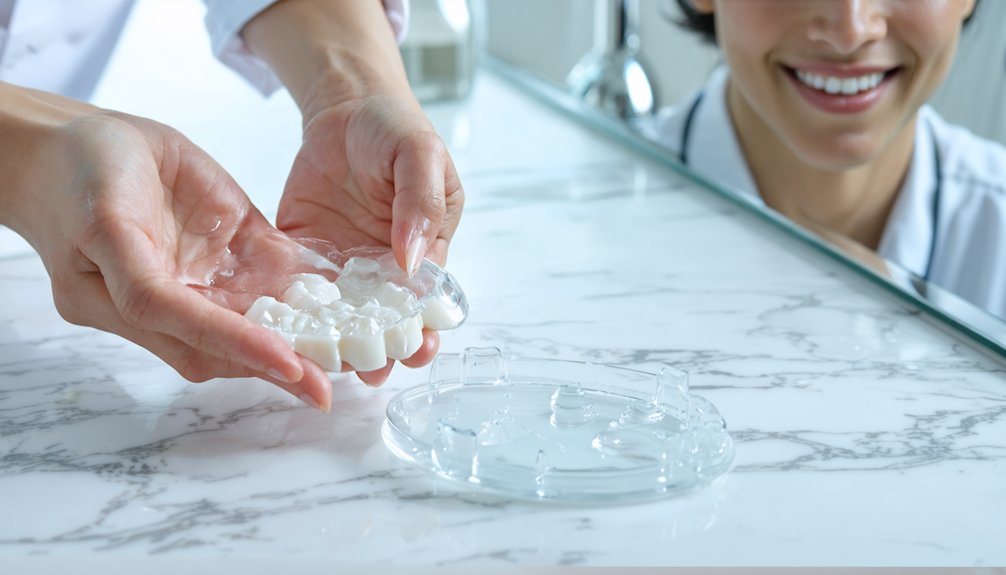
Apply pea-sized gel amounts per tooth using custom trays—proper tray fit guarantees even distribution and prevents gum irritation. Insert gel-loaded trays quickly, wiping excess immediately. During sessions, lean back slightly, minimize mouth movement, and swallow saliva regularly. Activate LED accelerators if included.
Establish a consistent application routine: 10-30 minutes daily for 1-2 weeks, then monthly maintenance. Remove products immediately if sensitivity develops. Post-treatment, rinse thoroughly and avoid staining substances for 30 minutes minimum. Consult your dentist for persistent complications.
Frequently Asked Questions
How Long Do Teeth Whitening Results Typically Last Before Retreatment Is Needed?
The duration of whitening effects typically ranges from 6-12 months with at-home kits. You’ll need touch-ups every 3-4 months for ideal maintenance of whitening results, especially if you’re prone to discoloration from dietary habits or smoking.
Can Teeth Whitening Kits Be Safely Used With Dental Crowns or Veneers?
You’ll find whitening kits won’t damage your crowns or veneers, but they can’t whiten them either. Potential side effects include color mismatch as natural teeth brighten while dental restorations remain unchanged, impacting your smile’s uniformity.
Are Budget Whitening Kits Safe for Teenagers and Young Adults to Use?
Budget whitening kits aren’t recommended for teenagers under 14-15, as they risk enamel damage and gum irritation. You’ll minimize potential side effects by following proper usage guidelines and consulting your dentist before treatment to guarantee safe outcomes.
Will Whitening Products Work on Teeth Stained by Medications Like Tetracycline?
Budget whitening kits won’t effectively treat tetracycline-stained teeth. You’ll need professional-grade bleaching for 3-6 months to see partial improvement, particularly for mild cases. The effectiveness of whitening on tetracycline stains remains limited; possible side effects include increased sensitivity.
How Do Budget Kits Compare to Professional In-Office Whitening Treatments?
Budget kits offer affordable whitening solutions for minor surface stains but can’t match professional treatments’ immediate, dramatic results. The effectiveness of budget kits remains limited due to lower peroxide concentrations, requiring weeks of consistent application versus one in-office session.