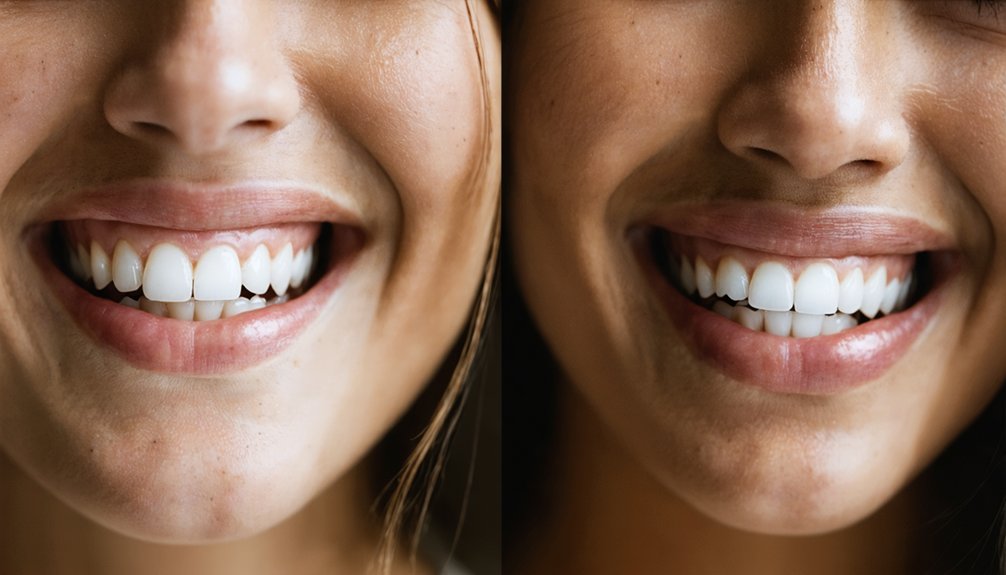
Teeth whitening directly boosts your confidence by eliminating the self-consciousness that holds you back in conversations and social situations. When you’re not hiding your smile, you engage more naturally, make stronger first impressions, and build deeper personal connections. Whiter teeth signal health, youthfulness, and competence — shaping how others perceive you before you speak. From choosing the right whitening method to maintaining your results long-term, there’s much more to uncover ahead.
Key Takeaways
- Whiter teeth boost confidence by eliminating self-consciousness, making conversations easier and encouraging genuine smiling that strengthens personal relationships.
- Brighter smiles signal health, youthfulness, and competence, creating strong first impressions and reshaping how others perceive you socially.
- Open, confident smiles foster warmth and approachability, deepening bonds and improving the overall quality of social connections.
- Professional whitening delivers faster, dramatic results, while at-home kits offer gradual improvement with lower peroxide concentrations.
- Maintaining results requires daily oral hygiene, limiting staining foods, using sensitivity toothpaste, and scheduling regular touch-up sessions.
Why Teeth Whitening Makes You More Confident in Conversation
Confidence shapes how you engage in conversations, and the appearance of your smile plays a surprisingly significant role in building it.
Teeth confidence directly influences your willingness to speak openly, make eye contact, and connect authentically. Whitening effects extend beyond aesthetics — they reshape your self-image and amplify your emotional benefits by reducing anxiety tied to appearance.
Teeth confidence reshapes your self-image, reduces appearance anxiety, and transforms how openly you connect with others.
When you’re no longer concealing stained teeth, conversation ease increases naturally. Social perception shifts too; others view whiter teeth as indicators of attractiveness boost, professionalism, and health.
This appearance improvement strengthens your bonding power by encouraging genuine, open smiling — a nonverbal signal that fosters trust. Research confirms that smile impact reaches both internal confidence and external social outcomes, giving you measurable control over how you present yourself.
How Teeth Whitening Changes the Way You Connect With People
When you smile openly and freely, you create an immediate sense of warmth and approachability that draws others toward you.
Teeth whitening removes the self-consciousness that once held you back, replacing hesitation with a natural willingness to engage.
That shift in confidence doesn’t just change how you present yourself — it fundamentally transforms the quality of your connections with others.
Smiling Builds Deeper Bonds
A bright smile does more than improve your appearance—it fundamentally changes how you engage with the people around you. When you smile authentically, you signal openness and approachability, prompting reciprocal warmth from others. This exchange strengthens emotional connection and accelerates trust-building in both personal and professional relationships.
Teeth whitening removes a common barrier—self-consciousness about discoloration—that causes many people to suppress their smiles. Once that barrier is gone, you smile more freely and frequently.
Research confirms that genuine smiling activates positive responses in others, deepening interpersonal bonds over time.
You’re not simply improving aesthetics; you’re actively reshaping how people experience you. A confident, open smile invites meaningful conversation, sustains engagement, and ultimately builds the deeper, more fulfilling connections you want in your life.
Confidence Transforms Social Interactions
The moment your self-consciousness about your smile disappears, your entire approach to social interaction shifts. You engage more directly, initiate conversations with greater ease, and project an assurance others immediately notice.
The whitening effects on your psychological state aren’t superficial—research confirms that brighter teeth measurably reduce negative emotions tied to social anxiety.
Your social confidence strengthens because you’re no longer managing concealment. You stop angling your face away, stop suppressing laughter, stop calculating whether someone noticed your teeth. That mental energy redirects toward genuine connection.
Professional environments respond accordingly. Colleagues perceive you as more competent and approachable.
Personal relationships deepen because you’re fully present rather than self-monitoring. Whitening doesn’t fabricate confidence—it removes a specific barrier that was consistently limiting your social effectiveness.
What Others Really Notice About Your Smile
Have you ever wondered what people actually notice first when they meet you? Research confirms your smile’s impact is immediate and far-reaching.
Others unconsciously assess your attractiveness factors within seconds, linking whiter teeth to health, youthfulness, and professional competence.
Within seconds, people unconsciously connect your smile’s brightness to health, youthfulness, and professional competence.
Stained teeth prompt people to form negative assumptions about your hygiene and success. Conversely, a brighter smile signals liveliness and confidence, drawing positive attention to your facial features.
Studies indicate that people perceive those with whiter teeth as more attractive, capable, and socially desirable.
You control this perception. Whitening your teeth directly influences how others evaluate you professionally and personally.
Understanding this dynamic gives you a strategic advantage—your smile communicates before you speak a single word, shaping every interaction from the very first moment.
What Kind of Whitening Results Can You Realistically Expect?
When choosing between professional and at-home whitening, you’ll find that in-office treatments deliver the fastest and most dramatic shade improvements, while over-the-counter kits offer gradual, more modest results.
Once you’ve achieved your desired level of whiteness, you’ll need to schedule touch-up sessions monthly or twice yearly to maintain it.
Avoiding staining foods and beverages, practicing consistent oral hygiene, and using an electric toothbrush will help you extend the longevity of your results.
Professional Vs. At-Home Results
Whether you choose professional whitening or an at-home kit, your results will largely depend on the method’s strength and your teeth’s current condition.
Professional techniques deliver faster, more dramatic outcomes, while at-home methods offer gradual, manageable improvements.
Key distinctions to take into account:
- Professional treatments use higher-concentration bleaching agents, producing noticeable results in a single session.
- At-home kits contain lower peroxide concentrations, requiring consistent use over days or weeks.
- Sensitivity management differs greatly; professional settings allow immediate clinical intervention if discomfort occurs.
- Cost versus control matters; at-home methods let you self-direct your whitening pace and budget.
Understanding these differences helps you make an informed decision aligned with your confidence goals, timeline, and personal preferences.
Maintaining Your Whitened Smile
Once you’ve achieved your desired shade—whether through professional treatment or an at-home kit—keeping that brightness requires consistent, practical effort.
Schedule touch-up sessions monthly or twice yearly, depending on your lifestyle and staining habits. Use whitening products as directed—overuse causes sensitivity and enamel damage without improving results.
Your daily oral hygiene routine directly determines how long results last. Brush twice daily, floss regularly, and consider an electric toothbrush for superior plaque removal.
Avoid coffee, tea, and red wine when possible; use a straw when you can’t. Rinse your mouth immediately after consuming staining beverages.
Manage post-whitening sensitivity with specialized toothpaste formulated for that purpose.
Following these disciplined habits keeps your smile consistently bright and protects your investment long-term.
How to Handle Sensitivity Without Losing Your Whitening Momentum
Tooth sensitivity is one of the most common side effects of whitening treatments, but it doesn’t have to derail your progress. Effective sensitivity management lets you maintain your whitening techniques without interruption.
- Use desensitizing toothpaste containing potassium nitrate or fluoride before and after treatments to block pain signals.
- Reduce treatment frequency temporarily—spacing sessions further apart gives enamel recovery time without abandoning your goals.
- Avoid temperature extremes in food and beverages immediately post-treatment, as exposed dentin amplifies discomfort considerably.
- Apply desensitizing gel directly to teeth post-whitening; many professional kits include this as a standard component.
You’re in control of your whitening timeline. Adjusting your approach strategically preserves your results while eliminating unnecessary discomfort, keeping your confidence-building momentum firmly intact.
Daily Habits That Prevent Staining and Protect Your Whitening
Protecting your whitening results requires consistent daily habits that minimize stain accumulation and preserve enamel integrity. Limit staining foods and beverages—coffee, tea, red wine, and berries—or use a straw to reduce direct contact with teeth. Rinse your mouth immediately after consuming pigment-rich substances to prevent stain absorption.
Prioritize rigorous oral hygiene by brushing twice daily with a whitening toothpaste and flossing consistently to eliminate plaque buildup that accelerates discoloration. An electric toothbrush delivers superior cleaning efficacy compared to manual alternatives, targeting surface stains more effectively.
Schedule touch-up whitening sessions monthly or biannually to sustain your desired shade. Following product instructions precisely prevents enamel damage while optimizing results.
These disciplined habits guarantee your investment in whitening translates into lasting confidence and appearance improvements.
How Long Do Teeth Whitening Results Actually Last?

How long your whitening results last depends on several interconnected factors, including your lifestyle habits, the method used, and individual biological differences. Whitening duration typically ranges from several months to three years, depending on your commitment to maintenance strategies.
Key factors controlling your results:
- Method matters: Professional treatments deliver longer-lasting outcomes than over-the-counter alternatives.
- Touch-up consistency: Scheduling monthly or biannual sessions preserves your desired shade effectively.
- Dietary discipline: Limiting coffee, tea, and red wine directly extends whitening duration.
- Oral hygiene: Twice-daily brushing and flossing prevent surface staining between treatments.
You control how long your results last. By implementing deliberate maintenance strategies and monitoring your habits closely, you can sustain a brighter smile well beyond the initial treatment period.
How to Keep Your Teeth Whitening Results Looking Fresh
Once you’ve completed your whitening treatment, maintaining those results requires consistent, deliberate habits. Brush twice daily, floss regularly, and use an electric toothbrush to prevent surface discoloration.
Sustaining whitening results demands consistent daily habits—brush twice, floss regularly, and embrace an electric toothbrush.
Avoid common whitening myths—coffee, tea, and red wine don’t permanently reverse results if you act promptly by rinsing your mouth or using a straw.
Incorporate touch-up techniques strategically. Monthly at-home tray applications or twice-yearly professional sessions sustain your desired shade without over-whitening, which can compromise enamel integrity.
Use sensitivity-formulated toothpaste post-treatment to manage any discomfort effectively.
Follow product instructions precisely—excessive application doesn’t accelerate results. Your personality traits, including conscientiousness, directly influence long-term whitening success.
Frequently Asked Questions
Can Teeth Whitening Improve Self-Esteem in People With Social Anxiety?
Yes, teeth whitening can improve your self-esteem if you experience social anxiety. Enhancing your teeth aesthetics boosts confidence, promotes anxiety reduction, and encourages you to smile openly, fostering more meaningful social interactions and emotional well-being.
Does Personality Type Influence How Satisfied You Feel After Whitening?
Studies show low neuroticism boosts your short-term satisfaction, while high conscientiousness sustains long-term results. Your personality perceptions directly shape your whitening expectations, meaning you’ll feel more fulfilled when your natural traits align with your treatment goals.
Are Certain Personality Traits Linked to Longer-Lasting Whitening Confidence Benefits?
Yes, your personality resilience directly shapes lasting benefits. If you’re highly conscientious, you’ll maintain whitening results longer. Lower neuroticism strengthens your confidence perception over time, sustaining improved self-esteem and meaningful social engagement well beyond initial treatment.
Can Teeth Whitening Positively Impact Career Advancement and Professional Relationships?
When Sarah landed her promotion after whitening her teeth, her confidence transformed workplace interactions. Yes, it can boost your career—a brighter smile enhances your professional image, making you appear more competent, approachable, and successful to colleagues and clients.
How Soon After Whitening Do Psychological and Social Benefits Typically Appear?
You’ll notice psychological effects and social benefits shortly after your whitening timeline begins. Reduced self-consciousness and improved confidence typically emerge almost immediately, enhancing your interactions and emotional well-being within days of completing your initial treatment.
References
- https://www.westfieldsmiles.com/articles/emotional-effects-of-whiter-teeth
- https://westgatedentalcentre.com/the-psychological-impact-of-whiter-teeth-on-self-esteem-and-social-connections/
- https://drritapeck.com/psychological-benefits-of-teeth-whitening/
- https://www.emeralddental.ie/blog/the-psychology-of-a-brighter-smile-how-whitening-affects-confidence/
- https://pmc.ncbi.nlm.nih.gov/articles/PMC12330114/
- https://www.drweinstock.com/2023/09/29/the-emotional-benefits-of-whitening/
- https://www.elitedentalwellness.com/blog/teeth-whitening-boost-confidence
- https://www.viennafamilydental.com/blog/reveal-smile-teeth-whitening-boosts-confidence/44072
- https://myhealthdentistry.com/blog/our-office/2025/10860/the-transformative-power-of-teeth-whitening-for-confidence-and-social-interactions/
- https://www.bsuperb.com/how-teeth-whitening-services-improve-confidence-and-appearance/