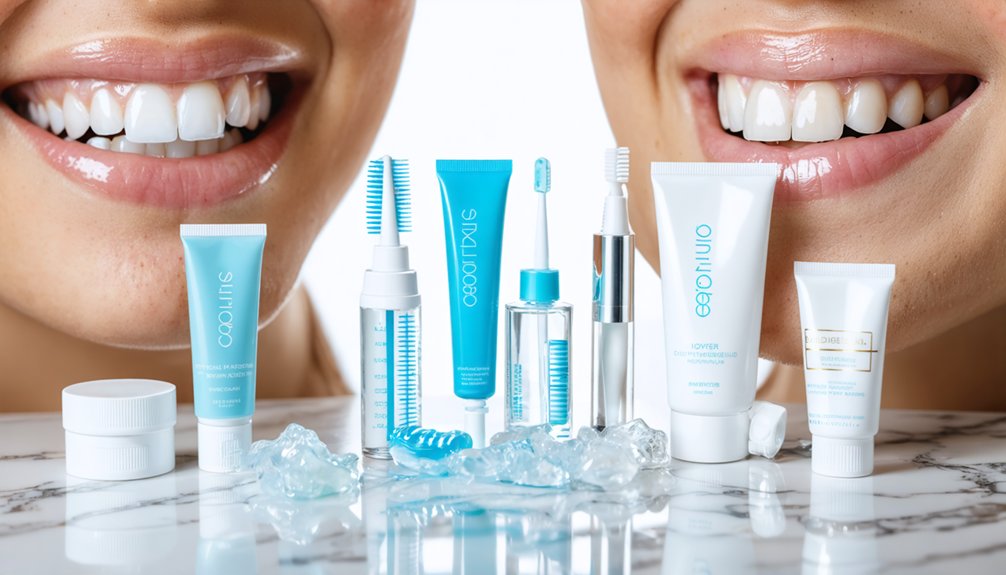
For general yellowing, Crest 3D White Glamorous White delivers reliable results. If you have sensitive teeth, Crest 3D Whitestrips Dental Whitening Kit Sensitive reduces discomfort while still targeting stains. Lumineux Whitening Strips offer a peroxide-free alternative that protects enamel integrity. For deep, stubborn discoloration, Professional Effects strips justify their $44.99 price point. Matching the right formula to your specific stain type determines how effective your treatment will be—and there’s more to take into account before you start.
Key Takeaways
- Crest 3D White Glamorous White strips effectively target general yellowing caused by dietary habits like coffee, tea, and red wine.
- Professional Effects strips address deep stains aggressively, priced at $44.99, making them ideal for severe discoloration.
- Lumineux Whitening Strips offer a peroxide-free, enamel-safe alternative, minimizing sensitivity risks during treatment.
- Crest 3D Whitestrips Dental Whitening Kit Sensitive reduces discomfort, making it optimal for users with sensitive teeth.
- Plus White 5 Minute Kit provides a budget-friendly whitening solution at $11.49 for mild yellowing cases.
Why Your Teeth Turn Yellow in the First Place
Before reaching for whitening strips, it helps to understand why teeth yellow in the first place. Your enamel, the outer layer of each tooth, accumulates stains through daily exposure to pigmented compounds.
Teeth yellow because enamel absorbs pigmented compounds from everyday exposure, long before whitening strips enter the picture.
Dietary habits play a significant role — coffee, tea, red wine, and berries deposit chromogens directly onto enamel surfaces, creating extrinsic teeth stains over time.
Intrinsic discoloration runs deeper, originating within the dentin layer beneath enamel. Aging naturally thins enamel, revealing dentin’s yellowish tone.
Tobacco use accelerates surface staining through tar and nicotine deposits. Certain medications, particularly tetracycline antibiotics, can also alter tooth color internally.
Identifying your stain type matters. Extrinsic stains respond well to whitening strips, while intrinsic discoloration may require professional intervention for meaningful results.
How Whitening Strips Actually Remove Yellow Stains
Once you’ve identified the source of your yellowing, understanding how whitening strips address those stains clarifies what you can realistically expect.
Whitening technology in most strips relies on peroxide-based compounds that penetrate your enamel‘s surface and oxidize discolored molecules beneath it. This chemical reaction breaks the bonds holding stains in place, producing measurable stain removal without abrasion.
You apply the strips directly to your teeth, allowing the active agent consistent contact time with the enamel. Peroxide concentration determines how aggressively the formula targets embedded pigments.
If you prefer avoiding peroxide, chemical-free options like Lumineux use alternative compounds that reduce sensitivity risks while still delivering gradual brightening.
Recognizing this mechanism helps you select a formula that aligns precisely with your yellowing’s cause and your sensitivity threshold.
The Best Yellow Teeth Whitening Strips Right Now
Selecting the right whitening strips depends on your stain profile, sensitivity level, and budget. Strip effectiveness varies greatly across formulations, so matching the product to your specific needs is critical.
For general yellowing, Crest 3D White Glamorous White delivers consistent, noticeable results.
If sensitivity concerns you, the Crest 3D Whitestrips Dental Whitening Kit Sensitive minimizes discomfort without sacrificing performance.
For a peroxide-free approach, Lumineux Whitening Strips offer enamel-safe whitening backed by user testimonials confirming reduced sensitivity.
Budget-conscious users can rely on the Plus White 5 Minute Kit at $11.49 or the CVS Platinum Whitening Kit.
Professional Effects targets deep, years-old stains at $44.99, making it worth the investment if surface-level options haven’t delivered measurable change.
Choose based on evidence, not marketing.
Do You Actually Need Peroxide in Your Whitening Strips?
Whether peroxide is necessary in whitening strips depends on the type of stain you’re targeting and your sensitivity threshold.
Peroxide-based strips penetrate enamel to address intrinsic discoloration, delivering stronger whitening efficacy for deep or set-in stains. If you’re dealing with surface-level yellowing, peroxide alternatives like those found in Lumineux strips can produce measurable results without triggering sensitivity or chemical exposure.
You’ll want to assess your priorities before choosing. If whitening speed and depth matter most, peroxide remains the clinically supported option.
If you’re managing enamel sensitivity or prefer a cleaner ingredient profile, peroxide-free formulations offer a viable path.
Neither approach is universally superior — your stain type, tolerance, and treatment goals should drive the decision, not marketing claims.
Which Whitening Strips Work Best for Sensitive Teeth?
If you have sensitive teeth, your best option is the Crest 3D Whitestrips Dental Whitening Kit Sensitive, which is specifically formulated to minimize discomfort during treatment.
You can also choose peroxide-free strips like Lumineux, which whiten your teeth without the sensitivity risks associated with peroxide-based formulas.
Selecting the right strip for your sensitivity level lets you achieve meaningful whitening results while keeping discomfort to a minimum.
Best Strips For Sensitivity
Practical comfort tips include limiting application frequency, avoiding cold beverages immediately after use, and pairing strips with a desensitizing toothpaste like Sensodyne.
These strategies help you manage discomfort without abandoning your whitening routine. Selecting the correct strip based on your sensitivity threshold gives you precise control over both comfort and results.
Peroxide-Free Whitening Options
Peroxide-free whitening strips offer a viable alternative when standard formulas trigger sensitivity or cause enamel concerns. Lumineux Whitening Strips lead this category, delivering natural whitening without compromising enamel safety.
Consider these clinically relevant advantages:
- Enamel preservation — Peroxide-free formulas eliminate oxidative damage risks associated with hydrogen peroxide exposure.
- Sensitivity reduction — You’ll experience markedly less post-treatment discomfort compared to peroxide-based competitors.
- Treatment volume — Lumineux’s Super Pack provides 21 treatments, supporting consistent, long-term results.
- Chemical-free composition — You’re avoiding harsh bleaching agents while still achieving measurable whitening outcomes.
If you prioritize enamel safety and tolerate sensitivity poorly, peroxide-free strips give you deliberate control over your whitening regimen without sacrificing effectiveness.
Lumineux remains the strongest evidence-supported choice in this category.
Minimizing Whitening Discomfort
Tooth sensitivity during whitening stems from peroxide penetrating enamel and temporarily irritating dentinal tubules, making strip selection critical for sensitive users.
You’ll find that the Crest 3D Whitestrips Dental Whitening Kit Sensitive addresses discomfort management directly by delivering a lower peroxide concentration, reducing nerve irritation without greatly compromising results.
If you prefer sensitive solutions that eliminate peroxide entirely, Lumineux Whitening Strips offer an enamel-safe formulation that minimizes irritation risk altogether.
You should also consider limiting application frequency and duration, as overuse amplifies sensitivity.
Pairing strips with a desensitizing toothpaste containing potassium nitrate further suppresses nerve response before and after treatments.
How to Apply Whitening Strips for Maximum Results
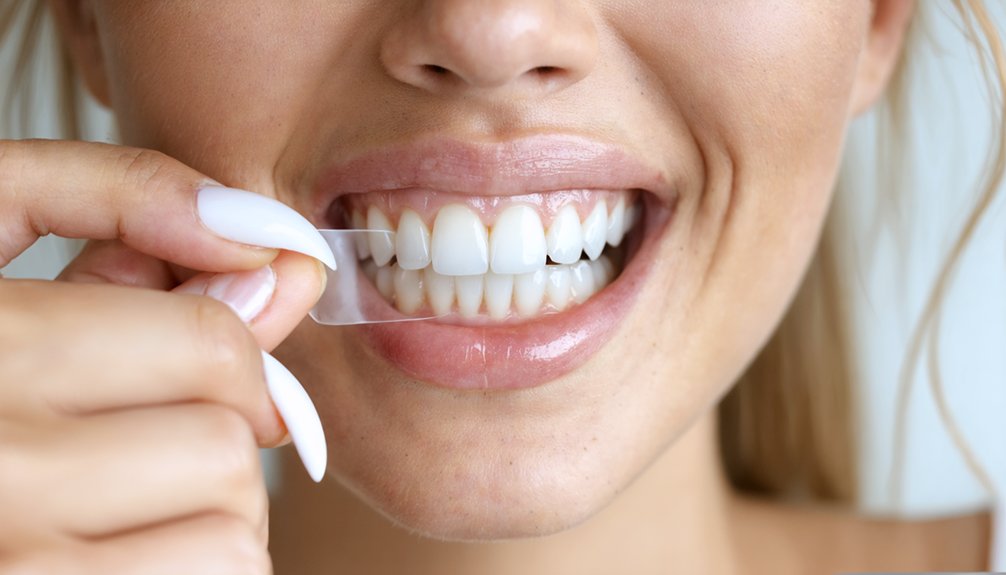
Before applying whitening strips, you’ll want to brush your teeth thoroughly and ascertain your enamel is dry, as moisture can reduce adhesion and limit peroxide contact with the tooth surface.
Position each strip precisely along your gumline, pressing it firmly against the teeth to eliminate air pockets that compromise even whitening coverage.
To maximize results, you should avoid eating, drinking, or rinsing immediately after removal, and consider pairing strips with a whitening toothpaste to address both extrinsic and intrinsic staining.
Prepare Teeth Beforehand
Proper preparation of your teeth greatly influences how effectively whitening strips adhere and perform. Controlling pre-treatment conditions maximizes your results.
- Schedule a dental checkup before starting any whitening regimen to identify cavities or gum issues that strips may aggravate.
- Complete thorough teeth cleaning by brushing without fluoride toothpaste immediately beforehand, as fluoride residue creates a barrier reducing peroxide penetration.
- Dry your teeth using a clean cloth or tissue, since moisture weakens strip adhesion and dilutes the active whitening agent.
- Avoid eating or drinking pigmented substances like coffee or wine for at least one hour prior, minimizing surface stain interference.
Following these steps systematically guarantees the whitening strips maintain consistent contact with enamel, optimizing the chemical action responsible for stain removal.
Apply Strips Correctly
Once your teeth are clean and dry, application technique determines how well the strips bond to enamel and deliver their active whitening agents. Align the gel side precisely along your gumline, pressing firmly to eliminate air pockets that reduce contact between the whitening agents and enamel surface.
Fold the excess strip behind your teeth to secure placement.
Following the manufacturer’s recommended strip duration is critical—exceeding it increases sensitivity without improving results. Most kits specify 30-minute sessions for standard formulas, while sensitive variants recommend shorter windows.
Avoid eating, drinking, or excessive talking during application, as movement compromises adhesion.
These application tips guarantee the active ingredients penetrate stains efficiently. Consistent, correct placement across the full treatment cycle produces measurably whiter teeth.
Maximize Whitening Results
Pairing your whitening strips with complementary habits amplifies the treatment’s effectiveness beyond what strips alone can achieve. Control your outcomes by following these evidence-backed strategies:
- Maintain whitening frequency — Apply strips consistently per the manufacturer’s schedule to sustain enamel-level stain removal without overexposure.
- Optimize strip duration — Honor the recommended wear time precisely; exceeding it risks sensitivity without improving results.
- Pair with whitening toothpaste — Colgate Optic White targets intrinsic stains, complementing strips that address extrinsic discoloration.
- Avoid staining agents — Eliminate coffee, tea, and tobacco during active treatment cycles to prevent recontamination.
Adhering to correct whitening frequency and strip duration gives you measurable, predictable results while protecting enamel integrity throughout your whitening regimen.
Peroxide Strength, Strip Fit, and Other Specs That Actually Matter
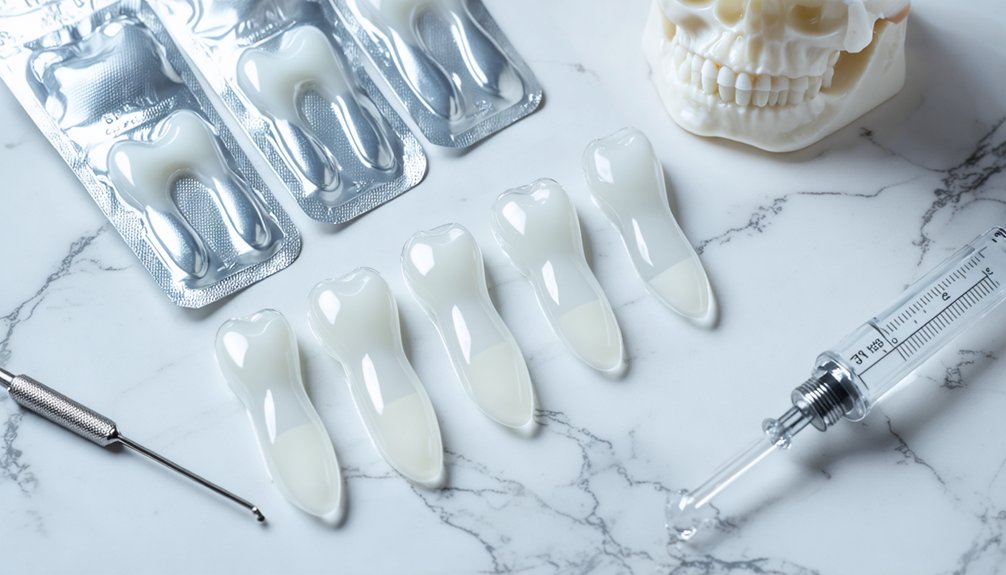
When choosing whitening strips, the specs beneath the marketing claims are what actually drive results. Peroxide concentration determines how aggressively a strip targets discoloration, with higher percentages accelerating stain breakdown.
You’ll want to verify whether a product uses hydrogen or carbamide peroxide, as each releases active agents at different rates. Strip durability affects whether the film holds its position throughout the full application time—poor adhesion means uneven contact and inconsistent whitening.
Fit matters just as much; strips that don’t conform to your tooth contours leave gaps that peroxide can’t bridge. Application time varies by formula, typically ranging from five to thirty minutes.
Matching these variables to your specific tooth geometry and sensitivity threshold gives you measurable control over your outcome.
Frequently Asked Questions
How Long Do Whitening Strip Results Typically Last Before Teeth Yellow Again?
Your whitening strip longevity typically spans six months to two years. Factors affecting discoloration include your diet, tobacco use, and oral hygiene habits. You’ll maintain results longer by avoiding staining foods and beverages consistently.
Can Whitening Strips Be Used Safely During Pregnancy or Breastfeeding?
safety concerns make whitening strips risky during pregnancy or breastfeeding. You should avoid peroxide-based strips and consult your doctor. Instead, you’ll find alternative methods like Lumineux’s peroxide-free strips offer safer choices.
Are Whitening Strips Effective on Dental Crowns, Veneers, or Bonding?
Whitening strips don’t improve dental restoration compatibility—they won’t whiten crowns, veneers, or bonding. Whitening strip effectiveness applies only to natural enamel, so you’ll likely notice uneven color contrast between treated teeth and existing restorations.
How Soon After Eating or Drinking Should You Apply Whitening Strips?
While waiting feels inconvenient, you’ll optimize your ideal whitening routine by waiting 30 minutes after eating or drinking before applying strips. This supports post application care, ensuring enamel’s ready and maximizing your whitening strips’ effectiveness.
Can Children or Teenagers Safely Use Teeth Whitening Strips at Home?
You shouldn’t use whitening strips on children without consulting a dentist first. Most products enforce strict age restrictions of 12–18 years. Follow established safety guidelines, as developing enamel faces higher sensitivity risks and potential long-term damage.
References
- https://www.healthline.com/health/dental-and-oral-health/best-teeth-whitening
- https://nhdentistrybeverlyhills.com/press/6-of-the-best-teeth-whitening-kits-in-the-drugstore/
- https://lumineuxhealth.com/products/super-pack-whitening-strips-21-treatments