Professional in-office whitening treatments using 35-40% hydrogen peroxide concentrations offer your best chance for lightening genetic tooth discoloration, potentially improving color up to 8 shades in a single session. Over-the-counter products deliver modest results—typically 1-2 shades—since they can’t penetrate deeply enough to address the intrinsic chromophores causing hereditary discoloration. For severe cases involving conditions like amelogenesis imperfecta or dentinogenesis imperfecta, cosmetic alternatives such as porcelain veneers or dental bonding provide more effective solutions that address the underlying structural abnormalities causing your discoloration.
Key Takeaways
- Professional in-office whitening with 35-40% hydrogen peroxide penetrates deeper than over-the-counter products, achieving up to 8 shades improvement.
- Over-the-counter whitening strips with higher peroxide concentrations provide modest 1-2 shade improvements but cannot address deep intrinsic discoloration.
- Genetic discoloration from conditions like amelogenesis imperfecta resists standard bleaching because chromophores exist beneath the enamel surface.
- Porcelain veneers offer the most effective solution for stubborn genetic discoloration, lasting 10-15 years while allowing custom shade selection.
- Combining professional whitening treatments with cosmetic options like veneers or bonding provides comprehensive correction for genetically discolored teeth.
Understanding How Genetics Influence Tooth Color and Structure
Your tooth color begins beneath the surface, determined by genetic factors you inherited from your parents. The genetic tooth surface structure consists of two critical layers: enamel and dentin. Your enamel thickness directly impacts whiteness—thicker layers block the yellowish dentin beneath, while thinner enamel allows more visibility of that underlying color.
Inherited enamel translucency varies considerably among families, affecting how much dentin shows through. Some individuals naturally possess more transparent enamel, revealing the yellow-brown dentin hue regardless of hygiene practices.
Specific conditions like dentinogenesis imperfecta and amelogenesis imperfecta create abnormal tooth development. These mutations in genes like DSPP, FAM83H, and AMELX produce grayish or yellow-brown discoloration from defective dentin or enamel formation. Additionally, your genetic mineral metabolism determines fluoride uptake efficiency, influencing both discoloration prevention and fluorosis susceptibility.
Why Genetic Tooth Discoloration Differs From Surface Stains
Understanding the distinction between intrinsic and extrinsic stains is essential for selecting effective whitening solutions for your teeth. Surface stains accumulate on your enamel’s outer layer from external sources like coffee and tobacco, while genetic discoloration originates from structural abnormalities within your tooth’s deeper layers during formation.
Conditions such as amelogenesis imperfecta and dentinogenesis imperfecta create inherent color variations that stem from compromised enamel development rather than lifestyle factors you can control.
Intrinsic Versus Extrinsic Stains
When it comes to tooth discoloration, the location of staining determines everything about your treatment success.
Extrinsic stains sit on your enamel’s surface, originating from tobacco, coffee, tea, and dietary chromogens that deposit within the pellicle layer. You’ll notice blotchy, streaky patterns that respond well to whitening treatments, professional cleaning, and polishing.
Intrinsic stains develop deep within your dentin during tooth formation or through trauma, fluoride overexposure, and tetracycline antibiotics. These uniform discolorations resist standard bleaching because they’re embedded beneath your enamel. Enamel structure defects and increased stain penetration depth allow extrinsic discoloration to internalize through cracks, creating hybrid cases.
Your genetic tooth discoloration qualifies as intrinsic, requiring bonding, veneers, or crowns rather than surface whitening. Understanding this distinction prevents wasted effort on ineffective products.
Genetic Conditions Cause Discoloration
Genetic conditions fundamentally alter how your teeth develop at the cellular level, creating discoloration that originates within the tooth structure itself. When you have dentinogenesis imperfecta, DSPP gene mutations produce abnormally soft dentin that appears grayish-blue to brown-yellow.
Amelogenesis imperfecta disrupts enamel formation through various genetic pathways, resulting in yellow-brown or gray teeth with defective structure. These genetic tooth structure variations resist standard whitening because the discoloration exists within your tooth layers, not on the surface.
Your genetic mineral content influences how light diffracts through the dentin-enamel junction, creating characteristic translucent or opaque appearances. Unlike extrinsic stains from coffee or tobacco, these intrinsic discolorations stem from collagen defects, mineralization abnormalities, and protein synthesis errors during tooth development.
Understanding this distinction helps you select appropriate treatment strategies.
Professional In-Office Whitening Treatments for Hereditary Discoloration
Professional in-office whitening uses concentrated hydrogen peroxide gels (35-40%) that penetrate beneath your enamel surface to target intrinsic discoloration from genetic factors, medications, or trauma.
You’ll achieve results equivalent to weeks of at-home treatment in a single 60-minute session, with teeth becoming 8 shades whiter through targeted breakdown of deep enamel stains.
The higher peroxide concentration delivers faster color change than over-the-counter products while professional supervision protects your gums and minimizes risks of enamel damage or sensitivity.
High-Strength Whitening Agent Benefits
High-concentration whitening agents administered by dental professionals deliver transformative results that over-the-counter products can’t match, particularly for patients struggling with hereditary tooth discoloration. These clinical-grade hydrogen peroxide gels penetrate enamel at depths unattainable through consumer products, breaking down intrinsic stains effectively through light or heat activation. You’ll achieve up to 8 shades of improvement per session.
Professional oversight enables custom whitening plans tailored to your dental history and sensitivity thresholds. Your dentist conducts lightening effectiveness evaluation while applying protective barriers to safeguard gum tissue and administering desensitizing agents when necessary. This controlled environment minimizes side effects while maximizing outcomes.
Results persist for 12 months or longer with proper maintenance, far exceeding store-bought alternatives. The procedure remains non-invasive with zero recovery time, allowing you to resume normal activities immediately.
Single-Session Treatment Results
- Immediate results: Color change occurs within one appointment, unlike at-home methods requiring weeks
- Enhanced six-month outcomes: Both concentrations increase to 7.20-7.68 ΔE at six months, demonstrating long term whitening sustainability
- Genetic ceiling awareness: Hereditary enamel characteristics limit improvement potential despite professional-strength agents
Professional customization adjusts application duration and concentration based on your baseline shade and genetic predispositions, optimizing outcomes within your biological constraints.
Over-The-Counter Whitening Products: Limitations and Realistic Expectations
Most over-the-counter whitening products deliver modest improvements for surface stains but show significant limitations when addressing genetic tooth discoloration. You’ll find peroxide concentration tradeoffs that directly impact results—OTC products achieve ΔE values around 2.0 compared to in-office treatments at 3.3. Whitening strips with higher peroxide concentrations outperform rinses and toothpastes, potentially lightening teeth one to two shades with repeated use.
Over the counter whitening effectiveness remains constrained by lower active ingredient levels and shorter contact times. You’re looking at weeks or months of consistent application rather than immediate results. Non-peroxide alternatives like PAP and charcoal show even weaker outcomes. For intrinsic discoloration from genetic conditions, these products typically can’t penetrate deep enough to address the underlying chromophores causing your discoloration.
Cosmetic Alternatives When Whitening Isn’t Enough
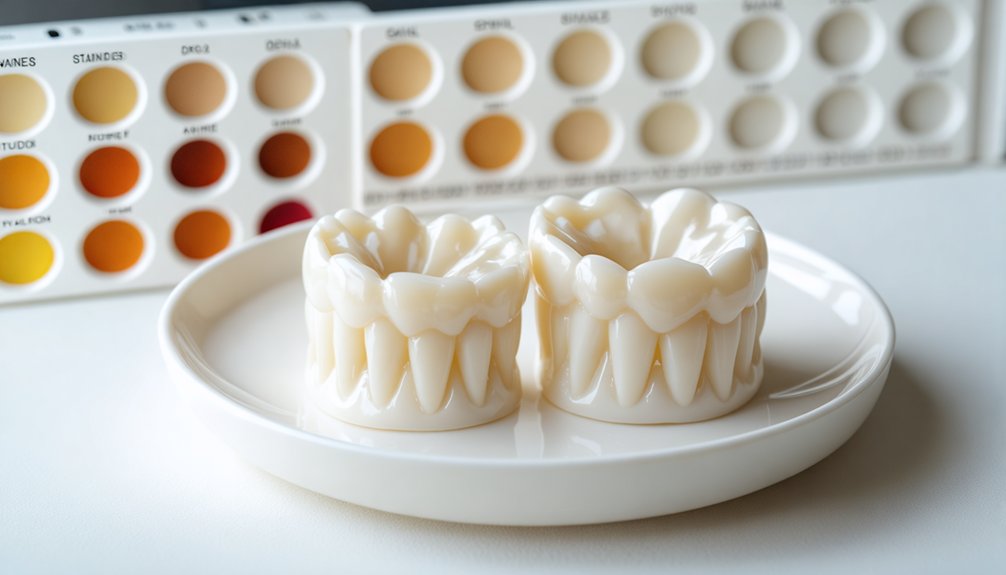
When genetic tooth discoloration proves resistant to conventional whitening treatments, cosmetic dentistry offers permanent solutions that address both intrinsic stains and structural concerns.
Three strategic options for comprehensive smile transformation:
- Custom veneers — Porcelain shells bonded to tooth fronts cover stubborn discoloration while correcting chips, cracks, and gaps. You’ll select your ideal shade and maintain results for 10-15 years with proper care.
- Esthetic dental bonding — Tooth-colored resin applied in a single 30-minute visit provides an affordable alternative for minor discoloration and imperfections. This material seamlessly blends with your natural teeth.
- Porcelain crowns — Complete coverage masks severe intrinsic stains and structural damage simultaneously, delivering transformative results when discoloration extends beyond surface-level concerns.
These treatments eliminate the limitations of whitening products, giving you predictable, lasting control over your smile’s appearance.
Choosing the Right Treatment Based on Your Genetic Condition
Understanding your specific genetic condition determines which treatment will deliver ideal results for your unique discoloration pattern. You’ll need professional whitening for enamel-level stains from fluorosis, achieving up to 8 shades brighter in one visit.
However, amelogenesis imperfecta requires restorative considerations—crowns protect weakened enamel while improving appearance. Dentinogenesis imperfecta responds poorly to bleaching agents; you’ll achieve better outcomes with porcelain veneers or bonding that masks intrinsic discoloration completely.
Tetracycline staining penetrates dentin layers, making composite resin bonding or veneers your most effective options rather than whitening treatments alone. Your treatment plan must include tooth sensitivity management protocols, particularly after whitening procedures or enamel preparation. Consult your dentist to match your genetic diagnosis with appropriate interventions, considering both cosmetic goals and structural integrity requirements for long-term success.
Frequently Asked Questions
Can Genetic Tooth Discoloration Be Prevented Before Teeth Develop?
No, you can’t prevent genetic tooth discoloration before teeth develop. Early dental interventions and preventative dental care can’t alter hereditary enamel or dentin formation. However, you’ll minimize additional staining through proper fluoride monitoring and post-eruption management strategies.
Do Whitening Toothpastes Work on Genetically Discolored Teeth?
Whitening toothpastes won’t effectively address your genetically discolored teeth—they only target surface stains. You’ll need professional dental whitening procedures for intrinsic discoloration, as over the counter bleaching kits deliver weak, temporary results on inherited yellowing.
How Much Do Veneers Cost Compared to Professional Whitening Treatments?
You’ll pay $900-$2,500 per veneer versus $500-$1,000 total for professional whitening treatments. The average cost of veneers quickly multiplies across multiple teeth, while professional whitening treatment duration covers your entire smile in one session.
Will My Children Inherit My Tooth Discoloration Condition?
Your children may inherit your condition—hereditary tooth structure passes through generations, genetic enamel defects follow predictable patterns. Consult a genetic counselor to assess specific inheritance risks and empower yourself with concrete knowledge for family planning decisions.
Are There Natural Remedies Effective for Genetic Tooth Discoloration?
Natural remedies like baking soda remedies and oil pulling techniques won’t effectively treat genetic tooth discoloration since it originates within your tooth structure. You’ll need professional deep bleaching to penetrate beyond enamel and achieve meaningful whitening results.