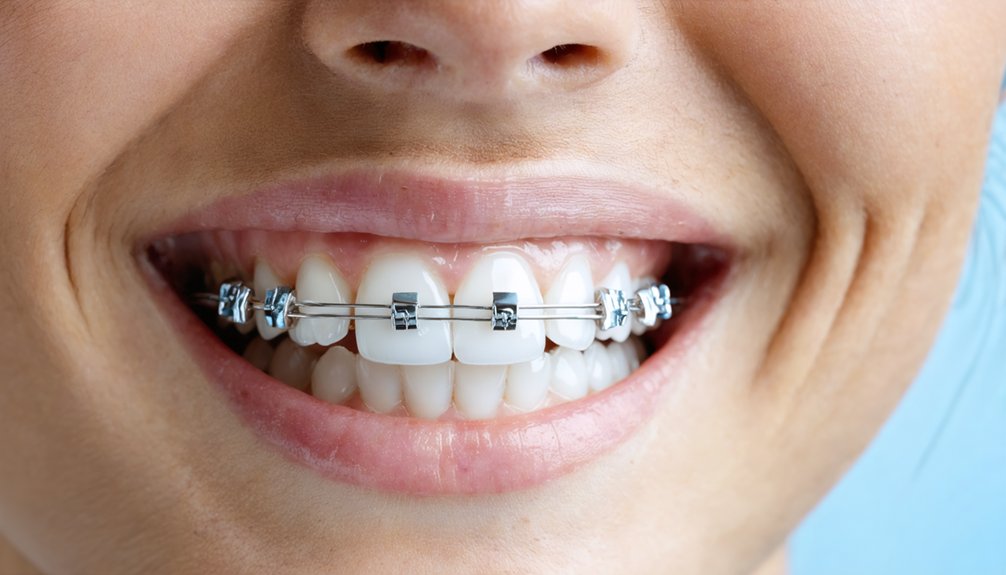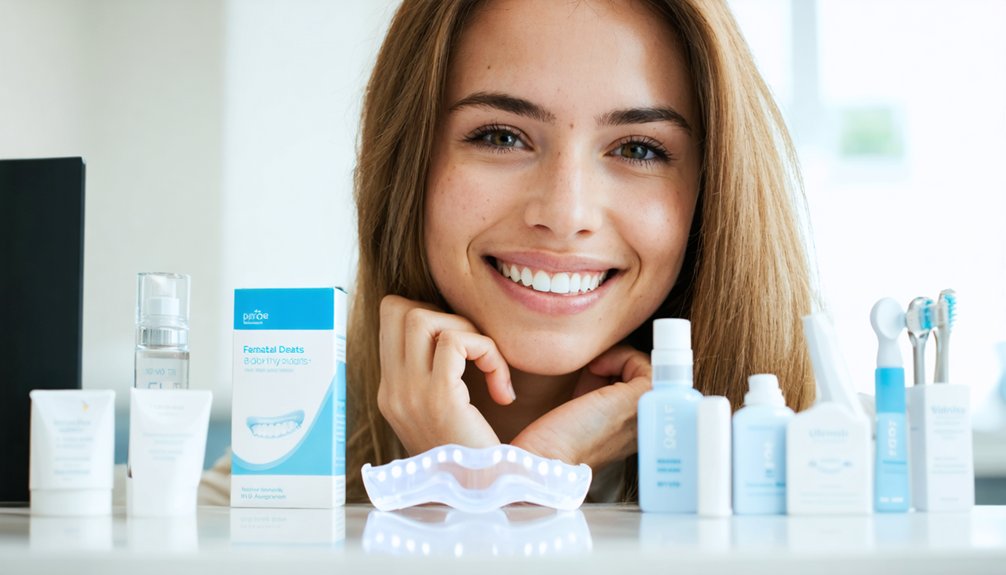
You should wait at least two weeks after braces removal before whitening, though three to six months yields better results as your enamel remineralizes. Professional in-office treatments with hydrogen peroxide deliver the fastest results, while at-home options like Crest 3DWhitestrips Post-Ortho or custom dentist-supervised trays offer effective alternatives. Whitening toothpastes and pens help maintain brightness between treatments. If you’re experiencing sensitivity, extend your waiting period to three to four weeks. The following sections outline specific treatment protocols and long-term maintenance strategies.
Key Takeaways
- Wait 2 weeks minimum before whitening, or 3-6 months for optimal results and enamel remineralization after braces removal.
- Professional in-office treatments use hydrogen peroxide and light-activated technology for rapid, uniform whitening with sensitivity management.
- At-home kits like Crest 3DWhitestrips Post-Ortho and Opalescence Go offer effective whitening with dentist-grade ingredients.
- Braces cause discoloration through plaque accumulation, tartar buildup, and enamel erosion around brackets during treatment.
- Maintain results with whitening toothpastes for daily use and whitening pens for targeted touch-ups between treatments.
How Long Should You Wait Before Whitening Your Teeth After Braces?
After braces removal, you should wait a minimum of two weeks before whitening your teeth, though extended waiting periods of three to six months often yield superior results. This timeframe enables gradual enamel remineralization following demineralization from orthodontic adhesives and brackets. Your enamel requires rehydration and strengthening, while your gums need adequate settling time after bracket removal.
If you’re experiencing sensitivity, extend your waiting period to three to four weeks minimum. For ideal outcomes with whitening strips, consider waiting three months. A six-month delay allows your teeth to regain maximum strength and permits saliva’s natural stain-reduction properties to work effectively.
Your dentist can provide professional sensitivity management and evaluate your enamel’s readiness for whitening. Professional treatments may commence earlier than over-the-counter products, as your dentist controls chemical concentrations based on your individual recovery status.
Why Do Teeth Look Discolored After Braces Removal?
When you remove your braces, the discoloration patterns that emerge often surprise patients who’ve maintained diligent oral hygiene. Bacterial plaque accumulation around brackets creates concentrated acid exposure, producing chalky white spots in 23-60% of cases—these represent early enamel demineralization.
Yellow or brown stains result from hardened tartar and prolonged plaque contact with enamel surfaces. The enamel discoloration patterns typically outline where brackets were bonded, as these areas trap food particles and harbor bacteria despite brushing efforts.
Acidic dietary choices compound the problem by directly eroding enamel, exposing the naturally yellow dentin layer beneath. Even conscientious patients face structural challenges: reduced saliva flow around appliances and physically obstructed access points allow demineralization processes to advance undetected throughout treatment.
Professional Whitening Treatments for Post-Braces Teeth
After your braces come off, professional whitening treatments offer the most effective approach to correcting discoloration and achieving uniform tooth color. Your dentist can recommend three primary treatment modalities: in-office hydrogen peroxide applications that deliver rapid results through controlled high-concentration gels, custom tray systems that provide professional-grade bleaching for at-home use, and light-activated technologies that accelerate the whitening process during office visits.
Each method addresses the specific challenges of post-orthodontic staining while minimizing sensitivity through professional oversight and tailored treatment protocols.
In-Office Hydrogen Peroxide Treatment
Professional in-office hydrogen peroxide treatments represent the most powerful whitening option available for post-braces teeth, utilizing high-concentration bleaching agents that aren’t accessible through over-the-counter products. Your dentist applies protective barriers to your gums before carefully coating tooth surfaces with the gel formula, which remains active for 15-20 minute intervals.
The procedure typically includes:
- Targeted application via UV or laser technology to accelerate the whitening process
- Multiple gel applications (2-3 repetitions) during a single 30-90 minute session
- Sensitivity management through potassium nitrate additives and calcium phosphate remineralization
You’ll achieve significant shade improvement in one visit, with uniform results that prevent streaking. Schedule treatment at least one month post-braces removal to allow proper gum recovery and ideal whitening effectiveness.
Custom Tray Professional Systems
Unlike in-office treatments that deliver immediate results, custom tray professional systems provide dentist-supervised whitening you’ll complete at home over 10-14 days. Your dentist creates trays from exact tooth impressions, ensuring custom tray sizing that prevents gel leakage and gum irritation—problems common with store-bought alternatives. These lab-fabricated trays feature reservoirs that maximize gel contact with tooth surfaces, reaching cracks and crevices that generic trays miss.
You’ll receive professional-grade carbamide peroxide with gel concentration customization ranging from 10% to 45%, selected based on your sensitivity tolerance and desired timeline. The sticky, viscous formula stays positioned during 15-minute to overnight wear sessions. You’ll apply a small bead to your front 6-8 teeth, wear daily, and achieve your target shade within two weeks. Your trays remain reusable for years, enabling periodic touch-ups as needed.
Light-Activated Bleaching Technology
Light-activated bleaching technology combines high-concentration hydrogen peroxide gels with specialized light sources—including blue LEDs (450 ± 10 nm), UV lights, lasers, and plasma arc systems—to theoretically accelerate the whitening process. Your dentist applies a protective gum barrier, then activates the gel with light for 20-30 minutes per session.
Treatment protocol typically involves:
- Initial professional cleaning to remove surface debris
- Multiple sessions (3-4) spaced weeks apart for ideal results
- Post-treatment maintenance with at-home kits
However, multiple systematic reviews show no overall efficacy increase from light activation. Safety considerations include transient tooth sensitivity from high-concentration peroxide, with some studies reporting increased sensitivity compared to non-light methods. Possible adverse effects resolve quickly, and results last years without permanent enamel damage when properly administered.
Effective At-Home Whitening Kits to Consider
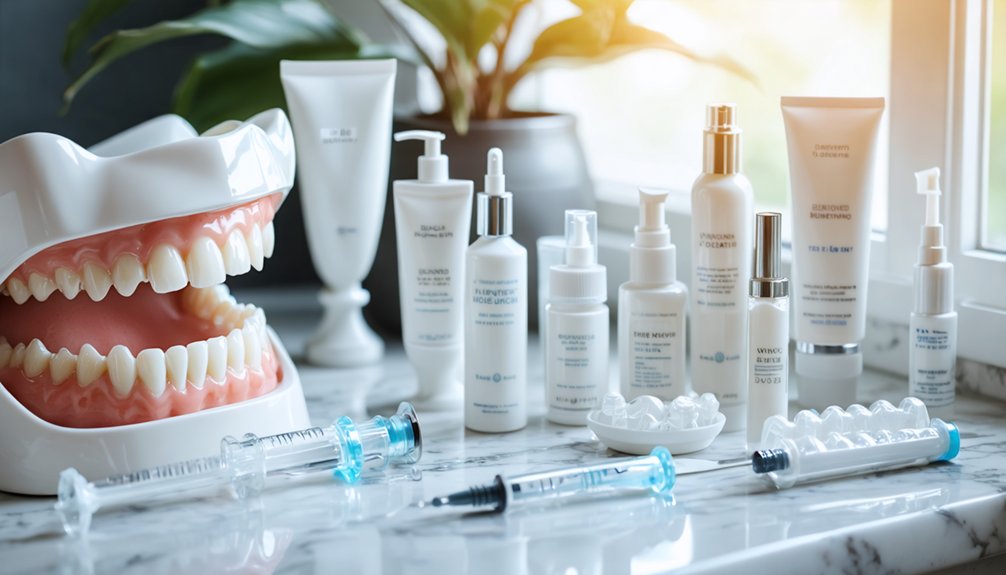
Once your braces come off, several clinically tested at-home whitening kits can help you achieve uniform tooth color without the higher cost of professional treatments. Your whitening kit selection should prioritize enamel-safe hydrogen peroxide formulations.
Crest 3DWhitestrips Post-Ortho delivers visible results in 8 days with 45-minute daily applications, while their LED-enhanced version achieved 100% user satisfaction with zero sensitivity reports. For maximum at home whitening effectiveness on sensitive teeth, Rembrandt’s 1 Week Kit provides up to four shades of improvement without irritation. Plus White’s 5-minute tray system offers quick application with minimal sensitivity.
If you’re still wearing brackets, Opalescence Go’s pre-filled trays uniquely accommodate orthodontia while removing biofilm around hardware. Each option uses dentist-grade active ingredients for controlled, predictable whitening results.
Whitening Toothpastes and Tools for Maintenance
After completing professional whitening treatments, you’ll need strategic maintenance products to safeguard your results. Whitening toothpastes work through mild abrasives and chemical agents to gradually remove surface stains, while touch-up tools like whitening pens offer targeted application between treatments.
Selecting the right combination of daily-use toothpaste and periodic touch-up methods secures long-term brightness without compromising enamel integrity.
Gradual Surface Stain Removal
While professional treatments deliver dramatic results, whitening toothpastes offer a practical starting point for addressing surface stains after braces removal. These products tackle surface discoloration through controlled abrasive action and active ingredients, providing gradual improvements you can monitor.
Expected timeline for results:
- Days 1-7: Initial surface stain reduction begins
- Days 8-20: Noticeable one to two shade improvement emerges
- Week 3+: Potential for up to three shades lighter with consistent use
Products containing hydrogen peroxide at low concentrations balance effectiveness with safety during post-braces recovery. Some formulas incorporate hydroxyapatite for mineral restoration, specifically targeting white spots from demineralization. You’ll achieve ideal results by pairing whitening toothpaste with complementary mouthwash while avoiding excessive application that risks gum irritation.
Touch-Up Pens and Tools
Because whitening pens deliver targeted treatment to individual teeth, they’ve become essential maintenance tools for addressing lingering discoloration after braces removal. The convenient gel application allows you to paint 35% carbamide peroxide directly onto specific teeth showing stubborn stains from coffee, wine, or tea. You’ll control treatment duration—10 to 30 minutes—with longer applications increasing effectiveness while potentially raising sensitivity risk.
Improved whitening formulas now include mint-flavored options and peroxide-free alternatives for sensitivity-prone users. The compact design fits your post-orthodontic routine, providing 15+ treatments per pen. You can apply gel up to four times daily, though you should reduce frequency if sensitivity develops. The thick consistency prevents leakage, while the clear tube lets you monitor remaining product for consistent maintenance scheduling.
Long-Term Brightness Maintenance
Touch-up pens address immediate discoloration concerns, but sustained brightness depends on daily oral care products that prevent new stains from forming. Fluoride-based whitening toothpastes remove surface debris through gentle abrasives while strengthening enamel compromised during orthodontic treatment. Professional fluoride treatments during routine cleanings provide additional protection against cavity formation and sensitivity.
Essential maintenance protocols include:
- Brushing twice daily with whitening toothpaste and flossing once to eliminate plaque accumulation
- Rinsing after consuming pigmented foods or using straws for dark beverages to minimize enamel contact
- Scheduling biannual professional cleanings for polishing and stain removal monitoring
Balanced dietary intake reduces staining risk while supporting enamel remineralization. Pair sensitivity toothpaste with whitening products if discomfort develops. Avoid tobacco products entirely—they cause persistent yellow-brown discoloration resistant to standard maintenance routines. Consult your dentist if sensitivity persists beyond four weeks post-treatment.
Important Safety Precautions When Whitening After Braces
Before pursuing any whitening treatment after braces removal, you’ll need to address several critical safety considerations that protect your oral health. Wait at least one to six months before bleaching to allow heightened sensitivity from orthodontic force to subside.
Select only American Dental Association-approved products containing hydrogen peroxide or carbamide peroxide as active ingredients. The proper fit of whitening trays prevents gum irritation and guarantees even application across tooth surfaces.
Avoid harsh at-home remedies like activated charcoal or lemon juice, which damage enamel structure. Use desensitizing toothpaste containing potassium nitrate before and after treatment.
The importance of professional supervision can’t be overstated—consultation with your orthodontist or dentist determines appropriate timing, identifies suitable products, and prevents complications. Shorten application times if sensitivity develops, and maintain fluoride treatments to strengthen enamel throughout the whitening process.
How to Maintain Your Bright Smile Long-Term
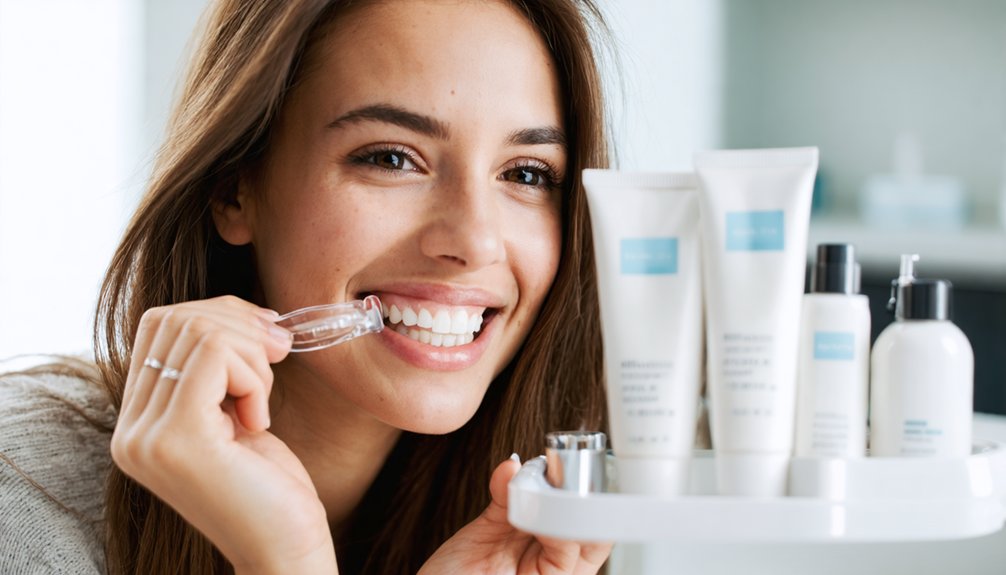
Maintaining your newly whitened smile requires consistent effort across multiple fronts, from daily hygiene protocols to strategic dietary choices. Your dental hygiene routine forms the foundation of smile preservation, combining twice-daily brushing with fluoride toothpaste, daily flossing, and water flossing for thorough plaque control.
Strategic maintenance involves three critical components:
- Professional oversight: Schedule cleanings every six months and utilize custom retainers with professional gel for ongoing tray whitening between appointments.
- Dietary management: Avoid staining agents like coffee, tea, and red wine while incorporating crunchy vegetables that naturally clean teeth surfaces.
- At-home enhancement: Apply whitening strips every few months for touch-ups, preventing the gradual discoloration that occurs despite ideal hygiene practices.
Professional whitening results typically last months to years when you implement these evidence-based protocols consistently.
Frequently Asked Questions
Can I Whiten My Teeth if I Still Wear a Retainer?
Yes, you’ll multitask like a champion—whitening while retaining! You can use dentist-approved gels, but consult your orthodontist first. Maintain your retainer cleaning routine and follow retainer staining prevention protocols to guarantee safe, effective results.
Will Whitening Treatments Affect My Retainer’s Fit or Material?
Yes, whitening treatments can compromise retainer material integrity through chemical breakdown and warping. You’ll protect retainer wear and whitening results by removing your retainer before treatment, then cleaning it thoroughly to prevent degradation and maintain proper fit.
Are Natural Remedies Like Baking Soda Safe After Braces Removal?
Baking soda’s abrasive nature risks enamel damage after braces, especially with daily use. You’ll find charcoal whitening methods equally erosive, while oil pulling techniques lack scientific evidence for whitening. Consult your dentist before trying natural remedies post-orthodontic treatment.
How Much Does Professional Whitening Cost Compared to At-Home Options?
Professional whitening costs $300-$1,000 versus $100-$200 for at-home options. The average cost of professional whitening delivers superior results lasting 6 months to 3 years, while whitening treatment duration comparisons show at-home methods fade within 2-6 months.
Can Whitening Fix Permanent White Spots Left by Braces?
Whitening won’t fix permanent white spots—they’re enamel defects, not stains. You’ll need enamel restoration through professional treatments like resin infiltration, microabrasion, or remineralization therapy. These targeted approaches address the underlying structural damage whitening can’t resolve.