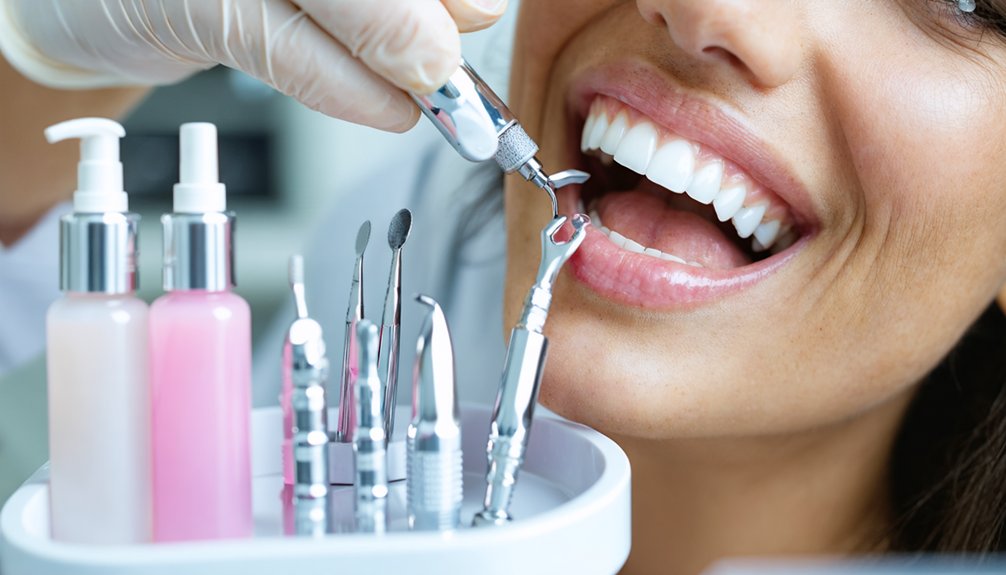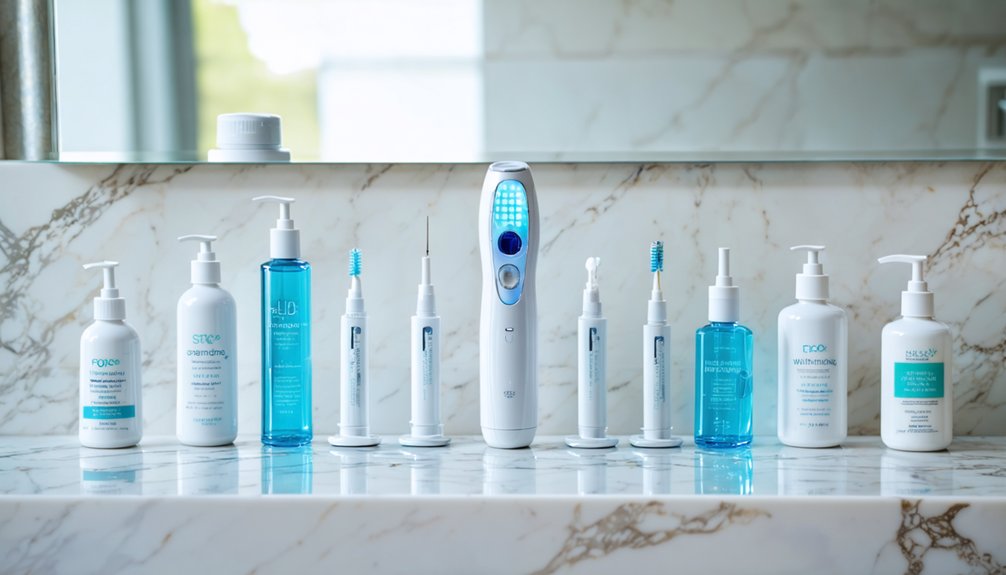
You can cut teeth whitening costs considerably by combining smart strategies across every stage of your routine. Start with ADA-approved whitening toothpaste for daily maintenance, then layer in store-brand strips, which often match name-brand results at a fraction of the price. Dental membership plans, custom trays, and interest-free financing make professional options more accessible. Stack coupons, time your purchases seasonally, and protect your results through consistent habits—the full breakdown ahead covers each method in detail.
Key Takeaways
- Use ADA-approved whitening toothpaste ($5–$15) as a daily baseline to prevent new stains and enhance results from stronger treatments.
- Choose store-brand whitening strips over name brands; they use identical active ingredients at a significantly lower price.
- Dental membership plans ($199–$399 annually) often include free annual whitening treatments and 20–60% off additional cosmetic procedures.
- Custom trays from dentists last years; ongoing gel refill costs make them economical for long-term, consistent whitening needs.
- Stack manufacturer coupons with seasonal retailer promotions, particularly in late fall and winter, to maximize savings on whitening products.
Start With Whitening Toothpaste for Daily Maintenance
Whitening toothpaste is one of the simplest, lowest-cost steps you can take to manage tooth discoloration, with ADA-approved options typically running $5–$15 per tube. It’s designed primarily for surface stain removal and plaque removal rather than deep color alteration, so it won’t reverse significant discoloration on its own.
Where it delivers real value is as a maintenance tool. After using strips or a whitening kit, daily use helps prevent new stains from taking hold. Many formulas also support enamel protection, which matters if you’re cycling through multiple whitening methods.
Think of it as your baseline defense—low cost, low effort, and effective when paired with stronger interventions. It’s not a standalone solution, but it’s a smart starting point for controlling long-term whitening costs.
Choose Store-Brand Whitening Strips Over Name-Brand Options
When it comes to over-the-counter strips, store-brand versions often deliver comparable results at a fraction of the cost of name-brand alternatives like Crest 3D Whitestrips. Branded kits can run $30–$70, while store-brand options frequently cost considerably less for similar hydrogen peroxide concentrations.
To maximize value without compromising tooth enamel or stain prevention, consider these factors:
- Active ingredient concentration – Compare hydrogen peroxide percentages between store-brand and name-brand strips before purchasing.
- Treatment count – Calculate cost per application to identify the most economical option per session.
- Contact time – Follow manufacturer guidelines precisely to protect enamel while achieving consistent stain prevention.
You’re paying for branding, not necessarily better chemistry. Generic strips let you control spending while still achieving measurable whitening outcomes.
Are OTC Whitening Strips Actually Worth the Cost?
Over-the-counter whitening strips offer a compelling cost-to-results ratio compared to professional bleaching, which can run hundreds to over a thousand dollars per session. While in-office whitening delivers faster, more dramatic results, strips provide measurable surface stain removal at a fraction of the price.
Branded kits like Crest 3D Whitestrips are available for under $20, making them a practical, evidence-backed alternative for budget-conscious consumers.
Unlike natural remedies—which lack clinical support for meaningful whitening—OTC strips contain peroxide concentrations proven to lighten enamel over consistent use.
You’ll see the best return by pairing strips with whitening toothpaste for daily maintenance.
If your staining is moderate and your timeline is flexible, OTC strips are a defensible, cost-effective choice over pricier clinical interventions.
When Custom Trays Save You More Money Long-Term
Custom trays represent one of the few whitening investments that can reduce your long-term spending. Unlike strips or generic kits, dental tray durability means you’re not repurchasing delivery systems repeatedly—only the refill gel.
Tray customization options also improve gel contact and reduce waste, making each application more efficient.
Consider these cost-controlling advantages:
- Reusability – Custom trays last years with proper care, eliminating recurring hardware costs.
- Refill-only spending – You’re purchasing gel alone after the initial tray fabrication, which significantly lowers per-treatment costs.
- Provider comparison – Tray systems range from $150–$1,200 depending on the provider, so shopping around can yield substantial savings.
If you’re whitening consistently, custom trays often cost less than repeated OTC purchases over a 12–24 month period.
Stack Coupons and Seasonal Deals for Extra Savings
You can stretch your whitening budget further by searching manufacturer websites, retailer apps, and coupon aggregators for active promo codes before purchasing any product or service.
Timing your purchase around off-peak seasons—particularly late fall and winter—can yield lower cosmetic pricing from both OTC brands and dental providers.
When possible, stack manufacturer coupons with seasonal promotions, since some retailers permit combining discounts for additional savings.
Finding Active Coupon Codes
Stacking manufacturer coupons with seasonal promotions is one of the most straightforward ways to cut whitening costs without compromising product quality. You’ll find the most reliable savings by targeting specific sources consistently.
- Check the manufacturer’s website directly for printable or digital coupons on Crest 3D Whitestrips, which occasionally drops kits under $20.
- Use coupon aggregator sites like RetailMeNot or Honey to locate active promo codes before checkout, reducing costs on fluoride benefits-supporting whitening toothpastes bundled in kits.
- Time purchases around late fall or winter when cosmetic dental promotions peak, maximizing gingivitis prevention-focused bundle deals that include whitening gel.
Layering these sources systematically—manufacturer discount, retailer sale, and seasonal timing—gives you precise cost control without sacrificing product efficacy or safety standards.
Timing Seasonal Whitening Promotions
Timing also protects your results. Scheduling whitening after a professional cleaning removes dental plaque that would otherwise block gel penetration, improving treatment efficiency.
If you experience teeth sensitivity, off-peak promotions may also give you time to use sensitivity-relief toothpaste beforehand, reducing discomfort.
Planning purchases around predictable discount windows lets you control both your budget and your whitening outcomes without compromising treatment quality.
How Bundled Dental Packages Lower Your Whitening Bill
Bundled dental packages can meaningfully reduce what you’d otherwise pay for whitening alone. When you combine whitening with routine exams or cleanings, providers often discount the total cost considerably.
Even without dental insurance covering cosmetic procedures, bundled pricing gives you structured savings on your oral health investment.
Three bundled strategies worth considering:
- First-time patient specials — Many practices offer packages ranging from $59–$199, bundling exams, cleanings, and whitening together.
- Membership plan bundles — Annual plans ($199–$399) frequently include 25–60% off whitening and sometimes one free treatment per year.
- Seasonal package pricing — Late fall and winter often bring reduced cosmetic rates when demand drops.
Comparing bundled offers across providers puts pricing control directly in your hands.
Use a Dental Membership Plan to Cut Whitening Costs
Dental membership plans function as in-office subscription programs that replace traditional insurance. Typically, they charge annual fees of $199–$399 in exchange for discounted preventive care and cosmetic services.
If your provider offers one, you can expect whitening discounts ranging from 20–60%, with some plans including one free whitening treatment per year.
Comparing plan structures across local providers helps you identify whether the annual cost offsets your projected whitening expenses before you commit.
How Membership Plans Work
Membership plans offered by dental offices operate on a straightforward model: you pay an annual fee, typically ranging from $199 to $399, in exchange for discounted or bundled services throughout the year. These plans give you structured control over your dental hygiene costs while addressing tooth discoloration systematically.
Most plans include:
- 20–60% off cosmetic whitening procedures applied directly at the point of service
- One free whitening treatment per year, bundled with routine care
- Discounted exams and cleanings, reducing total out-of-pocket spending annually
Before enrolling, calculate your projected usage. If you’re combining professional whitening with regular cleanings, the membership fee frequently pays for itself.
Compare plan structures across providers, since benefit tiers and whitening inclusions vary considerably between offices.
Typical Savings and Costs
Actual savings through a dental membership plan depend on how frequently you use whitening services. Most plans offer 20–30% off cosmetic procedures, with some providing 25–60% discounts or one free whitening treatment annually.
Annual membership fees typically range from $199–$399. Since dental insurance rarely covers elective whitening, a membership plan becomes your most practical cost-control tool.
To calculate real value, compare your projected whitening frequency against the membership fee. If you experience teeth sensitivity and require lower-concentration treatments or extended timelines, you’ll likely use services more often, making membership savings more substantial.
Factor in any bundled preventive benefits as well. When the math favors membership, you’re converting an unpredictable cosmetic expense into a structured, manageable annual cost.
Finding the Right Plan
Once you’ve confirmed that a membership plan makes financial sense, the next step is identifying which plan structure fits your actual usage pattern. Evaluate each option against your dental hygiene routine and how aggressively staining affects your tooth enamel.
Compare plans using these three criteria:
- Whitening frequency coverage – Does the plan include one free whitening annually, or does it only offer percentage discounts on additional treatments?
- Discount depth – Plans offering 25–60% off cosmetic procedures deliver stronger value than those capped at 20%.
- Bundling potential – Confirm whether the plan allows stacking whitening discounts with exam or cleaning fees.
Annual membership fees typically range from $199–$399. Run the numbers against your projected whitening schedule before committing.
Make Professional Whitening Affordable With Financing
Dental membership plans and financing options give you two practical tools for reducing the upfront cost of professional whitening. Many dental membership plans offer 20–30% off cosmetic procedures, with some providing up to 60% off in-office whitening.
Annual fees typically range from $199–$399, and certain plans include one free whitening per year. Since dental insurance rarely covers cosmetic treatments, these membership plans function as a structured alternative worth evaluating.
If upfront cost remains a barrier, ask your provider about interest-free financing. Many practices offer installment plans that distribute payments over several months without added interest.
Combining a membership discount with a payment plan gives you direct control over both the total cost and how you manage cash flow for professional whitening.
Habits That Keep Your Whitening Results From Fading
Reducing what you pay for whitening only matters if the results hold long enough to justify the cost. Forget teeth whitening myths about natural whitening remedies like charcoal or oil pulling preserving results—consistent daily habits do.
Three evidence-backed behaviors protect your investment:
- Limit staining agents—coffee, tea, red wine, and dark berries accelerate discoloration; use a straw to reduce direct tooth contact.
- Rinse immediately after exposure—water removes residual pigment before it bonds to enamel.
- Brush twice daily and floss regularly—plaque accumulation traps staining compounds against enamel surfaces.
Additionally, wait 60 minutes before brushing after acidic foods to prevent enamel erosion.
Pairing these habits with whitening toothpaste extends results and reduces how often you’ll need to repurchase whitening products.
What to Stop Doing If You Want Whiter Teeth Longer
Three common behaviors quietly erase whitening results faster than most people realize. First, you’re likely consuming staining agents — coffee, tea, red wine, and dark berries — without rinsing afterward, allowing pigments to bond directly to enamel.
Three habits are silently undoing your whitening results — and coffee or tea without rinsing afterward is the first culprit.
Second, poor dental hygiene, including inconsistent brushing and skipping floss, lets plaque accumulate and accelerate discoloration.
Third, brushing immediately after acidic foods weakens enamel, making teeth more vulnerable to staining compounds.
Your lifestyle habits determine how long whitening actually lasts. Stop using tobacco in any form — it’s one of the most aggressive staining sources.
Stop skipping your straw when drinking pigment-heavy beverages.
And stop neglecting regular cleanings, which remove surface deposits that dull results between whitening cycles.
Controlling these behaviors directly extends your investment.
Frequently Asked Questions
Does Teeth Whitening Work the Same on Crowns or Veneers?
Over 90% of restorations resist whitening agents entirely. Whitening doesn’t work on crowns or veneers due to dental material compatibility limitations—natural enamel responds, but these surfaces won’t lighten, leaving crown and veneer staining visibly mismatched.
Can Whitening Treatments Cause Lasting Damage to Tooth Enamel?
Overusing whitening treatments can trigger enamel erosion and sensitivity increase, but you won’t cause lasting damage if you follow recommended guidelines. Wait 60 minutes after acidic exposure and don’t exceed product usage instructions.
How Long Does Professional Teeth Whitening Typically Last?
Professional whitening typically lasts 1–3 years. Your longevity factors include diet, oral hygiene, and staining habits. Cost comparison matters here—maintaining results with $5–$15 whitening toothpaste extends professional outcomes without repeating expensive treatments.
Is Teeth Whitening Safe During Pregnancy or While Breastfeeding?
You should avoid teeth whitening due to pregnancy safety risks and breastfeeding concerns, as research on peroxide absorption remains limited. Dentists consistently recommend postponing all whitening treatments until after pregnancy and breastfeeding are complete.
At What Age Can Teenagers Safely Start Whitening Their Teeth?
Most whitening age guidelines recommend you wait until 14–16, once permanent teeth fully erupt. Teenage oral health is still developing, so you should consult your dentist before starting any whitening regimen to guarantee enamel safety.
References
- https://www.rejuv-health.com/cosmetic-dentistry/teeth-whitening-cost/
- https://www.sbdental.com/blog/budgetfriendly-teeth-whitening-options-that-deliver-real-results
- https://www.goodrx.com/conditions/dental-care/is-teeth-whitening-safe
- https://www.healthline.com/nutrition/whiten-teeth-naturally
- https://shop.colgate.com/learn/guide-to-affordable-teeth-whitening
- https://www.reddit.com/r/Frugal/comments/11jj60d/healthy_ish_affordable_ways_to_whiten_teeth/
- https://clubwhitesmile.com/save-on-teeth-whitening-tips-for-new-patients/
- https://shop.colgate.com/learn/how-to-save-money-on-teeth-whitening
- https://boomcloudapps.com/patient-blog/teeth-whitening/