You can remove medication stains from your teeth through three proven methods: professional whitening treatments using high-concentration hydrogen peroxide gels that lighten teeth 8-10 shades in one session, porcelain veneers that permanently cover severe intrinsic stains with custom-fabricated shells, and cost-effective home remedies combining baking soda’s mild abrasive action with 3% hydrogen peroxide’s stain-penetrating properties. Each approach targets different stain severities, and understanding their specific applications, expected outcomes, and maintenance requirements will help you select the most appropriate solution for your dental needs.
Key Takeaways
- Professional whitening treatments use high-concentration hydrogen peroxide to lighten teeth 8-10 shades in one 45-90 minute session.
- Porcelain veneers permanently correct severe intrinsic medication stains through custom-fabricated shells with superior stain resistance.
- Baking soda and 3% hydrogen peroxide provide cost-effective whitening for superficial stains through abrasive and penetrating actions.
- Dentist-supervised take-home kits offer gradual whitening over 2-4 weeks as a professional alternative to in-office treatments.
- Limit home remedy use to prevent enamel erosion and sensitivity; avoid daily application of hydrogen peroxide mixtures.
Professional Teeth Whitening Treatments
Professional teeth whitening treatments represent the most effective approach for removing medication-induced dental stains, particularly those resistant to over-the-counter solutions. In-office procedures utilize high-concentration hydrogen peroxide gels up to 35%, delivering rapid whitening results that lighten teeth 8-10 shades in a single 45-90 minute session.
Laser activated whitening systems like Zoom employ LED technology to accelerate stain removal while incorporating desensitizing agents such as potassium nitrate and fluoride. You’ll find specialized systems like KöR maintain gel potency through refrigeration, targeting deep-set medication stains effectively.
Alternatively, dentist-supervised take-home kits with custom-fitted trays provide gradual whitening over 2-4 weeks. These professional options guarantee gum protection through precise application barriers and deliver results lasting 1-3 years with proper maintenance protocols.
Dental Veneers for Severe Intrinsic Stains
Dental veneers provide a definitive solution for severe intrinsic medication stains that resist conventional whitening approaches. These custom-fabricated porcelain shells exhaustively address deep discoloration within your tooth structure, delivering permanent aesthetic correction. High-quality ceramic materials offer superior stain resistance through nonporous surfaces while mimicking natural tooth translucency.
Porcelain veneers permanently correct deep medication stains through nonporous ceramic surfaces that resist discoloration while replicating natural tooth translucency.
Porcelain veneer longevity depends on four critical factors:
- Material quality—porcelain outperforms composite alternatives with 10-15 year durability
- Daily brushing using soft-bristled toothbrushes and nonabrasive toothpaste
- Flossing to prevent bonding cement discoloration at veneer edges
- Professional cleanings to polish surface stains and monitor structural integrity
Proper veneer maintenance extends their functional lifespan beyond standard expectations. You’ll need to rinse after consuming staining beverages and avoid hard foods that compromise bonding. While veneers resist external staining better than natural enamel, neglected hygiene causes subtle discoloration requiring professional intervention or replacement.
Home Remedies With Baking Soda and Hydrogen Peroxide
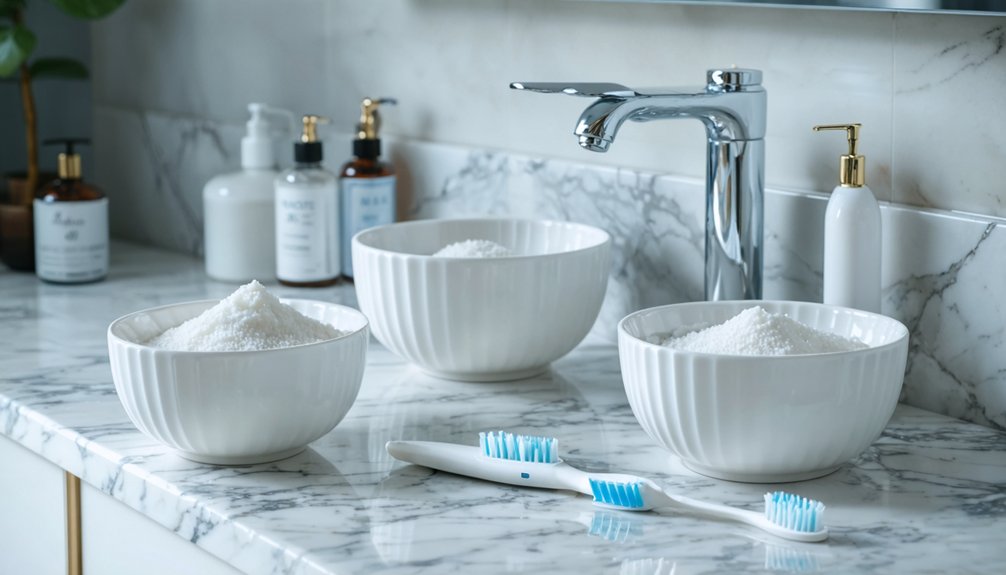
A cost-effective whitening alternative combines baking soda and hydrogen peroxide to address superficial medication stains through dual-action mechanisms. You’ll create the paste by mixing one tablespoon baking soda with two tablespoons 3% hydrogen peroxide until achieving a thick, non-gritty consistency. Proper application technique requires gentle circular motions for two minutes maximum, limiting contact time to prevent enamel erosion.
The baking soda functions as a mild abrasive removing surface discoloration, while hydrogen peroxide penetrates tooth layers to break down staining compounds. Research in the Journal of American Dental Association confirms efficacy for plaque reduction and whitening. However, you must restrict hydrogen peroxide concentration to 3% for home use and avoid daily application. Long term effects on enamel include sensitivity and breakdown when overused, necessitating strict adherence to recommended frequency.
Frequently Asked Questions
Which Specific Medications Are Most Likely to Cause Tooth Staining?
Like a permanent marker on fabric, tetracycline antibiotics cause intrinsic staining you can’t easily reverse. Chlorhexidine mouthwash, iron supplements, and antihistamines also discolor teeth. You’ll need professional intervention to manage these medication-induced stains effectively.
How Long Does Professional Cleaning Take to Remove Medication Stains?
Professional cleaning typically takes 30-60 minutes to remove medication stains, though time required for stain removal varies based on buildup severity. Your dental professional’s recommendations may include additional appointments if you’ve developed deeper, older stains needing extended treatment.
Can Whitening Toothpaste Prevent Stains While Taking Staining Medications?
Yes, whitening toothpaste can prevent medication-induced stains through chemical displacement mechanisms. You’ll maximize protection by using mouthwash regularly to reduce stain adherence and applying whitening strips periodically, though professional treatments remain necessary for existing deep stains.
Is Oil Pulling Effective for Removing Medication-Related Tooth Discoloration?
Oil pulling technique effectiveness lacks scientific evidence for removing medication-induced tooth discoloration. While you’ll find it reduces plaque-related surface stains, it’s ineffective against intrinsic medication staining. You should pursue professional whitening treatments as evidence-based medication staining prevention methods instead.
How Often Should I Floss to Prevent Medication Stain Buildup?
You should floss daily to prevent medication stain buildup between teeth. Combine this with proper brushing technique twice daily for a consistent dental hygiene routine. Daily flossing removes plaque before it hardens, minimizing stain accumulation in interdental spaces.