Your thinning enamel and exposed dentin require gentler whitening solutions than younger adults need. Low-concentration carbamide peroxide systems like custom-fitted trays provide effective results without damaging vulnerable tooth structures. Sensodyne Clinical White and nano-hydroxyapatite toothpastes offer daily stain removal with sensitivity protection, while LED-accelerated devices using 405-410nm violet wavelengths produce 5-8 shade improvements when used correctly. Your dentist should assess gum recession and enamel thickness before you begin any whitening protocol. This thorough guide explains how to safely brighten your smile while protecting aging teeth.
Key Takeaways
- Sensodyne Clinical White and Boka Ela Mint toothpastes provide gentle whitening while protecting sensitive enamel in seniors.
- Custom tray systems ensure even gel distribution and minimize sensitivity better than one-size-fits-all alternatives for aging teeth.
- LED light devices using violet wavelengths achieve 5-8 shade improvements with minimal sensitivity when properly used.
- Carbamide peroxide concentrations designed for mature enamel effectively penetrate decades of intrinsic discoloration safely.
- Crest Advanced Seal strips and BURST Prefilled Trays demonstrate 93% zero sensitivity while enabling normal activities during treatment.
Understanding Age-Related Tooth Discoloration in Seniors
As enamel naturally thins with age, the yellowish dentin layer beneath becomes increasingly visible, creating the characteristic discoloration many seniors experience. You’ll notice this occurs because years of chewing, brushing, and acid exposure wear down enamel’s protective layer, which can’t regenerate due to its lack of living cells.
Enamel erosion from decades of daily wear exposes the yellow dentin beneath, causing permanent discoloration that cannot naturally reverse.
Age related dentin changes further compound this issue—your dentin layer actually expands over time, intensifying the darkened appearance.
Beyond structural changes, decades of staining from coffee, tea, tobacco, and pigmented foods accumulate on your teeth. The impact of fluoride exposure during childhood may also manifest as white spots, while certain medications, including tetracycline and blood pressure drugs, cause intrinsic discoloration.
Understanding these mechanisms enables you to select appropriate whitening interventions.
Why Gentle Whitening Matters for Teeth Over 60
Your teeth undergo substantial structural changes after age 60 that demand modified whitening approaches to prevent irreversible damage. Thinning enamel and exposed dentin markedly increase your sensitivity to standard peroxide-based treatments, making understanding peroxide based risks essential before beginning any whitening regimen.
Gum recession exposes vulnerable root surfaces, while dry mouth conditions intensify tissue irritation during bleaching. You’ll need professional assessment to identify untreated cavities, existing decay, or periodontal disease that contraindicate whitening procedures.
Combating tooth discoloration triggers requires lower-concentration formulas applied gradually through custom trays rather than aggressive in-office treatments. Your dentist can tailor peroxide levels to your enamel thickness, preventing excessive sensitivity while achieving controlled results. Take-home kits with extended application periods protect porous older teeth better than high-intensity single sessions.
Top Whitening Toothpastes for Sensitive Senior Teeth
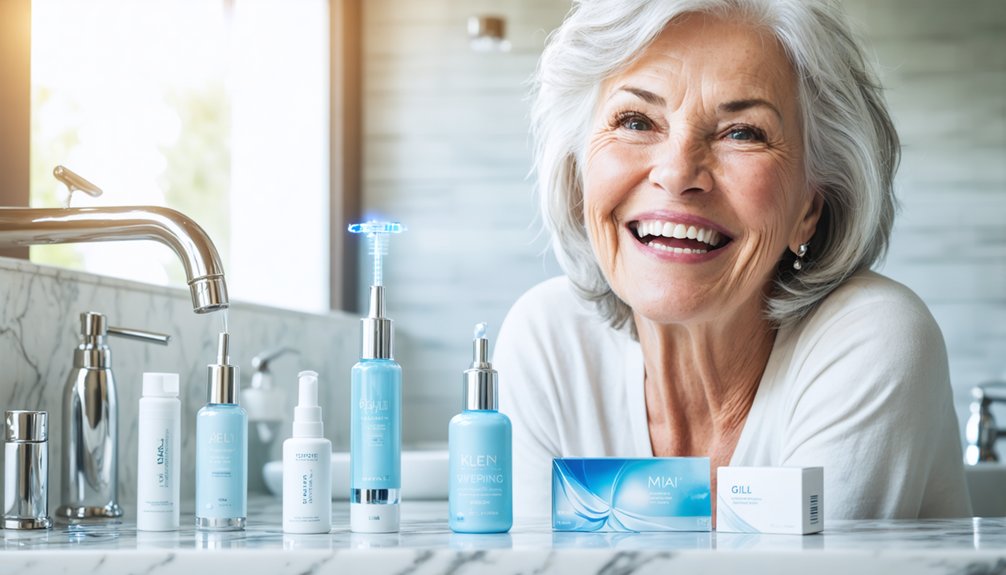
Specialized whitening toothpastes formulated for sensitive teeth deliver measurably effective results while minimizing the inflammatory responses common in aging oral tissues. Sensodyne Clinical White provides documented 2-shade improvement within 8 weeks while maintaining 24/7 sensitivity protection through enamel-strengthening compounds.
You’ll benefit from single ingredient whitening agents like nano-hydroxyapatite in Boka Ela Mint, which remineralizes enamel while reducing hypersensitivity. Natural stain removing formulas containing activated charcoal, as found in Hello’s peroxide-free option, offer gentler alternatives for compromised dental structures.
Crest 3D White Brilliance Gentle employs lower-abrasion polishing technology specifically calibrated for thinned enamel surfaces. Budget-conscious selections like Colgate Sensitive Whitening combine fluoride protection with stain-removal systems, addressing multiple age-related dental concerns simultaneously.
Select products featuring triple-action mechanisms that whiten, polish, and protect against future discoloration.
Professional-Grade At-Home Whitening Solutions
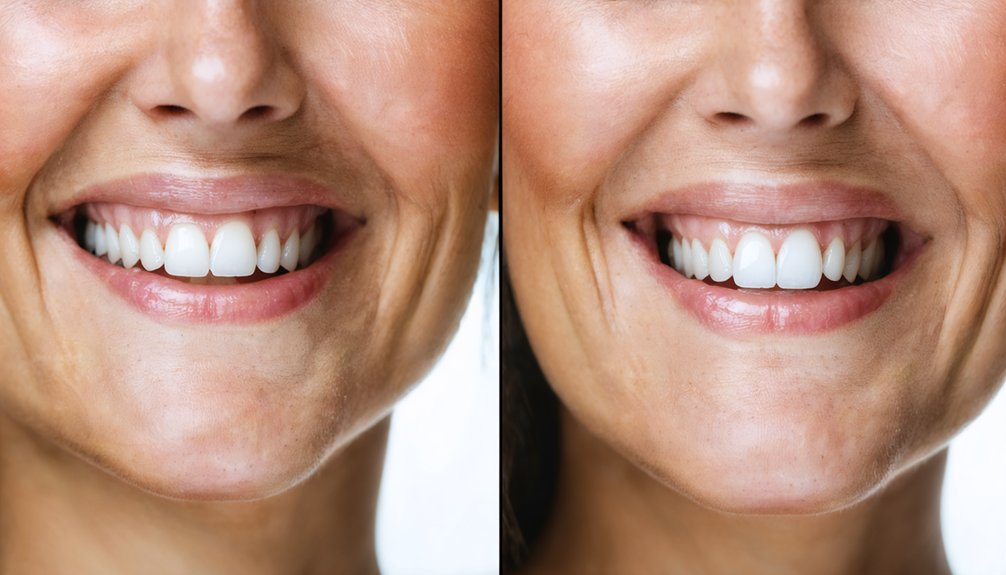
You’ll achieve dentist-level results at home through three proven technologies: LED light acceleration, custom-fitted tray systems, and high-concentration peroxide formulations. These professional-grade methods address age-related staining more effectively than over-the-counter toothpastes, with clinical studies showing improvements of 5-18 shades within 1-3 weeks.
When selecting your treatment, prioritize products with carbamide peroxide concentrations and sensitivity-reduction features specifically designed for mature enamel.
LED Light Accelerated Whitening
While LED light-accelerated whitening systems promise professional-grade results at home, clinical evidence reveals a more nuanced reality for seniors over 60. Research demonstrates these devices produce modest color improvements of approximately 1.8 ΔE units—results that completely relapse without consistent at-home maintenance protocols. The comparative efficacy against gel-only treatments shows no significant acceleration or enhancement, questioning their added value.
For your age group, tooth sensitivity remains manageable below mild levels when properly administered. However, thinning enamel and exposed roots require careful consideration. Extended bleaching processes lasting three months or longer yield more persistent effects than abbreviated treatments. Professional oversight guarantees appropriate peroxide concentrations that protect compromised enamel while achieving desired outcomes. Fluoride applications before and after treatment minimize discomfort, making LED systems viable when combined with proper monitoring.
Custom Tray Application Systems
How do custom tray systems deliver superior whitening outcomes compared to over-the-counter alternatives? These trays, fabricated from exact tooth impressions, guarantee snug fit against your dental contours for even gel distribution. You’ll avoid patchy results common with generic strips while minimizing gum irritation through precise gel containment.
Your dentist selects carbamide peroxide concentrations (10-45%) based on your sensitivity and stain severity—particularly effective for tobacco, coffee, or medication discoloration. This affordable professional grade quality includes personalized protocols: 10% gel worn overnight for sensitivity, or 35% for 30-60 minutes daily.
Extended tray reuse capabilities provide long-term value. You’ll retain trays for future touch-ups with digitally stored impressions enabling discounted gel reorders. The BPA-free, extra-thin construction (<1mm) assures comfortable all-day wear under professional supervision.
High-Strength Peroxide Formulations
Professional-grade peroxide formulations bring clinical-strength whitening into your home environment, delivering concentrations that penetrate decades of intrinsic discoloration in aging enamel. KöR’s high-strength systems address geriatric teeth complications including dentinogenesis imperfecta and fluorosis through specialized formulations.
Opalescence’s 45% carbamide peroxide gel whitens up to 5 shades, while Philips Zoom NiteWhite offers tiered concentrations from 6% to 22% for customized treatment intensity. These high peroxide concentrations outperform standard retail products, with Colgate’s 5% hydrogen peroxide Pro Series targeting deep-set staining.
Safety considerations remain paramount—clinical specialists guide application protocols to prevent enamel damage and manage sensitivity in aging dentition. Ultra-White’s pharmaceutical-grade gels match dentist-dispensed products, ensuring controlled whitening that addresses lifelong pigmentation accumulation effectively.
LED Light Devices for Accelerated Results
LED light devices accelerate peroxide-based whitening by triggering photochemical reactions that fragment stain molecules, with violet wavelengths (405-410 nm) penetrating enamel to target both surface and intrinsic discoloration. The Moon Platinum Pro employs adaptive LED technology alongside lower-concentration gels to minimize thermal sensitivity—a critical consideration for seniors whose age-related enamel thinning increases vulnerability to nerve irritation.
Clinical data show sensitivity scores remain below 0.43 when proper protocols are followed, making these devices viable for older adults seeking 5-8 shade improvements without compromising dental health.
How LED Technology Works
Many seniors seeking effective tooth whitening solutions can now benefit from advanced light-activated systems that weren’t available to previous generations. Understanding LED whitening principles helps you make informed treatment decisions.
The technology works through precise photochemical activation: blue LED wavelengths (typically 480-520nm) catalyze hydrogen peroxide gel, decomposing it into free radicals that penetrate enamel and break down chromophores responsible for discoloration.
LED whitening applications deliver controlled oxidation through three mechanisms:
- Photocatalysis: Light energy accelerates peroxide breakdown, releasing oxygen molecules that target stain compounds
- Enhanced penetration: Activated gel distributes evenly across enamel surface and into dentin layers
- Temperature regulation: Cool operation maintains pulp safety when temperature increases remain below 5.5°C
This evidence-based approach produces measurable results—typically 5-8 shade improvements—while minimizing sensitivity risks common with traditional methods.
Moon Platinum Pro Benefits
Revolutionary triple-wavelength technology distinguishes the Moon Platinum Pro from single-spectrum whitening devices, delivering concurrent therapeutic benefits that address multiple oral health concerns in seniors. You’ll achieve up to 18 shades whiter teeth within one week through blue light activation of hydrogen peroxide strips, while simultaneously addressing age-related sensitivity and gum recession.
The innovative light integration provides unparalleled oral benefits: red wavelengths reduce periodontal inflammation and hypersensitivity, yellow light increases oral hydration and neutralizes odors. Board-certified dentist Dr. Julie Cho recommends this clinically validated system for maintaining oral health between professional visits. Each 15-minute cycle automatically proceeds through all three wavelengths, enabling you to target enamel whitening, tissue healing, and bacterial control simultaneously—eliminating the need for multiple separate treatments.
Safety for Sensitive Teeth
While the Moon Platinum Pro offers advanced features for thorough oral care, seniors with sensitive teeth require specific safety protocols when using any LED whitening device. Professional administration safety becomes paramount for this population, as controlled environments enable protective barriers and desensitizing protocols during treatment.
Essential safety measures include:
- Pre-treatment assessment – Evaluate for untreated cavities, active gum disease, or exposed root surfaces that contraindicate whitening procedures
- Controlled peroxide concentrations – Select products with moderate bleaching agent levels to prevent enamel weakening and nerve irritation
- Post treatment desensitization – Apply fluoride varnishes and utilize prescription-strength sensitivity toothpastes to minimize discomfort
Cool blue light technology eliminates thermal damage concerns, though proper gel application prevents gum tissue burns. Products bearing ADA certification guarantee rigorous safety testing standards.
Whitening Strips and Trays Designed for Comfort
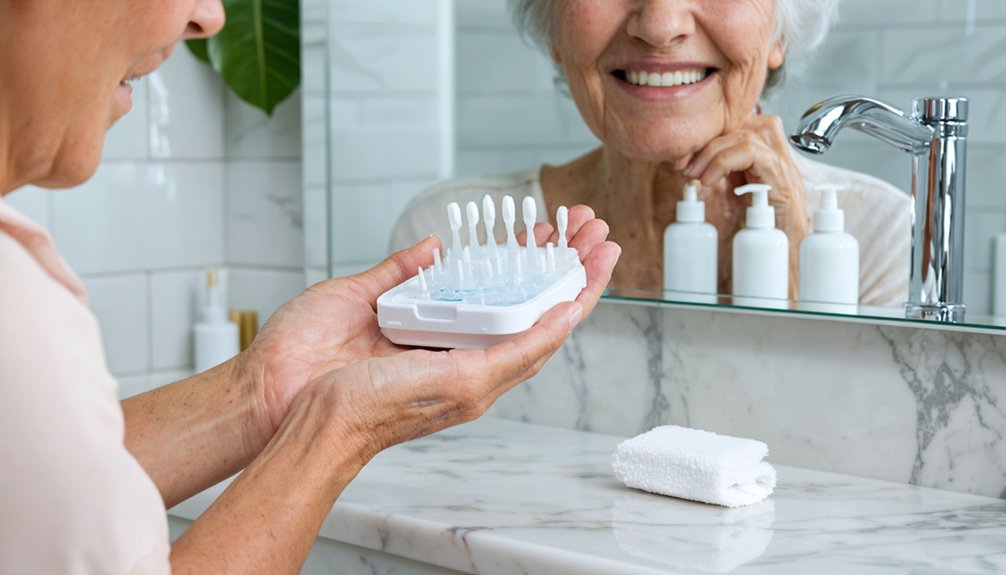
Because aging teeth often develop increased sensitivity and gum recession, selecting whitening products that prioritize comfort becomes essential for seniors over 60. Custom-fit trays eliminate the one-size-fits-all limitations by ensuring ideal gel contact while preventing seepage that irritates receding gums.
BURST Prefilled Whitening Trays demonstrate clinical efficacy with 93% of participants reporting zero sensitivity after one week, addressing shelf life considerations through pre-measured doses. Boil-and-bite alternatives like Plus White’s 5 Minute system cause minimal sensitivity while remaining cost-effective.
Advanced Seal strips from Crest enable normal activities during treatment, maintaining user consistency requirements through flexible 30-minute applications. Opalescence strips provide slip-free adherence with enamel-safe formulations that remove stains immediately. These comfort-focused options deliver controlled whitening while minimizing the discomfort typically associated with traditional bleaching methods.
Essential Safety Tips and Dentist Recommendations
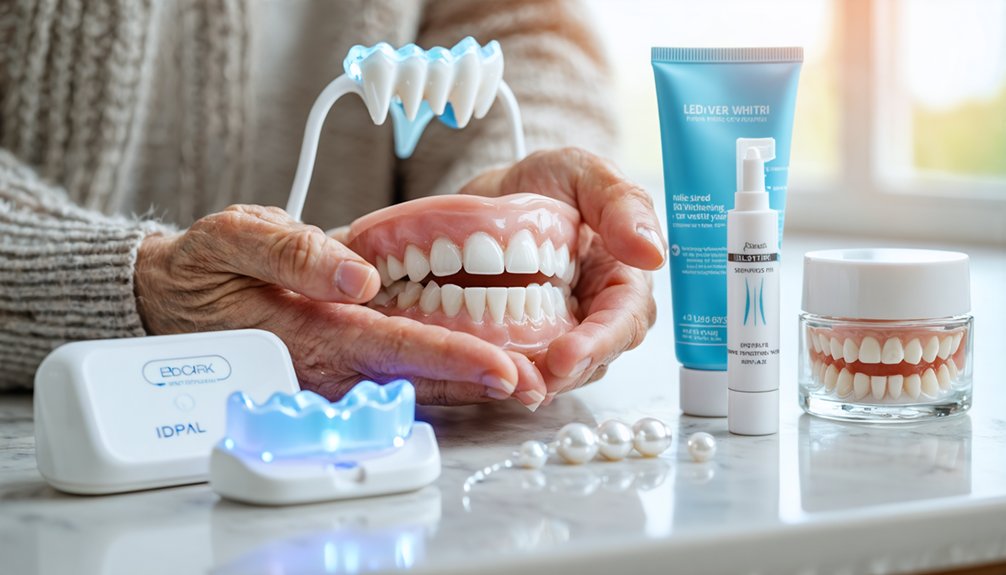
Safe teeth whitening for seniors over 60 requires professional dental evaluation before purchasing any over-the-counter product. A dental examination pre whitening identifies contraindications like cavities, gum disease, or exposed dentin that demand treatment first. Your dentist assesses enamel thickness and determines appropriate peroxide concentrations for age-related oral changes.
Critical safety protocols include:
- Select lower peroxide formulations (10% or less) to minimize enamel erosion and sensitivity from thinned enamel
- Apply fluoride treatments before and after whitening sessions to strengthen tooth structure and reduce discomfort
- Avoid staining substances for 24-48 hours post-treatment to maximize results and prevent complications
Professional whitening supervision guarantees proper application techniques and monitors adverse reactions. The ADA recommends dentist-guided treatments for seniors due to increased risks from receding gums, dry mouth, and compromised enamel integrity.
Maintaining Your Whitening Results Long-Term
Professional whitening treatments deliver ideal brightness, but maintaining those results requires consistent daily practices and strategic lifestyle adjustments. You’ll need supplementary whitening regimens every few months using at-home bleaching kits or whitening strips to preserve brightness between full sessions scheduled every 1-2 years.
Brush twice daily, floss regularly, and rinse after consuming staining agents like coffee or tobacco. Sipping dark beverages through straws minimizes enamel contact. Schedule six-month dental check-ups for professional cleanings and personalized enamel assessments that determine appropriate whitening concentrations for your thinning enamel.
Fluoride treatments strengthen compromised surfaces and reduce sensitivity. Select whitening toothpaste formulated for sensitive teeth, and eliminate tobacco use entirely. Your dentist will customize maintenance protocols based on your enamel thickness, gum recession, and staining patterns.
Frequently Asked Questions
How Long Does Each Whitening Treatment Session Typically Take for Seniors?
Picture yourself settling into the dental chair: your in-office session takes 30-90 minutes with controlled application techniques. At-home treatments require 4-8 hours daily. Frequency of whitening sessions depends on your enamel’s condition and desired shade improvement.
Can Whitening Products Interfere With Dentures or Dental Implants?
Whitening products can damage dentures through bleaching agents that degrade acrylic materials, but they won’t affect dental implants’ titanium structure. You’ll need specific safety precautions for seniors regarding impact on dental restorations, including professional assessment before treatment.
What Is the Average Cost Comparison Between At-Home and Professional Treatments?
Professional treatments average $600-$900 versus at-home options at $20-$100, making OTC products cost-effective alternatives. However, you’ll benefit from professional consultation recommendations to guarantee treatment compatibility with your existing dental work and oral health status.
Are There Specific Ingredients Seniors Should Avoid in Whitening Products?
You’ll want to avoid high-concentration peroxides, chlorine dioxide, and acidic natural ingredients like lemon juice. These compounds intensify sensitivity concerns in aging dentition. Even seemingly harmless natural ingredients like charcoal and baking soda progressively erode your protective enamel layer.
How Soon Can Seniors Expect to See Visible Whitening Results?
You’ll see immediate noticeable changes within 30-60 minutes with in-office treatments, achieving up to eight shades brighter. Take-home kits show gradual whitening progression over one-to-two weeks, while over-the-counter products require several weeks for visible results.