You’ll find seven proven solutions for stained teeth: professional in-office whitening systems deliver immediate results through high-concentration peroxide gels, while custom take-home professional kits offer controlled treatment protocols. Over-the-counter options include whitening strips, prefilled tray systems, and targeted whitening pens for localized discoloration. Daily-use whitening toothpastes and baking soda formulations provide maintenance-level stain removal. Each modality addresses specific staining etiologies with varying efficacy, and understanding their clinical applications, contraindications, and ideal protocols guarantees you’ll select the most appropriate intervention for your particular presentation.
Key Takeaways
- Professional in-office whitening systems deliver immediate results using high-concentration gels applied under dental supervision.
- Custom take-home professional kits provide gradual whitening with dentist-prescribed strength gels and fitted trays.
- Over-the-counter whitening strips offer convenient, affordable treatment when applied directly against enamel for recommended durations.
- Daily-use whitening toothpaste helps maintain results and prevent surface stains through regular brushing.
- Whitening pens and specialty products target specific areas for touch-ups between comprehensive treatments.
Professional In-Office Whitening Systems
Professional in-office whitening systems deliver clinically significant shade improvements through high-concentration peroxide formulations that typically range from 15% to 40% hydrogen peroxide. You’ll achieve results spanning 8-12 shades lighter in approximately one hour.
Optimized light activated treatments like Philips Zoom! WhiteSpeed utilize 25% hydrogen peroxide with blue light technology, while Opalescence Pro employs 40% hydrogen peroxide through chemical activation without LED requirements. GLO Science Professional’s patented Guided Light Optics technology reduces treatment time to 16 minutes using 24-30% hydrogen peroxide concentrations.
Enhanced customization options include sensitivity management through potassium nitrate and fluoride integration, particularly in Opalescence Boost’s PF formulation. BriteSmile’s neutral pH formulas minimize gingival irritation. Most systems incorporate universal or custom tray delivery mechanisms, with treatment protocols typically involving three application intervals.
High-Concentration Gel Treatments
High-concentration gel treatments employ hydrogen peroxide formulations between 15-38% or carbamide peroxide at 10-22% to accelerate tooth whitening through oxidative stain breakdown.
You’ll encounter two primary delivery methods: professional-strength gels dispensed for at-home use in custom trays, and in-office applications utilizing concentrations up to 44% hydrogen peroxide under clinical supervision. These protocols achieve maximum whitening within 2-4 weeks, though higher concentrations correlate with increased enamel surface alterations and elevated sensitivity risk, particularly above 35% hydrogen peroxide.
Professional Strength Gel Options
Dental practitioners utilize gel formulations containing 16% to 44% hydrogen peroxide concentrations to achieve accelerated whitening outcomes in controlled clinical settings. You’ll find brands like LaserGlow delivering customized peroxide percentages through syringe systems, while Opalescence Boost employs 40% hydrogen peroxide with viscosity-enhanced formulas that prevent solution migration during application.
Professional-grade options include carbamide peroxide formulations reaching 45% concentration, offering extended wear flexibility.
Treatment safety considerations necessitate gingival barrier placement and supervised administration. You can expect sensitivity mitigation through potassium nitrate and fluoride additives in specific formulations.
Clinical data demonstrates 98% efficacy improvement among practices utilizing professional-strength protocols, with visible results manifesting within single-session applications. FDA-compliant manufacturing standards guarantee enamel preservation when you follow established application parameters and concentration-specific contact durations.
Take-Home Treatment Protocols
When administered through custom-fitted trays, take-home whitening systems deliver 10-22% hydrogen peroxide or carbamide peroxide concentrations that demonstrate clinically equivalent shade improvement to higher-strength formulations after three weeks of consistent use.
You’ll achieve optimal results within 7-28 days through precise application protocols that prioritize teeth sensitivity management and gum irritation prevention.
Protocol Advantages You’ll Experience:
- Complete autonomy over your treatment schedule and intensity levels
- Custom tray fabrication guarantees gel containment, eliminating gum contact and chemical burns
- Gradual concentration adjustment allows you to control sensitivity while maintaining whitening effectiveness
- Predictable outcomes through oxidation of organic pigment molecules from coffee, wine, and tobacco stains
You should extend intervals between applications while reducing session duration if sensitivity develops, avoiding catalytic devices that intensify tissue damage.
Over-the-Counter Whitening Strips
Over-the-counter whitening strips represent an accessible, evidence-based method for reducing extrinsic tooth discoloration through controlled peroxide delivery. You’ll find that these flexible polymer strips, coated with hydrogen peroxide or carbamide peroxide formulations, adhere directly to enamel surfaces to oxidize chromogens responsible for staining.
Understanding the oxidation mechanism, selecting clinically validated products, and following precise application protocols will determine whether you achieve the one-to-two shade improvement documented in controlled studies.
How Whitening Strips Work
Whitening strips function through a peroxide-based chemical mechanism that penetrates tooth enamel to disintegrate chromophoric molecules responsible for dental discoloration. These flexible polyethylene delivery systems contain 10-22% hydrogen peroxide or 3-15% carbamide peroxide, releasing oxygen radicals upon saliva contact. You’ll control application by positioning strips along your gum line for 30-60 minutes daily over 14 days.
Whitening strip safety considerations include:
- FDA-regulated concentrations safeguard your enamel from excessive peroxide exposure
- Polymer-based adhesion technology secures you maintain precise contact with tooth surfaces
- Efficacy comparison to other treatments demonstrates strips deliver 2-3 shade improvements versus 6-8 shades from professional bleaching
- Individual response variability depends on your baseline discoloration and stain composition
Higher peroxide concentrations accelerate chromophore breakdown but may increase transient dentinal hypersensitivity.
Top Professional-Recommended Strips
Dental professionals consistently identify Crest 3D White Whitestrips Professional Effects as the gold-standard over-the-counter whitening system, with practitioners like Dr. Hadaegh recommending it for patients with naturally whiter or slightly discolored teeth. Dr. Palani confirms these affordable over the counter solutions deliver effective whitening results comparable to professional treatments when applied correctly.
You’ll find this system at Target for $44.99 or Walmart for $39.99, offering 20 treatments that whiten up to 20 levels. The strip technology adheres directly to enamel, maintaining consistent peroxide contact for ideal results. This dentist-recognized formulation balances efficacy with minimal sensitivity risk, giving you professional-grade whitening control without clinical appointments.
The price-to-performance ratio makes it the benchmark against which other OTC systems are measured.
Proper Application and Results
Achieving ideal whitening outcomes requires meticulous pre-treatment protocols that maximize peroxide-enamel contact while minimizing adverse effects. You’ll need to brush gently 30-60 minutes beforehand, floss interdental spaces, and dry tooth surfaces completely using a clean washcloth.
Proper strip fit demands precise alignment along the gumline without gum overlap—press the gel side firmly against enamel and smooth with a toothbrush to eliminate gaps.
Critical application parameters:
- Adhere to manufacturer’s recommended duration (typically 30 minutes)—exceeding time doesn’t accelerate results
- Position yourself supine to prevent saliva-induced strip migration
- Avoid staining agents for 30 minutes post-removal during enamel remineralization
- Implement every-other-day protocols if sensitivity develops
Long term maintenance requires consistent application schedules and desensitizing toothpaste integration for sustained peroxide oxidation effectiveness.
Prefilled Tray Systems
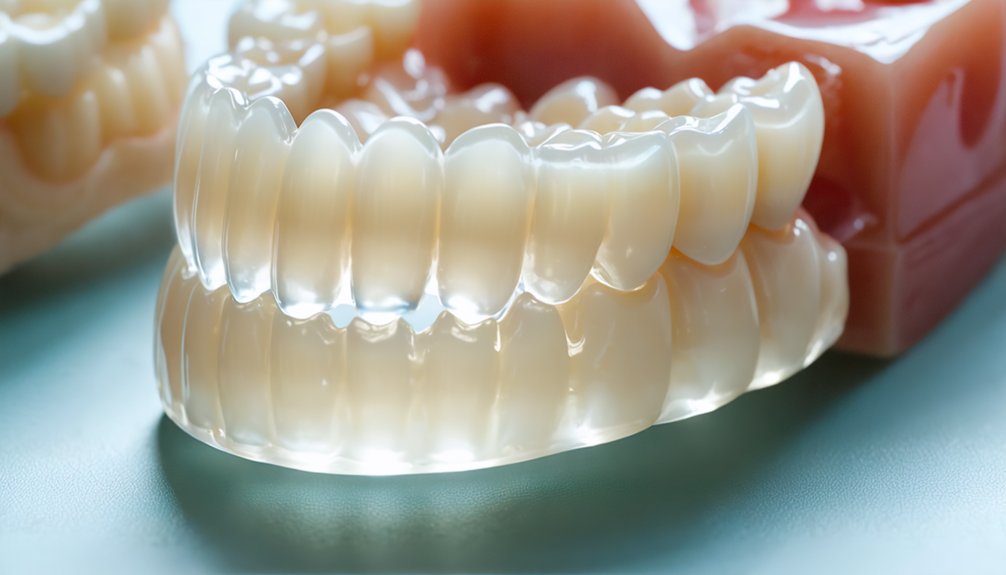
Because prefilled tray systems eliminate the preparation steps required with custom trays, they’ve become a practical solution for patients seeking professional-grade whitening without chairside visits. From a dental hygienist perspective, Patterson’s innovative tray designs deliver pre-measured 1-ml doses of 15% hydrogen peroxide gel, requiring only a two-second bite-and-suck placement technique.
You’ll achieve 5-6 shade improvements through 30-minute daily applications over seven consecutive nights. The potassium nitrate formulation addresses sensitivity concerns while maintaining enamel integrity. These disposable trays provide superior tooth contact compared to OTC strips and outperform them in cost-effectiveness.
You’ll observe results within days, with some systems producing 2-5 shade changes in 20 minutes. The protocol eliminates storage requirements and guesswork, maximizing compliance through simplified delivery.
Whitening Pens and Specialty Products
For patients requiring targeted application or maintenance between professional treatments, whitening pens offer a portable delivery system with documented efficacy ranges of 1-4 shade improvements. These precision instruments utilize peroxide-based or alternative formulations (PAP, bromelain) delivering convenient application during travel or daily routines. Results manifest within 3-7 days, though temporary effectiveness necessitates continuous use protocols.
Critical considerations for pen-based systems:
- Hydrogen peroxide formulations demonstrate superior ΔE=9.6 color changes versus sodium chlorite’s ΔE=3.9
- Application limitations prevent adequate coverage of interproximal surfaces and gingival margins
- Prolonged protocols risk enamel erosion and dentinal hypersensitivity
- Restorations, crowns, and exposed root surfaces remain unaffected by whitening agents
You’ll achieve ideal outcomes by avoiding application on compromised enamel, following manufacturer protocols precisely, and consulting professionals regarding frequency parameters for your specific clinical presentation.
Daily-Use Whitening Toothpaste and Baking Soda Formulations
Daily-use whitening toothpastes incorporating sodium bicarbonate (baking soda) deliver clinically documented shade improvements through mechanical abrasion and chemical interaction with extrinsic stains. You’ll achieve measurable results using formulations like Arm & Hammer Advance White, which reduced shade scores by 2.57 at week six (p<0.0001) while removing 61.6% of modified lobene stain index (MLSI) values.
These budget friendly whitening options function as enamel safe abrasives with lower abrasivity than activated charcoal yet produce substantial ΔE increases up to 39.3 after one month.
Brush twice daily for most effective efficacy—consistent application yields progressive shade reductions over six weeks without requiring higher-abrasive alternatives. However, you must supplement with fluoride toothpaste since sodium bicarbonate formulations lack cavity prevention agents. Discontinue use if sensitivity develops, indicating potential enamel compromise.
Custom Take-Home Professional Kits
When professional whitening accessibility meets home-use convenience, custom take-home kits deliver superior results through dentist-supervised carbamide peroxide concentrations ranging from 10-35% or hydrogen peroxide formulations at 6-15%—significantly exceeding OTC products capped at 10% carbamide peroxide.
Custom dental trays fabricated from precise impressions guarantee uniform gel distribution while minimizing soft tissue exposure and sensitivity risk. Under expert oversight, you’ll receive gum protection protocols and application instructions that optimize active ingredient contact time.
Treatment advantages you control:
- 2-4 shade improvement within 14-21 days following your schedule
- Professional-strength formulations without multiple office appointments
- Precision-fitted trays preventing patchy results and gel migration
- Lower cost than chairside treatments while maintaining clinical-grade efficacy
This approach combines pharmaceutical-grade bleaching agents with flexible at-home application under professional supervision.
Frequently Asked Questions
How Long Do Whitening Results Typically Last Before Retreatment Is Needed?
Like enamel’s microscopic pores acting as reservoirs, you’ll need retreatment within 6-24 months for professional whitening, 2-4 months for at-home strips. Whitening duration fluctuations depend on your habits; individualized whitening timelines require customized maintenance protocols you control.
Can Whitening Damage Dental Work Like Crowns, Veneers, or Fillings?
Whitening won’t damage your crowns, veneers, or fillings—these restorations remain structurally intact. However, you’ll experience impact on tooth sensitivity in natural teeth, and risks of overwhitening include enamel weakening and uneven shade distribution between restorations and bleached enamel.
What Causes Tooth Stains and Which Types Respond Best to Whitening?
Extrinsic stains from your coffee consumption and smoking habits respond best to whitening treatments through mechanical removal and chemical bleaching. Intrinsic stains require professional bleaching agents, as they’re embedded within enamel structure and resist surface-level interventions.
Are There Foods or Drinks to Avoid After Whitening Treatments?
You’ll need to avoid dark beverages, acidic foods, and chromogen-rich items for 48 hours post-treatment. Following whitening product application tips minimizes teeth sensitivity after whitening while maintaining results. Stick to white foods and neutral-pH drinks during this critical period.
Is Teeth Whitening Safe During Pregnancy or While Breastfeeding?
You should postpone whitening during pregnancy due to potential pregnancy complications from chemical absorption and gum sensitivity. While breastfeeding poses no breast milk discoloration risk, you’ll want to consult your dentist first for personalized safety assessment.