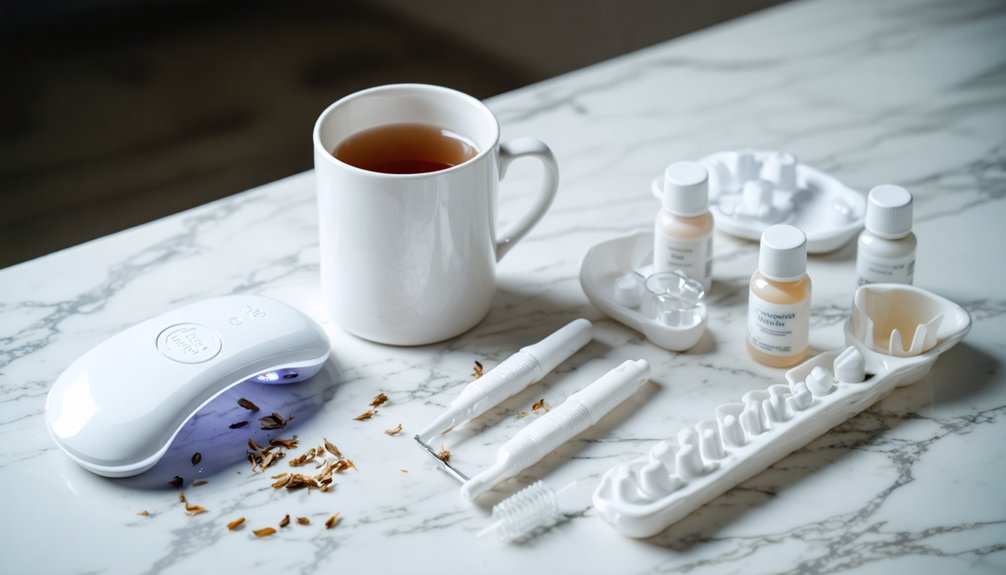
When tea tannins bond to your enamel, they create persistent stains that require targeted oxidation to break down. In-office hydrogen peroxide treatments, Zoom whitening, and laser whitening address deep, embedded pigmentation directly. Custom tray whitening, whitening strips, and LED systems help maintain results over time. Your prevention strategy matters just as much as the treatment itself. Each option works differently depending on stain severity, and understanding those distinctions helps you choose the most effective approach.
Key Takeaways
- In-office hydrogen peroxide whitening (25–40%) oxidizes deeply embedded tannin compounds, making it ideal for long-standing, persistent tea stains.
- Zoom whitening combines peroxide gel with light activation, delivering rapid visible results in a single visit for extrinsic tea stains.
- Laser whitening breaks down embedded tannin deposits at a molecular level using high-strength peroxide activated by concentrated laser light.
- Custom tray whitening with carbamide peroxide gel provides precise, predictable results for moderate stains or post-professional whitening maintenance.
- LED whitening systems extend professional results by accelerating peroxide oxidation, reducing tea stain recurrence between professional treatments.
Professional Hydrogen Peroxide Whitening for Tea Stains
Professional in-office hydrogen peroxide whitening remains the most clinically effective option when tea stains have deeply penetrated the enamel over time.
Your dentist applies a 25–40% hydrogen peroxide gel directly to the enamel, where it oxidizes tannin compounds bonded within the tooth structure. Sessions run 15–40 minutes, with some protocols requiring 2–3 visits spaced roughly a week apart.
This controlled approach gives you precise oversight of concentration levels and exposure time, reducing unnecessary sensitivity.
Beyond stain removal, some formulations support enamel strengthening by incorporating fluoride or remineralizing agents post-treatment.
For tea stain prevention following your sessions, maintain a white diet for 48 hours and rinse immediately after drinking tea.
This treatment delivers the most clinically substantiated results for persistent, long-standing discoloration.
Zoom Whitening for Fast, Visible Results in One Visit
When tea tannins have bonded stubbornly to enamel and you need fast results, Zoom whitening delivers visible brightening in a single session. It combines a specialized peroxide gel with a light-activation system to accelerate oxidation of embedded stain compounds.
Here’s what makes Zoom a precise, controlled option:
Zoom whitening isn’t guesswork — it’s a precise, controlled system designed to deliver measurable results.
- Single-session efficiency — targets extrinsic tea stains without prolonged treatment schedules.
- Light-accelerated gel activation — enhances peroxide penetration while supporting enamel preservation through dentist-monitored application.
- Rapid stain oxidation — breaks down tannin bonds that routine polishing can’t fully address.
- Structured aftercare — your dentist will guide tea stain prevention protocols, including a 48-hour white diet to reduce re-staining while enamel pores close.
You’re in control of both the outcome and the maintenance strategy.
Laser Whitening for Deep or Stubborn Tea Stains
If you’re dealing with deep or persistent tea stains that haven’t responded to milder treatments, laser whitening uses high-strength peroxide gel activated by concentrated light energy to break down embedded tannin deposits at a molecular level.
Your dentist applies the gel directly to the enamel surface, then directs a laser beam to accelerate the oxidation process, producing faster and more pronounced results than standard bleaching alone.
You’re an ideal candidate if you have long-standing, heavily pigmented staining, structurally sound enamel, and no active periodontal disease or hypersensitivity that would contraindicate high-intensity light exposure.
How Laser Whitening Works
Laser whitening works in two key stages: a high-strength peroxide gel is applied to the teeth, then a focused laser activates the gel to accelerate the oxidation of embedded tea tannins. This controlled activation breaks down stain compounds more efficiently than gel alone.
Key procedural facts to know:
- Laser safety protocols require protective eyewear and soft tissue shielding before activation begins.
- Treatment duration typically ranges from 15–40 minutes per session, depending on stain severity.
- The laser targets gel-coated enamel precisely, minimizing exposure to surrounding tissues.
- Your dentist controls intensity and exposure time, giving you a predictable, measurable outcome.
This two-stage mechanism makes laser whitening one of the most targeted options for persistent tea staining embedded within enamel.
Ideal Candidates For Treatment
Patients with deep or persistent tea staining that hasn’t responded to over-the-counter products are typically the strongest candidates for laser whitening.
You’re a strong candidate if your staining is intrinsic or has bonded deeply to enamel over years of heavy tea consumption.
Laser whitening works best when your oral hygiene is consistent—active gum disease or untreated decay disqualifies you until resolved.
You’ll also need realistic expectations: severely compromised enamel or existing restorations may limit outcomes.
Post-treatment, diet modifications are non-negotiable. Avoiding dark beverages, acidic foods, and pigment-rich substances for at least 48 hours protects your results while enamel pores close.
If you maintain disciplined oral hygiene and follow post-treatment protocols precisely, laser whitening delivers measurable, lasting improvement for stubborn tea discoloration.
Custom Tray Whitening for Lasting Tea Stain Removal
With custom tray whitening, your dentist takes precise impressions of your teeth to fabricate trays that hold carbamide peroxide gel—typically at 10%—in close, even contact with enamel for consistent results.
You wear the trays for approximately four hours daily over two or more weeks, allowing the gel to oxidize tannin deposits that have bonded to the enamel surface.
This approach works best if you have moderate tea staining or need a reliable maintenance protocol following an in-office whitening session.
How Custom Trays Work
Custom tray whitening works by using dentist-fabricated trays molded precisely to your teeth, ensuring the whitening gel maintains even, close contact with enamel throughout treatment. This level of whitening customization maximizes gel exposure and minimizes waste or uneven application.
The standard protocol for effective tea stain removal includes:
- Impression taking — your dentist creates an exact mold of your teeth for a precise fit.
- Gel loading — you apply carbamide peroxide (typically 10%) directly into the tray.
- Wear schedule — trays are worn approximately 4 hours daily over 2 or more weeks.
- Monitoring — your dentist tracks progress and adjusts concentration if needed.
This controlled approach delivers consistent, predictable results while keeping you in full command of your whitening outcome.
Best Candidates for Trays
Not every whitening method suits every stain pattern, and custom trays work best for a specific clinical profile. You’re an ideal candidate if your tea stain removal needs fall within the moderate range—surface discoloration that’s accumulated over time but hasn’t penetrated deeply into dentin.
You’ll also benefit from tray fitting if you’ve recently completed in-office whitening and need a structured maintenance protocol. Patients who prefer controlled, gradual whitening over a single-session approach tend to see more consistent outcomes with trays.
However, if your staining is severe or deeply intrinsic, in-office laser or Zoom protocols are more appropriate first-line interventions. Trays complement those treatments well post-procedure.
You should also have intact enamel and no active restorations in the treatment zone for ideal gel contact and predictable results.
Whitening Strips and Gels for Tea Tannin Removal
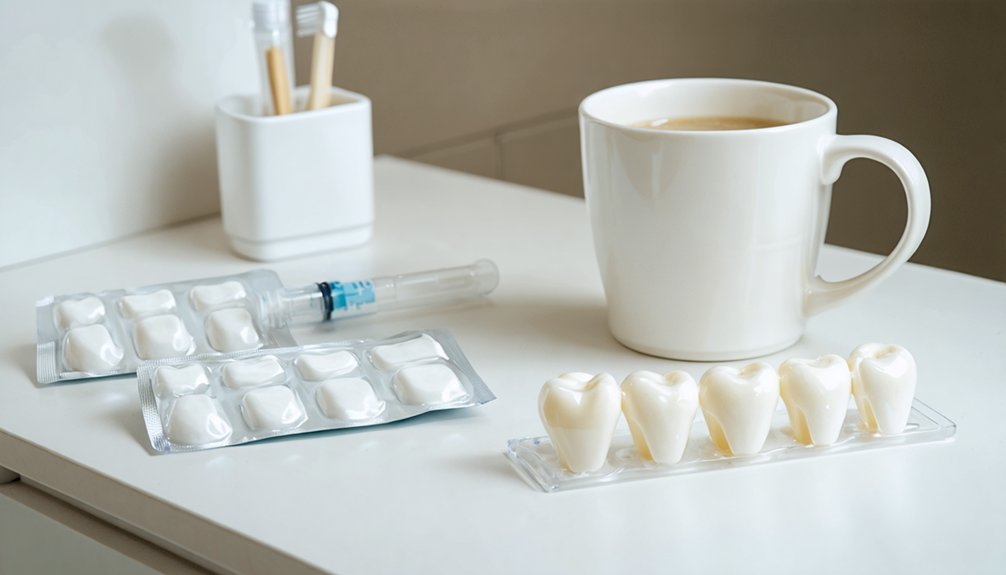
Peroxide-based whitening strips and gels work by penetrating enamel and oxidizing the tannin compounds responsible for tea-related discoloration. Unlike natural remedies or modified dietary habits, these systems deliver measurable peroxide concentrations directly to stained surfaces.
Follow this evidence-based protocol for ideal tannin removal:
- Apply strips or gel trays once or twice daily for 30-minute sessions, maintaining consistent scheduling.
- Choose products with stabilized hydrogen or carbamide peroxide to guarantee active oxidation reaches bonded tannin deposits.
- Use LED-assisted systems to accelerate the whitening reaction when paired with compatible gel formulations.
- Track shade changes weekly using a dental shade guide to objectively measure your progress.
Single applications won’t produce significant results—consistent, repeated exposure is what breaks down accumulated tea pigmentation effectively.
LED Whitening Systems for Tea Stain Maintenance
LED whitening systems offer a practical maintenance strategy for managing tea stain recurrence between professional treatments. These systems pair peroxide-based gel trays with an LED light source designed to accelerate the oxidation reaction, targeting tannins bonded to enamel surfaces.
LED whitening systems target tea tannins between professional treatments, pairing peroxide gel trays with light-accelerated oxidation.
You’ll typically apply them for 30-minute sessions, with consistent use producing more measurable outcomes than single applications.
Unlike natural remedies or alternative methods—such as oil pulling or activated charcoal—LED systems rely on clinically validated peroxide chemistry rather than anecdotal evidence. This distinction matters when you’re managing persistent tea pigmentation after Zoom or laser whitening.
They won’t replace professional-grade intervention, but used systematically, they extend your whitening results and reduce the frequency of in-office retreatment.
Prioritize systems with a carbamide or hydrogen peroxide concentration clearly disclosed on the label.
How to Keep Tea Stains From Coming Back
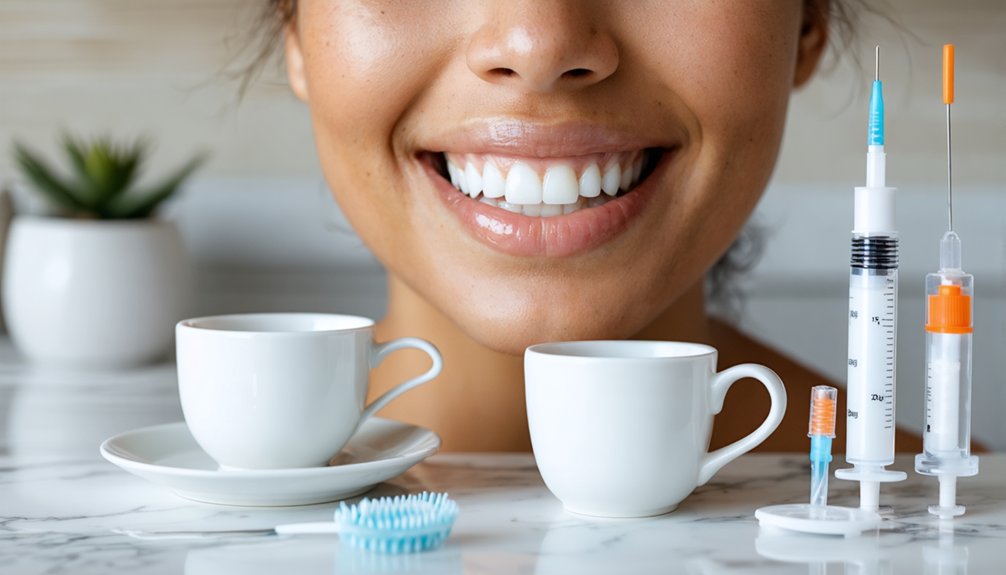
Maintaining your whitening results requires 3 consistent behavioral adjustments that directly limit tannin rebonding to enamel.
Tea stain prevention depends on disrupting tannin contact before it embeds.
- Rinse immediately after tea — water flushes tannins before they bond to enamel surfaces.
- Use a straw — it reduces direct tannin exposure to anterior enamel substantially.
- Delay brushing 30 minutes post-tea — brushing acidified enamel accelerates erosion, not cleaning.
- Follow a 48-hour white diet after whitening — open enamel pores reabsorb pigment rapidly during this window.
Enamel strengthening through fluoride application also reinforces surface resistance against tannin penetration.
Pair these behavioral protocols with whitening toothpaste containing mild abrasives to maintain surface clarity between professional treatments.
Frequently Asked Questions
Can Professional Whitening Treatments Damage Existing Dental Crowns or Veneers?
Like oil and water, whitening agents won’t alter dental crown durability or veneer color matching—they don’t bleach prosthetics. You’ll notice natural teeth brighten while restorations stay fixed, potentially creating visible shade mismatches you should address with your dentist.
How Long Do Professional Whitening Results Typically Last for Regular Tea Drinkers?
For regular tea drinkers, you’ll typically maintain results for 6–12 months. Without home remedies or natural alternatives, re-staining accelerates. You must rinse after tea, schedule periodic touch-ups, and use peroxide-based maintenance to extend outcomes effectively.
Is Professional Whitening Safe for People With Sensitive Teeth or Gums?
Studies show 38% of patients report temporary tooth sensitivity post-whitening. If you have sensitive teeth or gums, you can still undergo professional whitening—your dentist’ll adjust peroxide concentration and exposure time to minimize tooth sensitivity and gum irritation effectively.
Does Dental Insurance Ever Cover Professional Whitening for Tea Stain Removal?
Most dental insurance plans don’t cover professional whitening since it’s cosmetic. You’ll typically pay out-of-pocket, so explore treatment affordability options like payment plans or HSA funds to manage insurance coverage gaps effectively.
At What Age Is Professional Teeth Whitening Considered Safe for Younger Patients?
Ready to whiten? Age considerations typically place pediatric eligibility at 16–18 years, once permanent teeth fully erupt. You’ll want to confirm root development is complete before pursuing professional whitening treatments safely.
References
- https://www.myvalleyviewdental.com/can-teeth-whitening-remove-deep-stains-from-coffee-tea-or-wine/
- https://pearlysmiledentalstudio.com/teeth-whitening-options-for-coffee-and-tea-drinkers/
- https://www.medicalnewstoday.com/articles/322421
- https://gorgeoussmilesdental.com/blog/best-teeth-whitening-treatments-recommended-by-dentists/
- https://clubwhitesmile.com/whitening-treatments-for-stubborn-tea-stains/
- https://clubwhitesmile.com/whitening-techniques-to-remove-tea-stains-from-teeth/
- https://g-p-dental.com/best-teeth-whitening-for-tea-and-coffee-drinkers/
- https://scienceinsights.org/how-to-remove-tea-stains-from-teeth-what-works/
- https://www.facebook.com/groups/simplesavers/posts/2691484974334422/