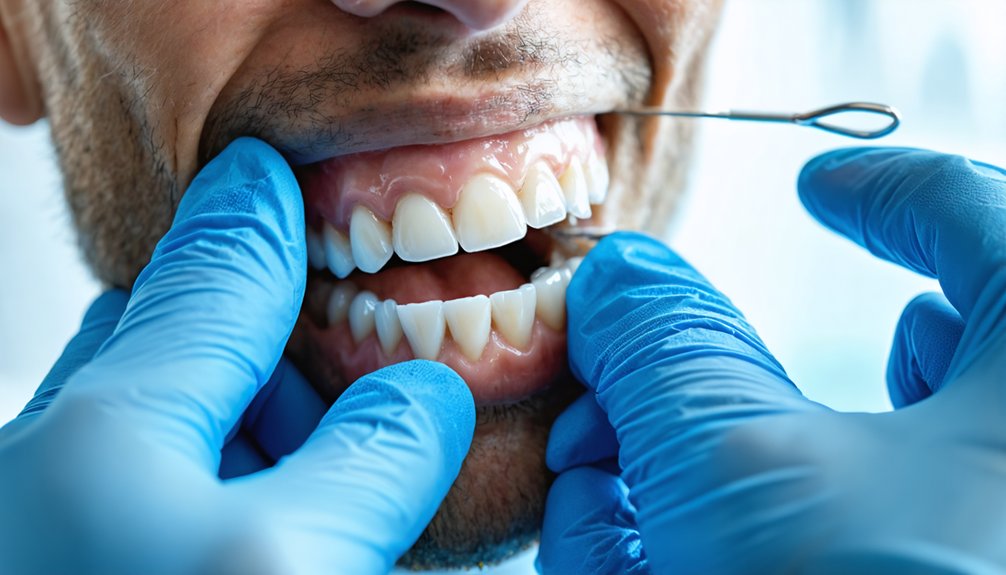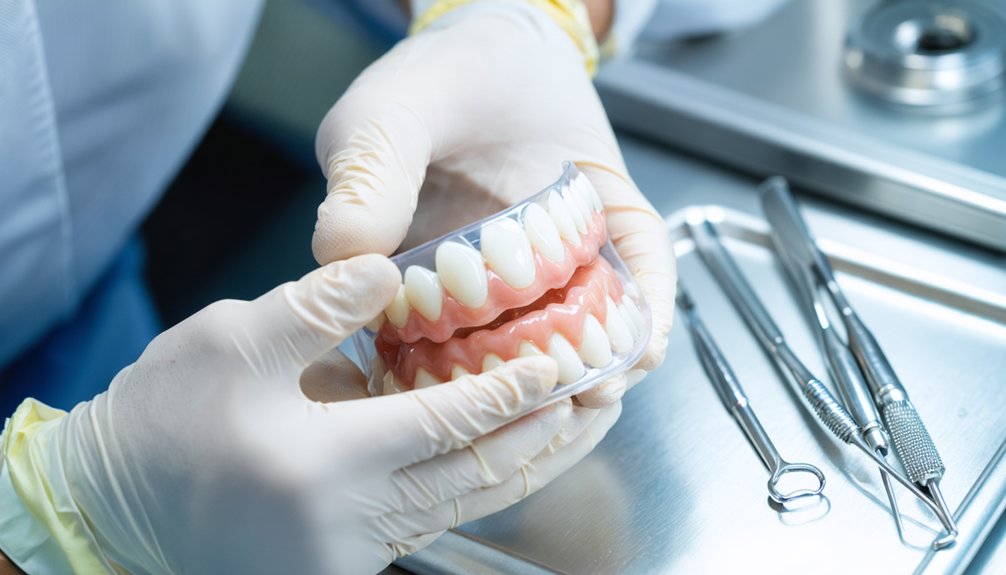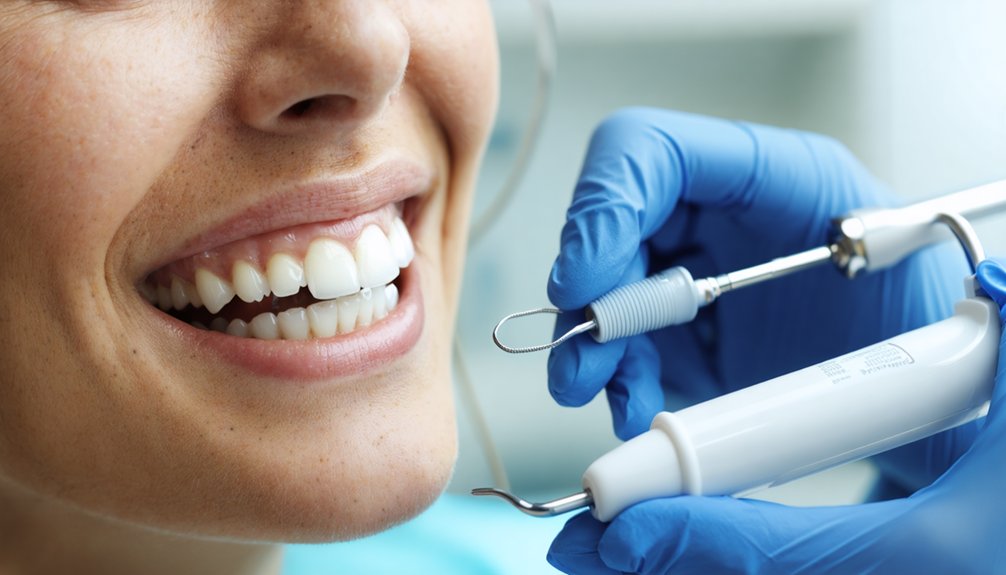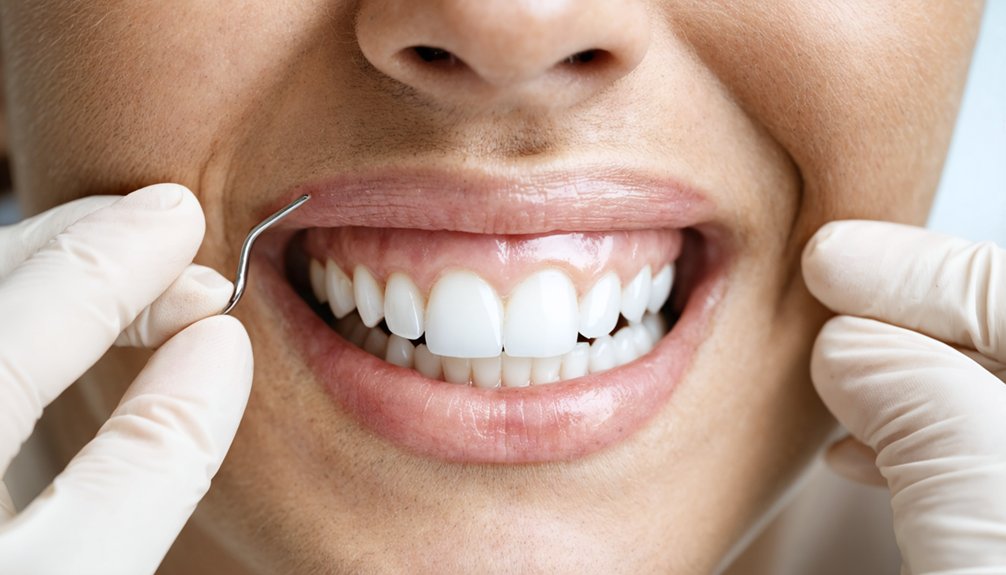
Start by verifying credentials to ascertain you’re consulting qualified cosmetic dentists with extensive whitening experience in your area. Compare in-office treatments ($500-$1,000) against custom take-home kits ($100-$800) based on your timeline and sensitivity levels. Review patient testimonials that highlight comfort, shade improvement, and satisfaction rates. Look for providers who offer personalized treatment plans addressing your specific dental conditions and aesthetic goals. The sections below reveal exactly what questions to ask during consultations and how to evaluate the factors that’ll determine your whitening success.
Key Takeaways
- Verify dentist credentials and cosmetic whitening experience through online profiles, certifications, and professional association memberships.
- Compare treatment options like in-office laser whitening ($500-$1,000) versus custom take-home kits ($200-$500) based on your timeline.
- Read patient testimonials focusing on comfort levels, shade improvement results, and overall satisfaction with the provider’s service.
- Evaluate technology offerings such as Zoom!, BriteSmile, or Opalescence systems to understand available methods and expected outcomes.
- Schedule consultations to discuss sensitivity concerns, oral health evaluations, and personalized treatment plans before committing to services.
Understanding Professional vs. At-Home Whitening Options
When you’re ready to brighten your smile, you’ll face a fundamental choice: professional whitening at a dental office or at-home treatments you can do yourself. Professional treatments deliver dramatic results in a single session through higher whitening agent concentration—breaking down deep enamel stains that over-the-counter products can’t reach. You’ll see several shades of improvement immediately, with color consistency guaranteed by expert application.
At-home kits offer you flexibility and lower costs but require patience. The milder formulas mean you’ll need multiple applications over weeks, and whitening frequency requirements increase for maintenance. Custom dentist-dispensed trays bridge this gap, giving you professional-strength gel with the convenience of home use. Your choice ultimately depends on whether you prioritize immediate, supervised results or gradual improvement on your schedule.
Types of Professional Teeth Whitening Treatments Available
Your smile transformation begins with selecting the right professional whitening treatment for your unique needs and lifestyle.
Modern dentistry offers two primary pathways: powerful in-office procedures that brighten your teeth up to 10 shades in a single visit, or custom take-home kits that deliver professional-grade results on your own schedule.
Each approach provides distinct advantages in speed, convenience, and investment level, ensuring you’ll find the perfect match for your whitening goals.
In-Office Bleaching Options
If you’re seeking the fastest path to a brilliant smile, in-office bleaching delivers transformative results in a single visit. Your dentist applies professional-grade whitening agents selection ranging from 15% to 38% hydrogen peroxide—significantly stronger than retail products you’d use at home.
Systems like Zoom! and BriteSmile incorporate light activation considerations, using LED or laser technology to accelerate the chemical process. Alternatively, Opalescence Boost achieves comparable outcomes without light, relying on high-concentration gel and extended application time.
You’ll typically spend one to two hours in the chair while your dentist applies gel in multiple intervals. This controlled environment allows immediate adjustments if sensitivity occurs. For stubborn tetracycline stains, specialized protocols like KöR Deep Bleaching provide solutions when standard treatments fall short.
Take-Home Professional Kits
Professional take-home kits bridge the gap between in-office treatments and over-the-counter solutions, offering you dentist-supervised whitening in the comfort of your own space.
Custom tray systems deliver professional-grade results through precise fit and higher concentrations of carbamide peroxide, ensuring even coverage for excellent efficacy. You’ll invest $200-600 for custom trays, but proper custom tray maintenance extends their lifespan substantially.
Opalescence kits eliminate impression appointments with pre-filled Go trays, containing potassium nitrate to minimize sensitivity while delivering quicker results. GLO Science PRO combines 10% hydrogen peroxide with patented illuminating heat technology, achieving up to 10 shades of whitening for sensitive teeth.
LED-accelerated options ($50-150) offer moderate pricing with light-activated acceleration, while sensitivity-focused formulations provide gradual whitening that fits your schedule. Your desired whitening results determine which professional kit best suits your control preferences and timeline.
What to Expect From Cost and Pricing in Your Area
Understanding the investment required for a brighter smile starts with recognizing that teeth whitening costs vary remarkably based on where you live and which treatment you choose. You’ll find affordable pricing options ranging from $300 to $600 for standard in-office treatments, while advanced procedures like laser whitening reach $700 to $1,500. Metropolitan areas typically command premium prices due to location factors and enhanced technology.
Your teeth whitening investment depends significantly on location and treatment type, with costs spanning $300 to $1,500 based on technology sophistication.
When evaluating the quality of services offered in your area, consider these cost tiers:
- Basic professional whitening: $300–$600 for standard in-office sessions
- Mid-range treatments: $600–$1,000 for specialized options like Zoom whitening
- Premium services: $1,000–$1,500 for advanced laser or KöR systems
Take-home professional kits provide controllable alternatives at $200–$500, letting you manage your whitening timeline independently.
Key Benefits of Choosing Professional Whitening Services
When you’re weighing your whitening options, professional services deliver transformative results that over-the-counter products simply can’t match. You’ll achieve 7-10 shades lighter in a single session through effective application techniques guided by trained specialists. High-concentration agents produce immediate, dramatic brightness with ΔE values around 3.3, guaranteeing visibly superior outcomes.
Your results endure 12 months to 3 years with proper care—significantly outlasting drugstore alternatives. Custom-fitted trays and long term maintenance strategies minimize touch-ups while maximizing your investment. Dentists tailor treatments to your sensitivity levels, incorporating protective barriers and desensitizing agents for comfortable, safe procedures.
Beyond aesthetics, you’ll receive exhaustive oral health evaluations that identify underlying staining causes. This integrated approach ensures you’re enhancing your smile while maintaining ideal dental health, giving you complete control over your whitening journey.
How to Research and Compare Local Whitening Providers
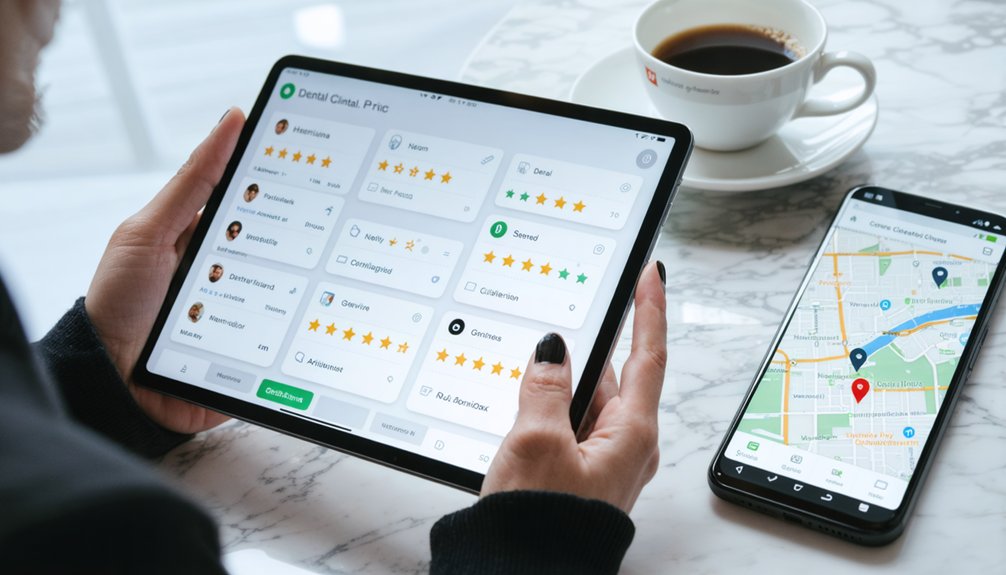
Your whitening journey begins with informed decision-making, and finding the right provider requires strategic evaluation of several critical factors. Start by verifying credentials—qualified cosmetic dentists with extensive whitening experience guarantee procedure safety and excellent results. You’ll want providers who prioritize gum protection through proper isolation techniques and customized treatment protocols.
Compare your options systematically:
- Treatment Methods: Evaluate in-office laser treatments versus custom take-home kits based on your timeline and sensitivity levels
- Cost Structure: Balance $500-$1,000 in-office investments against $100-$800 at-home options, considering longevity and concentration strength
- Patient Feedback: Analyze testimonials highlighting comfort, shade improvement, and satisfaction rates
Schedule consultations to assess personalization capabilities. Providers should address pre-existing conditions, offer desensitizing treatments, and create tailored plans matching your enamel integrity and whitening goals.
Important Factors That Impact Your Whitening Results
Your whitening results depend on three critical elements working together: your natural tooth color and condition, the expertise of your chosen provider, and the treatment method they recommend for your specific needs.
Each factor plays a distinct role in determining how many shades lighter you’ll achieve and how long those results will last. Understanding these variables before your first appointment helps you set realistic expectations and choose the provider who’ll deliver the transformation you’re seeking.
Your Natural Tooth Color
Before investing in teeth whitening, understanding your natural tooth color helps set realistic expectations for your results. Your teeth’s baseline shade stems from key influences on natural tooth color that determine how dramatically you’ll see improvements.
Three primary elements shape your starting point:
- Enamel-dentin structure – Thicker enamel masks yellowish dentin beneath, while thinner enamel reveals more warmth
- Genetic undertones – Your teeth naturally fall within yellow, gray, reddish-brown, or tan categories on professional shade guides
- Skin tone harmony – Cool complexions support brighter whites with blue undertones; warm skin tones complement ivory shades
Factors affecting tooth discoloration include both surface stains from coffee and wine, plus internal changes from aging and medications. You’ll achieve ideal results by targeting shades 2-3 tones lighter than your current color, preserving authenticity while maximizing visible transformation.
Dentist Expertise and Customization
Professional guidance transforms teeth whitening from guesswork into science. Your dentist’s expertise guarantees you’ll receive customized treatment plans tailored to your specific discoloration patterns, oral health status, and aesthetic goals. Through personalized shade assessment, they’ll establish your baseline color and determine realistic outcomes you can expect.
This precision matters because your dentist adjusts whitening agent concentrations, treatment duration, and application methods based on your unique needs. They’ll identify whether staining stems from diet, aging, or medications—factors that influence which approach delivers perfect results. Custom-fitted trays ensure even gel distribution, while professional supervision prevents sensitivity issues.
You’re not settling for generic solutions. You’re accessing higher-concentration treatments unavailable over-the-counter, protected gums during application, and real-time adjustments that pledge the dramatic, natural-looking brightness you’re pursuing.
Treatment Method Selection
Understanding the science behind whitening methods empowers you to choose treatments that match your expectations. Your professional whitening timeline varies dramatically based on concentration levels and activation technology you select.
Key treatment selection factors:
- Concentration strength – In-office procedures use hydrogen peroxide up to 35%, while take-home kits feature gentler 10-22% carbamide peroxide for gradual results
- Activation method – Laser systems deliver 6-8 shade improvements in one 45-90 minute session, while LED alternatives offer peroxide-free options
- Stain severity – Surface discoloration from coffee and wine responds better than medication-induced deeper stains
Your sensitivity management strategies should guide concentration selection. Higher percentages produce dramatic results lasting 1-3 years but may increase discomfort. Carbamide peroxide breaks down slowly, reducing sensitivity risk while maintaining effectiveness for patients requiring customized comfort levels.
Questions to Ask During Your Initial Consultation
When you’re ready to enhance your smile through teeth whitening, arriving at your consultation with the right questions transforms a routine appointment into a strategic planning session for your aesthetic goals.
Ask your dentist to evaluate your candidacy based on enamel thickness and sensitivity levels. Request specific details about desired results you can expect—how many shades lighter your teeth will become and whether intrinsic stains require alternative treatments like veneers. Clarify the timeline for treatment, including session duration and follow-up requirements.
Discuss cost breakdowns covering initial procedures and maintenance touch-ups, since insurance won’t cover cosmetic treatments. Inquire about FDA-approved products they’ll use and strategies for managing post-treatment sensitivity. Request guidance on dietary restrictions and aftercare protocols that’ll maximize your investment’s longevity.
Evaluating Provider Credentials and Experience
Anyone can claim expertise in teeth whitening, but verifying your provider’s credentials protects both your investment and oral health. Start by confirming their state-specific dental license and active malpractice insurance—both essential for legal compliance. Ask about their specialized training in cosmetic dentistry and hands-on experience with various whitening systems.
Essential credentials to verify:
- Active state dental license with no disciplinary actions or restrictions on their record
- Professional liability insurance that specifically covers cosmetic procedures and client safety incidents
- Specialty certifications in cosmetic dentistry or teeth whitening from accredited programs
Review their portfolio of before-and-after results, focusing on cases similar to yours. Providers who understand dental anatomy and health conditions deliver safer assessments and superior outcomes. Don’t hesitate to request documentation—legitimate professionals expect informed patients.
Making Your Final Decision on a Whitening Provider
Your research into credentials and experience sets the foundation—now it’s time to weigh all factors and commit to a provider who’ll transform your smile. Start by comparison of providers in your area using before-after photos that demonstrate real color changes and patient testimonials highlighting confidence-boosting results.
Evaluate which technology aligns with your goals—LED-accelerated treatments for speed, KöR systems for stubborn stains, or take-home kits for gradual improvement. Assess costs against value: stronger professional-grade gels deliver superior, longer-lasting results than over-the-counter alternatives.
Confirm your chosen provider offers customized plans addressing sensitivity levels and maintenance guidance. Finding a reputable provider means selecting someone who balances immediate improvements with post-treatment support, ensuring you maintain your investment through proper touch-ups and oral care protocols.
Frequently Asked Questions
How Long Do Professional Teeth Whitening Results Typically Last?
Your professional whitening results typically last one to three years with proper care. Average whitening duration depends on your habits—avoiding staining foods and maintaining good hygiene maximizes long-term whitening effectiveness, giving you control over your brilliant smile.
Can Teeth Whitening Damage Enamel or Cause Permanent Sensitivity?
Professional whitening won’t damage your enamel when done correctly. While one low-quality OTC gel caused 14.2% enamel loss, supervised treatments produce minimal long-term effects. You’ll experience temporary enamel sensitivity for 24-48 hours, not permanent damage.
Are There Certain Foods to Avoid After Professional Whitening Treatments?
You’ll want to avoid staining foods like berries, coffee, red wine, and acidic items for 48-72 hours post-treatment. Maintain oral hygiene with gentle brushing to protect your investment and maximize your brilliant, lasting results.
How Soon Can I Repeat Professional Whitening if Unsatisfied?
Don’t rush perfection—wait at least six months between professional sessions. The possible timeline for repeat treatments depends on your enamel’s resilience. Considerations for repeated whitening sessions include sensitivity risks, so you’ll want your dentist guiding these results-oriented decisions.
Does Dental Insurance Cover Any Professional Teeth Whitening Costs?
Most dental insurance won’t cover professional whitening since it’s cosmetic. However, you’ll find rare exceptions if discoloration stems from pre-existing conditions affecting dental health. Always review your plan’s eligibility requirements to confirm coverage possibilities.