You can remove yellow stains faster when you match the right whitening gel to your discoloration type. Carbamide peroxide gels (10–35%) work through controlled oxidation, breaking down chromogens embedded in enamel. Hydrogen peroxide gels deliver quicker surface results within days. Custom trays guarantee consistent gel contact, while LED activation accelerates penetration. Adding potassium nitrate reduces sensitivity during treatment. The best approach depends on stain depth, concentration tolerance, and application consistency — all of which you’ll find covered ahead.
Key Takeaways
- Carbamide peroxide gels (16–35%) effectively remove deep stains, with 35% concentrations producing noticeable whitening within 3–5 days.
- Hydrogen peroxide gels deliver faster results than carbamide peroxide, with visible whitening achievable within days at 6–10% concentrations.
- Custom trays ensure consistent gel contact across all tooth surfaces, producing faster and more uniform whitening than strips.
- LED-activated whitening gels accelerate peroxide penetration, with some kits achieving approximately 2.1 shades lighter within one week.
- Higher peroxide concentrations increase sensitivity risk; additives like potassium nitrate and fluoride help minimize discomfort during treatment.
What Makes a Whitening Gel Actually Remove Yellow Stains?
When you apply a whitening gel, hydrogen peroxide or carbamide peroxide penetrates the enamel and breaks apart the molecular chains of chromogens—the organic compounds responsible for yellow discoloration.
These stain removal mechanisms rely on oxidation: the peroxide releases free radicals that react with pigmented molecules, neutralizing their color.
Peroxide releases free radicals that target and neutralize pigmented molecules, stripping away discoloration through powerful oxidation.
Whitening gel ingredients typically range from 3% to 35% peroxide concentration, with higher percentages accelerating results.
Carbamide peroxide breaks down into hydrogen peroxide and urea upon contact, delivering a slower, more controlled release.
Potassium nitrate and fluoride are often added to counteract sensitivity without compromising efficacy.
Understanding these mechanisms lets you select formulas that match your stain severity, sensitivity threshold, and desired timeline for measurable whitening outcomes.
The Best Carbamide Peroxide Gels for Stubborn Yellow Stains
Carbamide peroxide gels remain the gold standard for addressing stubborn yellow stains at home, largely because they release hydrogen peroxide gradually through a two-stage breakdown process. This controlled delivery maximizes carbamide effectiveness while minimizing sensitivity.
When selecting a gel, prioritize these clinically validated options:
- Opalescence Go (10–15%) – Custom tray compatibility enhances stain removal depth.
- Crest 3D Whitestrips Professional – Delivers consistent peroxide contact across enamel surfaces.
- Rembrandt 1 Week Kit – Incorporates potassium nitrate, reducing irritation during treatment.
- Carbamide gels at 16–35% – Professional-grade concentrations outperform standard OTC formulas for deep discoloration.
You’ll achieve the strongest results by wearing trays for the full recommended duration daily, ensuring the active ingredient penetrates intrinsic stain layers effectively.
Hydrogen Peroxide Gels That Deliver Faster Visible Results
Hydrogen peroxide gels work faster than carbamide peroxide because they don’t require a two-stage breakdown — the active bleaching agent is immediately available upon application.
Among whitening gel types, hydrogen peroxide formulas typically deliver visible results within days rather than weeks. Peroxide concentration matters greatly here; concentrations between 6% and 10% offer meaningful whitening without excessive sensitivity.
Hydrogen peroxide formulas deliver visible whitening within days — with concentrations between 6% and 10% hitting the sweet spot.
You’ll notice faster surface stain removal because hydrogen peroxide penetrates enamel directly, oxidizing discolored molecules on contact.
LED kits leveraging hydrogen peroxide accelerate this reaction further, with some users achieving 2.1 shades of lightening within one week.
If you’re targeting stubborn yellow stains with urgency, hydrogen peroxide gels give you measurable, faster control over your whitening timeline.
Why Custom Tray Gels Give You the Most Even Whitening
When you use a custom tray, the gel-filled mold conforms precisely to your tooth contours, ensuring consistent contact across every surface.
This full coverage eliminates the uneven results common with strips, which often miss curved or hard-to-reach areas.
Research supports that trays deliver faster, more uniform whitening than strips or LED kits, making them the most reliable at-home option available.
Custom Trays Fit Perfectly
Custom trays fit the unique contours of your teeth precisely, ensuring the whitening gel makes consistent contact with every surface.
Unlike generic strips, custom comfort means you’re controlling exactly where the gel sits, minimizing uneven results.
Follow these tray maintenance steps to protect your investment:
- Rinse trays with cool water immediately after each use.
- Store trays in their protective case away from heat.
- Inspect trays weekly for cracks or warping.
- Clean trays with a soft toothbrush and mild soap monthly.
Proper tray maintenance extends their lifespan and preserves their precise fit.
When your trays maintain their shape, the gel distributes evenly across every tooth surface, delivering the controlled, predictable whitening results you’re seeking without compromising enamel integrity.
Gel Covers Every Tooth
Because custom tray gels conform precisely to your tooth contours, they deliver whitening agents to every surface simultaneously, eliminating the patchy results common with strips or generic trays.
Proper gel application techniques require you to load a small, controlled amount into each tooth compartment, preventing overflow onto gum tissue. Overfilling triggers irritation and wastes product unnecessarily.
Gel safety considerations demand that you select formulas containing potassium nitrate and fluoride, particularly if sensitivity concerns you.
Carbamide peroxide concentrations between 10–35% offer clinically validated bleaching without compromising enamel integrity when used correctly.
Wear your tray 10–60 minutes daily, following manufacturer instructions precisely. This controlled, uniform contact guarantees hydrogen peroxide penetrates evenly across all tooth surfaces, producing consistent, measurable shade improvements rather than inconsistent, unpredictable outcomes.
Trays Outperform Other Methods
Among whitening methods, custom tray gels consistently outperform strips, pens, and LED kits in delivering even, measurable results. Research confirms trays produce the fastest, most uniform whitening because gel compatibility with your tooth surface remains constant throughout treatment.
Key tray benefits include:
- Full coverage guarantees no missed surfaces or uneven patches.
- Controlled contact time maximizes hydrogen or carbamide peroxide absorption.
- Custom fit prevents gel dilution from saliva interference.
- Concentration flexibility lets you select 10–35% carbamide peroxide formulas.
You’re not relying on a strip’s limited adhesion or a pen’s inconsistent application. Trays keep professional-grade gel precisely positioned, giving you measurable shade improvements within days.
If you want predictable, clinical-level results at home, trays remain your most reliable option.
LED Whitening Gel Kits That Actually Speed Up Results
LED whitening gel kits combine light activation with peroxide-based gels to accelerate the bleaching process beyond what strips or toothpastes can achieve alone.
LED effectiveness stems from the light’s ability to activate peroxide molecules faster, producing measurable results within days. The Oralgen LED kit, for example, lightened teeth 2.1 shades in just one week.
To maximize outcomes, you’ll need to follow precise application techniques: apply the gel evenly across all visible tooth surfaces, avoid gum contact, and position the LED device correctly for full coverage.
Kits typically cost between $50 and $150, making them a mid-range investment compared to professional treatments. If you’re seeking controlled, accelerated whitening with clinical-grade efficiency, LED kits deliver a compelling advantage over slower alternatives.
Whitening Gel Pens for Quick Targeted Touch-Ups
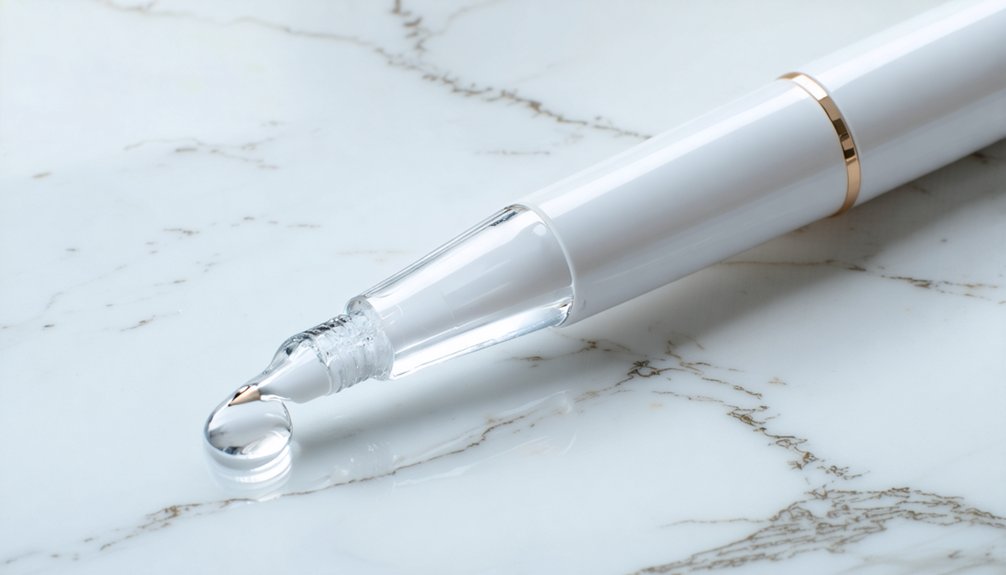
While LED kits offer broad, accelerated coverage, whitening gel pens give you precise, on-demand control for targeting specific teeth or spots between full treatment sessions. Hydrogen peroxide concentrations typically range from 5–10%, delivering measurable results without full-session commitment.
Whitening gel pens deliver precise, on-demand control between full sessions — no full commitment, just targeted results.
Apply using these pen application techniques for maximum efficacy:
- Dry target teeth with a cloth before applying to improve gel adhesion.
- Twist the pen slowly until gel appears, then apply a thin, even layer.
- Keep lips open for 60 seconds post-application to prevent gel dilution.
- Follow gel storage tips: cap tightly, store upright in a cool, dry location to preserve potency.
Consistent targeted use between primary treatments maintains your whitening trajectory without overexposing enamel to unnecessary peroxide contact.
The Best Whitening Gels for Sensitive Teeth
Sensitivity doesn’t have to mean sacrificing results. If you experience discomfort, you’ll want to select gels formulated with potassium nitrate and fluoride, both clinically recognized for sensitivity reduction.
The Rembrandt 1 Week Whitening Kit and Opalescence Go with custom trays are strong options that balance efficacy with tolerability.
Your application techniques matter equally. Apply gel only to tooth surfaces, avoiding gum contact to minimize irritation. Use lower peroxide concentrations—typically under 10%—and limit wear time to the manufacturer’s recommended window.
You can also apply a fluoride gel immediately after whitening to reinforce enamel integrity.
Crest’s 3D White Gentle series provides gradual whitening while strengthening enamel.
Which Whitening Gel Works Fastest on Deep Stains?
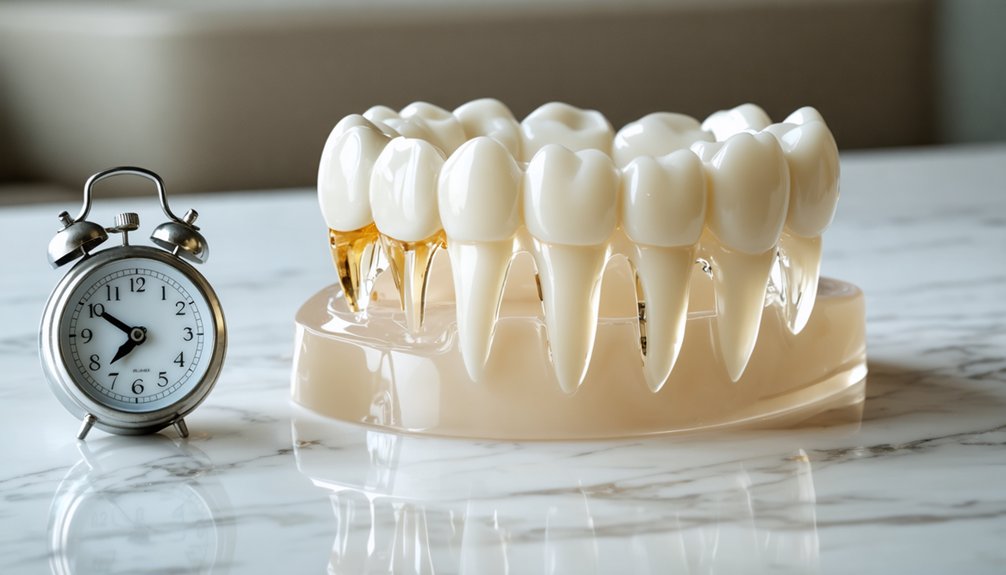
When targeting deep stains, you’ll get the fastest results from gels containing higher concentrations of carbamide or hydrogen peroxide, with professional-grade kits using 10–35% carbamide peroxide consistently outperforming standard OTC options.
LED-activated gel kits accelerate the bleaching process further, with some systems lightening teeth by over two shades within a single week.
You should prioritize formulas with clinically validated peroxide levels, as concentration directly determines how effectively the gel penetrates and breaks down intrinsic stain compounds.
Fastest Deep Stain Gels
Deep stains respond best to carbamide peroxide gels at concentrations between 10% and 35%, with higher concentrations delivering faster, more noticeable results.
Selecting the right gel application techniques directly impacts how quickly you’ll see measurable changes.
Follow these evidence-based protocols to maximize speed and whitening gel safety:
- Apply 35% carbamide peroxide gel in custom trays for 30–60 minutes daily.
- Use professional-grade kits containing potassium nitrate to reduce sensitivity during extended wear.
- Target intrinsic stains with LED-activated gels, which accelerate peroxide breakdown for faster penetration.
- Avoid hydrated silica formulas, as they compromise enamel integrity over repeated use.
You’ll achieve the most controlled, clinically consistent results by pairing higher-concentration gels with precise application schedules rather than relying on over-the-counter strips alone.
High Peroxide Concentration Results
Carbamide peroxide concentration directly determines how fast a gel breaks down into active hydrogen peroxide and penetrates enamel to address deep stains.
At high concentration levels of 10–35%, carbamide peroxide releases hydrogen peroxide more aggressively, accelerating oxidation of chromogenic compounds embedded within dentin. Professional kits leveraging these formulations consistently outperform over-the-counter averages, delivering measurable shade improvements within days rather than weeks.
Peroxide safety becomes critical at elevated concentrations. You’ll need to monitor exposure time precisely, as prolonged contact increases sensitivity risk and potential enamel disruption.
Formulas containing potassium nitrate and fluoride counteract these effects by desensitizing nerve pathways and reinforcing enamel integrity. Selecting a gel within the 10–35% carbamide range gives you maximum whitening efficiency while maintaining a clinically responsible safety margin.
How to Apply Whitening Gel for Maximum Results
Applying whitening gel correctly involves three critical steps that directly determine your results. Gel compatibility with your tray or strip system matters greatly — mismatched products reduce contact time and effectiveness.
Follow these application tips precisely:
- Dry your teeth thoroughly before applying gel to prevent saliva dilution.
- Apply a thin, even layer — excess gel irritates gums and wastes product.
- Seat the tray firmly to maximize surface contact with enamel.
- Adhere strictly to timing — wear gel 10–60 minutes based on peroxide concentration.
After removal, rinse immediately and avoid staining foods for 30 minutes.
Consistency across sessions, not single prolonged applications, drives cumulative whitening outcomes you can measure and control.
How Many Days Until Whitening Gel Visibly Works?
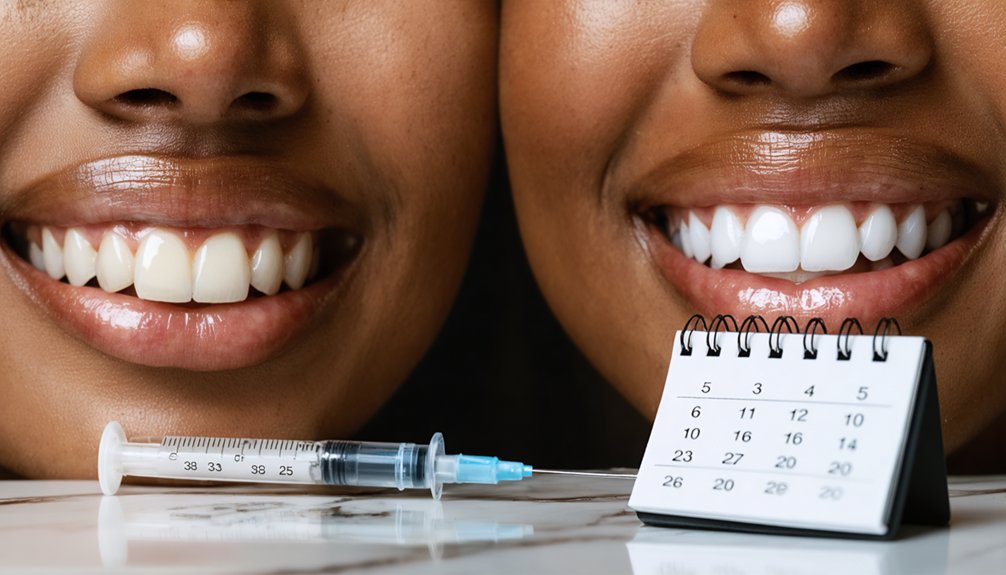
You can typically expect to see visible results from whitening gel within 7 to 19 days, depending on the product and concentration you use.
If you incorporate an LED light into your routine, you’ll accelerate that timeline—Oralgen’s LED kit, for example, achieved 2.1 shades of lightening in just one week.
Higher peroxide concentrations, such as carbamide peroxide at 10–35%, work faster than lower-dose formulas, so your gel’s strength directly determines how quickly you’ll notice a change.
Average Whitening Timeline
Most people see visible results from whitening gels within 3 to 14 days, though the exact timeline depends on the product type, peroxide concentration, and the nature of your stains.
Understanding whitening gel duration helps you set realistic expectations and track progress effectively. Yellow stain factors like diet, tobacco use, and enamel porosity directly influence how quickly you’ll respond.
Key variables shaping your timeline:
- Peroxide concentration — Higher percentages (10–35% carbamide) accelerate results.
- Stain depth — Extrinsic stains respond faster than intrinsic discoloration.
- Application frequency — Daily use produces faster, more consistent outcomes.
- Product type — Trays outperform strips; LED kits accelerate gel activation.
Crest’s formula, for example, delivered 2.6 shades of improvement within 19 days.
Faster Results With LED
When you add an LED device to your whitening routine, results can appear considerably faster — the Oralgen LED kit, for example, lightened teeth 2.1 shades in just one week.
Among the LED advantages is the light’s ability to accelerate peroxide activation, which directly increases whitening efficiency compared to strips or trays used alone.
LED kits typically cost $50–$150, placing them above basic strips in price but below professional treatments.
You’re fundamentally trading a higher upfront cost for a compressed timeline. If you’re targeting a specific event or deadline, that trade-off often makes practical sense.
Unlike toothpastes, which work gradually on surface stains, LED-assisted gels penetrate more effectively.
You’ll get measurable, visible changes faster — without waiting weeks to confirm the product is actually working.
Gel Concentration Affects Speed
Gel concentration directly determines how quickly you’ll see results — carbamide peroxide formulas ranging from 10–35% and hydrogen peroxide concentrations up to 10% produce meaningfully different timelines.
Optimizing gel absorption and application techniques accelerates outcomes considerably.
- 10% carbamide peroxide — expect visible changes in 2–4 weeks with nightly wear.
- 16–22% carbamide peroxide — results typically appear within 1–2 weeks.
- 35% carbamide peroxide — noticeable whitening often occurs within 3–5 days.
- 10% hydrogen peroxide — delivers accelerated results comparable to mid-range carbamide concentrations.
Apply gel evenly, ensuring full tooth contact without gum overlap. Inconsistent application techniques reduce gel absorption and extend your timeline.
Higher concentrations demand precision — you’re trading sensitivity risk for speed.
Frequently Asked Questions
Can Whitening Gel Permanently Damage or Weaken Your Natural Tooth Enamel?
Whitening gel won’t permanently damage your enamel if you’re using it correctly. However, you’ll risk tooth enamel sensitivity and long-term effects if you overuse high-peroxide formulas. Stick to recommended concentrations and application times.
Is Whitening Gel Safe to Use During Pregnancy or Breastfeeding?
You shouldn’t use whitening gel during pregnancy or breastfeeding due to safety concerns around peroxide absorption. Instead, you’ll want to explore alternative methods like fluoride toothpastes, which effectively maintain your dental health without potential risks.
Does Whitening Gel Work on Dental Crowns, Veneers, or Implants?
Whitening gel won’t change crowns whitening results or improve veneers effectiveness—they’re non-porous materials. You’ll notice your natural teeth lighten while restorations stay their original shade, creating visible mismatches you’ll want to address with your dentist.
Can You Use Whitening Gel While Wearing Braces or Retainers?
You shouldn’t use whitening gel with braces, as it can cause uneven whitening. For braces care and retainer safety, consult your orthodontist first—they’ll recommend appropriate timing and lower-peroxide formulas to protect your dental hardware effectively.
How Should Whitening Gel Be Stored to Maintain Its Effectiveness?
Store your whitening gel in a cool, dark refrigerator—temperature extremes will absolutely devastate its potency. You’ll preserve hydrogen peroxide’s effectiveness by maintaining ideal storage conditions, ensuring precise application techniques deliver maximum, consistent whitening results every single time.
References
- https://www.goodhousekeeping.com/health-products/g28723133/best-at-home-teeth-whitening-products/
- https://www.purpleplumdentistry.com/post/whitening-gel-sensitive-teeth
- https://kaufmandentistry.com/2025/04/10/which-at-home-whitening-treatments-are-worth-it/
- https://nhdentistrybeverlyhills.com/press/6-of-the-best-teeth-whitening-kits-in-the-drugstore/
- https://wewhiten.com/which-teeth-whitening-kit-is-the-best/
- https://expertwhitening.com/no-no/blogs/news/which-teeth-whitening-method-works-best