To prevent medication stains, use an oral syringe or bottle adapter for precise, drip-free dosing. Always hold measuring cups at eye level and work over a silicone mat or rimmed tray. Cap bottles immediately after use and wipe the rim with a damp cloth. Store medications upright in a designated cabinet. If a spill happens anyway, act fast—blot it immediately and treat it with the right cleaner for that specific medication type.
Key Takeaways
- Use an oral syringe or bottle adapter for precise, controlled dispensing that minimizes drips and spillage during medication dosing.
- Work over a rimmed tray or silicone mat to contain potential drips and protect surrounding surfaces.
- Hold measuring cups at eye level to improve accuracy and reduce the risk of overpour spills.
- Wipe the bottle’s rim and exterior immediately after each use to prevent residue buildup and surface transfer.
- Cap medication bottles immediately after dispensing and store them upright to prevent leaks and accidental tipping.
Don’t Let Liquid Medications Drip in the First Place
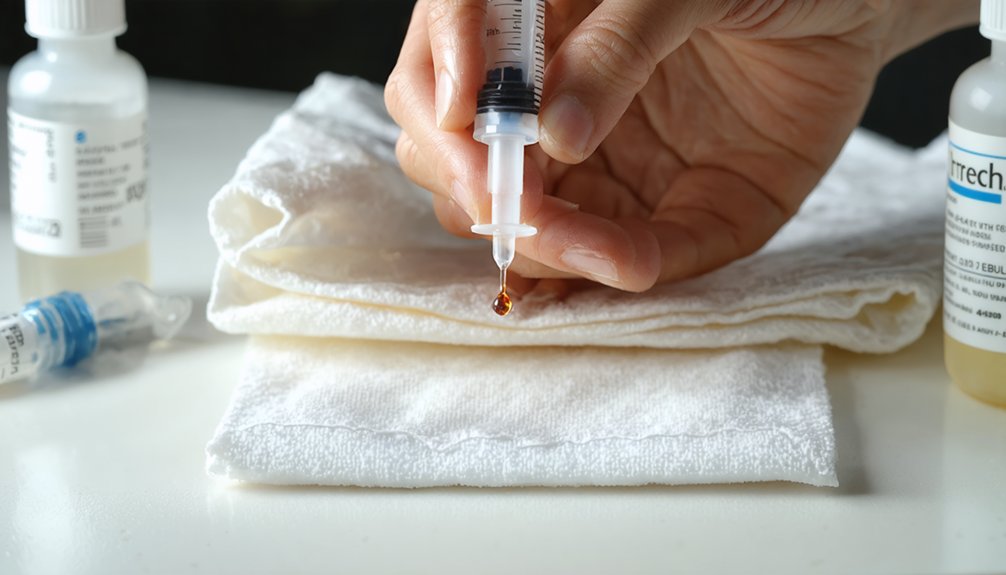
Liquid medications are notorious for dripping and leaving stubborn stains on clothing, countertops, and upholstery. You can prevent this by using an oral syringe instead of a spoon when measuring liquid dosage — syringes deliver precise amounts with minimal spillage.
Attach a bottle adapter to your medication container for controlled dispensing. When pouring, hold the cup at eye level and wipe the bottle’s rim immediately after each use with a damp cloth.
Spill prevention also depends on your environment: work over a hard, easy-to-clean surface rather than fabric. Cap bottles tightly after every use and store them upright.
Your environment matters: always work over hard, cleanable surfaces, cap bottles firmly, and store them upright.
These deliberate techniques eliminate the careless handling that causes stains, keeping you firmly in control of every dose you administer.
Always Cap and Store Medications Immediately After Use
Even after you’ve mastered controlled pouring and precise measuring, an uncapped bottle sitting on the counter undoes that careful work in seconds. Residual medication clings to the rim, drips down the exterior, and transfers onto surfaces before you notice.
Cap every bottle immediately after dispensing the dose—no exceptions.
Proper handling requires treating the cap as part of the administration process, not an afterthought. Wipe the bottle’s exterior with a dry cloth before sealing it.
Safe storage means returning it promptly to a designated, upright position in a cool, dry cabinet—away from countertop edges where it can tip.
This discipline eliminates pooling, secondary drips, and cross-contamination. You maintain control over the medication’s path from bottle to patient, leaving nothing to chance.
Protect Surfaces to Prevent Medication Stains While Dosing
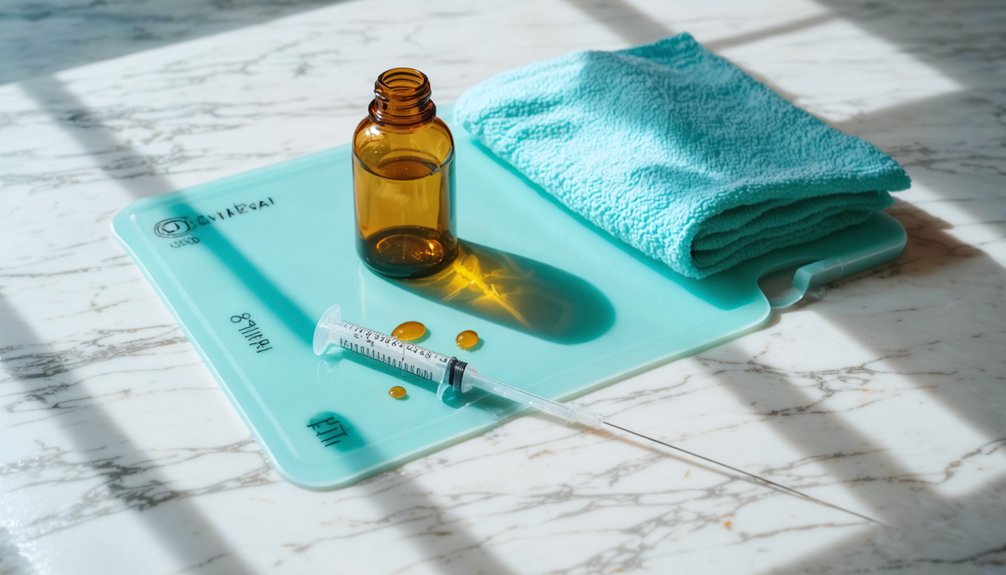
When you dose liquid medications, the surface beneath the bottle and measuring tool takes the first hit from spills and drips. Deploy a dedicated silicone mat or disposable absorbent pad as your primary surface protection layer. These materials resist staining and contain runoff before it contacts countertops or furniture.
Refine your dosing techniques by holding measuring cups at eye level, dispensing slowly, and returning excess medication to the bottle using a clean syringe rather than pouring. Work over a rimmed tray to contain unpredictable drips.
Wipe the mat or pad immediately after dosing — don’t let medication residue dry and bond to surfaces. Replace disposable pads regularly.
These straightforward protocols give you precise control over where medication travels during every dosing session.
The Worst Medication Stains and How to Remove Them
Despite your best prevention efforts, certain medications leave stubborn stains that demand targeted removal strategies. Knowing your stain types helps you act decisively.
Even with careful precautions, some medication stains persist—identifying them precisely is your first step toward effective removal.
Iron supplements leave dark, rust-colored marks—treat them with diluted white vinegar, then rinse thoroughly.
Liquid antibiotics containing dyes require immediate cold-water flushing followed by enzymatic cleaner application.
Betadine and iodine-based medications respond well to hydrogen peroxide on fabric surfaces.
Turmeric-based supplements need dish soap combined with baking soda paste before washing.
Activated charcoal requires dry-brushing first, then cold water—never hot, which sets the stain permanently.
Your removal techniques must match the specific compound. Always blot, never rub. Act within minutes for maximum effectiveness.
Test cleaning solutions on inconspicuous areas first to avoid compounding the damage.
Act Fast: How to Lift Any Remaining Stains Before They Set
Time is your most critical asset when tackling medication stains—once a compound bonds to fabric fibers or surfaces, removal becomes exponentially harder.
Different stain types demand targeted cleaning solutions: oil-based medications require dish soap or solvent-based degreasers, while liquid suspensions respond to cold water flushing combined with enzymatic cleaners.
Iron-containing medications need specialized rust removers, and dye-based compounds require oxidizing agents like hydrogen peroxide.
Act immediately by blotting—never rubbing—the affected area to prevent deeper fiber penetration.
Apply your chosen cleaning solution, working from the stain’s outer edge inward. Rinse thoroughly, then assess before heat-drying, since heat permanently sets residual staining.
Keep a targeted stain-removal kit accessible wherever you store medications, giving you immediate intervention capability when spills occur.
Frequently Asked Questions
Can Certain Medications Permanently Discolor Skin or Nails Over Time?
Yes, certain medications can permanently cause skin discoloration and nail pigmentation. You’ll find antimalarials, minocycline, and chemotherapy agents are common culprits, altering melanin distribution or depositing compounds directly into your skin and nail tissues over time.
Are There Medications That Stain More Due to Specific Dyes or Pigments?
Yes, you’ll find that medications containing iron-based compounds, artificial dye types like FD&C colors, and strong pigment effects from tetracyclines or rifampin stain more aggressively, directly impacting your skin, teeth, and surrounding surfaces.
Do Clothing Fabrics Affect How Easily Medication Stains Set In?
Coincidentally, yes—fabric types directly impact stain prevention. You’ll find synthetic fibers like polyester resist absorption, while natural fabrics like cotton readily absorb medication stains, making them set faster and deeper, complicating your removal efforts considerably.
Can Medication Stains Cause Allergic Reactions on Sensitive Skin?
Yes, medication stains can trigger allergic reactions if you have skin sensitivity. Residual chemical compounds absorbed through contact may activate your immune response, causing redness or irritation. You’ll want to wash affected skin immediately to minimize exposure.
Does Hard Water Make Removing Medication Stains More Difficult?
Like rust conquering iron, hard water effects can anchor medication stains deeper into fabric fibers, making stain removal tougher for you. Its mineral deposits bond with compounds, so you’ll need stronger treatments to reclaim control.
References
- https://www.americandatanetwork.com/patient-safety/essential-strategies-for-preventing-medication-errors/
- https://poisoncontrol.utah.edu/news/2020/12/6-helpful-tips-avoid-medication-mishaps
- https://lumistry.com/blog/ways-to-reduce-medication-errors/
- https://pharmacy.msu.edu/resources/8-tips-to-prevent-medication-errors
- https://www.pfizer.com/news/articles/10_ways_to_reduce_medication_errors
- https://www.wsna.org/news/2024/avoiding-preventable-harm
- https://pmc.ncbi.nlm.nih.gov/articles/PMC8468915/
- https://www.aafp.org/pubs/fpm/issues/2007/0200/p41.html